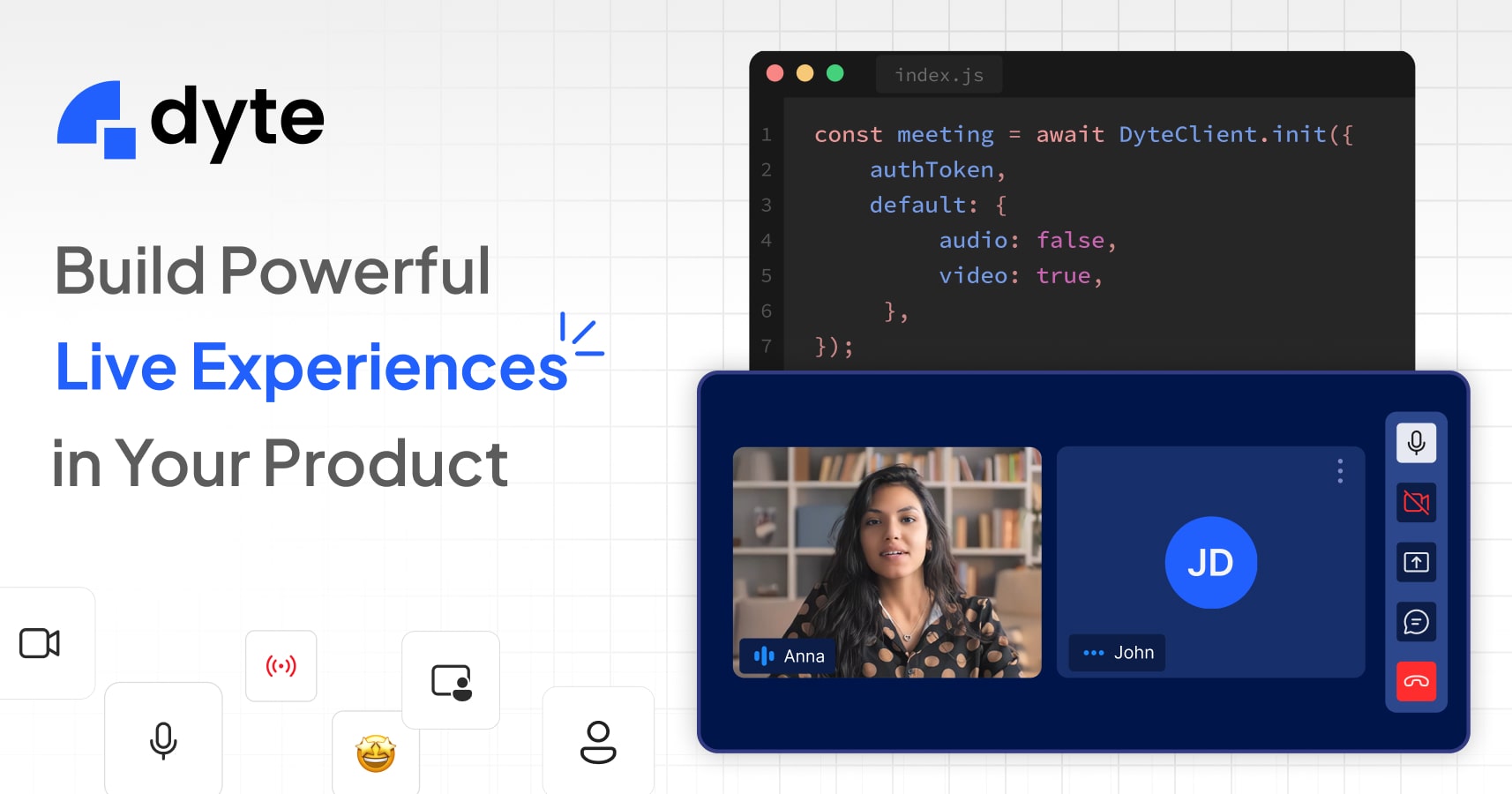
Dyte ist eine auf Entwickler ausgerichtete SDK-Plattform zur einfachen Einbettung hochwertiger, anpassbarer und sicherer Live-Video- und Audioerlebnisse in jede Anwendung. Es bietet vorgefertigte UI-Komponenten, leistungsstarke Plugins und ein robustes Backend, das es Entwicklern ermöglicht, interaktive Kommunikationsfunktionen für Branchen wie Telemedizin, Bildungstechnologie und virtuelle Veranstaltungen mit minimalem Aufwand zu erstellen, wobei die Sicherheit durch SOC2- und HIPAA-Konformität Priorität hat.

Mux ist eine entwicklerorientierte Video-API-Plattform, die die Integration von Live- und On-Demand-Videos vereinfacht. Sie bietet eine robuste Infrastruktur für Encoding, Streaming und Echtzeit-Analysen, die es Unternehmen ermöglicht, hochwertige Videoerlebnisse in großem Maßstab bereitzustellen. Mux bietet zwei Kernprodukte: Mux Video für Streaming und Mux Data für die Überwachung der Quality of Experience (QoE).
Produktübersicht
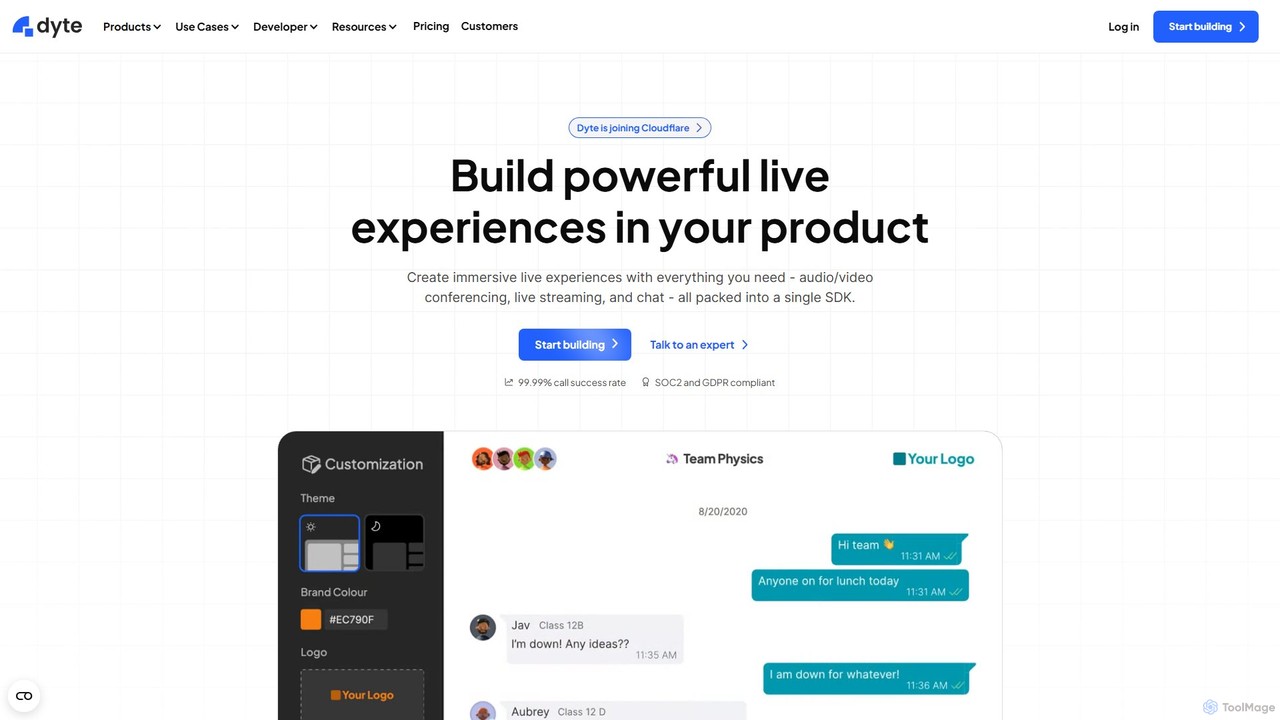
Dyte Produktübersicht
Dyte ist eine auf Entwickler ausgerichtete SDK-Plattform zur einfachen Einbettung hochwertiger, anpassbarer und sicherer Live-Video- und Audioerlebnisse in jede Anwendung. Es bietet vorgefertigte UI-Komponenten, leistungsstarke Plugins und ein robustes Backend, das es Entwicklern ermöglicht, interaktive Kommunikationsfunktionen für Branchen wie Telemedizin, Bildungstechnologie und virtuelle Veranstaltungen mit minimalem Aufwand zu erstellen, wobei die Sicherheit durch SOC2- und HIPAA-Konformität Priorität hat.
Mux Produktübersicht
Mux ist eine entwicklerorientierte Video-API-Plattform, die die Integration von Live- und On-Demand-Videos vereinfacht. Sie bietet eine robuste Infrastruktur für Encoding, Streaming und Echtzeit-Analysen, die es Unternehmen ermöglicht, hochwertige Videoerlebnisse in großem Maßstab bereitzustellen. Mux bietet zwei Kernprodukte: Mux Video für Streaming und Mux Data für die Überwachung der Quality of Experience (QoE).
Detailed feature comparison
| Feature | Dyte | Mux |
|---|---|---|
| Hauptkategorie | API | API |
| Hinzugefügt | 2025-08-15 | 2025-08-03 |
| Preismodell | Freemium | Freemium |
| Offizielle Website | dyte.io | www.mux.com |
| Produkttyp | Website | Website |
| Performance data | ||
| Nutzerbewertung | Nicht verifiziert | Nicht verifiziert |
| Kommentare | 0 | 0 |
| Monatliche Besuche | 40.1K | 863.4K |
| Monatliches Wachstum | -15.7% | 32.5% |
| Favoriten | 124 | 127 |
| Details | Details ansehen | Details ansehen |
Dyte vs Mux monthly traffic
Compare Dyte and Mux by monthly reach, traffic trend, visit depth, top regions, and acquisition sources.
How to interpret the traffic data
In the Dyte vs Mux monthly traffic comparison, Dyte currently shows 40.1K visits and Mux shows 863.4K; Mux has about 21.5 times the visible traffic of Dyte, an absolute difference of about 823.3K visits. This reflects visible reach, not feature quality or paid users.
Both tools provide verified traffic details, so monthly trends, visit depth, regions, and acquisition sources can be compared on the same basis.
Dyte monthly traffic:
Latest traffic
Monthly traffic trend
- 2025/9: 52.8K Monatliche Besuche
- 2026/1: 49.3K Monatliche Besuche
- 2026/2: 42.1K Monatliche Besuche
- 2026/3: 50.7K Monatliche Besuche
- 2026/4: 47.5K Monatliche Besuche
- 2026/5: 40.1K Monatliche Besuche
Top-Regionen
Top 5 countries/regions
| Country/region | Percentage | Traffic |
|---|---|---|
| 🇮🇳India | 30.72% | 12.3K |
| 🇺🇸United States | 25.75% | 10.3K |
| 🇳🇬Nigeria | 20.77% | 8.3K |
| 🇨🇦Canada | 12.21% | 4.9K |
| 🇻🇳Vietnam | 10.55% | 4.2K |
Traffic-Quellen
| Source type | Percentage | Traffic |
|---|---|---|
| Direkt | 93.56% | 37.5K |
| Verweis | 6.31% | 2.5K |
| 0.13% | 52 |
Suchbegriffe
Mux monthly traffic:
Latest traffic
Monthly traffic trend
- 2025/9: 471.4K Monatliche Besuche
- 2026/1: 685.8K Monatliche Besuche
- 2026/2: 606.6K Monatliche Besuche
- 2026/3: 654.8K Monatliche Besuche
- 2026/4: 651.4K Monatliche Besuche
- 2026/5: 863.4K Monatliche Besuche
Top-Regionen
Top 5 countries/regions
| Country/region | Percentage | Traffic |
|---|---|---|
| 🇮🇳India | 55.86% | 482.3K |
| 🇺🇸United States | 25.47% | 219.9K |
| 🇮🇩Indonesia | 6.82% | 58.9K |
| 🇳🇬Nigeria | 6.76% | 58.4K |
| 🇧🇷Brazil | 5.09% | 43.9K |
Traffic-Quellen
| Source type | Percentage | Traffic |
|---|---|---|
| Direkt | 84.38% | 728.5K |
| Verweis | 14.76% | 127.4K |
| 0.86% | 7.4K |
Suchbegriffe
Usage comparison
Compare the core capabilities of Dyte and Mux
Dyte Core features
Mux Core features
Use cases
Dyte Use cases
Mux Use cases
Dyte vs Mux:In-depth comparison and selection guidance
First decide whether the products solve the same kind of need
This in-depth Dyte vs Mux comparison uses only the product records, taxonomy, audience, traffic, and community signals available on this page. Dyte is primarily listed under “API”, while Mux is primarily listed under “API”, so the first decision is whether your actual task matches their recorded scope.
The structured fields currently show these decision-relevant differences: Primary category (Dyte: API; Mux: API); Monthly visits (Dyte: 40.1K; Mux: 863.4K); Monthly growth (Dyte: -15.7%; Mux: 32.5%); Favorites (Dyte: 124; Mux: 127); Website (Dyte: dyte.io; Mux: www.mux.com). These facts are more useful for selection than brand visibility alone.
What market visibility and monthly traffic mean
In the Dyte vs Mux monthly traffic comparison, Dyte currently shows 40.1K visits and Mux shows 863.4K; Mux has about 21.5 times the visible traffic of Dyte, an absolute difference of about 823.3K visits. This reflects visible reach, not feature quality or paid users.
Both tools provide verified traffic details, so monthly trends, visit depth, regions, and acquisition sources can be compared on the same basis.
If public market visibility is an important first-pass criterion, investigate Mux first. The final choice should still follow taxonomy, use case, and a real trial because higher traffic does not prove broader capabilities or better workflow fit.
Product positioning, use cases, and roles
Dyte and Mux currently overlap in shared categories: Streaming; shared tags: API, Entwicklerwerkzeuge und Live-Streaming. This can place both on the same shortlist, but it does not prove equal implementation, depth, or cost.
Dyte's unique categories/tags are API, Kommunikations-SDK, Zusammenarbeit, Audio-SDK, Kollaboration, EdTech, Live-Video und Echtzeitkommunikation; Mux's are API, Analysen, Mux Daten, Mux Video, Video auf Abruf, Erlebnisqualität, Videoanalyse und Video-API. These unique fields are the strongest differentiators: validate the product whose recorded scope matches the task instead of following traffic alone.
What ratings, comments, and favorites can tell you
Dyte has no verified rating, 0 comments, 124 favorites, and 114 likes;Mux has no verified rating, 0 comments, 127 favorites, and 125 likes。
Neither product has enough rating or comment samples for a credible reputation ranking.
Selection guidance by actual need
When to evaluate Dyte first
Put Dyte on the priority trial list when the task aligns with “API” and especially API, Kommunikations-SDK, Zusammenarbeit, Audio-SDK, Kollaboration und EdTech. This follows recorded positioning and does not imply unlisted capabilities are absent.
Dyte also currently records: pricing is freemium, product type is website, 40.1K verified monthly visits, no verified user rating. Verify any hard requirement around price, platform, or reach before trial, and do not let sparse review data substitute for testing.
When to evaluate Mux first
Put Mux on the priority trial list when the task aligns with “API” and especially API, Analysen, Mux Daten, Mux Video, Video auf Abruf und Erlebnisqualität. This follows recorded positioning and does not imply unlisted capabilities are absent.
Mux also currently records: pricing is freemium, product type is website, 863.4K verified monthly visits, no verified user rating. Verify any hard requirement around price, platform, or reach before trial, and do not let sparse review data substitute for testing.
How to validate the recommendation before deciding
The available data describes positioning, public visibility, and community signals, but it cannot prove output quality, speed, integration effort, privacy, or long-term cost in your workflow. Before deciding, run the same representative tasks in Dyte and Mux, then record completion time, accuracy, manual corrections, and the real paid threshold. A like-for-like trial turns this comparison into a defensible adoption decision.
Vergleichs-FAQ
How should I choose between Dyte and Mux?
Where does this comparison data come from?
What do unknown fields mean?
Related AI tools

Tencent RTC
Eine umfassende Entwicklerplattform, die leistungsstarke APIs und SDKs für Echtzeit-Sprach-, Video-, Chat- und Live-Streaming bereitstellt. Tencent RTC ermöglicht es Unternehmen, skalierbare, latenzarme und interaktive Kommunikationserlebnisse direkt in ihre Anwendungen in verschiedenen Branchen zu integrieren.
Videokonferenzen
LiveKit
LiveKit ist eine All-in-One-Open-Source-Plattform zum Erstellen, Bereitstellen und Skalieren von Echtzeit-Sprach- und Video-KI-Agenten. Es bietet eine Infrastruktur mit extrem niedriger Latenz, leistungsstarke APIs und hochmoderne KI-Tools, mit denen Entwickler Konversations-KI, Robotik und Live-Streaming-Anwendungen mit unternehmenstauglicher Zuverlässigkeit und Skalierbarkeit erstellen können.
Echtzeitkommunikation
VideoSDK
VideoSDK ist eine umfassende Entwicklerplattform, die APIs und SDKs zum Erstellen, Skalieren und Sichern von Echtzeit-Audio-/Videokommunikation und interaktivem Live-Streaming bereitstellt. Sie bietet eine Infrastruktur mit geringer Latenz, plattformübergreifende Unterstützung und integrierte KI-Funktionen wie Sprachagenten, Transkription und Zusammenfassung, die es Entwicklern ermöglichen, immersive Kommunikationserlebnisse in jede Anwendung einzubetten.
Videokonferenzen
Liveblocks
Liveblocks ist eine Entwicklerplattform, die fertige APIs und Komponenten bereitstellt, um schnell Echtzeit-Kollaborationserlebnisse und KI-Copiloten in jedes Produkt zu integrieren. Es übernimmt die komplexe Infrastruktur für Funktionen wie Multiplayer-Bearbeitung, Kommentare und KI-Chat, sodass Teams schneller liefern und die Benutzerbindung erhöhen können.
KI-Entwicklung
Velt
Velt ist ein KI-gestütztes SDK für Entwickler, um reichhaltige Kollaborationsfunktionen wie Kommentare, Co-Editing und Live-Präsenz schnell in jede Webanwendung zu integrieren. Es spart Monate an Entwicklungszeit, steigert die Nutzerbindung und ermöglicht es Teams, Funktionen 5x schneller zu veröffentlichen.
Kundenengagement
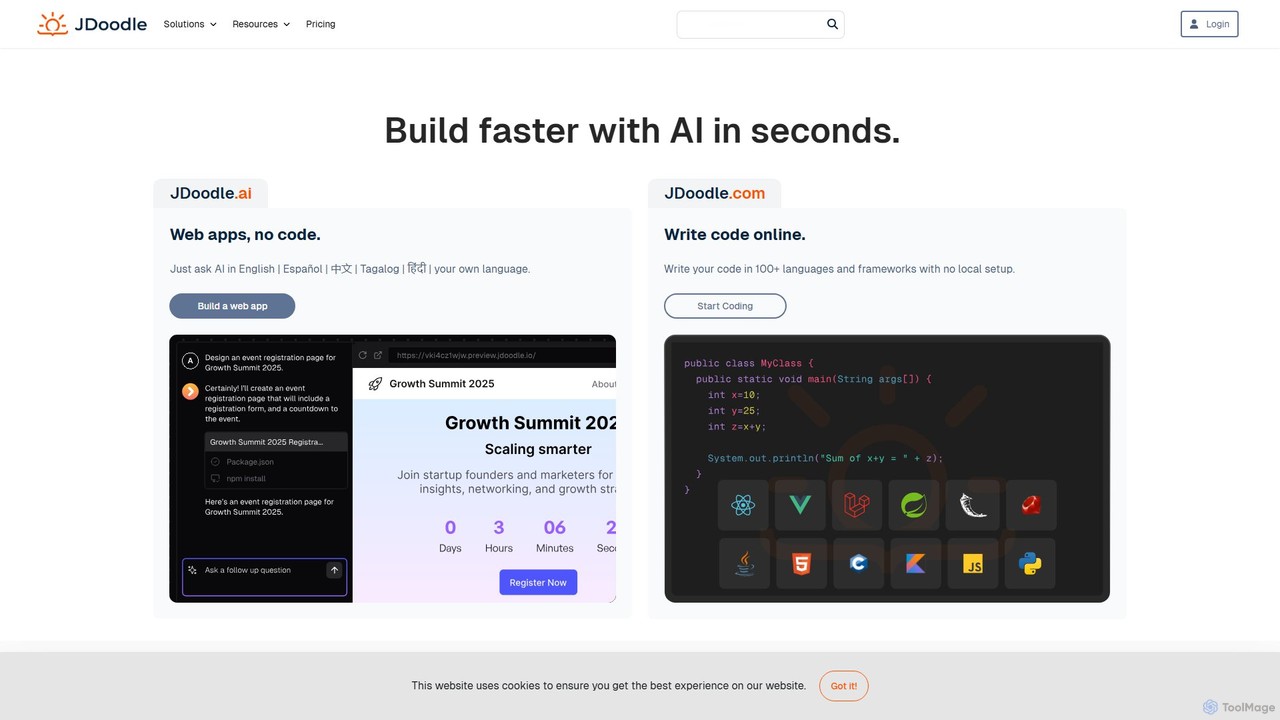
JDoodle
JDoodle ist eine KI-gestützte Online-Codierungsplattform und IDE, die über 96 Programmiersprachen und Frameworks unterstützt. Sie ermöglicht Entwicklern, Studenten und Lehrenden, Code direkt im Browser ohne jegliche Einrichtung zu schreiben, zu kompilieren und auszuführen. Mit KI-Unterstützung, Echtzeit-Kollaboration und leistungsstarken Integrations-APIs ist JDoodle darauf ausgelegt, die Codierungsproduktivität zu steigern und die Programmierausbildung zu optimieren.
Online-IDE
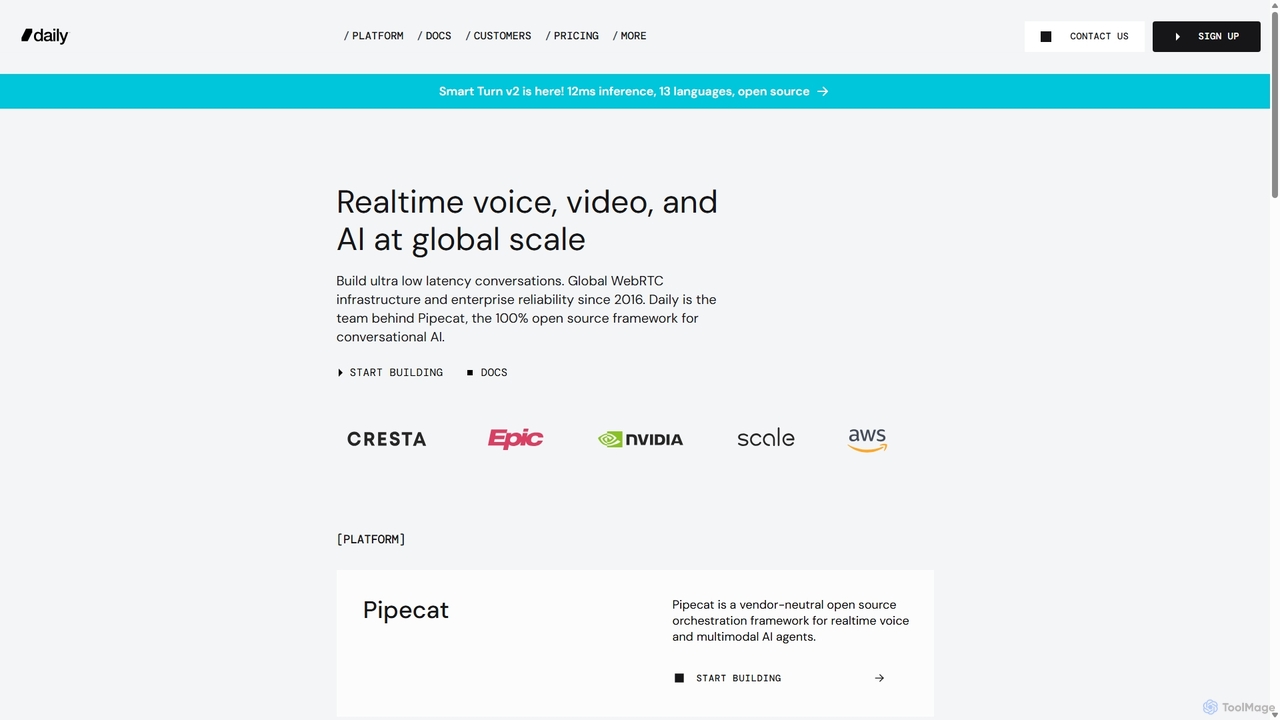
Daily
Daily ist eine Entwicklerplattform für Echtzeit-Video, -Sprache und -KI. Sie bietet robuste APIs und SDKs zum Erstellen von skalierbaren, hochwertigen Konversationserlebnissen mit extrem niedriger Latenz, einschließlich Videoanrufen von Mensch zu Mensch und fortschrittlichen Sprach-KI-Agenten über ihr Open-Source-Framework Pipecat.
Konversationelle KI
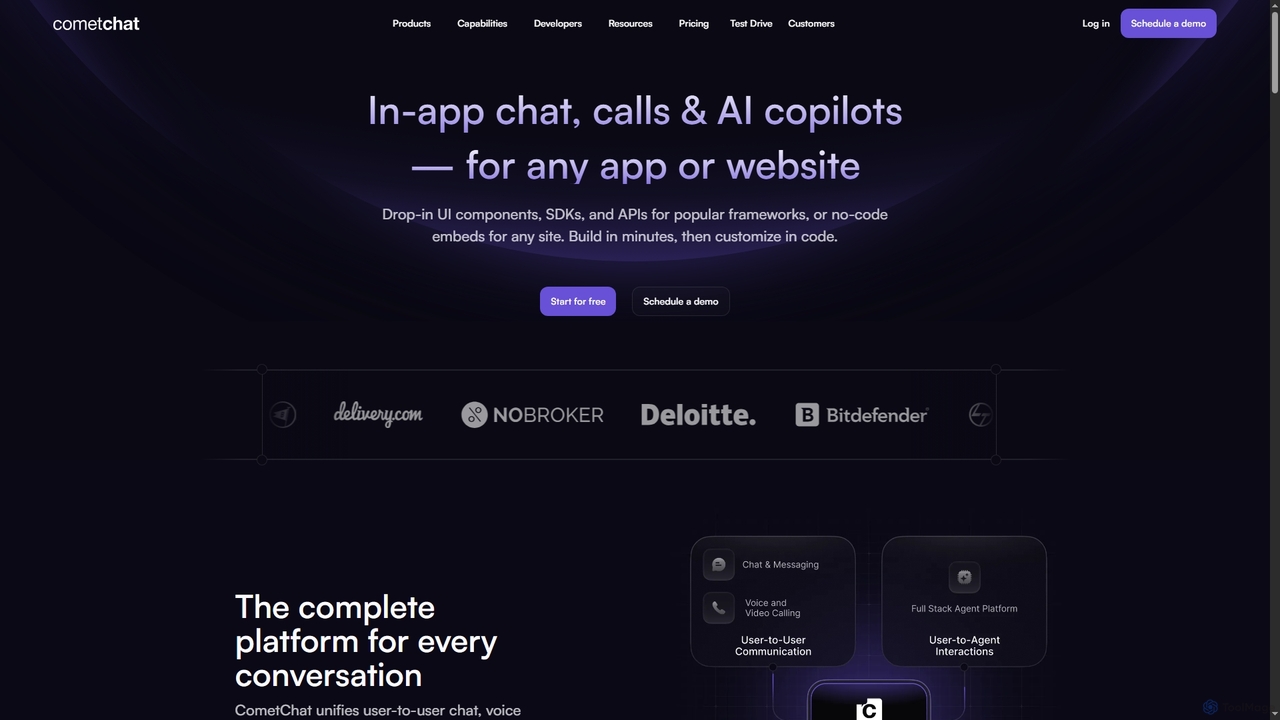
CometChat
CometChat bietet eine vollständige Kommunikationsplattform mit In-App-Chat-, Sprach- und Videoanruf-SDKs & APIs. Es bietet auch eine Full-Stack-Lösung für die Bereitstellung, Überwachung und Weiterentwicklung von benutzerorientierten KI-Agenten und Copilots, alles auf einer sicheren, skalierbaren und konformen Infrastruktur aufgebaut.
Chatbot-Entwicklung
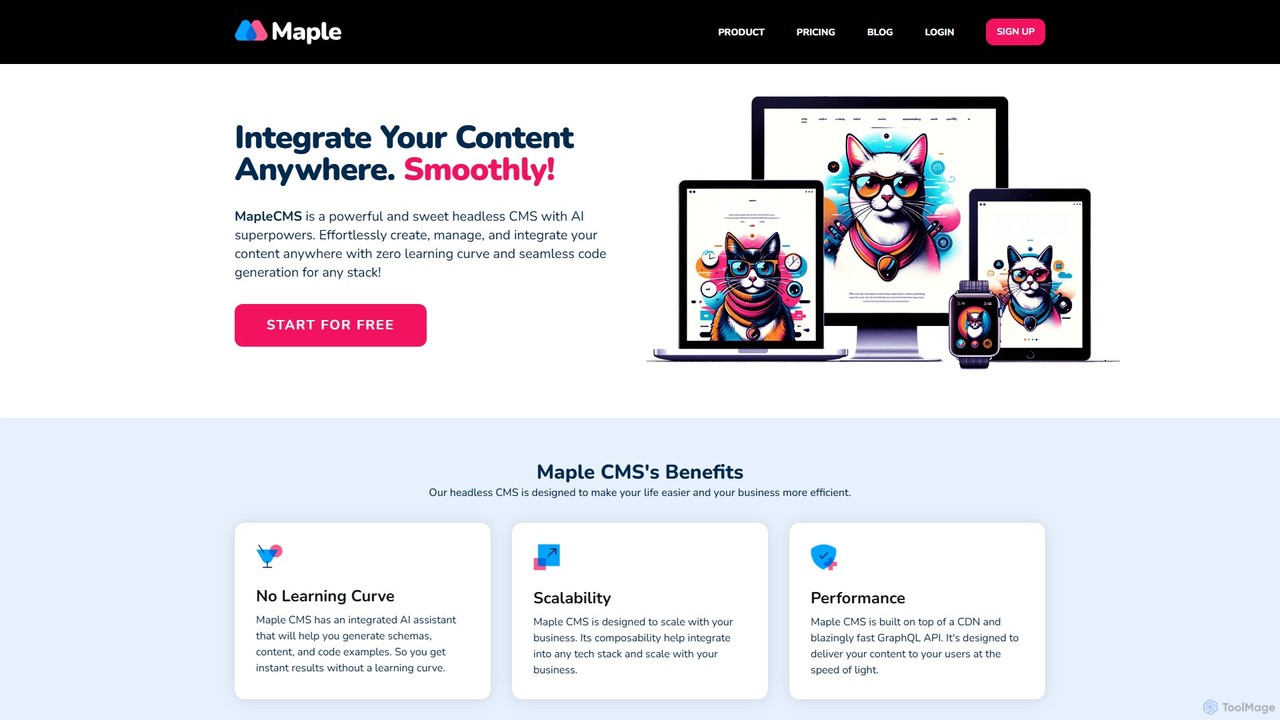
MapleCMS
MapleCMS ist ein leistungsstarkes, entwicklerorientiertes Headless-CMS mit KI-Unterstützung. Es ermöglicht Benutzern, Inhalte mühelos überall zu erstellen, zu verwalten und zu integrieren, indem es eine schnelle GraphQL-API und ein globales CDN nutzt. Mit einem integrierten KI-Assistenten bietet es eine Erfahrung ohne Lernkurve für Entwickler, Content-Ersteller und Marketer und optimiert Arbeitsabläufe von der Schema-Erstellung bis zur Content-Erstellung und Code-Implementierung.
Headless CMS
PromptPoint
Eine kollaborative No-Code-Plattform für Teams zum Entwerfen, Testen, Bereitstellen und Überwachen von LLM-Prompts. Sie bietet automatisierte Tests, Versionierung und Multi-LLM-Unterstützung, um hochwertige, vorhersagbare KI-Ausgaben zu gewährleisten.
LLM-Betrieb
vocode
Vocode ist eine Open-Source-Plattform zum Erstellen, Bereitstellen und Skalieren von hyperrealistischen Sprach-KI-Agenten. Sie bietet Entwicklern ein Kern-Framework und eine unternehmenstaugliche API zur Erstellung anspruchsvoller sprachbasierter LLM-Anwendungen für Aufgaben wie automatisierten Kundenservice, Verkaufsanrufe und interaktive Sprachdialogsysteme (IVR).
Sprachbot
OctoAI
OctoAI ist eine Hochleistungs-Rechenplattform für Entwickler, um generative KI-Modelle effizient auszuführen, anzupassen und zu skalieren. Sie bietet optimierte, produktionsreife API-Endpunkte für beliebte Open-Source-Modelle wie Llama, Mixtral und Stable Diffusion. Durch die Konzentration auf tiefgreifende Systemoptimierungen bietet OctoAI schnellere Inferenzgeschwindigkeiten und niedrigere Kosten, sodass Unternehmen skalierbare KI-Anwendungen erstellen und bereitstellen können, ohne komplexe Infrastrukturen verwalten zu müssen.
API
Twilio
Twilio ist eine führende Customer-Engagement-Plattform, die Entwicklern leistungsstarke APIs für SMS, Sprache, E-Mail und WhatsApp bietet. Sie integriert KI und eine Kundendatenplattform, um Unternehmen zu ermöglichen, personalisierte, skalierbare und zuverlässige Kommunikationserlebnisse über jeden Kanal hinweg zu schaffen.
API
OpenAI API Playground
Eine interaktive webbasierte Oberfläche für Entwickler und Forscher zum Experimentieren mit den leistungsstarken KI-Modellen von OpenAI wie GPT-4 und DALL-E. Testen Sie Prompts, passen Sie Parameter an und generieren Sie Code-Snippets für die API-Integration, ohne initialen Code zu schreiben.
PersönlichPixelbin
Pixelbin ist eine umfassende KI-gestützte Plattform für das Management visueller Assets und die Echtzeit-Bildtransformation. Es bietet eine Reihe von Werkzeugen, darunter einen KI-Editor, einen Hintergrundentferner, einen Bildvergrößerer und einen Wasserzeichenentferner, sowie ein robustes Digital-Asset-Management-System (DAM) und ein intelligentes CDN. Entwickelt für Entwickler, Vermarkter und E-Commerce-Unternehmen, optimiert Pixelbin den gesamten Lebenszyklus visueller Inhalte von der Erstellung und Speicherung bis zur Optimierung und Auslieferung und gewährleistet hochwertige visuelle Darstellungen und eine schnellere Leistung.
Digital Asset Management