Fast.ai ist ein Forschungsinstitut, das sich zum Ziel gesetzt hat, Deep Learning für jedermann zugänglich zu machen. Es bietet kostenlose Kurse, eine Open-Source-Softwarebibliothek (fastai), Spitzenforschung und eine lebendige Community, um Programmierer aller Hintergründe zu befähigen, Deep-Learning-Praktiker zu werden.
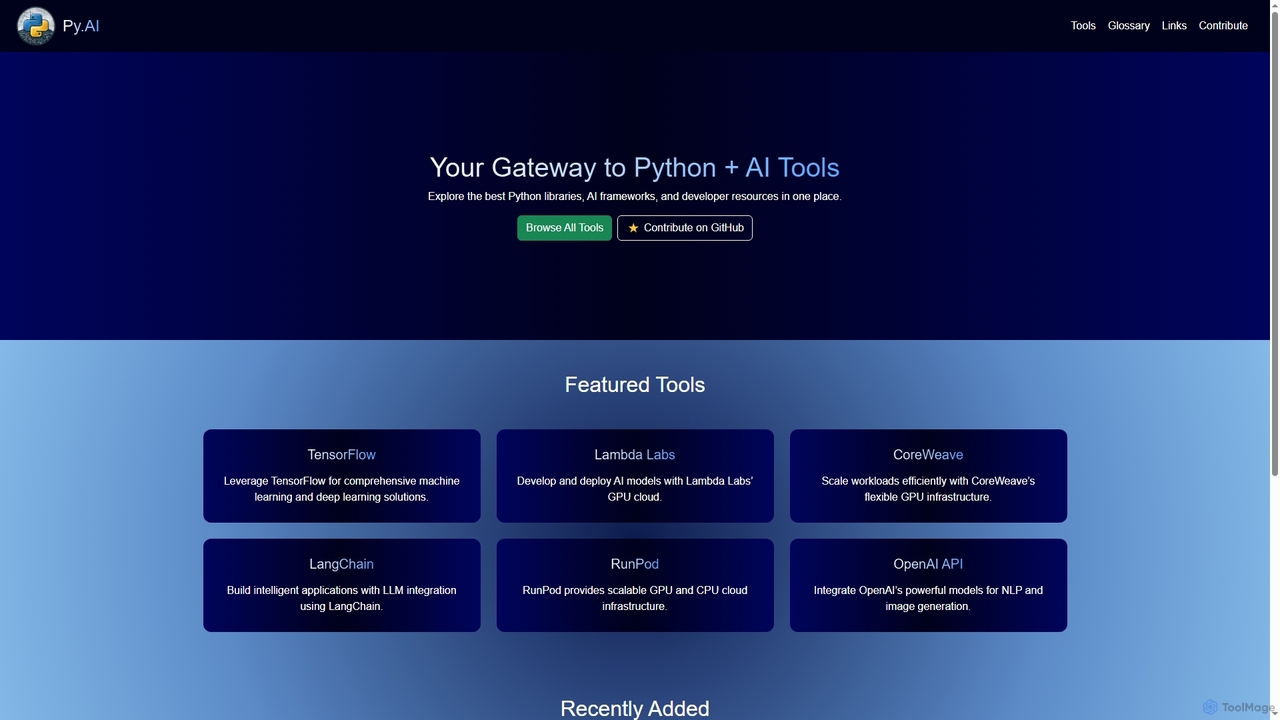
Py ist ein kuratiertes Online-Verzeichnis, das als umfassendes Tor zu den besten Python-Bibliotheken, KI-Frameworks und Entwicklerressourcen dient. Es hilft Benutzern, Tools zu erkunden, zu entdecken und zu finden, um ihre Machine-Learning- und KI-Projekte zu verbessern.
Produktübersicht
Fast.ai Produktübersicht
Fast.ai ist ein Forschungsinstitut, das sich zum Ziel gesetzt hat, Deep Learning für jedermann zugänglich zu machen. Es bietet kostenlose Kurse, eine Open-Source-Softwarebibliothek (fastai), Spitzenforschung und eine lebendige Community, um Programmierer aller Hintergründe zu befähigen, Deep-Learning-Praktiker zu werden.
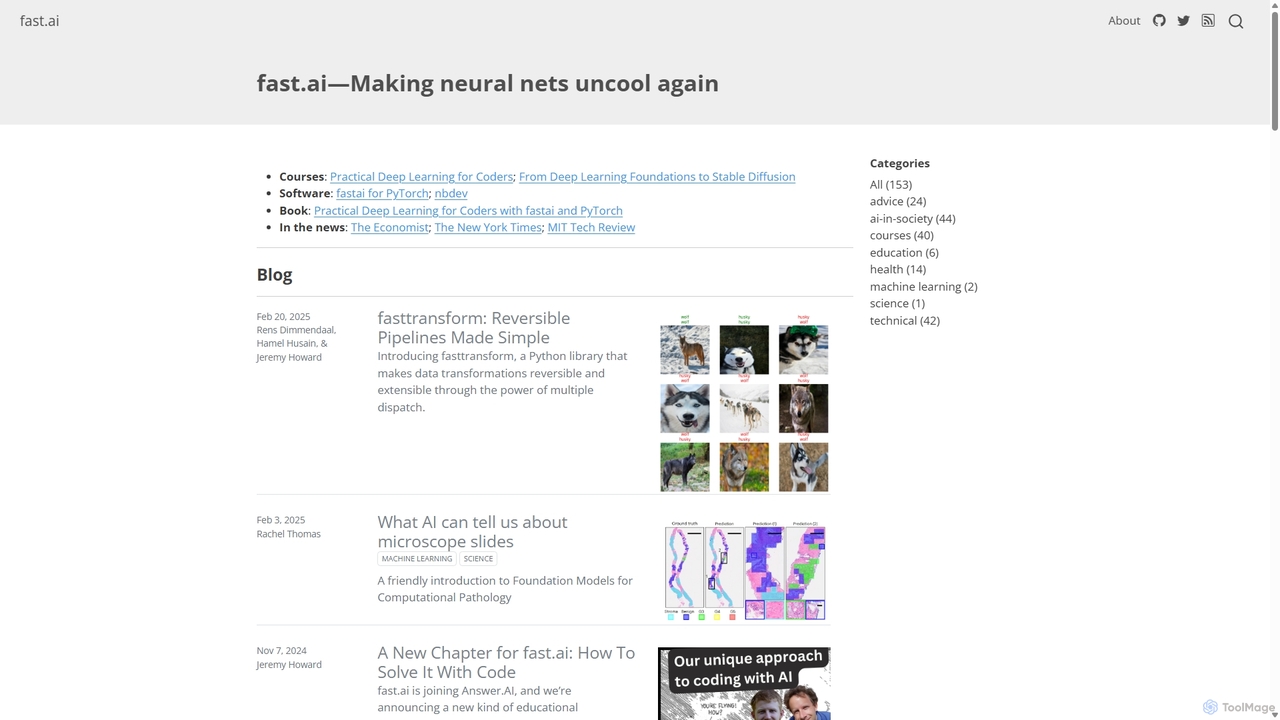
Py Produktübersicht
Py ist ein kuratiertes Online-Verzeichnis, das als umfassendes Tor zu den besten Python-Bibliotheken, KI-Frameworks und Entwicklerressourcen dient. Es hilft Benutzern, Tools zu erkunden, zu entdecken und zu finden, um ihre Machine-Learning- und KI-Projekte zu verbessern.
Detailed feature comparison
| Feature | Fast.ai | Py |
|---|---|---|
| Hauptkategorie | Maschinelles Lernen | Tool Discovery |
| Hinzugefügt | 2025-09-18 | 2025-11-18 |
| Preismodell | Kostenlos | Kostenlos |
| Offizielle Website | fast.ai | py.ai |
| Produkttyp | Website | Website |
| Performance data | ||
| Nutzerbewertung | Nicht verifiziert | Nicht verifiziert |
| Kommentare | 0 | 0 |
| Monatliche Besuche | 415K | 437 |
| Monatliches Wachstum | 3.8% | -72.9% |
| Favoriten | 153 | 109 |
| Details | Details ansehen | Details ansehen |
Fast.ai vs Py monthly traffic
Compare Fast.ai and Py by monthly reach, traffic trend, visit depth, top regions, and acquisition sources.
How to interpret the traffic data
In the Fast.ai vs Py monthly traffic comparison, Fast.ai currently shows 415K visits and Py shows 437; Fast.ai has about 949.7 times the visible traffic of Py, an absolute difference of about 414.6K visits. This reflects visible reach, not feature quality or paid users.
Both tools provide verified traffic details, so monthly trends, visit depth, regions, and acquisition sources can be compared on the same basis.
Fast.ai monthly traffic:
Latest traffic
Monthly traffic trend
- 2025/9: 428.4K Monatliche Besuche
- 2026/1: 417K Monatliche Besuche
- 2026/2: 396K Monatliche Besuche
- 2026/3: 428.7K Monatliche Besuche
- 2026/4: 400K Monatliche Besuche
- 2026/5: 415K Monatliche Besuche
Top-Regionen
Top 5 countries/regions
| Country/region | Percentage | Traffic |
|---|---|---|
| 🇺🇸United States | 47.6% | 197.6K |
| 🇮🇳India | 33.84% | 140.4K |
| 🇬🇧United Kingdom | 6.74% | 28K |
| 🇻🇳Vietnam | 6.4% | 26.6K |
| 🇨🇳China | 5.42% | 22.5K |
Traffic-Quellen
| Source type | Percentage | Traffic |
|---|---|---|
| Direkt | 82.3% | 341.6K |
| Verweis | 13.27% | 55.1K |
| 4.43% | 18.4K |
Suchbegriffe
Py monthly traffic:
Latest traffic
Monthly traffic trend
- 2026/2: 2.5K Monatliche Besuche
- 2026/3: 0 Monatliche Besuche
- 2026/4: 1.6K Monatliche Besuche
- 2026/5: 437 Monatliche Besuche
Suchbegriffe
Usage comparison
Compare the core capabilities of Fast.ai and Py
Fast.ai Core features
Py Core features
Use cases
Fast.ai Use cases
Py Use cases
Best suited roles
Fast.ai Best suited roles
Py Best suited roles
Fast.ai vs Py:In-depth comparison and selection guidance
First decide whether the products solve the same kind of need
This in-depth Fast.ai vs Py comparison uses only the product records, taxonomy, audience, traffic, and community signals available on this page. Fast.ai is primarily listed under “Maschinelles Lernen”, while Py is primarily listed under “Tool Discovery”, so the first decision is whether your actual task matches their recorded scope.
The structured fields currently show these decision-relevant differences: Primary category (Fast.ai: Maschinelles Lernen; Py: Tool Discovery); Monthly visits (Fast.ai: 415K; Py: 437); Monthly growth (Fast.ai: 3.8%; Py: -72.9%); Favorites (Fast.ai: 153; Py: 109); Website (Fast.ai: fast.ai; Py: py.ai). These facts are more useful for selection than brand visibility alone.
What market visibility and monthly traffic mean
In the Fast.ai vs Py monthly traffic comparison, Fast.ai currently shows 415K visits and Py shows 437; Fast.ai has about 949.7 times the visible traffic of Py, an absolute difference of about 414.6K visits. This reflects visible reach, not feature quality or paid users.
Both tools provide verified traffic details, so monthly trends, visit depth, regions, and acquisition sources can be compared on the same basis.
If public market visibility is an important first-pass criterion, investigate Fast.ai first. The final choice should still follow taxonomy, use case, and a real trial because higher traffic does not prove broader capabilities or better workflow fit.
Product positioning, use cases, and roles
Fast.ai and Py currently overlap in shared tags: Computer Vision, Datenwissenschaft, Deep Learning, Bildung, maschinelles Lernen, NLP und Python; shared roles: Datenwissenschaftler, Machine Learning Ingenieur, Softwareentwickler und Student. This can place both on the same shortlist, but it does not prove equal implementation, depth, or cost.
Fast.ai's unique categories/tags are Maschinelles Lernen, Bibliotheken und Frameworks, Programmierung, Entwicklerwerkzeuge, kostenlose Kurse, neuronale Netze, Open Source und PyTorch; Py's are Tool Discovery, Ressourcenverzeichnis, Lernressourcen, KI, Automatisierung, Entwicklung, Verzeichnis und Frameworks. These unique fields are the strongest differentiators: validate the product whose recorded scope matches the task instead of following traffic alone.
What ratings, comments, and favorites can tell you
Fast.ai has no verified rating, 0 comments, 153 favorites, and 138 likes;Py has no verified rating, 0 comments, 109 favorites, and 122 likes。
Neither product has enough rating or comment samples for a credible reputation ranking.
Selection guidance by actual need
When to evaluate Fast.ai first
Put Fast.ai on the priority trial list when the task aligns with “Maschinelles Lernen” and especially Maschinelles Lernen, Bibliotheken und Frameworks, Programmierung, Entwicklerwerkzeuge, kostenlose Kurse und neuronale Netze, or the users include KI-Entwickler, Datenanalyst und Forscher. This follows recorded positioning and does not imply unlisted capabilities are absent.
Fast.ai also currently records: pricing is free, product type is website, 415K verified monthly visits, no verified user rating. Verify any hard requirement around price, platform, or reach before trial, and do not let sparse review data substitute for testing.
When to evaluate Py first
Put Py on the priority trial list when the task aligns with “Tool Discovery” and especially Tool Discovery, Ressourcenverzeichnis, Lernressourcen, KI, Automatisierung und Entwicklung, or the users include KI-Forscher, Pädagoge und Python-Entwickler. This follows recorded positioning and does not imply unlisted capabilities are absent.
Py also currently records: pricing is free, product type is website, 437 verified monthly visits, no verified user rating. Verify any hard requirement around price, platform, or reach before trial, and do not let sparse review data substitute for testing.
How to validate the recommendation before deciding
The available data describes positioning, public visibility, and community signals, but it cannot prove output quality, speed, integration effort, privacy, or long-term cost in your workflow. Before deciding, run the same representative tasks in Fast.ai and Py, then record completion time, accuracy, manual corrections, and the real paid threshold. A like-for-like trial turns this comparison into a defensible adoption decision.
Vergleichs-FAQ
How should I choose between Fast.ai and Py?
Where does this comparison data come from?
What do unknown fields mean?
Related AI tools

DataCamp
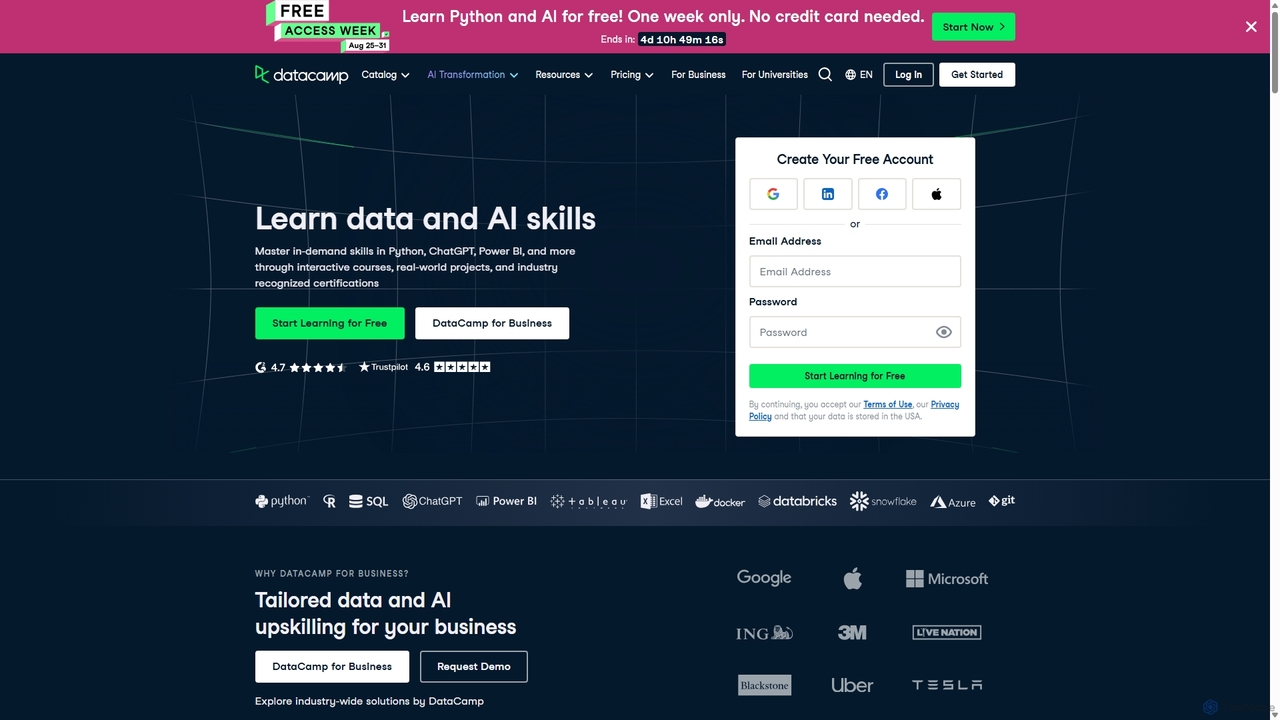
DataCamp ist eine interaktive Online-Lernplattform für Datenwissenschaft und KI. Sie bietet praxisnahe Kurse in Python, R, SQL, Power BI und mehr. Durch einen „Learning-by-Doing“-Ansatz mit In-Browser-Coding, realen Projekten und Karrierepfaden befähigt sie Einzelpersonen und Unternehmen, berufsrelevante Datenkompetenzen vom Anfänger- bis zum Expertenlevel aufzubauen.
Datenwissenschaft
Kaggle
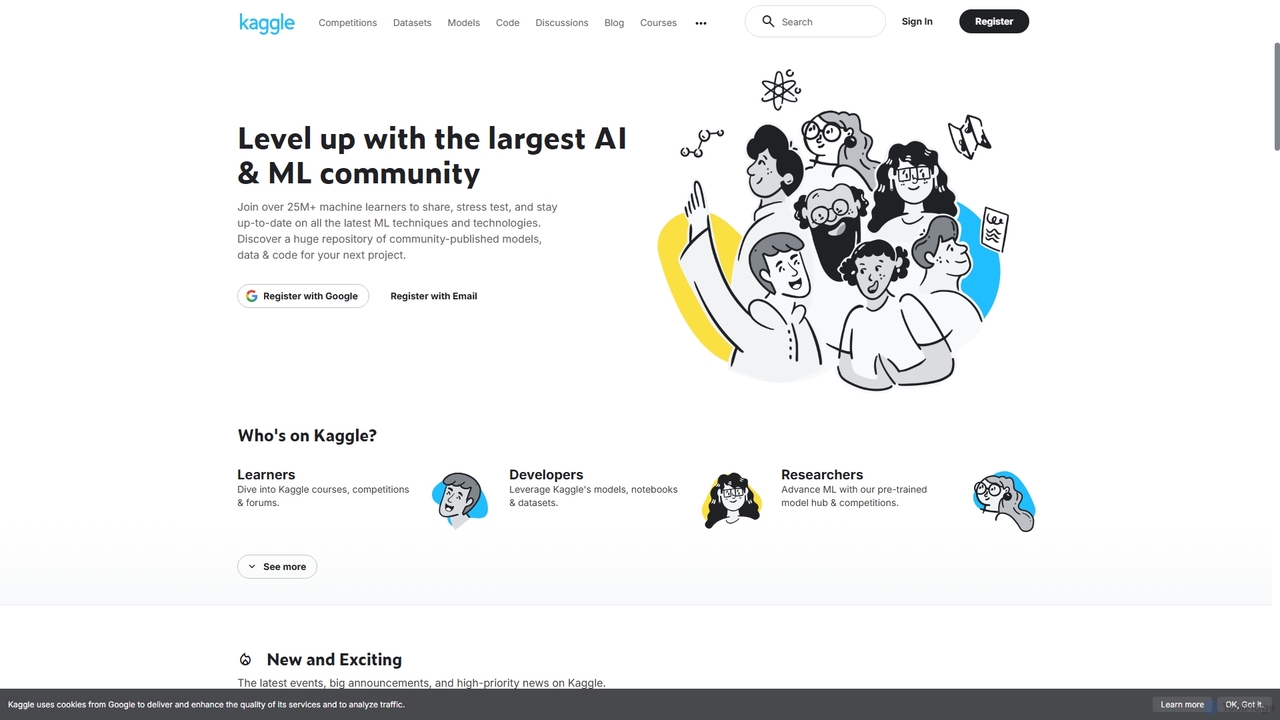
Kaggle ist die weltweit größte Online-Community für Datenwissenschaftler und Machine-Learning-Praktiker. Als Teil von Google bietet es eine Plattform zum Erkunden von Datensätzen, Erstellen von Modellen in einer webbasierten Umgebung, zur Teilnahme an Machine-Learning-Wettbewerben und zum Zugriff auf Bildungsressourcen. Es bietet kostenlosen Zugang zu leistungsstarken Rechenressourcen, einschließlich GPUs und TPUs, und ist damit ein unverzichtbares Werkzeug für Anfänger bis hin zu erfahrenen Experten in den Bereichen KI und Datenwissenschaft.
Datensätze
Metrics Help
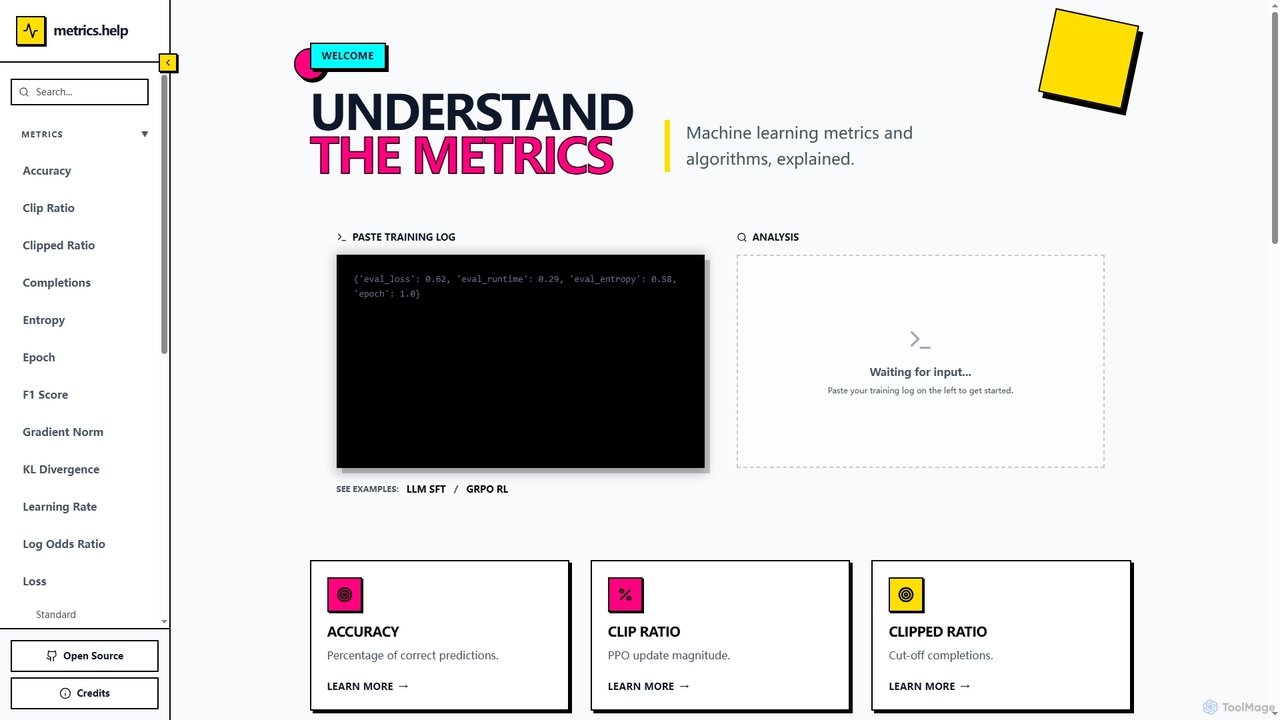
Metrics Help ist ein Open-Source-Webtool für Machine-Learning-Praktiker. Es fungiert als umfassender Leitfaden und interaktiver Analysator für ML-Trainingsmetriken. Benutzer können Trainingsprotokolle einfügen, um sofortige Erklärungen für Schlüsselmetriken wie Genauigkeit, Verlust und Perplexität zu erhalten, was die Analyse der Modellleistung und das Debugging unterstützt.
Modelltraining
Augmented Startups
Augmented Startups ist eine Online-KI-Universität, die praktische, projektbasierte Kurse für alle Fähigkeitsstufen anbietet. Sie ist auf fortgeschrittene Themen wie Computer Vision, Große Sprachmodelle (LLMs), Robotik und autonome Fahrzeuge spezialisiert. Die Plattform bietet umfassende Lernpfade mit Code, Datensätzen und Expertenunterstützung, um Studenten und Fachleuten zu helfen, reale KI-Anwendungen zu erstellen und die Lücke zwischen Theorie und praktischer Umsetzung zu schließen.
Code-Bibliotheken
AIDiscoveryBoards
AIDiscoveryBoards ist eine umfassende Online-Plattform, die Benutzern hilft, trendige KI-Tools zu entdecken, die neuesten KI-Prompts zu erkunden, bahnbrechende KI-Forschungspapiere zu vertiefen und kuratierte KI-Lernressourcen zu nutzen. Sie dient als zentrale Anlaufstelle, um über die sich schnell entwickelnde Landschaft der künstlichen Intelligenz auf dem Laufenden zu bleiben.
Werkzeugverzeichnis
TensorFlow
TensorFlow ist eine von Google entwickelte End-to-End-Open-Source-Plattform für maschinelles Lernen. Sie bietet ein umfassendes, flexibles Ökosystem aus Tools, Bibliotheken und Community-Ressourcen, mit dem Forscher und Entwickler ML-gestützte Anwendungen erstellen und bereitstellen können. Von Anfängern bis zu Experten bietet TensorFlow intuitive High-Level-APIs für den einfachen Modellaufbau und leistungsstarke Low-Level-APIs für fortgeschrittene Forschung, die eine Bereitstellung auf Servern, Edge-Geräten und in Browsern ermöglichen.
Frameworks
Prodigy
Prodigy ist ein skriptfähiges Annotationstool für KI, maschinelles Lernen und NLP, das für Entwickler konzipiert wurde. Es ermöglicht die schnelle Erstellung hochwertiger Trainings- und Evaluierungsdaten durch modellgestützte, Human-in-the-Loop-Workflows. Es läuft auf Ihrer eigenen Infrastruktur und gewährleistet vollständige Datenprivatsphäre und Kontrolle.
Annotation
AIWorldNext
AIWorldNext ist ein führendes globales Zentrum für künstliche Intelligenz und Robotik, das eine umfassende Plattform für Nachrichten, Expertenblogs, Stellenangebote, AI-Tool-Verzeichnisse und Community-Engagement bietet. Es dient als wichtige Ressource für Fachleute, Forscher und Enthusiasten, um im sich schnell entwickelnden AI-Bereich informiert und vernetzt zu bleiben.
Jobbörse
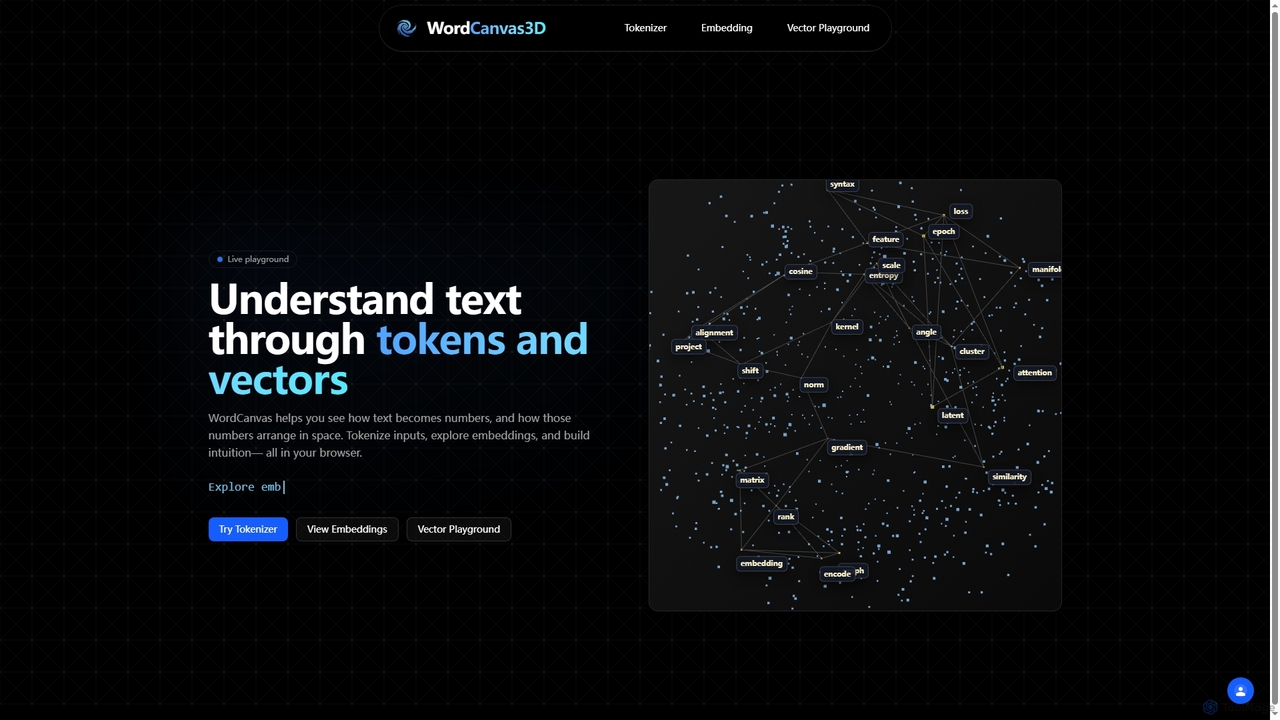
WordCanvas3D
WordCanvas3D ist ein interaktives, webbasiertes Tool zur Visualisierung und zum Verständnis grundlegender Konzepte der natürlichen Sprachverarbeitung wie Text-Tokenisierung, Wort-Embeddings und Vektorrechnung. Es bietet einen Live-Spielplatz, um zu erkunden, wie Text in numerische Darstellungen und deren räumliche Beziehungen umgewandelt wird.
Natürliche Sprachverarbeitung
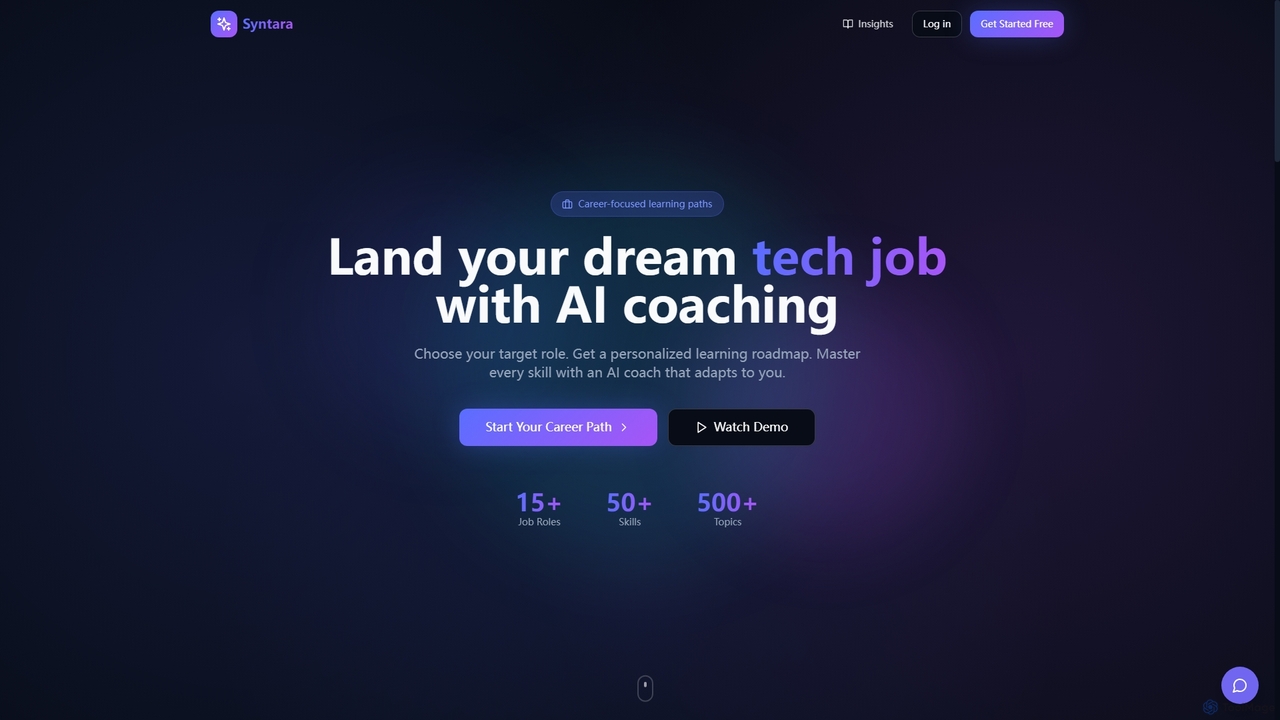
Syntara
Syntara ist eine KI-gestützte Lernplattform, die entwickelt wurde, um Tech-Karrieren zu beschleunigen. Sie bietet personalisierte Lernpfade, adaptives KI-Coaching und strukturierte Skill-Pfade, um Einzelpersonen dabei zu helfen, gefragte Tech-Fähigkeiten wie KI/ML, Prompt Engineering und Datenwissenschaft zu meistern und letztendlich ihren Traumjob zu finden.
Machine Learning Education
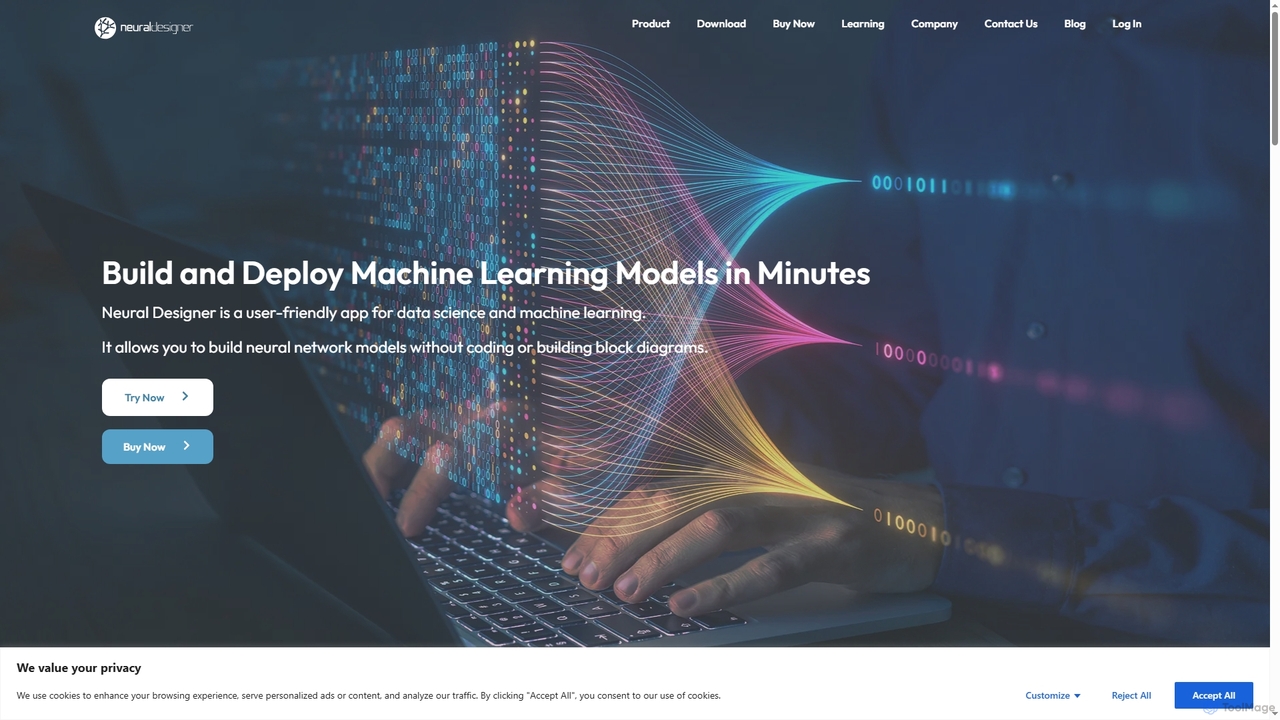
Neural Designer
Neural Designer ist eine benutzerfreundliche No-Code-Plattform für maschinelles Lernen, die sich auf neuronale Netze spezialisiert hat. Sie ermöglicht es Benutzern, fortschrittliche KI-Modelle für Approximation, Klassifizierung und Prognosen ohne Codierung oder komplexe Blockdiagramme zu erstellen, zu trainieren und bereitzustellen. Für Datenwissenschaftler und Organisationen entwickelt, bietet sie hohe Leistung, Energieeffizienz und überlegene Genauigkeit in verschiedenen Branchen.
Prädiktive Analysen
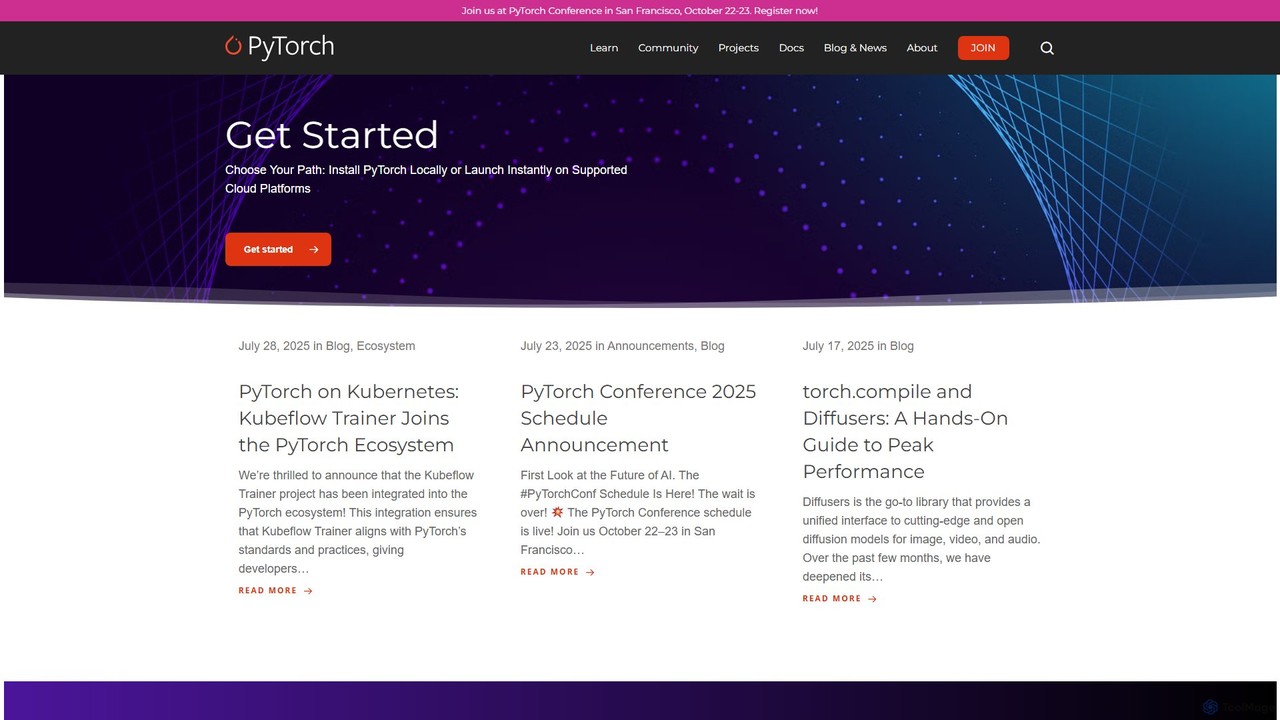
PyTorch
PyTorch ist ein Open-Source-Framework für maschinelles Lernen, das auf der Torch-Bibliothek basiert und für Anwendungen wie Computer Vision und die Verarbeitung natürlicher Sprache verwendet wird. Es bietet eine flexible, Python-first-Umgebung, die den Weg vom Forschungsprototypen zur Produktionsbereitstellung beschleunigt.
Tiefes Lernen
AIGoMarket
AIGoMarket ist eine Edge AI Foundry und ein Marktplatz, der darauf abzielt, die Edge AI-Entwicklung zu demokratisieren. Er ermöglicht es Entwicklern, ihre optimierten KI-Modelle hochzuladen und zu monetarisieren, während er Entwicklern eine Plattform bietet, um leistungsstarke KI-Lösungen für verschiedene Edge-Geräte und -Anwendungen zu entdecken, zu lizenzieren und bereitzustellen.
Model Marketplace
AI News Hub
AI News Hub ist eine umfassende Plattform, die Echtzeit-KI-Ankündigungen, kuratierte Blog-Updates zu agentischer KI, RAG und Produktionstools bereitstellt. Sie bietet einen personalisierten Feed, Lesezeichenfunktionen und eine reichhaltige Sammlung von Lernressourcen, einschließlich Roadmaps, Kursen und Videos, um Entwickler und Enthusiasten in der sich schnell entwickelnden KI-Landschaft auf dem Laufenden und kompetent zu halten.
Aggregation
Experiments with Google
Eine kuratierte Online-Galerie, die Tausende von kreativen und innovativen Experimenten zeigt, die seit 2009 mit Google-Technologien erstellt wurden. Sie dient als Inspirationsquelle für Entwickler, Designer und Kreative und erforscht die Schnittstelle von Technologie, Kunst und Kultur durch KI, AR, WebXR und mehr.
Generative Kunst