
ToolMage
Anmelden
Runstack
Sales Automation · 405 monatliche besuche

Runstack ist eine innovative KI-Agentenplattform, die Unternehmen befähigt, mühelos benutzerdefinierte KI-Assistenten zu erstellen. Durch die einfache Beschreibung von Aufgaben in einfachem Englisch können Benutzer intelligente Agenten einsetzen, um Workflows zu automatisieren, sich mit über 50 Geschäftstools zu integrieren und komplexe Operationen in verschiedenen Abteilungen, von Vertrieb und Marketing bis hin zu Finanzen und Projektmanagement, zu handhaben.

VS
Yansu
KI-Assistent · 399 monatliche besuche

Yansu ist ein proaktiver KI-Anwendungsbaukasten, der Ihre Arbeitsgewohnheiten beobichtet und ohne Aufforderung oder Programmierung automatisch benutzerdefinierte Tools und Workflows erstellt. Es läuft leise im Hintergrund, um die Produktivität zu steigern.

Runstack vs Yansu: Preise, Funktionen und Traffic

Vergleiche Runstack und Yansu nach Positionierung, Preis, Funktionen, Traffic und Nutzerfeedback.

Aktualisiert 05.08.2026

Produktübersicht

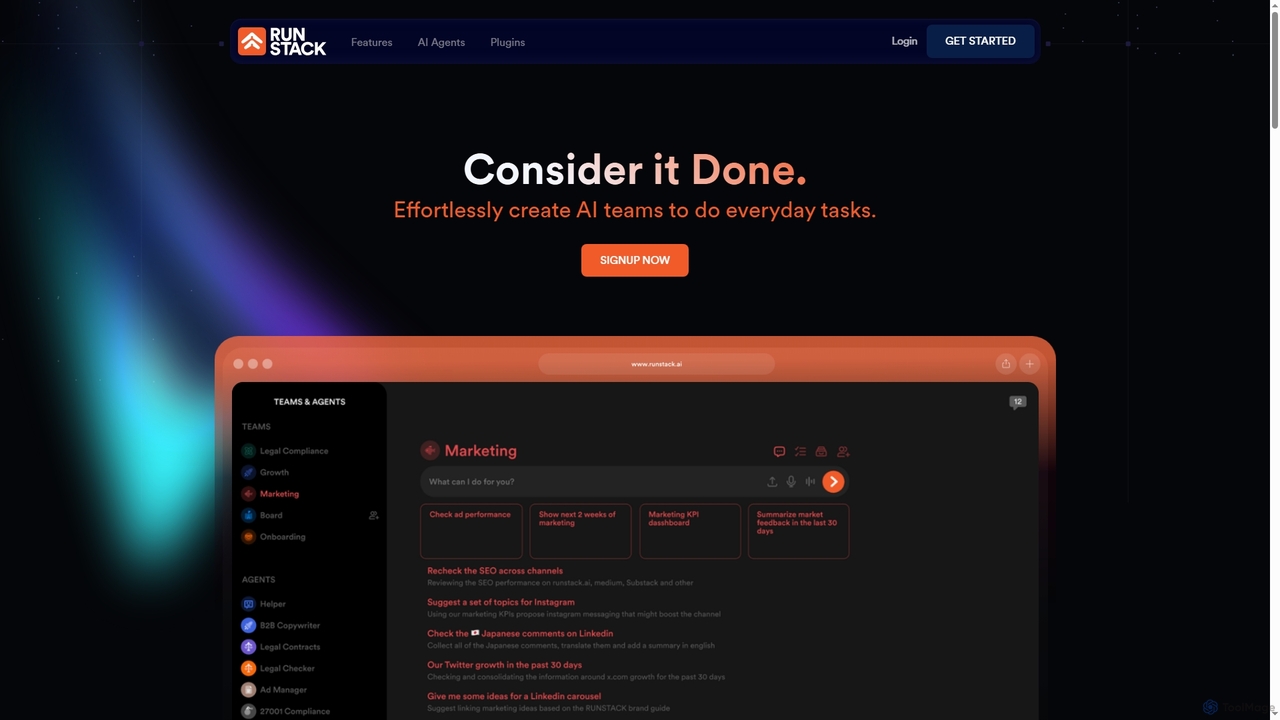
Runstack Produktübersicht

Runstack ist eine innovative KI-Agentenplattform, die Unternehmen befähigt, mühelos benutzerdefinierte KI-Assistenten zu erstellen. Durch die einfache Beschreibung von Aufgaben in einfachem Englisch können Benutzer intelligente Agenten einsetzen, um Workflows zu automatisieren, sich mit über 50 Geschäftstools zu integrieren und komplexe Operationen in verschiedenen Abteilungen, von Vertrieb und Marketing bis hin zu Finanzen und Projektmanagement, zu handhaben.
Preview

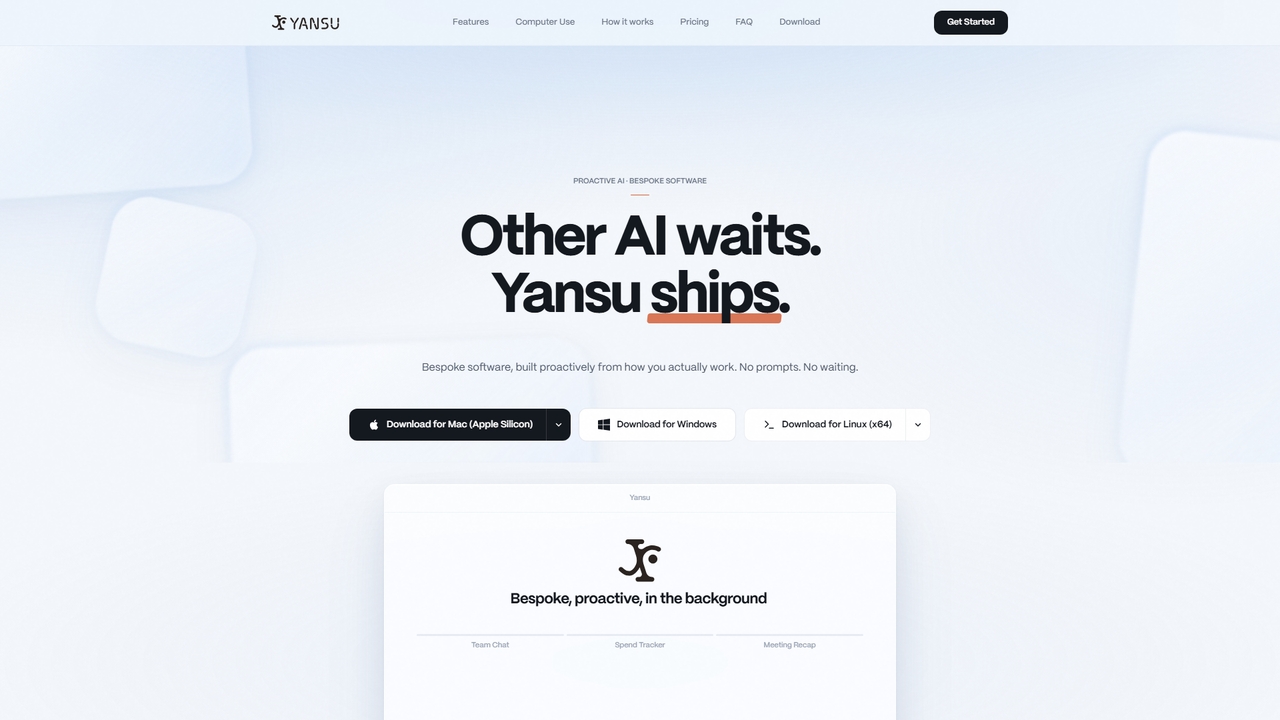
Yansu Produktübersicht

Yansu ist ein proaktiver KI-Anwendungsbaukasten, der Ihre Arbeitsgewohnheiten beobichtet und ohne Aufforderung oder Programmierung automatisch benutzerdefinierte Tools und Workflows erstellt. Es läuft leise im Hintergrund, um die Produktivität zu steigern.

Preview

Detailed feature comparison

FeatureRunstackYansu
HauptkategorieSales AutomationKI-Assistent
Hinzugefügt2025-12-162026-05-26
PreismodellNicht verifiziertFreemium
Offizielle Websitewww.runstack.aiyansu.app
ProdukttypWebsiteApp
Performance data
NutzerbewertungNicht verifiziertNicht verifiziert
Kommentare00
Monatliche Besuche405399
Monatliches Wachstum-70.5%-79.6%
Favoriten634
DetailsDetails ansehenDetails ansehen

Runstack vs Yansu monthly traffic

Compare Runstack and Yansu by monthly reach, traffic trend, visit depth, top regions, and acquisition sources.

How to interpret the traffic data

In the Runstack vs Yansu monthly traffic comparison, Runstack currently shows 405 visits and Yansu shows 399; the two products have similar visible traffic, an absolute difference of about 6 visits. This reflects visible reach, not feature quality or paid users.

Both tools provide verified traffic details, so monthly trends, visit depth, regions, and acquisition sources can be compared on the same basis.

Runstack monthly traffic:

Latest traffic

Monatliche Besuche
405
Ø Besuchsdauer
0:00
Seiten pro Besuch
1.07
Absprungrate
36.75%
Data updated 2026-06-15

Monthly traffic trend

  • 2026/1: 72 Monatliche Besuche
  • 2026/2: 367 Monatliche Besuche
  • 2026/3: 2.5K Monatliche Besuche
  • 2026/4: 1.4K Monatliche Besuche
  • 2026/5: 405 Monatliche Besuche

Top-Regionen

Top 5 countries/regions
Country/regionPercentageTraffic
🇧🇷Brazil58.97%239
🇪🇬Egypt27.17%110
🇹🇭Thailand13.86%56

Suchbegriffe

runstackscalewayscaleway aiscaleway sasstack.ai discord community

Yansu monthly traffic:

Latest traffic

Monatliche Besuche
399
Ø Besuchsdauer
1:01
Seiten pro Besuch
2.49
Absprungrate
33.23%
Data updated 2026-06-15

Monthly traffic trend

  • 2026/2: 0 Monatliche Besuche
  • 2026/3: 673 Monatliche Besuche
  • 2026/4: 2K Monatliche Besuche
  • 2026/5: 399 Monatliche Besuche

Top-Regionen

Top 5 countries/regions
Country/regionPercentageTraffic
🇺🇸United States100%399

Suchbegriffe

yansuyansu ai appyansu app
Traffic-based selection guidance: The current traffic scope is not sufficient for a reliable product ranking. Treat monthly visits as a market-interest signal, then decide using taxonomy, use cases, pricing, and a like-for-like trial rather than reading exposure as product capability.

Usage comparison

Compare the core capabilities of Runstack and Yansu

Runstack Core features

Workflow-Automatisierung
Sales Automation
Digitales Marketing
No Code Development

Yansu Core features

Workflow-Automatisierung
KI-Assistent
App Builders

Use cases

Runstack Use cases

Workflow-Automatisierung
KI-Agenten
Geschäftsautomatisierung
CRM-Automatisierung
Maßgeschneiderte KI
Datenmanagement
Unternehmens-KI
Integrationen
intelligent assistants
Marketing-Automatisierung
natürliche Sprachverarbeitung
No-Code KI
Produktivität
Projektmanagement
Sichere KI
Aufgabenautomatisierung

Yansu Use cases

Workflow-Automatisierung
KI-App-Builder
KI-Assistent
background AI
Kundenspezifische Software
Desktop-Automatisierung
Isoform
no-code tool
Proaktive KI
Produktivitätstool

Best suited roles

Runstack Best suited roles

Datenanalyst
Unternehmer
Marketing Manager
Betriebsleiter
Produktmanager
Projektmanager
Softwareentwickler
Buchhalter
Geschäftsinhaber
Kundensupport
Jurist
Vertriebsmitarbeiter

Yansu Best suited roles

Datenanalyst
Unternehmer
Marketing Manager
Betriebsleiter
Produktmanager
Projektmanager
Softwareentwickler
Business Analyst
Teamleiter

Runstack vs Yansu:In-depth comparison and selection guidance

First decide whether the products solve the same kind of need

This in-depth Runstack vs Yansu comparison uses only the product records, taxonomy, audience, traffic, and community signals available on this page. Runstack is primarily listed under “Sales Automation”, while Yansu is primarily listed under “KI-Assistent”, so the first decision is whether your actual task matches their recorded scope.

The structured fields currently show these decision-relevant differences: Primary category (Runstack: Sales Automation; Yansu: KI-Assistent); Product type (Runstack: Website; Yansu: App); Pricing (Runstack: Not disclosed; Yansu: Freemium); Monthly visits (Runstack: 405; Yansu: 399); Monthly growth (Runstack: -70.5%; Yansu: -79.6%). These facts are more useful for selection than brand visibility alone.

What market visibility and monthly traffic mean

In the Runstack vs Yansu monthly traffic comparison, Runstack currently shows 405 visits and Yansu shows 399; the two products have similar visible traffic, an absolute difference of about 6 visits. This reflects visible reach, not feature quality or paid users.

Both tools provide verified traffic details, so monthly trends, visit depth, regions, and acquisition sources can be compared on the same basis.

The current traffic scope is not sufficient for a reliable product ranking. Treat monthly visits as a market-interest signal, then decide using taxonomy, use cases, pricing, and a like-for-like trial rather than reading exposure as product capability.

Product positioning, use cases, and roles

Runstack and Yansu currently overlap in shared categories: Workflow-Automatisierung; shared tags: Workflow-Automatisierung; shared roles: Datenanalyst, Unternehmer, Marketing Manager, Betriebsleiter, Produktmanager, Projektmanager und Softwareentwickler. This can place both on the same shortlist, but it does not prove equal implementation, depth, or cost.

Runstack's unique categories/tags are Sales Automation, Digitales Marketing, No Code Development, KI-Agenten, Geschäftsautomatisierung, CRM-Automatisierung, Maßgeschneiderte KI und Datenmanagement; Yansu's are KI-Assistent, App Builders, KI-App-Builder, background AI, Kundenspezifische Software, Desktop-Automatisierung, Isoform und no-code tool. These unique fields are the strongest differentiators: validate the product whose recorded scope matches the task instead of following traffic alone.

What ratings, comments, and favorites can tell you

Runstack has no verified rating, 0 comments, 63 favorites, and 67 likes;Yansu has no verified rating, 0 comments, 4 favorites, and 5 likes。

Neither product has enough rating or comment samples for a credible reputation ranking.

Selection guidance by actual need

When to evaluate Runstack first

Put Runstack on the priority trial list when the task aligns with “Sales Automation” and especially Sales Automation, Digitales Marketing, No Code Development, KI-Agenten, Geschäftsautomatisierung und CRM-Automatisierung, or the users include Buchhalter, Geschäftsinhaber, Kundensupport und Jurist. This follows recorded positioning and does not imply unlisted capabilities are absent.

Runstack also currently records: pricing is not verified, product type is website, 405 verified monthly visits, no verified user rating. Verify any hard requirement around price, platform, or reach before trial, and do not let sparse review data substitute for testing.

When to evaluate Yansu first

Put Yansu on the priority trial list when the task aligns with “KI-Assistent” and especially KI-Assistent, App Builders, KI-App-Builder, background AI, Kundenspezifische Software und Desktop-Automatisierung, or the users include Business Analyst und Teamleiter. This follows recorded positioning and does not imply unlisted capabilities are absent.

Yansu also currently records: pricing is freemium, product type is app, 399 verified monthly visits, no verified user rating. Verify any hard requirement around price, platform, or reach before trial, and do not let sparse review data substitute for testing.

How to validate the recommendation before deciding

The available data describes positioning, public visibility, and community signals, but it cannot prove output quality, speed, integration effort, privacy, or long-term cost in your workflow. Before deciding, run the same representative tasks in Runstack and Yansu, then record completion time, accuracy, manual corrections, and the real paid threshold. A like-for-like trial turns this comparison into a defensible adoption decision.

Vergleichs-FAQ

How should I choose between Runstack and Yansu?
Compare positioning, pricing, taxonomy, and traffic maturity, then verify the latest details on each official website.
Where does this comparison data come from?
The factual baseline is derived from product, taxonomy, traffic, and community data. Reviewed editorial conclusions show their source and verification date.
What do unknown fields mean?
Unknown means there is not enough reliable evidence; the page does not fill gaps with assumptions.