
Marble
Marble is an innovative AI tool that empowers artists, designers, and enthusiasts to create, edit, and share high-fidelity, …
Marble is an innovative AI tool that empowers artists, designers, and enthusiasts to create, edit, and share high-fidelity, persistent 3D worlds from simple prompts. It transforms text, images, videos, or 3D structures into immersive virtual environments, fostering creativity and exploration within a vibrant community.
Fuser
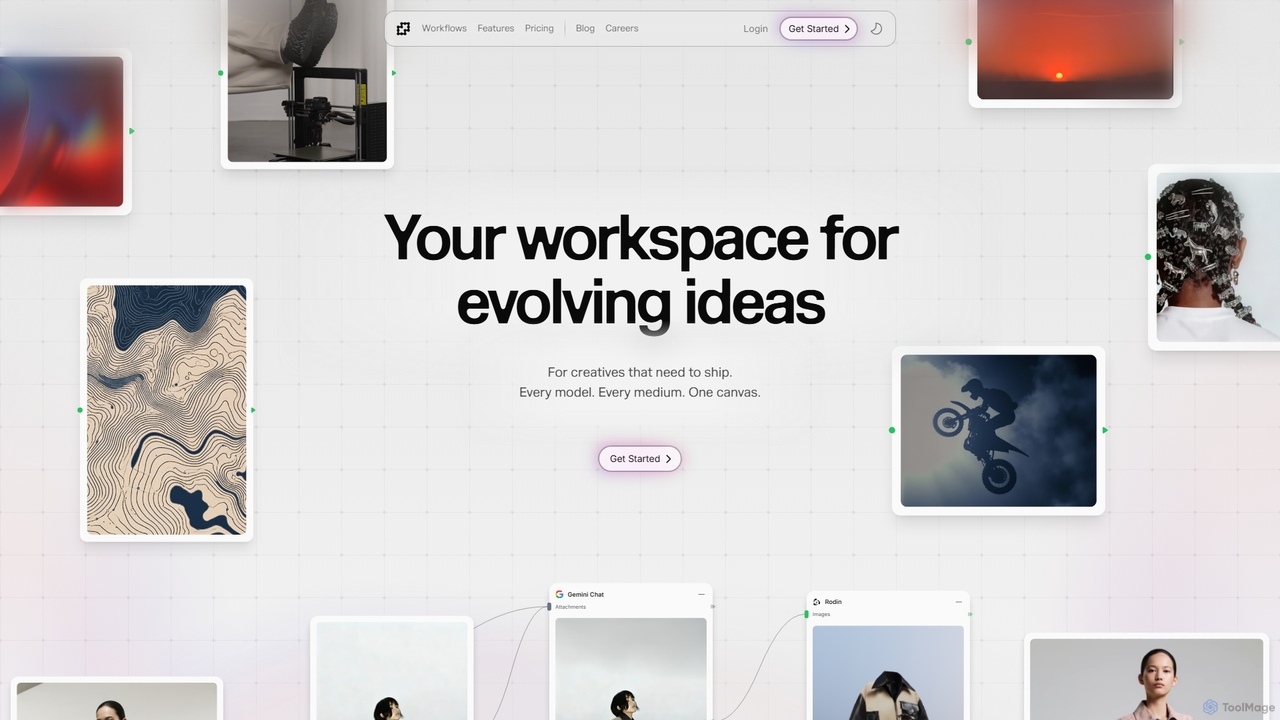
Fuser is an innovative AI workspace designed for creatives to evolve ideas across various mediums. It offers a …
Fuser is an innovative AI workspace designed for creatives to evolve ideas across various mediums. It offers a unified canvas to integrate over 160 models and 300 LLMs, facilitating iterative design for text, images, videos, audio, and 3D. Emphasizing process over output, Fuser empowers users to build tailored workflows, manage assets, and connect API keys for seamless creative exploration and production.
AI Architectures
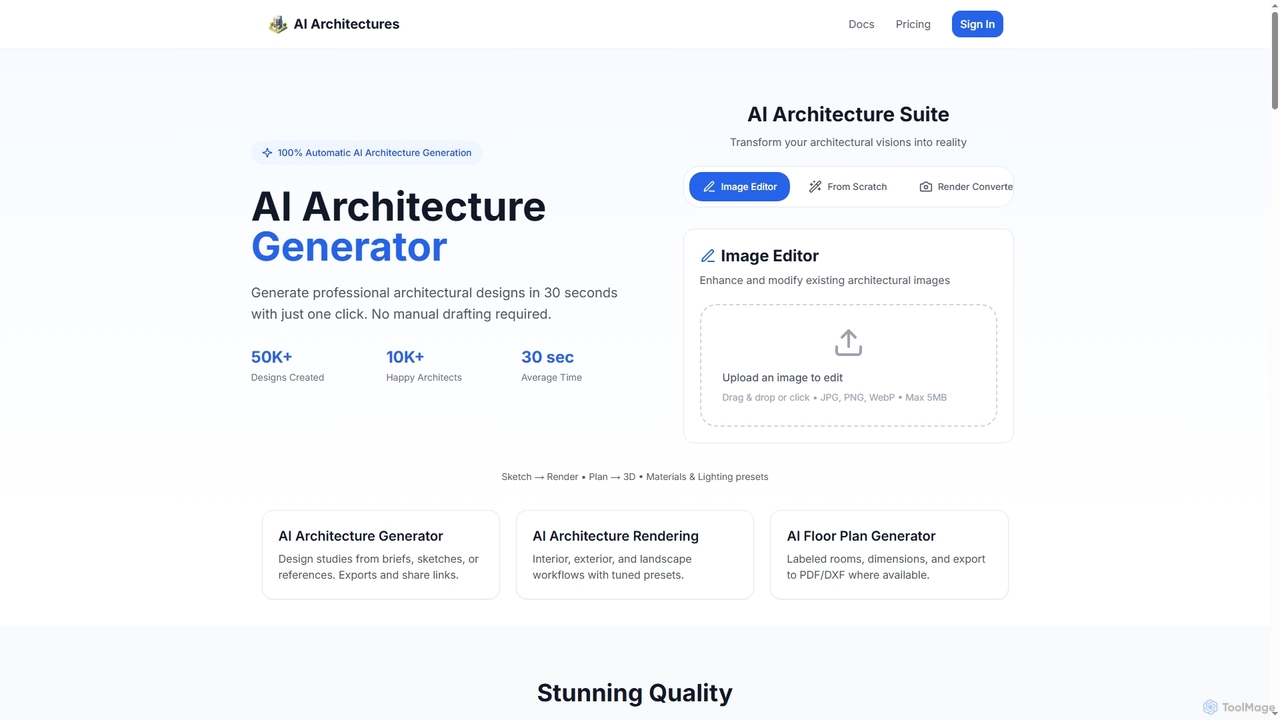
AI Architectures is an advanced AI platform designed for architects and designers, enabling 100% automatic generation of professional …
AI Architectures is an advanced AI platform designed for architects and designers, enabling 100% automatic generation of professional architectural designs, floor plans, and photorealistic renders in seconds. It transforms sketches, briefs, or existing images into stunning visualizations for various architectural scenarios.

blackshark.ai
blackshark.ai is an AI-powered Visual Earth Operating System (VEOS) that transforms satellite, aerial, and drone imagery into actionable …
blackshark.ai is an AI-powered Visual Earth Operating System (VEOS) that transforms satellite, aerial, and drone imagery into actionable 2D/3D geospatial intelligence and realistic simulations. It empowers analysts to rapidly train custom AI models for detection, classification, and monitoring, serving the defense, infrastructure, and autonomy sectors with unprecedented speed and flexibility.
About 3D & Design
3D & Design are AI-powered tools that revolutionize the creation, modification, and optimization of visual content across two-dimensional and three-dimensional spaces. These tools leverage advanced machine learning algorithms, including generative AI, to automate complex design tasks, accelerate workflows, and unlock new creative possibilities. They empower designers, artists, architects, and engineers to generate models, textures, and entire scenes with unprecedented speed and precision, transforming traditional design processes.
Core Features
- Generative 3D Modeling: Automatically create complex 3D models from text prompts, sketches, or existing assets.
- Intelligent Texturing & Material Generation: Apply realistic textures and materials, or generate new ones based on visual input or descriptions.
- Automated Rendering & Optimization: Enhance rendering quality, optimize lighting, and accelerate rendering times using AI algorithms.
- Design Style Transfer: Apply specific artistic styles or design aesthetics to existing 2D images or 3D models.
- Layout & Composition Assistance: AI-driven suggestions for optimal visual arrangement and composition in 2D and 3D scenes.
Use Cases
These tools are widely adopted in industries requiring high-fidelity visual content and rapid iteration. From game development studios accelerating asset creation to architectural firms visualizing complex structures, and product designers prototyping new concepts, AI 3D & Design tools streamline demanding visual workflows. They also assist marketing teams in generating diverse advertising creatives and animators in automating character rigging and motion.
How to Choose
When selecting AI 3D & Design tools, consider the specific design tasks you need to automate (e.g., modeling, texturing, rendering). Evaluate the tool's integration capabilities with your existing software ecosystem (e.g., Blender, Unity, Adobe Creative Suite). Assess the quality and fidelity of the AI-generated output, and compare pricing models based on usage or subscription. Finally, consider the learning curve and available community support for efficient adoption.
3D & DesignUse Cases
Rapid Prototyping for Product Design
Product designers can leverage AI 3D & Design tools to quickly generate multiple design iterations from initial concepts or textual descriptions. This allows for faster visualization of product variations, material simulations, and ergonomic assessments, significantly reducing the time and cost associated with traditional physical prototyping. Engineers can also use these tools for early-stage design validation and optimization.
Architectural Visualization & Interior Design
Architects and interior designers utilize AI to transform 2D floor plans or conceptual sketches into detailed 3D models and realistic renderings. AI can automatically populate spaces with furniture, suggest optimal lighting, and apply various material finishes, enabling clients to visualize projects with high fidelity before construction begins. This accelerates client feedback cycles and design approval.
Game Asset Creation & Environment Design
Game developers employ AI 3D & Design tools to rapidly generate diverse game assets, including characters, props, and environmental elements. From creating unique textures to generating entire landscapes based on simple prompts, AI streamlines the labor-intensive process of asset production. This allows artists to focus on creative refinement rather than repetitive modeling tasks, speeding up game development cycles.
Marketing & Advertising Visual Content Generation
Marketing professionals and advertisers use AI 3D & Design tools to create compelling visual content for campaigns. This includes generating high-quality product renders for e-commerce, designing engaging social media graphics, or producing short animated advertisements. AI enables the rapid creation of numerous visual variations tailored for different platforms and target audiences, enhancing campaign effectiveness.
Fashion Design & Virtual Apparel Creation
Fashion designers can utilize AI 3D & Design tools to visualize new apparel collections in a virtual environment. These tools allow for the rapid creation of garment prototypes, simulation of fabric drapes, and application of various patterns and textures. This reduces the need for physical samples, accelerates design iterations, and facilitates virtual try-on experiences for customers, revolutionizing the design-to-market process.
Industrial Design & Engineering Simulation
Industrial designers and engineers apply AI 3D & Design tools for complex part design, assembly visualization, and early-stage performance simulation. AI can suggest optimized geometries for manufacturing, analyze structural integrity, and predict material behavior under stress. This integration helps in identifying potential design flaws early, improving product functionality, and reducing development risks in fields like automotive and aerospace.