Seekho AI
Seekho AI is an innovative tool that transforms various content formats, such as YouTube videos, PDFs, and articles, …
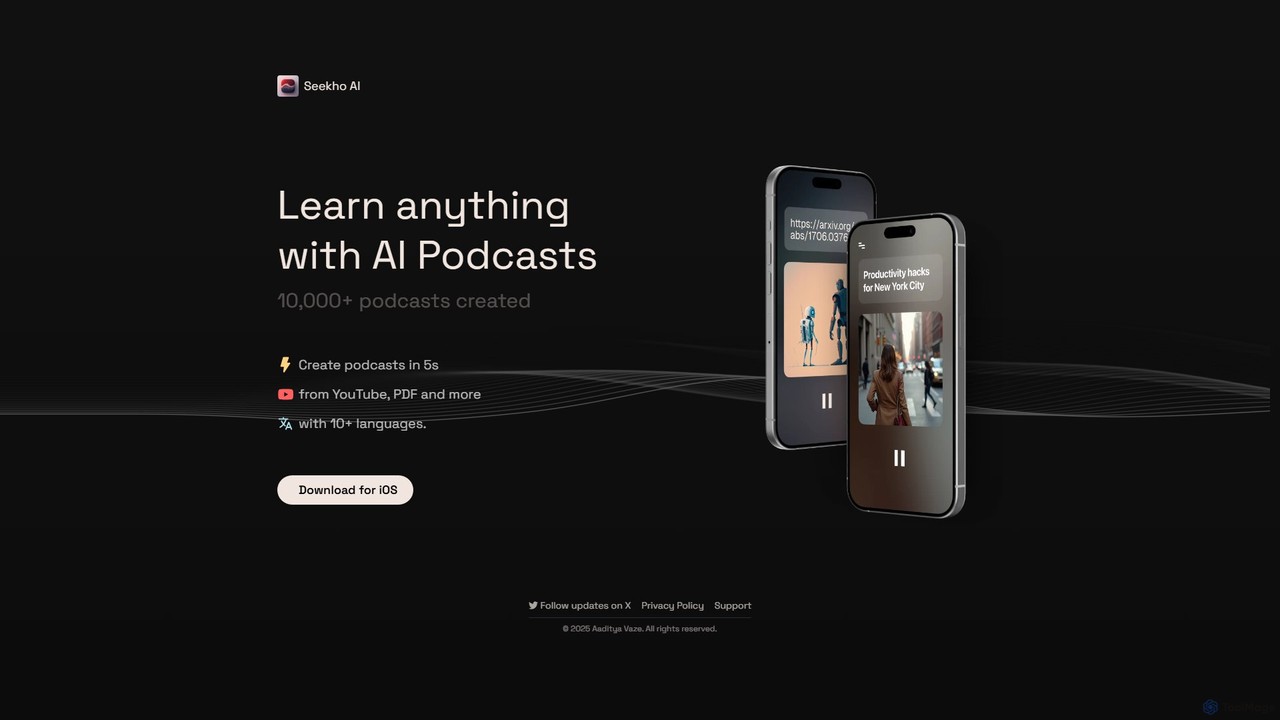
Seekho AI is an innovative tool that transforms various content formats, such as YouTube videos, PDFs, and articles, into engaging AI-generated podcasts. It allows users to learn anything on the go by converting written or visual material into audio content in over 10 languages, all within seconds.
About Repurposing
Repurposing tools are AI-powered solutions designed to transform existing content into various new formats, maximizing its reach and value. These tools leverage natural language processing and media generation AI to analyze original content and adapt it for different platforms and audiences. By automating the conversion of long-form articles into social media posts, videos into blog summaries, or podcasts into infographics, they significantly enhance content efficiency within the broader Content Creation workflow.
Core Features
- Format Transformation: Automatically converts content between text, audio, and video formats (e.g., blog to script, podcast to article).
- Content Summarization: Condenses lengthy content into concise summaries, bullet points, or key takeaways for quick consumption.
- Platform Adaptation: Adjusts content length, tone, and style to suit specific social media platforms, email newsletters, or website sections.
- Multi-Language Localization: Translates and adapts repurposed content for global audiences, expanding market reach.
- Asset Extraction: Identifies and extracts key quotes, images, or video clips from source material for standalone use.
Use Cases
Content marketers and creators frequently use repurposing tools to extend the lifespan and impact of their work. For instance, a marketing team can transform a detailed webinar recording into a series of short social media video clips, a comprehensive blog post, and an email newsletter summary, all from a single source. This approach ensures consistent messaging across channels and caters to diverse audience preferences without creating new content from scratch.
How to Choose
When selecting an AI repurposing tool, consider its supported input and output formats, ensuring it aligns with your content strategy. Evaluate the quality and accuracy of its AI-driven transformations, especially for summarization and style adaptation. Look for features like multi-language support, integration with existing content management systems, and the ability to customize output parameters (e.g., length, tone). Finally, assess the user interface for ease of use and the overall cost-effectiveness for your content volume.
RepurposingUse Cases
Transforming Webinars into Multi-Format Content
A B2B marketing team records a 60-minute webinar. Using a repurposing tool, they upload the video and automatically generate a detailed blog post, a concise email newsletter summary, 10-15 short social media video clips with captions, and a series of engaging quote graphics. This allows them to distribute valuable insights across LinkedIn, Twitter, email, and their blog, reaching different audience segments effectively and maximizing the ROI of the original event.
Converting Long-Form Articles into Social Media Campaigns
A content creator publishes an in-depth research article on their website. They utilize an AI repurposing tool to break down the article into 5-7 distinct social media posts, each highlighting a key finding or tip. The tool also suggests relevant hashtags and generates accompanying visuals or short video scripts, enabling the creator to maintain an active social media presence and drive traffic back to the original article without manual content fragmentation.
Adapting Podcasts for Blog Posts and Transcripts
A podcaster releases weekly episodes. Instead of manually transcribing and summarizing, they feed the audio files into a repurposing tool. The tool automatically generates a full transcript for accessibility and SEO, extracts key discussion points into a structured blog post, and even pulls out compelling soundbites for promotional audiograms. This significantly reduces post-production time and expands the podcast's discoverability through text-based search engines.
Creating Short-Form Video from Existing Long Videos
A brand has a library of long-form YouTube tutorials and product demos. An AI repurposing tool helps them identify and extract 15-30 second highlight clips from these videos, automatically adding captions and optimizing them for TikTok, Instagram Reels, and YouTube Shorts. This strategy allows the brand to tap into new audiences on short-form video platforms and drive engagement with existing valuable content.
Generating Email Sequences from Ebooks or Whitepapers
A company publishes a comprehensive ebook. To nurture leads, they use a repurposing tool to distill the ebook's chapters into a series of 5-7 targeted email newsletters. Each email focuses on a specific topic from the ebook, providing value and encouraging recipients to download the full resource. This automates the creation of a drip campaign, saving marketing teams hours of manual writing.
Localizing Content for International Markets
An e-commerce business wants to expand into new language markets. They have product descriptions and marketing copy in English. A repurposing tool can take these existing texts, translate them accurately into multiple target languages (e.g., Spanish, German, Japanese), and adapt the tone and cultural nuances for each region. This ensures consistent brand messaging globally while significantly accelerating market entry and reducing translation costs.