Tikpal
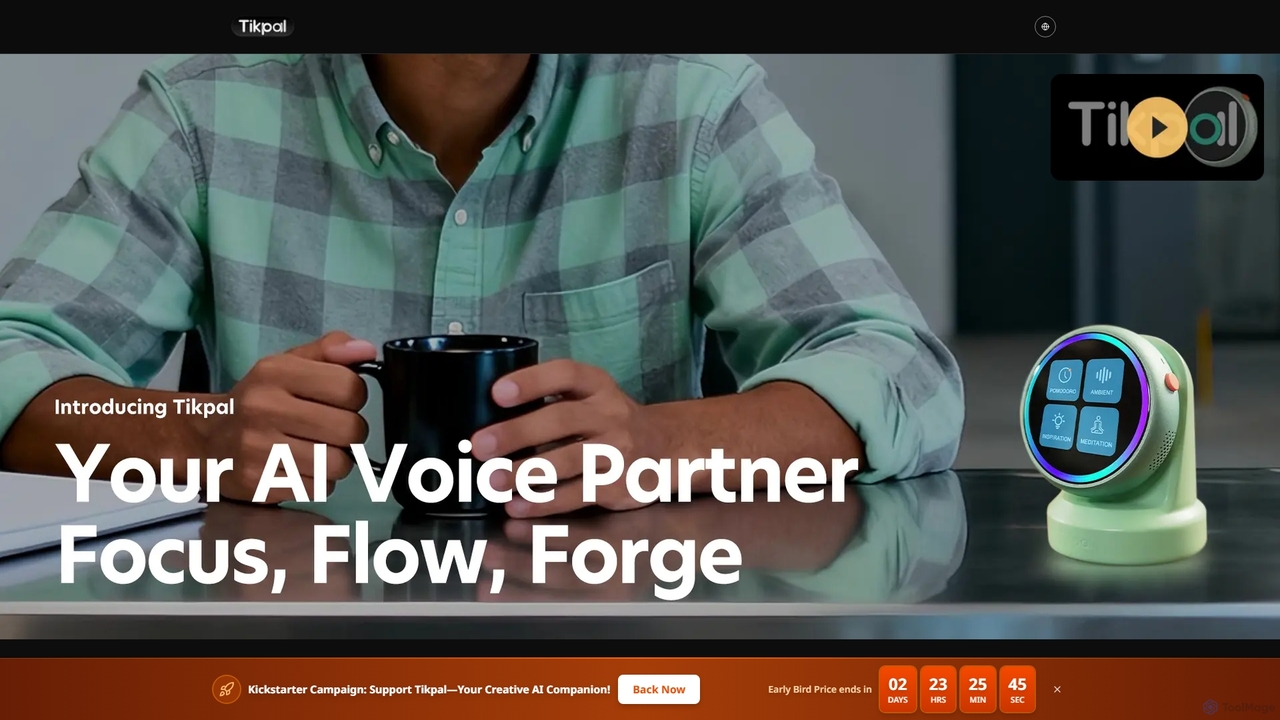
Tikpal is an innovative AI creative companion designed to enhance focus and productivity. This compact, multi-agent smart device …
Tikpal is an innovative AI creative companion designed to enhance focus and productivity. This compact, multi-agent smart device captures ideas instantly through high-quality voice recording, offers real-time transcription, and intelligently organizes your thoughts. It seamlessly integrates with popular tools like Notion and Xmind, fostering an uninterrupted creative flow for thinkers and creators.
About Idea Management
AI Idea Management tools are specialized platforms designed to systematically capture, organize, evaluate, and develop ideas. These tools utilize artificial intelligence, particularly natural language processing, to automatically categorize inputs, identify similar concepts, and highlight emerging themes from large volumes of data. This transforms raw inspiration into a structured innovation pipeline, enabling teams and individuals to prioritize the most promising concepts efficiently. Unlike simple note-taking apps, these platforms focus on the entire lifecycle of an idea, from initial spark to final implementation.
Core Features
- AI-Powered Capture: Automatically collect and process ideas from various sources like emails, chats, and documents, using AI to add tags and context.
- Semantic Clustering: Group related ideas based on their meaning and intent, not just keywords, to reveal underlying patterns and themes.
- Collaborative Evaluation: Provide frameworks for teams to rate, discuss, and prioritize ideas using customizable scoring criteria and voting systems.
- Idea Lifecycle Tracking: Monitor the progress of an idea from submission through review, approval, and development stages in a visual workflow.
- Trend Analysis & Insights: Analyze the idea database to identify popular topics, recurring problems, and potential innovation opportunities.
Use Cases
AI Idea Management tools are widely used in product development for managing feature requests, in marketing for brainstorming campaigns, and in R&D for tracking innovation projects. They are particularly valuable for large organizations aiming to foster a culture of innovation by centralizing employee suggestions and customer feedback, ensuring no valuable insight is lost.
How to Choose
When selecting an AI Idea Management tool, consider its integration capabilities with your existing workflow tools like Slack, Jira, or Microsoft Teams. Evaluate the sophistication of its AI features, such as the accuracy of its semantic clustering and trend analysis. Also, assess the platform's collaboration tools, customization options for evaluation workflows, and its ability to scale as your team and idea volume grow.
Idea ManagementUse Cases
Managing a Product Innovation Pipeline
Product managers use AI Idea Management tools to create a centralized hub for all product-related ideas. They can automatically capture user feedback from support tickets, feature requests from sales teams, and competitive insights from market analysis. The AI then clusters these inputs into themes like 'UI Improvements' or 'Performance Enhancements'. This allows the product team to visualize the demand for certain features, prioritize the roadmap based on data-driven insights, and track an idea's journey from concept to launch, ensuring a transparent and efficient innovation process.
Organizing Marketing Campaign Brainstorms
A marketing team can use an idea management platform to streamline their brainstorming sessions. Instead of scattered notes on whiteboards or in documents, team members can submit campaign ideas directly into the system. The AI helps by identifying duplicate ideas and grouping suggestions by channel (e.g., 'Social Media', 'Content Marketing', 'Email'). The team can then use built-in voting and commenting features to collaboratively evaluate each concept's potential impact and feasibility. This structured approach ensures that the best ideas are surfaced and developed into concrete marketing plans.
Building a Centralized Content Idea Hub
Content creators and editorial teams can establish a dynamic backlog of ideas for articles, videos, and podcasts. Team members, or even the entire company, can contribute ideas anytime. The AI system can automatically tag submissions with relevant topics (e.g., 'AI trends', 'SEO tips') and suggest connections to existing content pieces. This creates a searchable, organized repository that helps content strategists identify content gaps, avoid topic repetition, and plan a more coherent and impactful editorial calendar based on a steady stream of fresh ideas.
Automating Corporate Employee Suggestion Programs
Large enterprises can modernize their traditional suggestion box programs. An AI Idea Management platform provides an accessible channel for all employees to submit suggestions for process improvements, cost savings, or new business ventures. The AI automatically routes ideas to the relevant department (e.g., HR, Operations, Finance) for review. It also prevents review bias by anonymizing submissions if needed. Management can track the implementation status of approved ideas, providing transparency and encouraging continuous employee engagement in corporate innovation.
Structuring Academic Research and Notes
Researchers and students can use these tools to manage the complex process of academic inquiry. They can capture notes from literature, raw data observations, and spontaneous hypotheses in one place. The AI's semantic clustering can help identify connections between disparate pieces of information, potentially revealing new research avenues. The platform can then be used to structure these clustered ideas into an outline for a thesis, research paper, or presentation, transforming a chaotic collection of notes into a coherent academic argument.
Developing Personal Projects from Spark to Plan
Individuals can use idea management tools to nurture personal projects, such as writing a book, starting a side business, or planning a large event. Fleeting thoughts and inspirations can be captured on the go. Later, these raw ideas can be organized into categories, developed with more detail, and arranged into a logical sequence of actionable steps. This transforms abstract ambitions into a concrete project plan, helping individuals maintain momentum and track progress towards their personal goals without feeling overwhelmed by a disorganized collection of notes.