Lushair
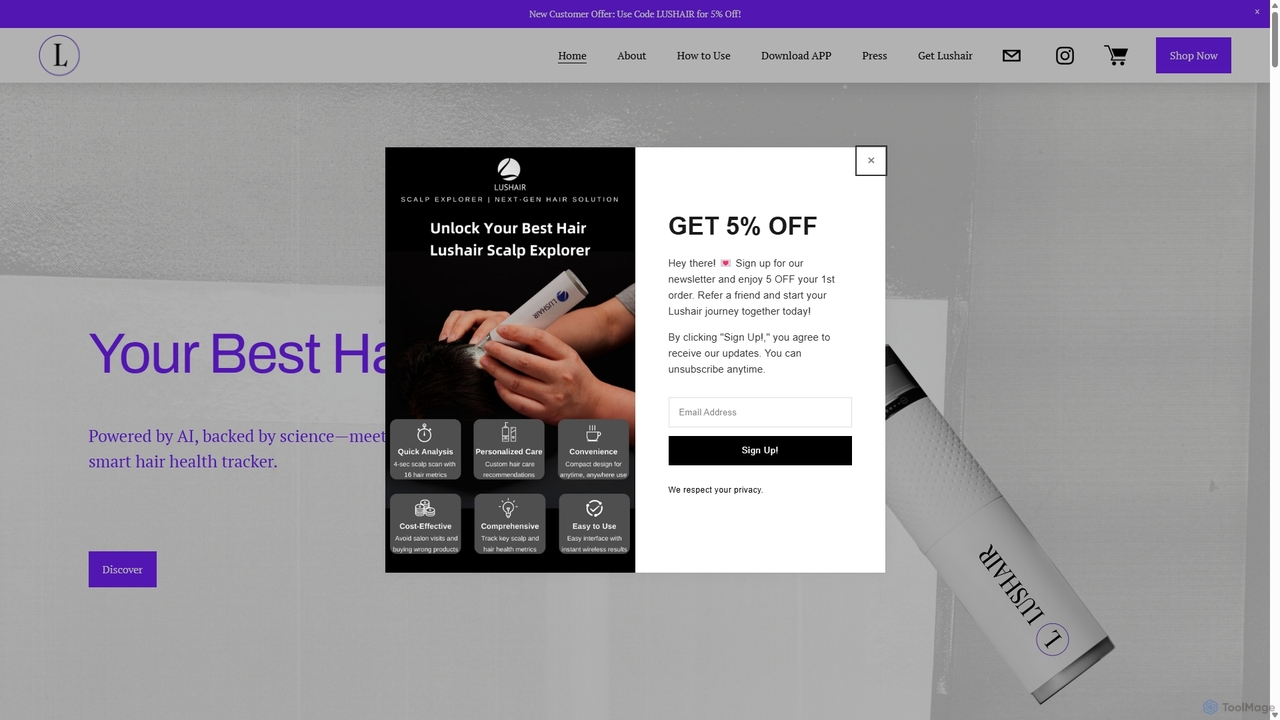
Lushair is an AI-powered hair and scalp analysis system that uses a smart dermascope and a mobile app …
Lushair is an AI-powered hair and scalp analysis system that uses a smart dermascope and a mobile app to provide clinic-grade diagnostics at home. It analyzes 16 vital signs to generate personalized care plans, including product, lifestyle, and professional recommendations, helping users proactively manage their hair health.
About Personalization
Personalization tools are AI-powered solutions designed to tailor the e-commerce experience for individual customers. These tools leverage machine learning to analyze user data, preferences, and behavior, enabling dynamic content delivery, personalized product recommendations, and targeted marketing efforts. Their primary value lies in enhancing customer engagement, driving conversions, and fostering long-term loyalty within online retail environments.
Core Features
- Dynamic Content Adaptation: Automatically adjusts website layouts, banners, and messaging based on individual user profiles and real-time interactions.
- Personalized Product Recommendations: Suggests relevant products or services to users through various touchpoints, including website, email, and mobile apps.
- Targeted Promotions & Offers: Delivers individualized discounts, bundles, or loyalty rewards to specific customer segments or individuals.
- Behavioral Segmentation: Groups customers based on their browsing history, purchase patterns, and engagement levels for precise marketing.
- A/B Testing & Optimization: Allows for testing different personalization strategies and continuously optimizing their effectiveness to improve metrics.
Applicable Scenarios
E-commerce businesses of all sizes utilize personalization tools to create unique shopping journeys. Online retailers deploy them to recommend complementary products during checkout, increasing average order value. Subscription services use them to suggest content or product bundles tailored to individual subscriber preferences, reducing churn. Digital marketers apply these tools to segment audiences and deliver highly relevant ad campaigns, improving ROI.
How to Choose
When selecting personalization tools, consider the depth of AI capabilities for data analysis and prediction, integration compatibility with existing e-commerce platforms (e.g., Shopify, Magento), the range of personalization touchpoints supported (website, email, app), and the level of customization offered for rules and algorithms. Evaluate scalability for future growth and the clarity of analytics and reporting features to measure impact.
PersonalizationUse Cases
Optimizing Product Discovery on E-commerce Sites
An online fashion retailer uses personalization AI to analyze a shopper's browsing history, past purchases, and real-time clicks. The tool dynamically reorders product listings, highlights relevant categories, and suggests complementary items on the homepage and product pages, making it easier for the customer to find desired products and increasing conversion rates.
Delivering Personalized Email Marketing Campaigns
An e-commerce manager for a home goods store employs personalization tools to segment their email list based on purchase history and browsing behavior. Instead of generic newsletters, customers receive emails featuring products they've viewed, abandoned cart reminders with tailored offers, or recommendations for items similar to their past purchases, leading to higher open and click-through rates.
Enhancing Customer Journey with Dynamic Website Content
A travel booking platform leverages personalization to adapt its website content for returning visitors. If a user previously searched for flights to Paris, the site might display Paris hotel deals, local attractions, or travel guides on subsequent visits, creating a more relevant and engaging experience that encourages booking.
Implementing Dynamic Pricing and Promotions
An electronics retailer uses AI personalization to offer dynamic discounts. For a first-time visitor, a small welcome discount might appear. For a loyal customer viewing an item frequently, a limited-time offer could be triggered to encourage immediate purchase, optimizing profit margins while retaining customer satisfaction.
Improving Cross-selling and Upselling Opportunities
A beauty product e-commerce site integrates personalization to suggest "customers also bought" or "complete the look" recommendations. After a customer adds a foundation to their cart, the system automatically suggests a matching concealer, brush, or primer, significantly increasing the average order value per transaction.
Personalizing Mobile App Experiences
A grocery delivery service utilizes personalization within its mobile app. Based on a user's past orders and dietary preferences, the app customizes the homepage with frequently purchased items, relevant recipes, and special offers on preferred brands, streamlining the ordering process and enhancing user convenience.