Stylitics
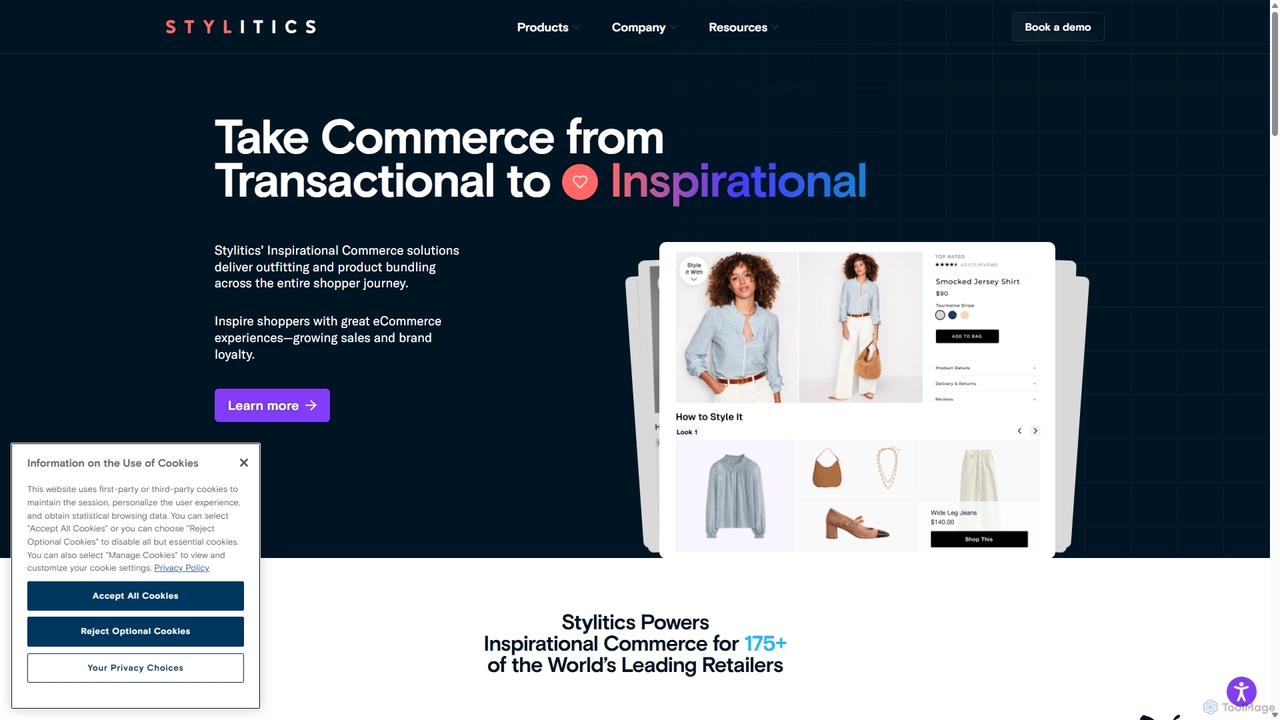
Stylitics is an AI-powered Inspirational Commerce platform for retailers. It transforms the online shopping experience by automatically creating …
Stylitics is an AI-powered Inspirational Commerce platform for retailers. It transforms the online shopping experience by automatically creating personalized product bundles, complete outfits, and shoppable content. This helps brands increase average order value (AOV), conversion rates, and customer loyalty by making commerce inspirational rather than just transactional.
About Fashion Tech
Fashion Tech tools are AI-powered solutions designed to innovate and optimize the entire fashion lifecycle, from initial design to retail experience. These tools leverage technologies like computer vision, generative AI, and predictive analytics to automate processes and provide data-driven insights. They enable brands to create personalized customer experiences, accelerate design cycles, and improve supply chain efficiency. By integrating AI, the fashion industry can respond more effectively to market trends and consumer demands.
Core Features
- Virtual Try-On (VTO): Uses augmented reality and computer vision to allow customers to digitally try on apparel and accessories.
- AI-Powered Design Generation: Employs generative models to create novel clothing designs, patterns, and color palettes based on specific inputs.
- Trend Forecasting: Analyzes data from social media, sales records, and runway shows to predict upcoming fashion trends with high accuracy.
- Personalized Recommendations: Implements machine learning algorithms on e-commerce platforms to suggest products tailored to individual user preferences.
- Automated Product Tagging: Utilizes computer vision to automatically identify and tag clothing attributes like color, style, and pattern for improved catalog management.
Use Cases
Fashion Tech tools are widely used by e-commerce platforms, fashion designers, retail buyers, and marketing teams. For instance, online retailers use virtual try-on to reduce return rates, while designers leverage generative AI to brainstorm new collection ideas. Buyers rely on trend forecasting to make informed inventory decisions that align with future demand.
How to Choose
When selecting a Fashion Tech tool, consider its specific application, such as retail, design, or supply chain. Evaluate the accuracy of its AI models, particularly for features like virtual try-on or trend forecasting. Assess its integration capabilities with your existing platforms (e.g., Shopify, Adobe Creative Suite). Also, consider the tool's scalability and pricing model to ensure it aligns with your business size and budget.
Fashion TechUse Cases
Enhance E-commerce with Virtual Try-On
An online apparel retailer aims to reduce high return rates and increase customer confidence. By integrating a Virtual Try-On (VTO) tool into their product pages, they allow shoppers to upload a photo or use their live camera to see how garments fit their body shape. This AI-powered feature creates a realistic simulation, helping customers make more accurate size selections. As a result, the retailer observes a significant decrease in returns due to sizing issues and a notable uplift in conversion rates, as shoppers feel more assured about their purchases.
Accelerate Design with AI-Generated Patterns
A fashion designer is tasked with creating a new fabric collection under a tight deadline. Instead of manually sketching hundreds of variations, they use an AI design generation tool. By providing inputs like a mood board, color palette, and style keywords (e.g., 'botanical', 'geometric'), the AI generates a vast array of unique, high-resolution patterns in minutes. The designer can then quickly review, refine, and select the best options for production. This process dramatically shortens the creative ideation phase from weeks to a single day, fostering more innovation and experimentation.
Optimize Inventory with AI Trend Forecasting
A retail buyer for a large fashion chain needs to make purchasing decisions for the upcoming season. They use an AI trend forecasting platform that analyzes real-time data from social media, e-commerce sales, and fashion news. The platform identifies emerging micro-trends, predicts which colors and styles will be popular, and forecasts demand by region. Armed with these insights, the buyer makes more accurate inventory purchases, reducing the risk of overstocking unpopular items and avoiding stockouts of high-demand products. This leads to higher profit margins and less waste.
Automate Catalog Management with AI Tagging
An e-commerce marketplace with thousands of new daily listings struggles with inconsistent and inaccurate product data. They implement an AI tool that uses computer vision to analyze product images. The tool automatically identifies and tags dozens of attributes, such as 'V-neck', 'floral print', 'A-line skirt', and 'long sleeve'. This automated process ensures data consistency, enriches product information, and significantly improves the on-site search and filtering experience for customers. It also frees up a significant amount of manual labor, allowing the team to focus on other merchandising tasks.
Create Personalized Shopping Journeys
An online fashion boutique wants to provide a unique experience for each visitor. They use an AI personalization engine that tracks user behavior, such as clicks, items viewed, and past purchases. Based on this data, the engine dynamically alters the homepage, product recommendations, and even marketing emails for each user. A customer who frequently views vintage-style dresses will see those featured prominently, while another interested in activewear will get a different experience. This tailored approach increases user engagement, average order value, and customer loyalty.
Plan Sustainable Production with Demand Forecasting
A sustainable fashion brand is committed to minimizing waste. They employ an AI-powered demand forecasting tool to predict sales for new products with greater accuracy. The tool analyzes historical sales data, market trends, and even factors like upcoming holidays or weather patterns. By generating a more precise forecast, the brand can optimize its production runs, manufacturing only what is likely to sell. This data-driven approach helps them avoid overproduction, reduce excess inventory and waste, and operate a more environmentally and financially sustainable business model.