PromptPilot
PromptPilot is an AI prompt optimization tool designed to transform raw ideas into powerful, optimized prompts for various …
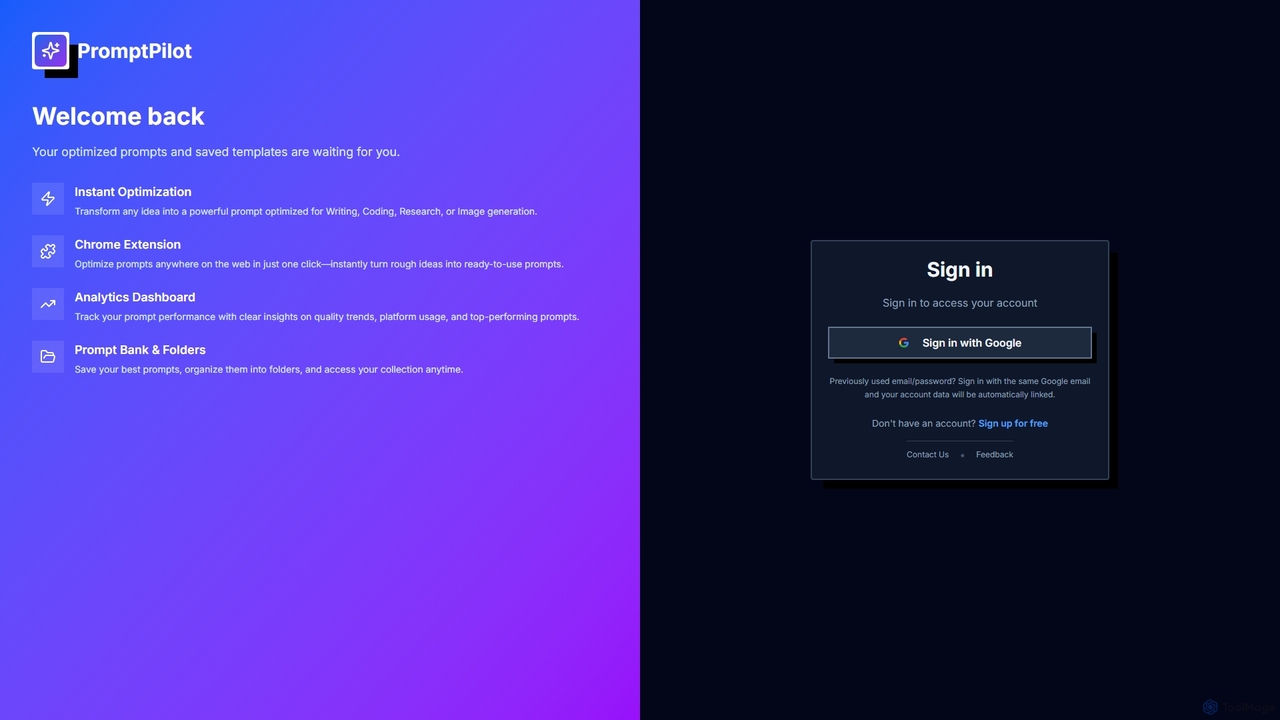
PromptPilot is an AI prompt optimization tool designed to transform raw ideas into powerful, optimized prompts for various AI models. It features instant optimization for writing, coding, research, and image generation, a convenient Chrome extension, an analytics dashboard to track prompt performance, and a prompt bank for organization and easy access.
About Image Generation
Image Generation tools are AI-powered applications that create novel visual content from textual descriptions, sketches, or other inputs. These tools primarily utilize deep learning models, such as Diffusion Models and Generative Adversarial Networks (GANs), to interpret user prompts and synthesize photorealistic or stylized images. They empower creators, marketers, and designers to rapidly visualize concepts, produce unique marketing assets, and generate artistic illustrations. The key advantage is the ability to generate a vast array of visual variations from a single idea, accelerating creative workflows.
Core Features
- Text-to-Image Generation: Converts natural language descriptions (prompts) into detailed, original images.
- Image-to-Image Transformation: Modifies existing images based on text prompts or style references.
- Inpainting & Outpainting: Fills in missing parts of an image or extends its boundaries contextually.
- Style Control: Allows users to specify artistic styles, camera angles, lighting, and other aesthetic parameters.
- Resolution Upscaling: Increases the resolution and detail of generated images using AI algorithms.
Use Cases
Image Generation tools are widely used across various industries. In digital marketing, they create unique visuals for social media campaigns and advertisements. Game developers and filmmakers use them for rapid concept art and character design. Content creators and bloggers generate custom illustrations for articles, avoiding generic stock photos. They are also applied in product design for mockups and e-commerce for creating lifestyle imagery.
How to Choose
When selecting an Image Generation tool, consider several factors. Evaluate the image quality and the model's proficiency in your desired style (e.g., photorealism, anime, abstract). Assess how well the tool interprets complex and nuanced prompts. Look for advanced controls like negative prompts, seed numbers, and parameter adjustments for fine-tuning. Finally, carefully review the usage rights and licensing terms to ensure they align with your commercial or personal needs.
Image GenerationUse Cases
Creating Marketing and Social Media Visuals
A marketing manager needs to create a series of engaging visuals for a new product launch campaign. Instead of organizing a costly photoshoot, they use an AI image generator. By inputting prompts like 'a vibrant, photorealistic image of our new eco-friendly water bottle on a mossy rock by a waterfall, morning light,' they can generate dozens of unique, high-quality ad creatives. This process saves significant time and budget, allowing the team to test multiple visual concepts and increase campaign engagement by over 30%.
Concept Art for Game and Film Development
A concept artist is tasked with brainstorming character designs for a new fantasy video game. To accelerate this process, they use an AI image generator. They input detailed descriptions like 'elven warrior with glowing silver armor, holding a crystal sword, in a dark enchanted forest' to quickly visualize different concepts. The AI produces hundreds of visual variations, which can then be refined manually. This method drastically reduces the time spent on initial ideation, allowing the art team to explore a wider range of creative directions in the pre-production phase.
Generating Unique Blog and Article Illustrations
A content creator needs custom header images for a blog post about 'The Future of AI in Healthcare'. Stock photos feel generic and uninspired. Using an AI image generator, they can create unique, conceptual images with prompts like 'abstract visualization of neural networks and human DNA helix, glowing blue and green, futuristic style'. This provides them with perfectly themed, royalty-free visuals that enhance reader engagement and make the content more memorable, all without needing graphic design skills or a budget for custom illustrations.
Product Mockups and E-commerce Staging
An e-commerce manager wants to showcase a new line of skincare products in various lifestyle settings. Instead of costly photoshoots, they upload clean product images and use AI tools with inpainting or image-to-image features. They can place the product in diverse scenes by prompting 'product on a marble bathroom counter next to a green plant' or 'product held by a model with glowing skin'. This generates a wide array of professional-looking lifestyle photos, helping customers visualize the product in use and potentially increasing conversion rates by up to 25%.
Architectural and Interior Design Visualization
An interior designer needs to present different design concepts for a living room renovation to a client. Using an AI image generator, they can turn a basic sketch or a simple 3D model into a photorealistic image. By applying different styles with prompts like 'minimalist Scandinavian living room with oak floors and a large window, afternoon sun,' they can instantly provide clients with realistic visualizations. This process facilitates faster decision-making and client approval, reducing the project timeline by weeks.
Personal Art and Creative Exploration
A hobbyist artist wants to explore their creativity without years of technical training. They use an AI image generator to experiment with imaginative prompts, combining unrelated concepts like 'an astronaut riding a whale through a cosmic nebula, in the style of an oil painting'. This allows them to create complex and beautiful artwork for personal projects, social media sharing, or even print-on-demand products. The tool acts as a creative partner, helping them visualize ideas that would be difficult or time-consuming to create traditionally.