Gohorto
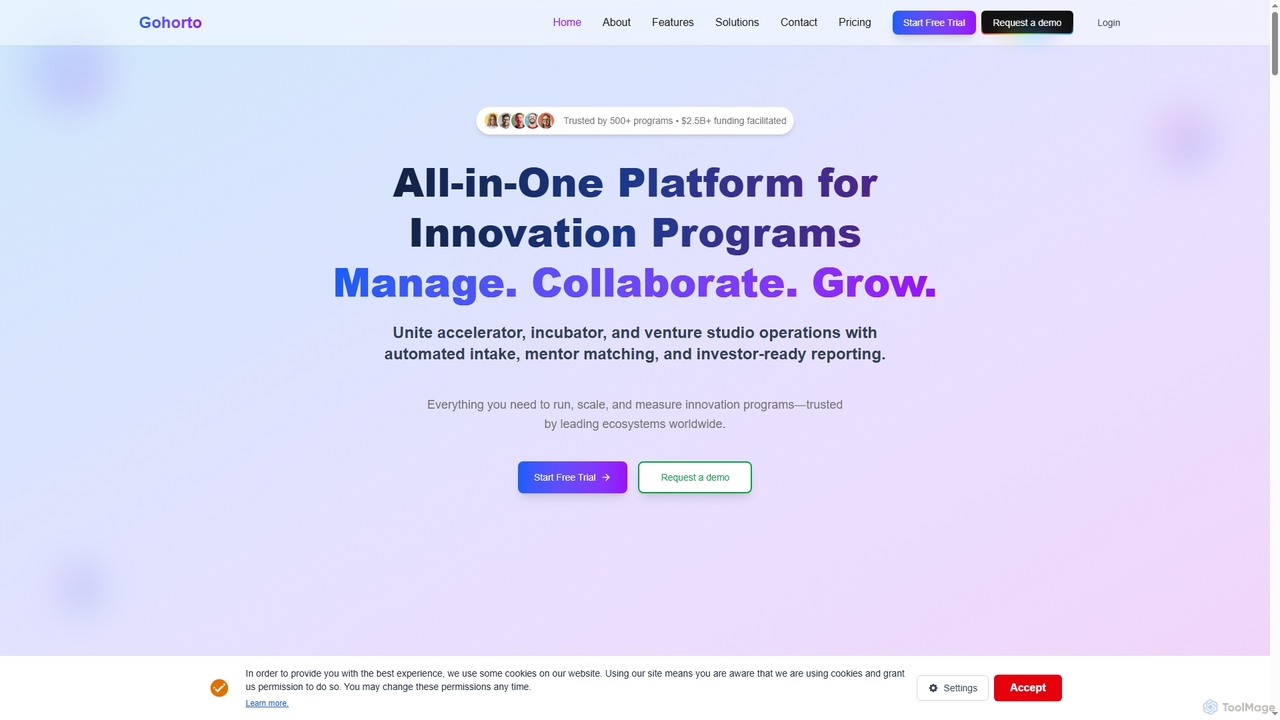
Gohorto is an AI-powered innovation program management platform designed for startup ecosystems. It unifies operations for accelerators, incubators, …
Gohorto is an AI-powered innovation program management platform designed for startup ecosystems. It unifies operations for accelerators, incubators, venture studios, universities, and corporations, streamlining application intake, mentor matching, and investor-ready reporting to foster growth and impact.
About Innovation Management
Innovation Management tools are AI-powered platforms designed to streamline and enhance the entire innovation lifecycle within organizations. These tools leverage artificial intelligence to facilitate ideation, project development, portfolio management, and strategic decision-making. They help businesses foster a culture of continuous innovation, accelerate time-to-market for new offerings, and maintain a competitive edge by systematically managing creative processes and R&D efforts.
Core Features
- Idea Generation & Crowdsourcing: AI-driven prompts and collaborative platforms to collect, categorize, and enrich new ideas from employees or external stakeholders.
- Innovation Portfolio Management: Tools for tracking, evaluating, and prioritizing innovation projects based on potential impact, feasibility, and alignment with strategic goals.
- Market & Trend Analysis: AI-powered analysis of market data, emerging technologies, and consumer trends to identify new opportunities and inform innovation strategies.
- Concept Development & Prototyping: Features that assist in refining ideas into viable concepts, often including simulation or early-stage design support.
- Intellectual Property Management: Support for tracking and managing patents, trademarks, and other intellectual assets generated through innovation.
Use Cases
Organizations across various sectors, from tech startups to established enterprises, utilize Innovation Management tools to drive growth. R&D departments use them to manage complex research projects, while product development teams leverage them to accelerate new product introductions. Marketing teams can also use these tools to identify unmet customer needs and develop innovative campaigns.
How to Choose
When selecting an Innovation Management tool, consider its integration capabilities with existing enterprise systems (e.g., CRM, ERP), the breadth of its innovation lifecycle support (from ideation to commercialization), its scalability for future growth, and the level of AI sophistication in trend analysis or idea evaluation. User-friendliness and collaborative features are also crucial for widespread adoption.
Innovation ManagementUse Cases
Strategic Idea Generation for New Products
Product development teams use AI to analyze market gaps and consumer feedback, generating novel product concepts that align with strategic objectives. This helps in identifying high-potential ideas early and reducing development risks, ensuring that resources are focused on innovations with the greatest market fit and potential for success.
Optimizing R&D Project Portfolio
R&D managers leverage AI to evaluate ongoing projects based on resource allocation, potential ROI, and strategic fit, enabling data-driven decisions to prioritize, pivot, or discontinue projects for maximum impact. This ensures that the innovation pipeline is efficient and aligned with the company's long-term vision.
Fostering Employee-Driven Innovation
Companies deploy internal innovation platforms where employees can submit ideas, collaborate, and vote on proposals. AI assists in categorizing ideas, identifying duplicates, and highlighting promising submissions for further review, creating a transparent and engaging environment for internal crowdsourcing of creative solutions.
Accelerating New Market Entry Strategies
Business development teams utilize AI-powered trend analysis to identify emerging markets or untapped customer segments, informing the development of innovative products or services tailored for rapid market penetration. This strategic insight allows companies to proactively seize new growth opportunities and expand their global footprint efficiently.
Managing Intellectual Property Development
Legal and R&D departments use these tools to track the progress of patent applications, manage invention disclosures, and monitor competitive IP landscapes, ensuring the protection and strategic leveraging of innovations. This systematic approach safeguards valuable intellectual assets and supports long-term competitive advantage.
Enhancing Cross-Functional Collaboration on Projects
Project leads use integrated platforms to facilitate real-time collaboration among diverse teams (e.g., engineering, marketing, sales) on innovation projects, ensuring alignment, shared progress tracking, and efficient feedback loops from concept to launch. This breaks down silos and accelerates the overall innovation process.