AI for Good Foundation
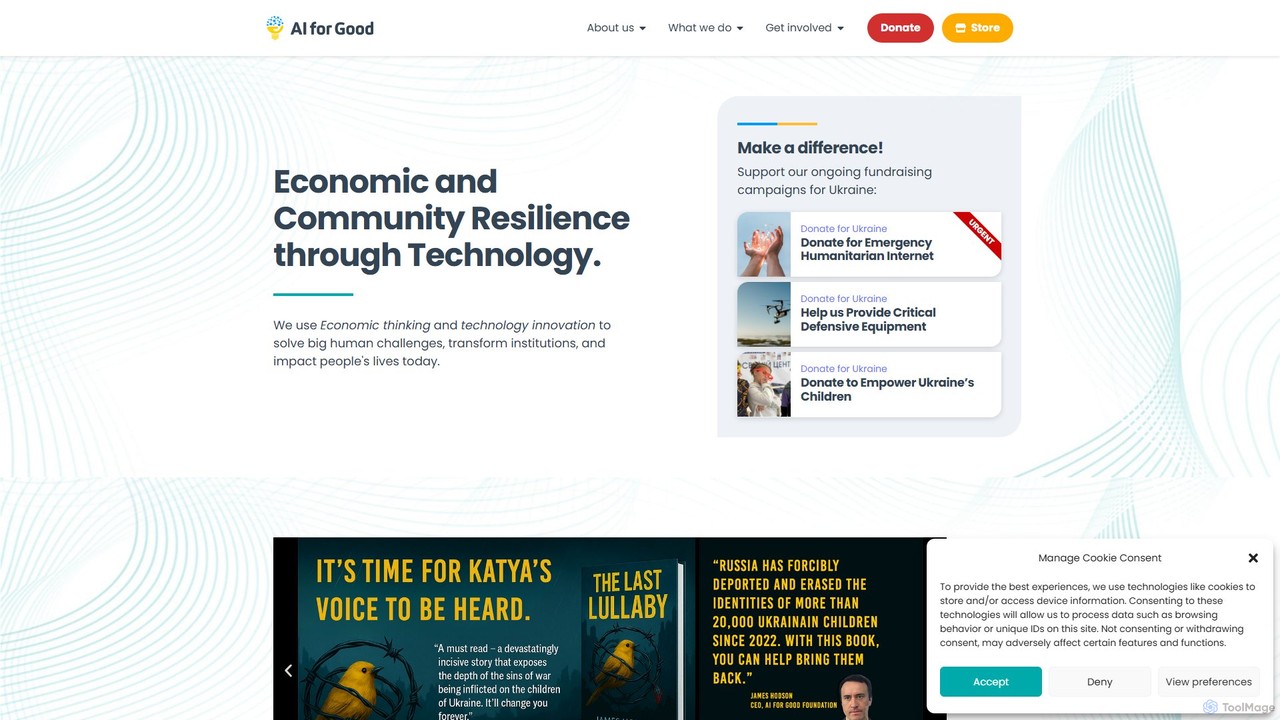
AI for Good Foundation is a global non-profit organization that harnesses the power of artificial intelligence and data …
AI for Good Foundation is a global non-profit organization that harnesses the power of artificial intelligence and data science to address pressing humanitarian issues and advance the UN's Sustainable Development Goals. It develops technology, provides open data, and fosters a network of experts to create tangible social impact.
About Non Profit
Non Profit AI tools are AI-powered solutions specifically designed to empower non-profit organizations in achieving their missions more effectively and sustainably. These innovative tools leverage advanced artificial intelligence, machine learning, and natural language processing to automate routine administrative tasks, enhance strategic decision-making, and optimize the allocation of precious resources. By integrating AI, charities, foundations, and social enterprises can significantly streamline their operations, cultivate deeper donor engagement, and amplify their social impact, ultimately fostering greater efficiency, transparency, and long-term viability in the non-profit sector.
Core Features
- Donor Management & Engagement: Automates donor segmentation, personalizes communication across multiple channels, and predicts giving patterns to cultivate stronger, lasting relationships with supporters.
- Fundraising Automation: Streamlines campaign creation and execution, optimizes outreach strategies, and identifies potential major donors or grant opportunities, significantly boosting fundraising efficiency and success rates.
- Volunteer Coordination & Recruitment: Facilitates efficient recruitment, skill-matching, scheduling, and communication with volunteers, ensuring optimal deployment of human resources for various programs.
- Impact Measurement & Reporting: Analyzes vast amounts of program data to quantify social impact, generate comprehensive and compelling reports, and demonstrate accountability to donors, beneficiaries, and other stakeholders.
- Personalized Communication & Outreach: Utilizes AI to tailor messages for different audience segments, improving engagement rates for newsletters, advocacy campaigns, and event promotions.
Applicable Scenarios
Non-profit organizations across the spectrum utilize these AI tools to transform their operations. Small local charities might leverage AI for more efficient volunteer management and localized fundraising campaigns, while large international NGOs can optimize complex global fundraising efforts and manage vast donor databases. These tools are indispensable for development teams personalizing donor journeys, program managers accurately measuring outcomes, and communications teams crafting highly targeted and impactful outreach messages. They support strategic planning, enhance operational efficiency, and foster more meaningful stakeholder communication, allowing organizations to focus more on their core mission.
How to Choose
Selecting the right Non Profit AI tool requires careful consideration of several critical factors to ensure alignment with your organization's unique needs and constraints. First, thoroughly evaluate the tool's specific functionalities against your core operational requirements, whether it's advanced fundraising analytics, robust volunteer management, or precise impact reporting. Second, assess its integration capabilities with your existing CRM, accounting, or project management systems to ensure seamless data flow and avoid operational silos. Third, scrutinize the pricing model, looking for non-profit specific discounts, flexible subscription tiers, or scalable solutions that grow with your organization. Finally, prioritize robust data security measures and compliance with relevant privacy regulations (like GDPR or CCPA), and ensure the vendor offers comprehensive support, training, and a strong community for non-profit users.
Non ProfitUse Cases
Automating Personalized Donor Outreach
A non-profit's fundraising team uses AI to analyze donor data, segmenting supporters based on giving history, interests, and engagement levels. The AI then generates personalized email campaigns, suggesting optimal timing and content for each segment. This approach significantly increases open rates and donation conversions, allowing the team to cultivate stronger relationships with a larger donor base without extensive manual effort.
Optimizing Volunteer Recruitment and Management
A community service organization employs AI tools to streamline its volunteer program. The AI matches potential volunteers with suitable roles based on their skills, availability, and preferences, reducing manual screening time. It also automates scheduling, sends reminders, and facilitates communication, ensuring volunteers are effectively deployed and engaged, leading to higher retention rates and more efficient program delivery.
Streamlining Grant Application and Research
A research foundation utilizes AI to identify relevant grant opportunities from vast databases, matching them with the foundation's mission and project needs. The AI can also assist in drafting initial grant proposals by generating text based on project descriptions and past successful applications, significantly reducing the time and effort required for grant writing and increasing the chances of securing funding.
Enhancing Social Impact Measurement and Reporting
An environmental conservation group uses AI to collect and analyze data from various sources, suchs as project outcomes, community feedback, and environmental metrics. The AI processes this complex data to generate clear, concise, and compelling impact reports, visualizing key achievements and demonstrating the organization's effectiveness to donors, partners, and the public, thereby building trust and transparency.
Personalizing Supporter Engagement through Chatbots
A large advocacy group deploys an AI-powered chatbot on its website and social media channels. The chatbot provides instant answers to frequently asked questions about the organization's mission, campaigns, and how to get involved. It can also guide users through donation processes or sign-up forms, offering a personalized and immediate support experience that enhances supporter satisfaction and engagement around the clock.
Predictive Analytics for Fundraising Campaigns
A humanitarian aid organization leverages AI to predict the likelihood of specific donors making future contributions or upgrading their giving level. By analyzing historical donation patterns, demographic data, and external economic indicators, the AI identifies high-potential donors and recommends optimal engagement strategies. This allows the fundraising team to focus resources on the most promising leads, maximizing campaign ROI and securing critical funding more efficiently.