AIM: AI Instant Messenger
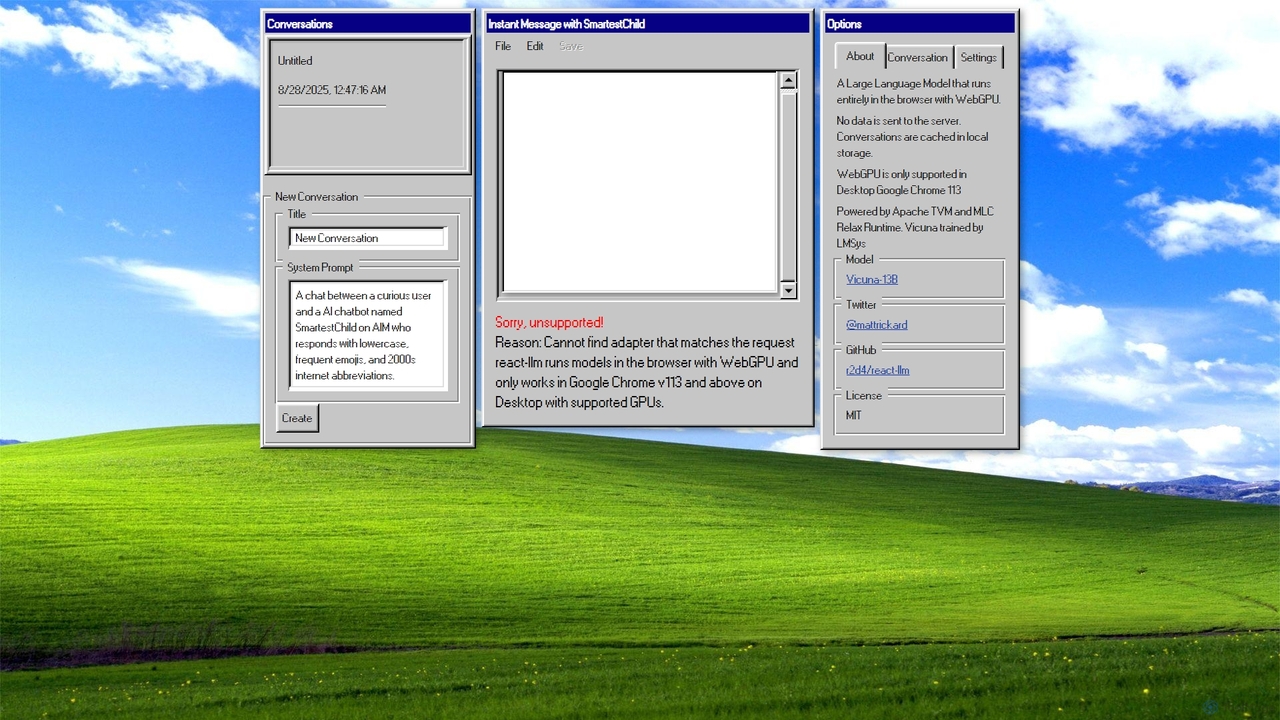
A privacy-focused AI chatbot that runs a large language model (Vicuna-13B) entirely in your browser using WebGPU. No …
A privacy-focused AI chatbot that runs a large language model (Vicuna-13B) entirely in your browser using WebGPU. No data is sent to a server, ensuring complete confidentiality of your conversations.
Neeva
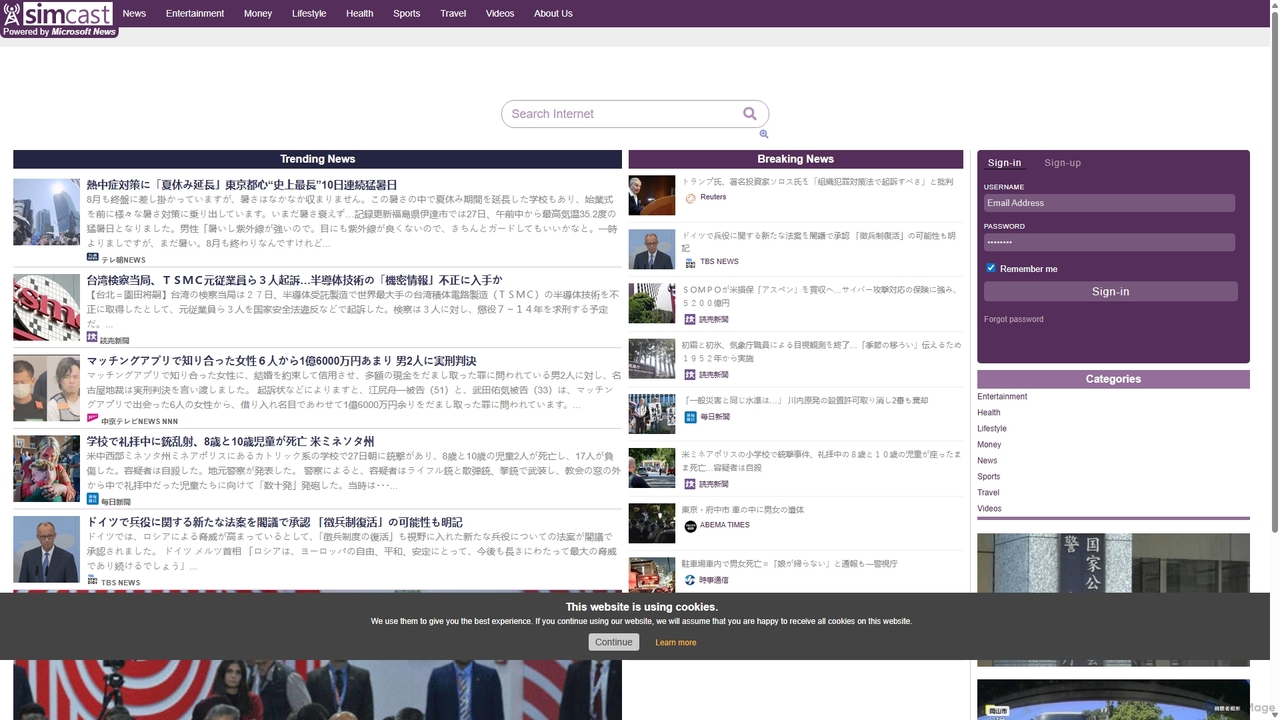
Neeva was a pioneering private, ad-free search engine powered by AI. It offered a user-centric search experience with …
Neeva was a pioneering private, ad-free search engine powered by AI. It offered a user-centric search experience with no ads or trackers, providing unbiased results and AI-generated summaries. The consumer search product was discontinued in June 2023 after Neeva was acquired by Snowflake.

Lit.Codes Chat
A privacy-focused AI chat interface offering access to a wide range of advanced GPT models, including GPT-4o. It …
A privacy-focused AI chat interface offering access to a wide range of advanced GPT models, including GPT-4o. It features end-to-end encrypted chat history and a convenient Chrome extension, making it a secure and versatile tool for developers, writers, and professionals seeking powerful AI assistance without compromising on data security.
AetheriumAI
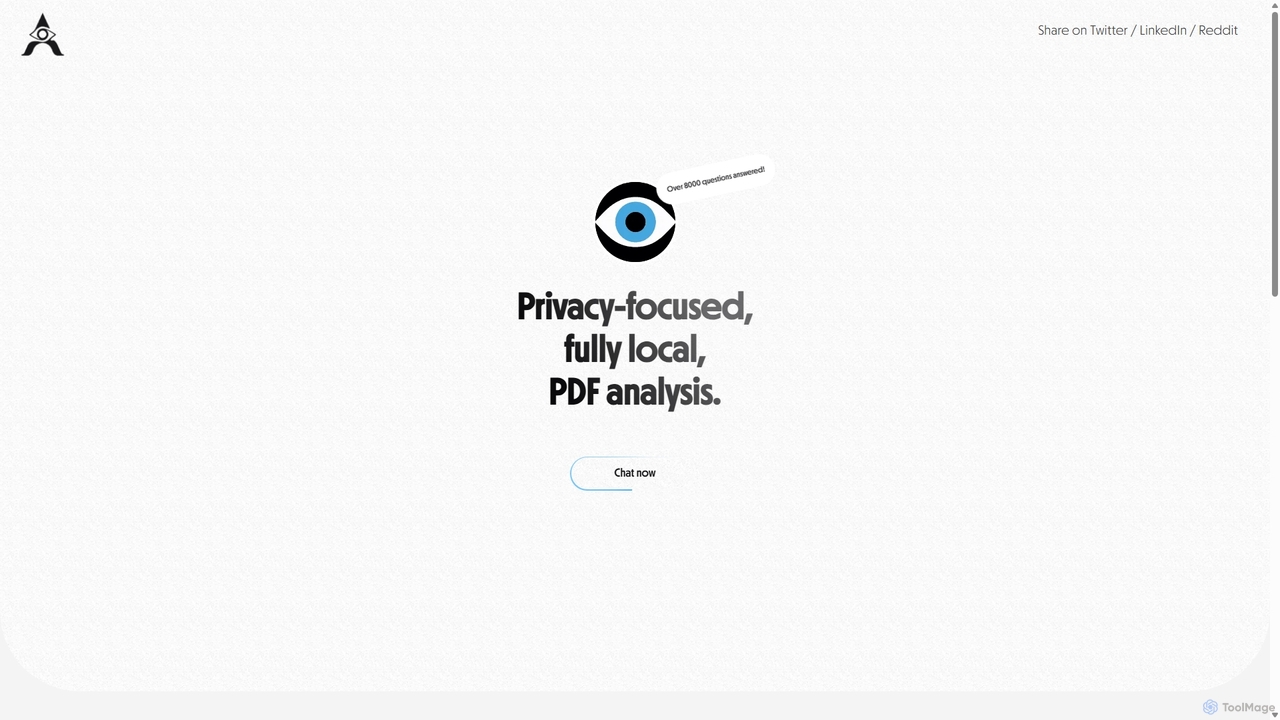
AetheriumAI is a secure, privacy-focused AI tool that allows you to chat with your PDF documents. It operates …
AetheriumAI is a secure, privacy-focused AI tool that allows you to chat with your PDF documents. It operates entirely on your local machine, ensuring no data is ever uploaded to a server. Supports multiple PDF uploads for comprehensive, cross-document analysis and insights.
Omnibot
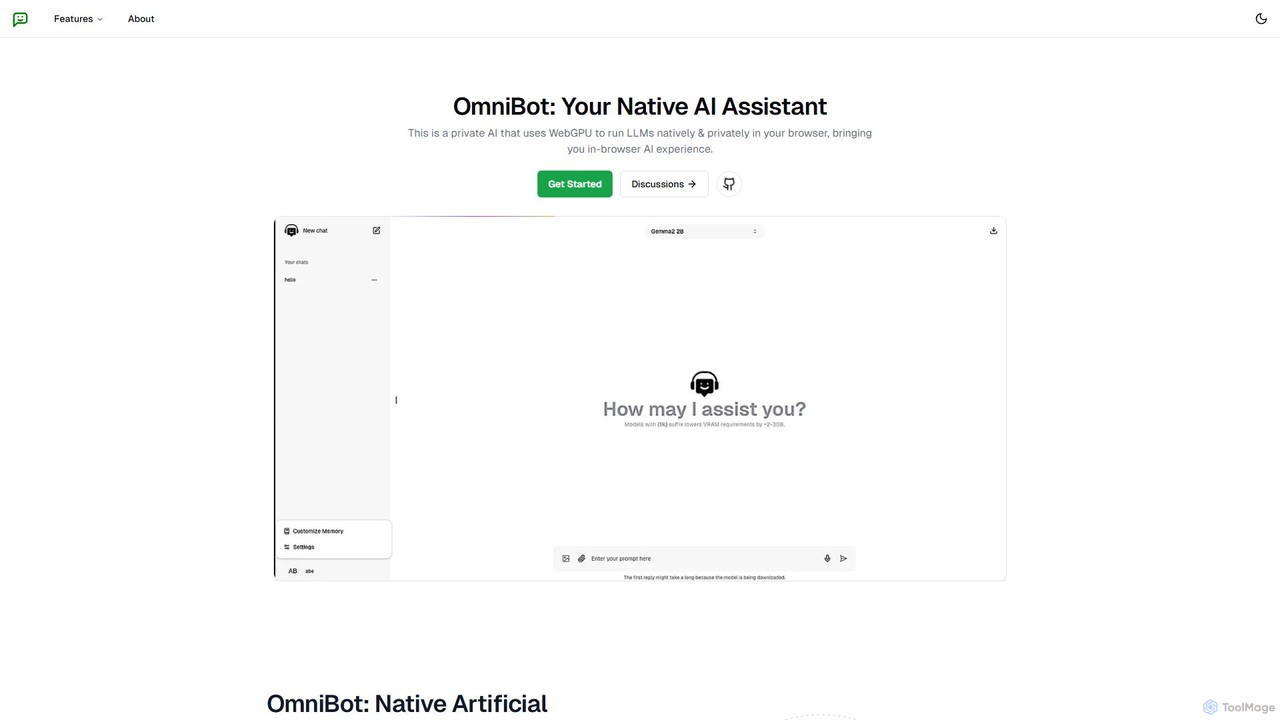
Omnibot is a private, native AI assistant that runs large language models (LLMs) directly in your browser using …
Omnibot is a private, native AI assistant that runs large language models (LLMs) directly in your browser using WebGPU. It offers a completely offline and secure chat experience, ensuring your data never leaves your computer. Customize it with your own instructions for personalized responses.

Conversease
A privacy-focused AI chat platform that provides a unified interface for leading AI models like GPT-4o and Pixtral. …
A privacy-focused AI chat platform that provides a unified interface for leading AI models like GPT-4o and Pixtral. Users connect their own API keys to store, manage, and search conversations locally on their browser. It supports advanced features including PDF chat and image analysis, offering a secure and versatile AI interaction experience.
About Privacy & Security
Privacy & Security AI tools are a class of solutions that leverage artificial intelligence to proactively protect data, identify threats, and automate security protocols. These tools employ machine learning algorithms to analyze vast datasets, detect anomalies in real-time, predict potential risks, and respond to security incidents with greater speed and accuracy. Their primary value lies in shifting cybersecurity from a reactive, signature-based model to a dynamic, predictive defense system. This proactive approach helps organizations identify novel threats, reduce false positives, and accelerate incident response, safeguarding sensitive information against sophisticated cyberattacks.
Core Features
- Threat Detection & Analysis: Uses machine learning to identify malware, phishing attempts, and unusual network activity that evades traditional rules.
- Data Anonymization & Masking: Automatically discovers and redacts or masks personally identifiable information (PII) within documents and databases to ensure compliance.
- Behavioral Analytics (UEBA): Establishes baseline user and entity behavior to detect insider threats or compromised accounts through anomalous actions.
- Automated Incident Response: Triggers pre-defined workflows to contain threats, such as isolating an infected device from the network.
- Vulnerability Prioritization: Predicts which system vulnerabilities are most likely to be exploited, allowing teams to focus on the highest-risk issues.
Applicable Scenarios
These tools are critical for any organization handling sensitive data, particularly in sectors like finance, healthcare, e-commerce, and government. Security Operations Center (SOC) analysts use them for real-time threat monitoring, while data protection officers leverage them to automate compliance with regulations like GDPR and HIPAA. IT administrators also use them to manage network security and prioritize system patching.
Selection Criteria
When choosing a Privacy & Security AI tool, consider its integration capabilities with your existing security infrastructure (e.g., SIEM, firewalls). Evaluate the accuracy of its detection models, specifically its false positive and false negative rates. Assess its scalability to handle your organization's data volume and growth. Finally, ensure the tool supports the specific compliance and regulatory frameworks relevant to your industry.
Privacy & SecurityUse Cases
Automate PII Redaction for GDPR Compliance
A data protection officer at a European financial services company is tasked with preparing large datasets for third-party analysis while adhering to strict GDPR regulations. Manually redacting Personally Identifiable Information (PII) is time-consuming and prone to error. By using an AI-powered data masking tool, the officer can automatically scan millions of documents and database entries. The AI identifies and redacts names, addresses, social security numbers, and other PII with high accuracy, creating a safe, anonymized dataset for analysis. This process reduces manual labor by over 95% and significantly lowers the risk of compliance violations.
Detect Insider Threats with Behavioral Analytics
A security analyst at a large tech company needs to protect sensitive intellectual property from internal threats. Traditional security systems often miss subtle, malicious activity from trusted insiders. The company implements an AI-powered User and Entity Behavior Analytics (UEBA) tool. This system learns the normal activity patterns of every employee, such as login times, data access frequency, and network usage. When an employee's account suddenly starts accessing project files they've never touched before at 3 AM, the AI flags this anomalous behavior in real-time and alerts the security team, enabling them to investigate and prevent a potential data leak before it happens.
Block Advanced Phishing Attacks in Real-Time
An IT security manager for a healthcare organization is concerned about sophisticated phishing attacks that bypass traditional email filters and could lead to a data breach of patient records. They deploy an AI-powered email security gateway. Unlike rule-based filters, this AI analyzes the language, context, sender reputation, and link structure of every incoming email. It successfully identifies and quarantines a spear-phishing email impersonating the CEO, which a traditional filter would have missed. By detecting threats based on learned patterns rather than known signatures, the tool prevents a potentially devastating breach and protects sensitive patient data.
Prioritize Vulnerability Patching with Predictive Analysis
A Security Operations Center (SOC) team is overwhelmed by the sheer number of software vulnerabilities reported daily. They struggle to decide which ones to patch first. By implementing an AI-powered vulnerability management platform, the team gains predictive insights. The AI analyzes each vulnerability in the context of the company's specific IT environment, cross-referencing it with real-time threat intelligence from across the web. It then assigns a risk score, highlighting the 10% of vulnerabilities that pose a 90% risk of actual exploitation. This allows the team to focus their limited resources on the most critical threats, drastically improving their security posture without increasing headcount.
Secure Code Development with AI-Powered Scans
A DevOps team at a fast-growing SaaS company needs to accelerate their development cycle without compromising security. Manually reviewing code for security flaws is a major bottleneck. They integrate an AI-powered static application security testing (SAST) tool directly into their CI/CD pipeline. As developers commit new code, the AI automatically scans it for common vulnerabilities like SQL injection, cross-site scripting, and insecure configurations. The tool provides immediate feedback with context-aware remediation advice, allowing developers to fix issues before the code ever reaches production. This 'shift-left' approach to security significantly reduces the number of vulnerabilities in the final product and builds a stronger security culture.
Monitor the Dark Web for Data Breaches
A corporate security team wants to proactively detect if their company's sensitive data or employee credentials have been compromised and are being sold on the dark web. Manually monitoring these hidden forums is impossible. They subscribe to an AI-driven dark web monitoring service. The AI continuously and anonymously scans dark web marketplaces, forums, and chat rooms for mentions of the company's domains, IP addresses, and executive names. When the AI discovers a newly posted database containing employee credentials for sale, it immediately alerts the security team. This early warning allows them to force password resets and mitigate the damage before the stolen credentials can be used for a larger attack.