Mindreveal
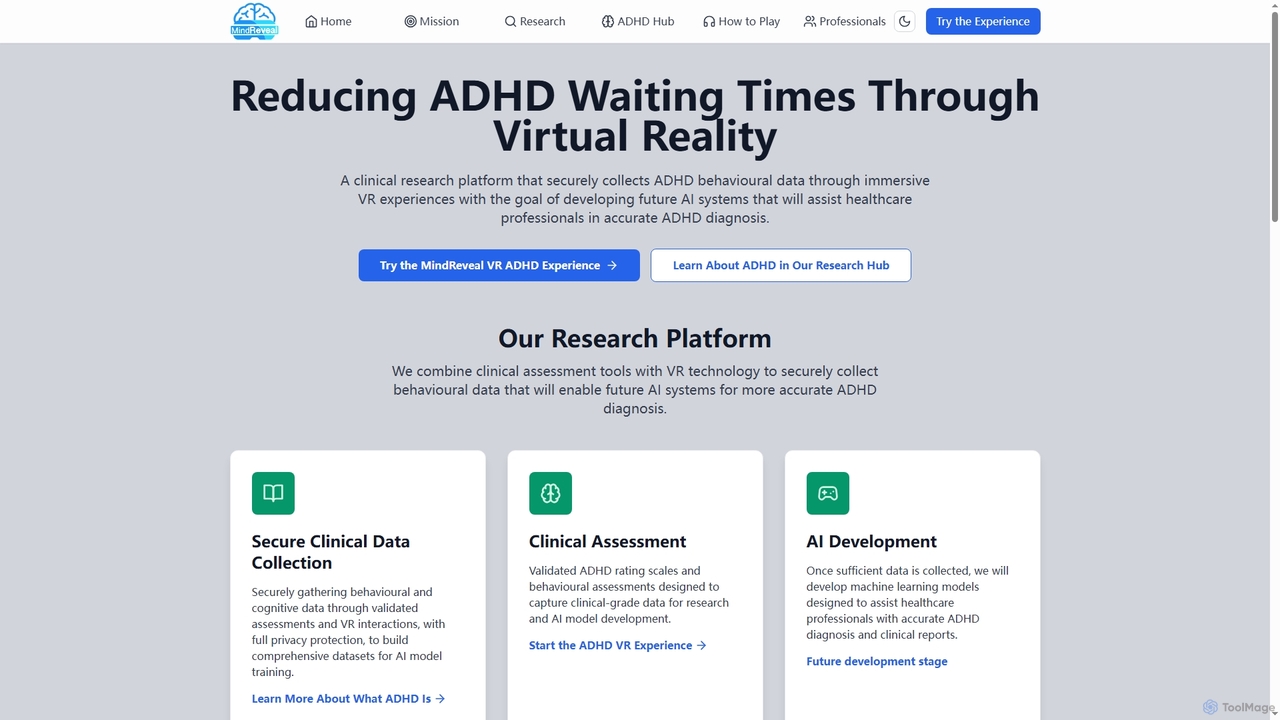
A clinical research platform using immersive Virtual Reality (VR) to securely collect behavioral data for ADHD. It aims …
A clinical research platform using immersive Virtual Reality (VR) to securely collect behavioral data for ADHD. It aims to develop future AI systems to assist healthcare professionals with accurate diagnosis, ensuring data privacy and using evidence-based assessments.
PicnicHealth
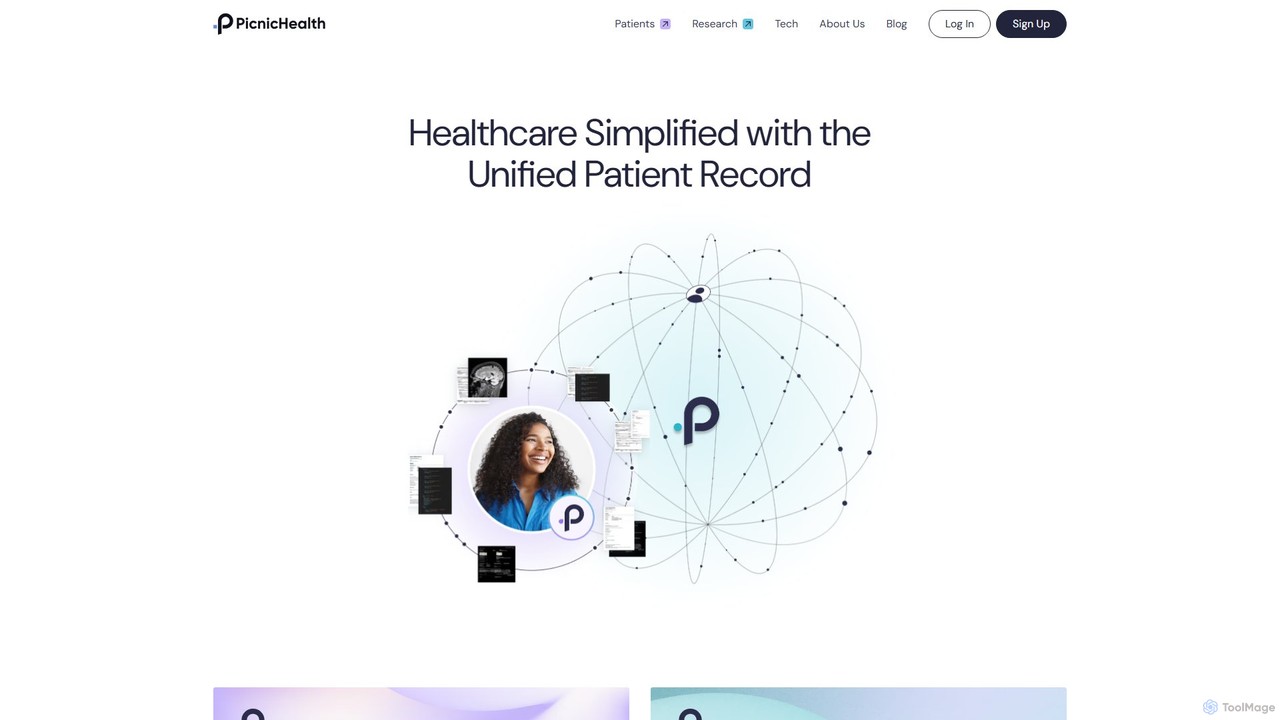
PicnicHealth is an AI-powered platform that collects, digitizes, and unifies all your medical records into a single, comprehensive …
PicnicHealth is an AI-powered platform that collects, digitizes, and unifies all your medical records into a single, comprehensive timeline. It empowers patients to manage their health with an AI assistant and enables life sciences companies to conduct more efficient observational research with high-quality, real-world data.
AgentGPT
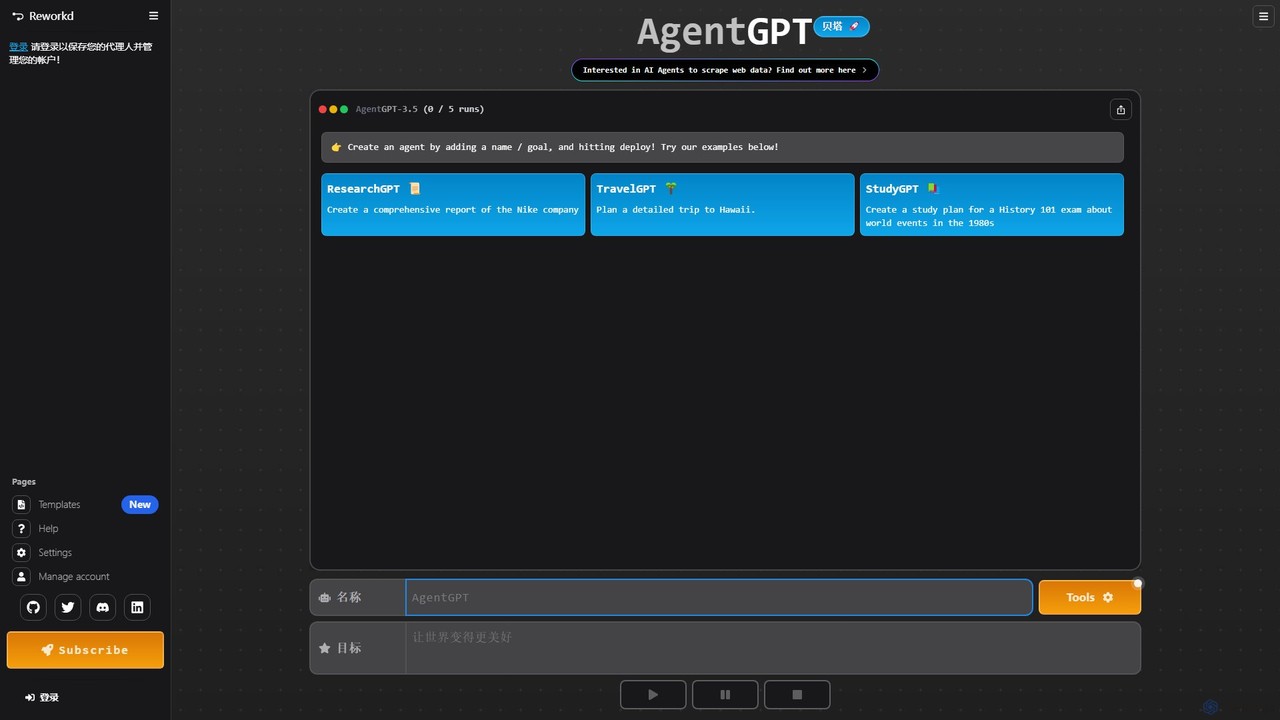
A powerful platform that allows you to configure and deploy autonomous AI agents directly in your browser. Simply …
A powerful platform that allows you to configure and deploy autonomous AI agents directly in your browser. Simply define a goal, and AgentGPT will create a plan, execute tasks, and adapt its strategy to achieve your objective, automating complex processes like research, planning, and content creation.

Dessix
Dessix is an AI-powered knowledge management and writing assistant that creates a shared contextual space for you and …
Dessix is an AI-powered knowledge management and writing assistant that creates a shared contextual space for you and AI. It helps you collect information, organize your thoughts, and write with a context-aware AI that understands your focus, transforming scattered ideas into coherent insights and content.
DeClutr
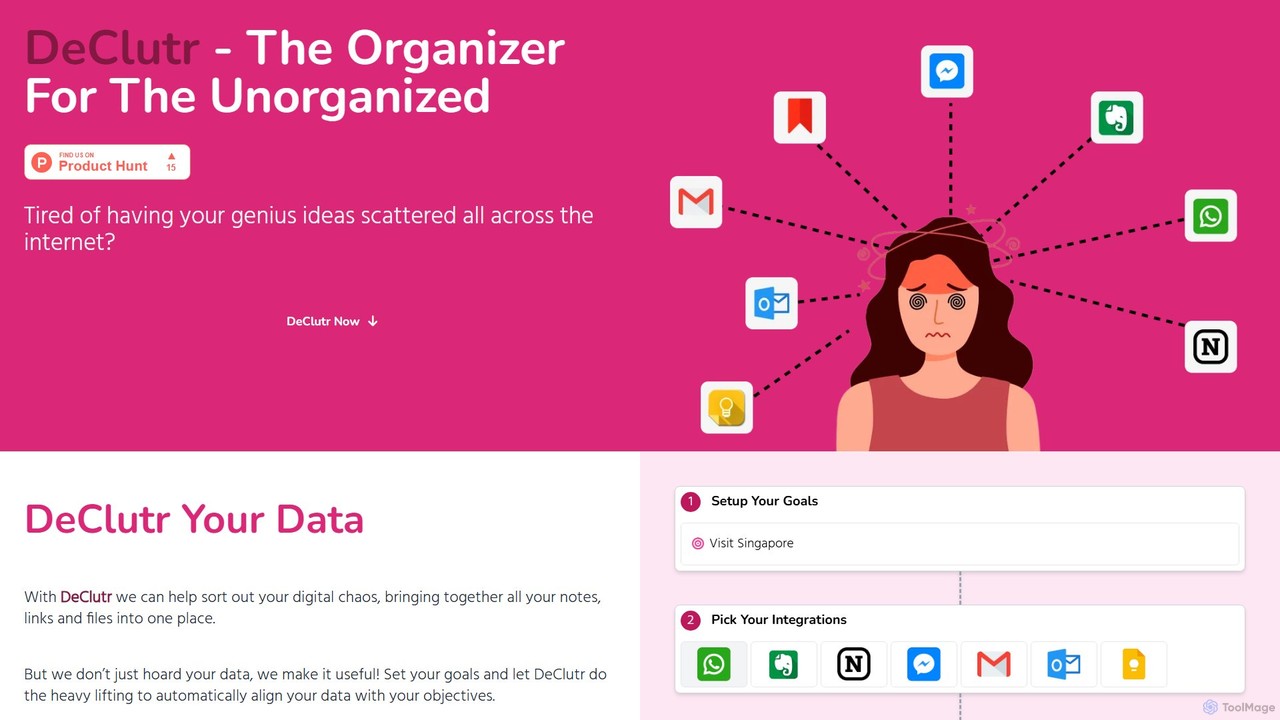
DeClutr is an AI-powered organizer designed for the unorganized. It centralizes your scattered notes, links, and files into …
DeClutr is an AI-powered organizer designed for the unorganized. It centralizes your scattered notes, links, and files into a single, intelligent workspace. The platform not only aggregates your data but also uses AI to align it with your goals, providing actionable insights and tasks to help you achieve your objectives.
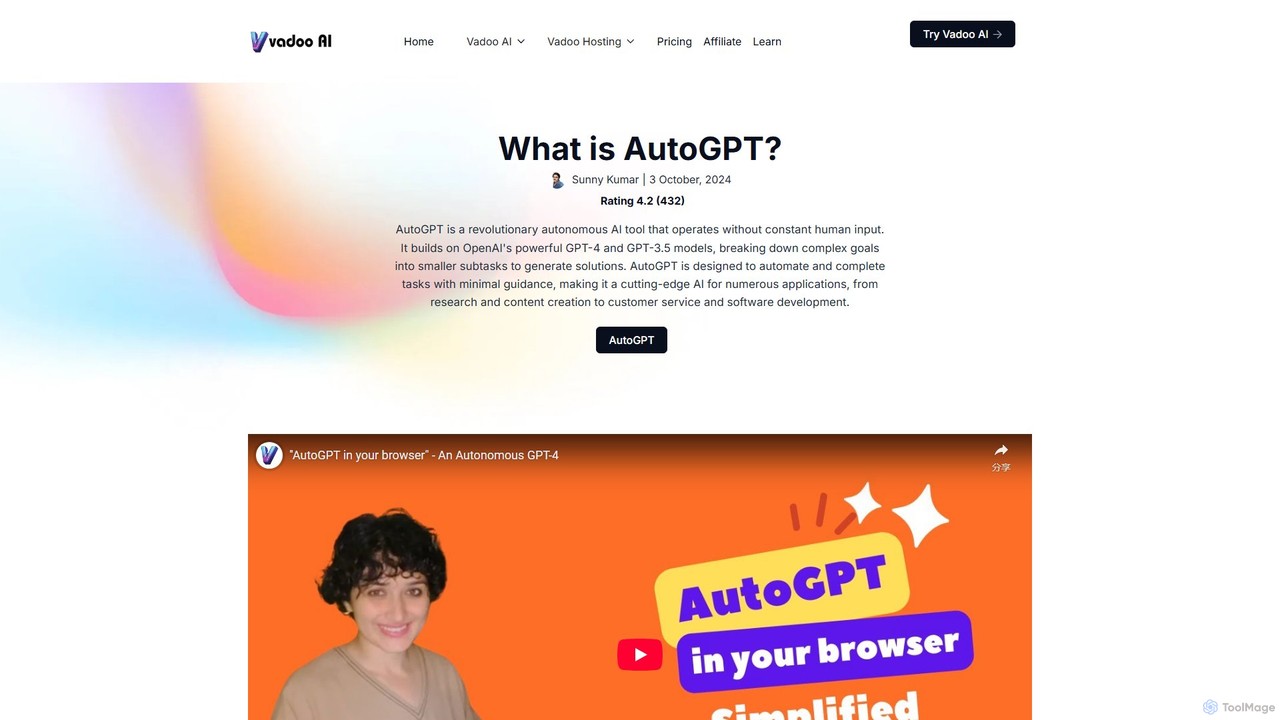
AutoGPT
AutoGPT is a revolutionary open-source autonomous AI agent that leverages GPT-4 and GPT-3.5 to independently achieve complex goals. …
AutoGPT is a revolutionary open-source autonomous AI agent that leverages GPT-4 and GPT-3.5 to independently achieve complex goals. By breaking down high-level objectives into smaller, manageable subtasks, it can browse the web, write code, manage files, and execute plans with minimal human intervention, dramatically boosting productivity and automating complex workflows.

bookmarked.pro
bookmarked.pro is an AI-powered bookmark manager that transforms your saved links into a searchable, organized knowledge base. It …
bookmarked.pro is an AI-powered bookmark manager that transforms your saved links into a searchable, organized knowledge base. It automatically tags, summarizes, and categorizes your content, allowing you to find information instantly with semantic search. Ideal for researchers, students, and professionals overwhelmed by information overload.
About Data Collection
Data Collection tools are AI-powered solutions designed to automate and optimize the process of gathering information from diverse sources. These tools leverage artificial intelligence for intelligent data extraction, filtering, and classification, significantly enhancing the efficiency and accuracy of raw data acquisition. They are crucial for researchers, businesses, and analysts who need to systematically accumulate large volumes of structured and unstructured data for subsequent analysis and insight generation within the broader Research domain.
Core Features
- Automated Web Scraping: Intelligently extracts specific data points from websites at scale, bypassing manual efforts.
- Social Media Monitoring: Tracks and collects public posts, comments, and trends across social platforms for sentiment analysis or market research.
- Sensor Data Aggregation: Gathers and consolidates real-time data from IoT devices and sensors for operational insights.
- Intelligent Document Parsing: Extracts structured information from unstructured documents like PDFs, invoices, or reports using NLP.
- Survey & Feedback Automation: Designs, distributes, and collects responses from surveys, often with AI-driven question generation or response analysis.
Use Cases
These tools are widely used in market research for competitive analysis, academic studies requiring large datasets, and business intelligence for customer behavior tracking. They enable organizations to build comprehensive datasets for training AI models, monitoring industry trends, and making data-driven decisions.
How to Choose
When selecting a Data Collection tool, consider the types of data sources you need to access (web, social, internal documents), the volume and velocity of data required, and the tool's ability to handle data cleaning and structuring. Evaluate its integration capabilities with existing analytics platforms, compliance with data privacy regulations (like GDPR), and the level of technical expertise needed for setup and maintenance.
Data CollectionUse Cases
Automate Market Trend Analysis
Market researchers and business strategists utilize AI data collection tools to continuously monitor industry news, competitor websites, and social media discussions. These tools automatically scrape relevant articles, product reviews, and public sentiment, providing real-time insights into emerging trends, consumer preferences, and competitive landscapes, significantly reducing manual research time.
Build High-Quality AI Training Datasets
AI developers and data scientists employ these tools to gather vast amounts of labeled or unlabeled data necessary for training machine learning models. Whether it's collecting images for computer vision, text for natural language processing, or sensor data for predictive analytics, AI data collection automates the acquisition of diverse and relevant datasets, accelerating model development.
Gather Competitive Intelligence Efficiently
Business intelligence analysts use AI data collection to track competitor pricing, product launches, marketing campaigns, and customer feedback across various online channels. The tools automatically extract and structure this information, enabling businesses to quickly identify competitive advantages, market gaps, and potential threats, informing strategic decisions.
Acquire Data for Academic Research
Academics and university researchers leverage AI data collection for large-scale studies, such as analyzing public discourse on social media, collecting demographic information from open sources, or aggregating scientific literature. These tools streamline the process of building comprehensive datasets for quantitative and qualitative analysis, supporting robust research outcomes.
Monitor Customer Feedback and Sentiment
Product managers and customer experience teams use AI data collection to aggregate customer reviews, support tickets, and social media comments. The tools can automatically identify key themes, common issues, and overall sentiment, providing actionable insights to improve products, services, and customer satisfaction without extensive manual review.
Process Real-time IoT Sensor Data
Operations managers and smart city planners deploy AI data collection solutions to gather and process continuous streams of data from IoT sensors, such as traffic flow, environmental conditions, or machinery performance. These tools intelligently filter and aggregate massive datasets, enabling real-time monitoring, predictive maintenance, and optimized resource allocation.