
ToolMage
Iniciar sesión
Bunnyshell
Infraestructura · 31.3K visitas mensuales

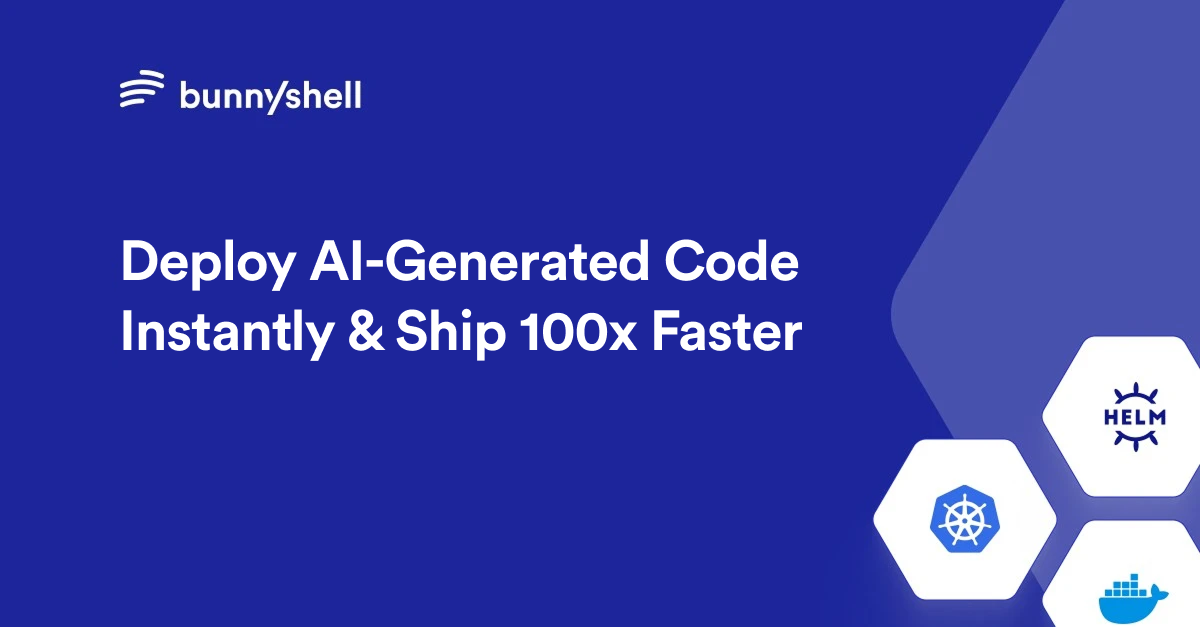
Bunnyshell es una plataforma de Entornos como Servicio (EaaS) orquestada por IA que automatiza la creación de entornos efímeros y similares a producción. Está diseñada para acelerar las pruebas, la revisión y el despliegue de código, especialmente el código generado por IA, permitiendo a los equipos entregar software hasta 100 veces más rápido y reduciendo los costos de la nube hasta en un 70%.

VS
Devtron
Computación en la Nube · 49.8K visitas mensuales

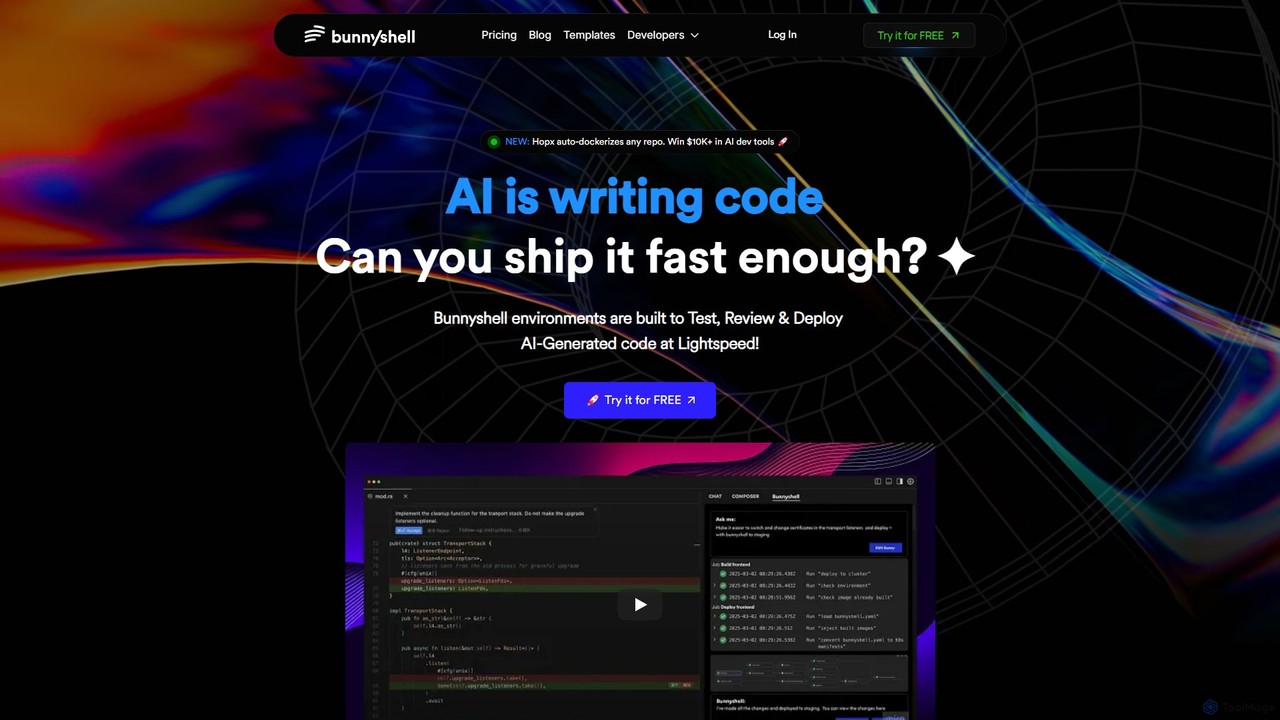
Devtron es una plataforma de entrega de software de código abierto y nativa de Kubernetes que simplifica la gestión de aplicaciones. Integra CI/CD, GitOps, seguridad y observabilidad en un panel unificado, capacitando a los desarrolladores y equipos de DevOps para gestionar entornos complejos de Kubernetes con facilidad, acelerar los ciclos de lanzamiento y mejorar la productividad sin una curva de aprendizaje pronunciada.

Bunnyshell vs Devtron: precios, funciones y tráfico

Compara Bunnyshell y Devtron por posicionamiento, precio, capacidades, tráfico y opiniones.

Actualizado 5 ago 2026

Resumen del producto

Bunnyshell Resumen del producto

Bunnyshell es una plataforma de Entornos como Servicio (EaaS) orquestada por IA que automatiza la creación de entornos efímeros y similares a producción. Está diseñada para acelerar las pruebas, la revisión y el despliegue de código, especialmente el código generado por IA, permitiendo a los equipos entregar software hasta 100 veces más rápido y reduciendo los costos de la nube hasta en un 70%.
Preview

Devtron Resumen del producto

Devtron es una plataforma de entrega de software de código abierto y nativa de Kubernetes que simplifica la gestión de aplicaciones. Integra CI/CD, GitOps, seguridad y observabilidad en un panel unificado, capacitando a los desarrolladores y equipos de DevOps para gestionar entornos complejos de Kubernetes con facilidad, acelerar los ciclos de lanzamiento y mejorar la productividad sin una curva de aprendizaje pronunciada.

Preview

Detailed feature comparison

FeatureBunnyshellDevtron
Categoría principalInfraestructuraComputación en la Nube
Añadido2025-08-062025-08-04
PrecioFreemiumFreemium
Sitio oficialwww.bunnyshell.comdevtron.ai
Tipo de productoSitio webSitio web
Performance data
ValoraciónSin verificarSin verificar
Comentarios00
Visitas mensuales31.3K49.8K
Crecimiento mensual40.2%-3.5%
Favoritos11082
DetailsVer detallesVer detalles

Bunnyshell vs Devtron monthly traffic

Compare Bunnyshell and Devtron by monthly reach, traffic trend, visit depth, top regions, and acquisition sources.

How to interpret the traffic data

In the Bunnyshell vs Devtron monthly traffic comparison, Bunnyshell currently shows 31.3K visits and Devtron shows 49.8K; Devtron has about 1.6 times the visible traffic of Bunnyshell, an absolute difference of about 18.5K visits. This reflects visible reach, not feature quality or paid users.

Both tools provide verified traffic details, so monthly trends, visit depth, regions, and acquisition sources can be compared on the same basis.

Bunnyshell monthly traffic:

Latest traffic

Visitas mensuales
31.3K
Duración media
0:17
Páginas por visita
1.73
Tasa de rebote
39.76%
Data updated 2026-06-15

Monthly traffic trend

  • 2025/9: 24.6K Visitas mensuales
  • 2026/1: 19.2K Visitas mensuales
  • 2026/2: 15.1K Visitas mensuales
  • 2026/3: 16.8K Visitas mensuales
  • 2026/4: 22.3K Visitas mensuales
  • 2026/5: 31.3K Visitas mensuales

Regiones principales

Top 5 countries/regions
Country/regionPercentageTraffic
🇺🇸United States32.09%10K
🇮🇳India29.56%9.3K
🇻🇳Vietnam17.11%5.4K
🇫🇷France10.94%3.4K
🇧🇷Brazil10.3%3.2K

Palabras clave

alternative to vercelbunnyshellcoolify alternativesokteto alternativessite like vercel

Devtron monthly traffic:

Latest traffic

Visitas mensuales
49.8K
Duración media
0:36
Páginas por visita
1.88
Tasa de rebote
39.7%
Data updated 2026-06-15

Monthly traffic trend

  • 2025/9: 77.4K Visitas mensuales
  • 2026/1: 68.9K Visitas mensuales
  • 2026/2: 54K Visitas mensuales
  • 2026/3: 55.9K Visitas mensuales
  • 2026/4: 51.7K Visitas mensuales
  • 2026/5: 49.8K Visitas mensuales

Regiones principales

Top 5 countries/regions
Country/regionPercentageTraffic
🇮🇳India33.05%16.5K
🇺🇸United States20.25%10.1K
🇳🇬Nigeria18.01%9K
🇻🇳Vietnam14.62%7.3K
🇰🇭Cambodia14.07%7K

Fuentes de tráfico

Source typePercentageTraffic
Directo84.81%42.3K
Referido15.19%7.6K

Palabras clave

ai harness frameworkdevtrondevtron secret grafanaharnessk8s cluster alertmanager config
Traffic-based selection guidance: If public market visibility is an important first-pass criterion, investigate Devtron first. The final choice should still follow taxonomy, use case, and a real trial because higher traffic does not prove broader capabilities or better workflow fit.

Usage comparison

Compare the core capabilities of Bunnyshell and Devtron

Bunnyshell Core features

DevOps
Gestión de Proyectos
Infraestructura
Pruebas

Devtron Core features

DevOps
Gestión de Proyectos
Computación en la Nube
Automatización de Despliegue

Use cases

Bunnyshell Use cases

CI/CD
DevOps
Kubernetes
Desarrollo de IA
Gestión de Costos en la Nube
Docker
EaaS
Entorno como Servicio
Entornos Efímeros
Entornos de Previsualización
Despliegue de Software
Entorno de Prueba

Devtron Use cases

CI/CD
DevOps
Kubernetes
Cloud Native
Automatización de Despliegue
DevSecOps
GitOps
Microservicios
Código Abierto
Ingeniería de Plataforma

Bunnyshell vs Devtron:In-depth comparison and selection guidance

First decide whether the products solve the same kind of need

This in-depth Bunnyshell vs Devtron comparison uses only the product records, taxonomy, audience, traffic, and community signals available on this page. Bunnyshell is primarily listed under “Infraestructura”, while Devtron is primarily listed under “Computación en la Nube”, so the first decision is whether your actual task matches their recorded scope.

The structured fields currently show these decision-relevant differences: Primary category (Bunnyshell: Infraestructura; Devtron: Computación en la Nube); Monthly visits (Bunnyshell: 31.3K; Devtron: 49.8K); Monthly growth (Bunnyshell: 40.2%; Devtron: -3.5%); Favorites (Bunnyshell: 110; Devtron: 82); Website (Bunnyshell: www.bunnyshell.com; Devtron: devtron.ai). These facts are more useful for selection than brand visibility alone.

What market visibility and monthly traffic mean

In the Bunnyshell vs Devtron monthly traffic comparison, Bunnyshell currently shows 31.3K visits and Devtron shows 49.8K; Devtron has about 1.6 times the visible traffic of Bunnyshell, an absolute difference of about 18.5K visits. This reflects visible reach, not feature quality or paid users.

Both tools provide verified traffic details, so monthly trends, visit depth, regions, and acquisition sources can be compared on the same basis.

If public market visibility is an important first-pass criterion, investigate Devtron first. The final choice should still follow taxonomy, use case, and a real trial because higher traffic does not prove broader capabilities or better workflow fit.

Product positioning, use cases, and roles

Bunnyshell and Devtron currently overlap in shared categories: DevOps y Gestión de Proyectos; shared tags: CI/CD, DevOps y Kubernetes. This can place both on the same shortlist, but it does not prove equal implementation, depth, or cost.

Bunnyshell's unique categories/tags are Infraestructura, Pruebas, Desarrollo de IA, Gestión de Costos en la Nube, Docker, EaaS, Entorno como Servicio y Entornos Efímeros; Devtron's are Computación en la Nube, Automatización de Despliegue, Cloud Native, DevSecOps, GitOps, Microservicios, Código Abierto e Ingeniería de Plataforma. These unique fields are the strongest differentiators: validate the product whose recorded scope matches the task instead of following traffic alone.

What ratings, comments, and favorites can tell you

Bunnyshell has no verified rating, 0 comments, 110 favorites, and 91 likes;Devtron has no verified rating, 0 comments, 82 favorites, and 93 likes。

Neither product has enough rating or comment samples for a credible reputation ranking.

Selection guidance by actual need

When to evaluate Bunnyshell first

Put Bunnyshell on the priority trial list when the task aligns with “Infraestructura” and especially Infraestructura, Pruebas, Desarrollo de IA, Gestión de Costos en la Nube, Docker y EaaS. This follows recorded positioning and does not imply unlisted capabilities are absent.

Bunnyshell also currently records: pricing is freemium, product type is website, 31.3K verified monthly visits, no verified user rating. Verify any hard requirement around price, platform, or reach before trial, and do not let sparse review data substitute for testing.

When to evaluate Devtron first

Put Devtron on the priority trial list when the task aligns with “Computación en la Nube” and especially Computación en la Nube, Automatización de Despliegue, Cloud Native, DevSecOps, GitOps y Microservicios. This follows recorded positioning and does not imply unlisted capabilities are absent.

Devtron also currently records: pricing is freemium, product type is website, 49.8K verified monthly visits, no verified user rating. Verify any hard requirement around price, platform, or reach before trial, and do not let sparse review data substitute for testing.

How to validate the recommendation before deciding

The available data describes positioning, public visibility, and community signals, but it cannot prove output quality, speed, integration effort, privacy, or long-term cost in your workflow. Before deciding, run the same representative tasks in Bunnyshell and Devtron, then record completion time, accuracy, manual corrections, and the real paid threshold. A like-for-like trial turns this comparison into a defensible adoption decision.

Preguntas frecuentes

How should I choose between Bunnyshell and Devtron?
Compare positioning, pricing, taxonomy, and traffic maturity, then verify the latest details on each official website.
Where does this comparison data come from?
The factual baseline is derived from product, taxonomy, traffic, and community data. Reviewed editorial conclusions show their source and verification date.
What do unknown fields mean?
Unknown means there is not enough reliable evidence; the page does not fill gaps with assumptions.