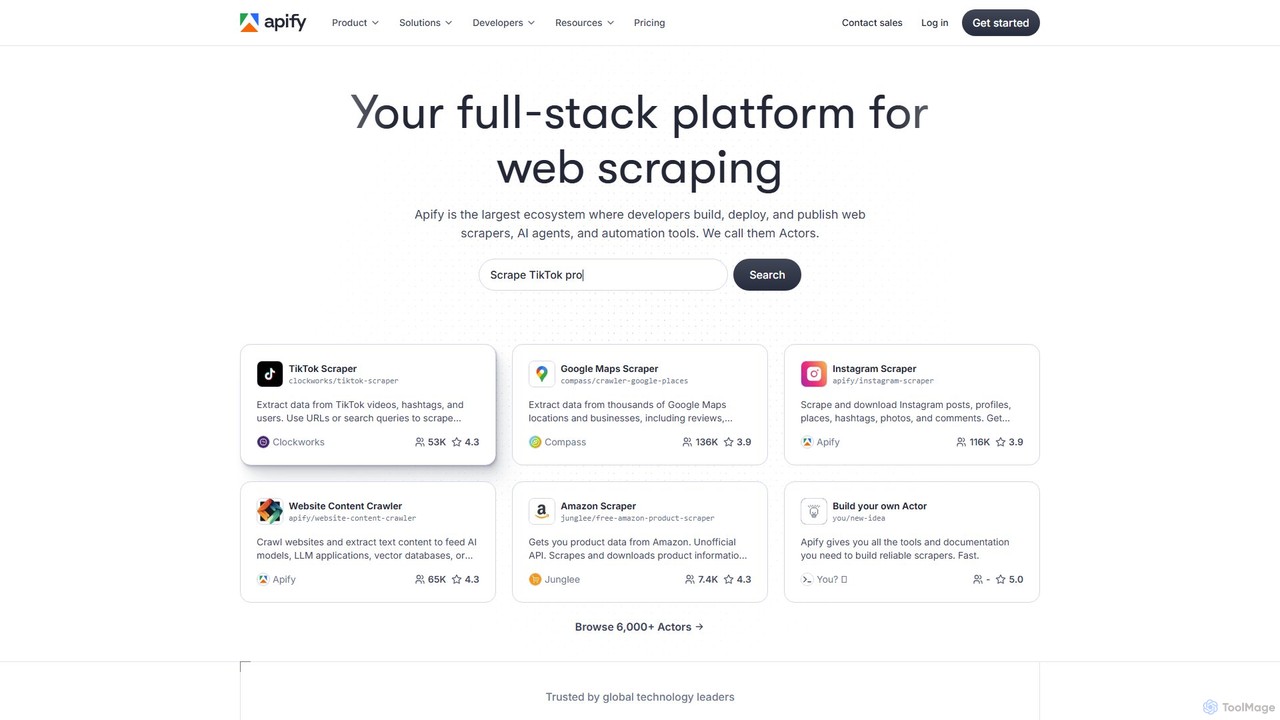
Apifyは、開発者が「Actor」と呼ばれるデータ抽出ツールを構築、デプロイ、公開できるフルスタックのウェブスクレイピングおよび自動化プラットフォームです。Googleマップ、Instagram、TikTokなどの人気ウェブサイト向けの豊富な構築済みスクレイパーマーケットプレイスを提供し、カスタムソリューションを作成するための堅牢なクラウドインフラを備えています。Python、JavaScript、オープンソースライブラリ、シームレスな統合をサポートし、あらゆる規模のウェブデータ収集を簡素化します。

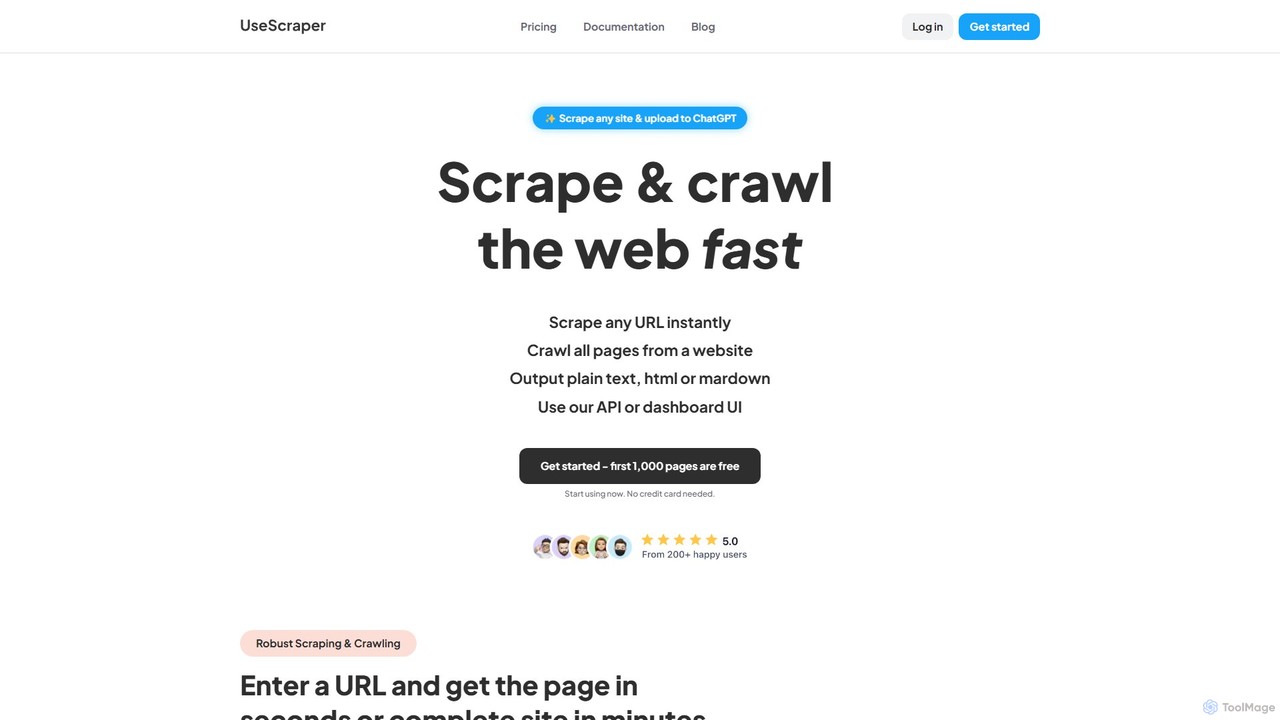
UseScraperは、開発者やAIアプリケーション向けに設計された強力なウェブクローラーおよびスクレイパーAPIです。あらゆるウェブサイトから効率的にデータを抽出し、完全なJavaScriptレンダリング、自動スケーリングインフラ、そしてChatGPTのようなLLMへのデータ供給に最適なクリーンなMarkdownなどの出力形式を特長としています。
製品概要
Apify 製品概要
Apifyは、開発者が「Actor」と呼ばれるデータ抽出ツールを構築、デプロイ、公開できるフルスタックのウェブスクレイピングおよび自動化プラットフォームです。Googleマップ、Instagram、TikTokなどの人気ウェブサイト向けの豊富な構築済みスクレイパーマーケットプレイスを提供し、カスタムソリューションを作成するための堅牢なクラウドインフラを備えています。Python、JavaScript、オープンソースライブラリ、シームレスな統合をサポートし、あらゆる規模のウェブデータ収集を簡素化します。
UseScraper 製品概要
UseScraperは、開発者やAIアプリケーション向けに設計された強力なウェブクローラーおよびスクレイパーAPIです。あらゆるウェブサイトから効率的にデータを抽出し、完全なJavaScriptレンダリング、自動スケーリングインフラ、そしてChatGPTのようなLLMへのデータ供給に最適なクリーンなMarkdownなどの出力形式を特長としています。
Detailed feature comparison
Apify vs UseScraper monthly traffic
Compare Apify and UseScraper by monthly reach, traffic trend, visit depth, top regions, and acquisition sources.
How to interpret the traffic data
In the Apify vs UseScraper monthly traffic comparison, Apify currently shows 4.4M visits and UseScraper shows 4K; Apify has about 1,095.4 times the visible traffic of UseScraper, an absolute difference of about 4.4M visits. This reflects visible reach, not feature quality or paid users.
Only Apify has complete third-party traffic details; UseScraper uses visits recorded inside ToolMage. These scopes cannot estimate market share directly, and on-site views should not be treated as the product’s total website traffic.
Apify monthly traffic:
Latest traffic
Monthly traffic trend
- 2025/9: 1.9M 月間訪問数
- 2026/1: 2.5M 月間訪問数
- 2026/2: 2.5M 月間訪問数
- 2026/3: 3.8M 月間訪問数
- 2026/4: 4.1M 月間訪問数
- 2026/5: 4.4M 月間訪問数
主要地域
Top 5 countries/regions
| Country/region | Percentage | Traffic |
|---|---|---|
| 🇺🇸United States | 40.31% | 1.8M |
| 🇮🇳India | 31.99% | 1.4M |
| 🇧🇷Brazil | 10.35% | 457.4K |
| 🇬🇧United Kingdom | 8.77% | 387.5K |
| 🇩🇪Germany | 8.58% | 379.1K |
流入元
| Source type | Percentage | Traffic |
|---|---|---|
| ダイレクト | 84.73% | 3.7M |
| 参照元 | 11.9% | 525.9K |
| Eメール | 3.37% | 148.9K |
検索キーワード
UseScraper monthly traffic:
Latest traffic
Usage comparison
Compare the core capabilities of Apify and UseScraper
Apify Core features
UseScraper Core features
Use cases
Apify Use cases
UseScraper Use cases
Apify vs UseScraper:In-depth comparison and selection guidance
First decide whether the products solve the same kind of need
This in-depth Apify vs UseScraper comparison uses only the product records, taxonomy, audience, traffic, and community signals available on this page. Apify is primarily listed under “データ収集”, while UseScraper is primarily listed under “データ抽出”, so the first decision is whether your actual task matches their recorded scope.
The structured fields currently show these decision-relevant differences: Primary category (Apify: データ収集; UseScraper: データ抽出); Monthly visits (Apify: 4.4M; UseScraper: 4K); Favorites (Apify: 102; UseScraper: 115); Website (Apify: apify.com; UseScraper: usescraper.com); Added (Apify: 2025-08-16; UseScraper: 2025-08-05). These facts are more useful for selection than brand visibility alone.
What market visibility and monthly traffic mean
In the Apify vs UseScraper monthly traffic comparison, Apify currently shows 4.4M visits and UseScraper shows 4K; Apify has about 1,095.4 times the visible traffic of UseScraper, an absolute difference of about 4.4M visits. This reflects visible reach, not feature quality or paid users.
Only Apify has complete third-party traffic details; UseScraper uses visits recorded inside ToolMage. These scopes cannot estimate market share directly, and on-site views should not be treated as the product’s total website traffic.
The current traffic scope is not sufficient for a reliable product ranking. Treat monthly visits as a market-interest signal, then decide using taxonomy, use cases, pricing, and a like-for-like trial rather than reading exposure as product capability.
Product positioning, use cases, and roles
Apify and UseScraper currently overlap in shared categories: データ抽出、自動化; shared tags: AIデータ、API、自動化、データ抽出、開発者ツール、検索拡張生成、ウェブクローラー、Webスクレイピング. This can place both on the same shortlist, but it does not prove equal implementation, depth, or cost.
Apify's unique categories/tags are データ収集、ウェブスクレイピング、データマイニング、JavaScript、リード生成、Python; UseScraper's are API、ChatGPT、データ収集、JavaScript レンダリング、マークダウン. These unique fields are the strongest differentiators: validate the product whose recorded scope matches the task instead of following traffic alone.
What ratings, comments, and favorites can tell you
Apify has no verified rating, 0 comments, 102 favorites, and 104 likes;UseScraper has no verified rating, 0 comments, 115 favorites, and 112 likes。
Neither product has enough rating or comment samples for a credible reputation ranking.
Selection guidance by actual need
When to evaluate Apify first
Put Apify on the priority trial list when the task aligns with “データ収集” and especially データ収集、ウェブスクレイピング、データマイニング、JavaScript、リード生成、Python. This follows recorded positioning and does not imply unlisted capabilities are absent.
Apify also currently records: pricing is freemium, product type is website, 4.4M verified monthly visits, no verified user rating. Verify any hard requirement around price, platform, or reach before trial, and do not let sparse review data substitute for testing.
When to evaluate UseScraper first
Put UseScraper on the priority trial list when the task aligns with “データ抽出” and especially API、ChatGPT、データ収集、JavaScript レンダリング、マークダウン. This follows recorded positioning and does not imply unlisted capabilities are absent.
UseScraper also currently records: pricing is freemium, product type is website, 4K on-site monthly views, no verified user rating. Verify any hard requirement around price, platform, or reach before trial, and do not let sparse review data substitute for testing.
How to validate the recommendation before deciding
The available data describes positioning, public visibility, and community signals, but it cannot prove output quality, speed, integration effort, privacy, or long-term cost in your workflow. Before deciding, run the same representative tasks in Apify and UseScraper, then record completion time, accuracy, manual corrections, and the real paid threshold. A like-for-like trial turns this comparison into a defensible adoption decision.