Browser Use
データ抽出 · 540K 月間訪問数
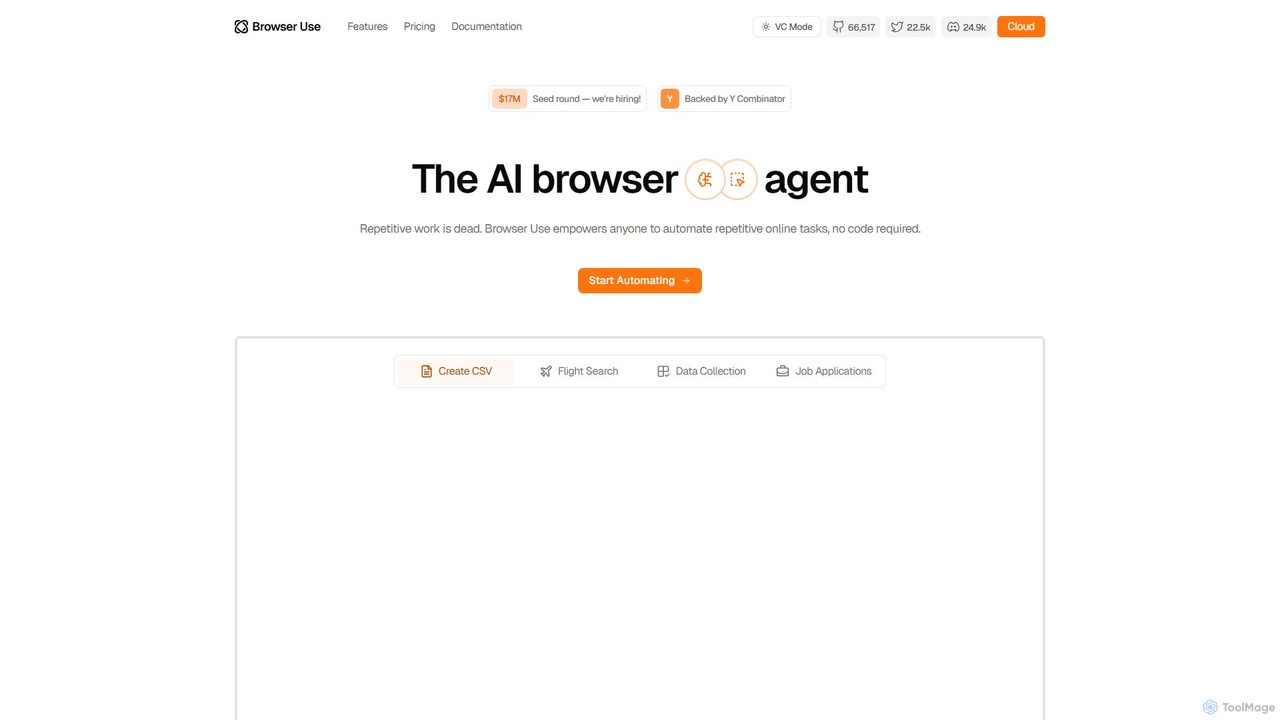
Browser Useは、コーディング不要で反復的なオンラインタスクを自動化するAI搭載のブラウザエージェントです。複雑なデータスクレイピング、フォーム入力、その他のウェブベースのワークフローを処理できます。Y Combinatorの支援を受けており、ユーザー向けのシンプルなチャットインターフェースと、開発者向けの強力なAPIを提供し、オンライン活動を効率化します。
Browser Useは、コーディング不要で反復的なオンラインタスクを自動化するAI搭載のブラウザエージェントです。複雑なデータスクレイピング、フォーム入力、その他のウェブベースのワークフローを処理できます。Y Combinatorの支援を受けており、ユーザー向けのシンプルなチャットインターフェースと、開発者向けの強力なAPIを提供し、オンライン活動を効率化します。
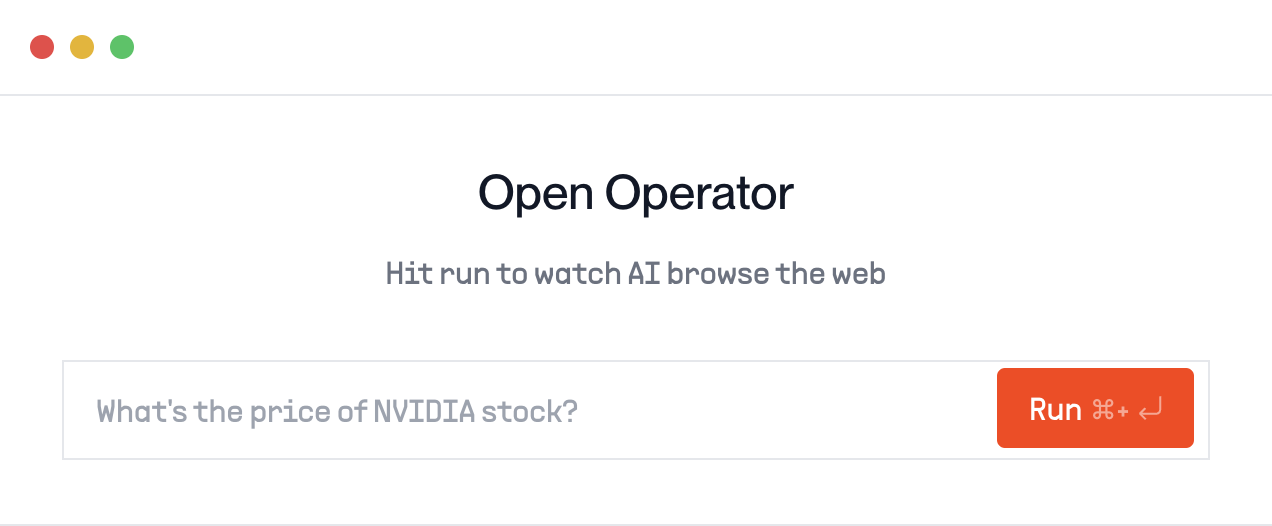
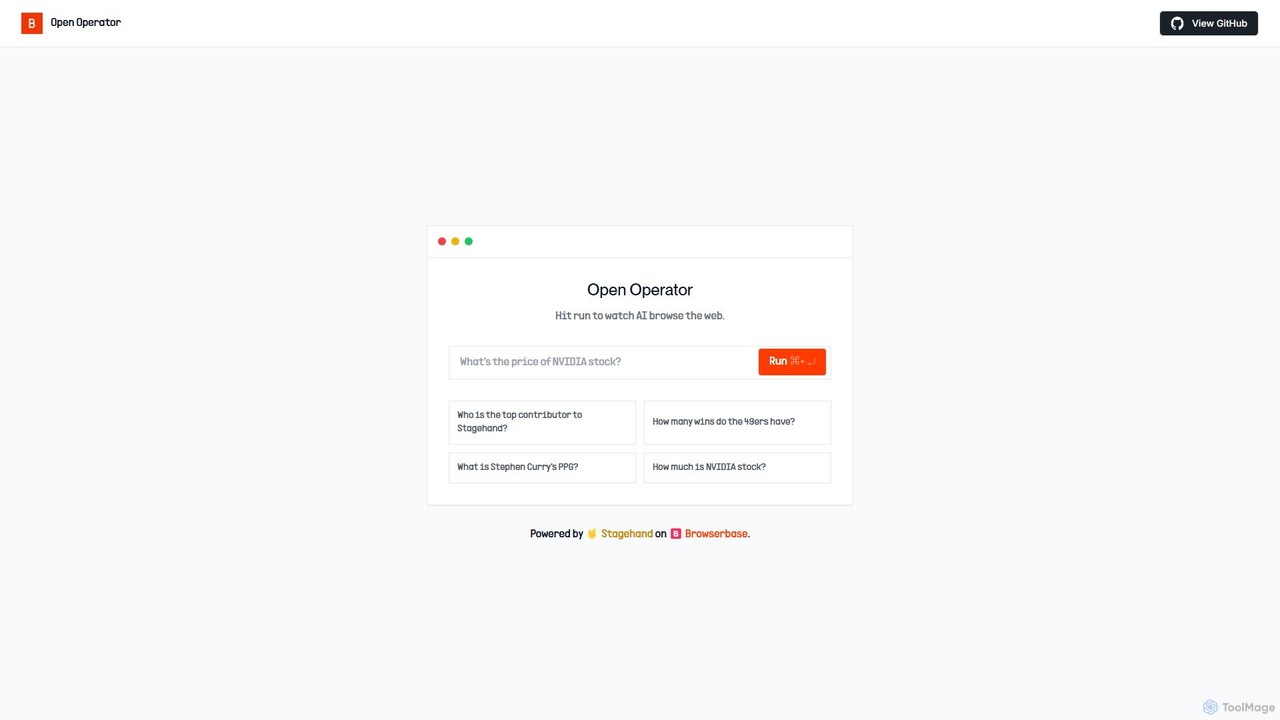
Open Operatorは、AIを搭載したウェブエージェントで、自律的にインターネットを閲覧して質問に答え、タスクを完了します。自然言語でプロンプトを入力するだけで、AIがウェブサイトをナビゲートし、情報を収集し、リアルタイムで回答を提供する様子を見ることができ、リサーチやデータ収集作業を自動化します。
Browser Useは、コーディング不要で反復的なオンラインタスクを自動化するAI搭載のブラウザエージェントです。複雑なデータスクレイピング、フォーム入力、その他のウェブベースのワークフローを処理できます。Y Combinatorの支援を受けており、ユーザー向けのシンプルなチャットインターフェースと、開発者向けの強力なAPIを提供し、オンライン活動を効率化します。
Open Operatorは、AIを搭載したウェブエージェントで、自律的にインターネットを閲覧して質問に答え、タスクを完了します。自然言語でプロンプトを入力するだけで、AIがウェブサイトをナビゲートし、情報を収集し、リアルタイムで回答を提供する様子を見ることができ、リサーチやデータ収集作業を自動化します。
| Feature | Browser Use | Open Operator |
|---|---|---|
| 主要カテゴリー | データ抽出 | API |
| 追加日 | 2025-08-04 | 2025-08-03 |
| 価格 | フリーミアム | 無料 |
| 公式サイト | browser-use.com | operator.browserbase.com |
| 製品タイプ | ウェブサイト | ウェブサイト |
| Performance data | ||
| ユーザー評価 | 未確認 | 未確認 |
| コメント | 0 | 0 |
| 月間訪問数 | 540K | 870 |
| 月間成長率 | -1.5% | -85.7% |
| お気に入り | 115 | 132 |
| Details | 詳細を見る | 詳細を見る |
Compare Browser Use and Open Operator by monthly reach, traffic trend, visit depth, top regions, and acquisition sources.
In the Browser Use vs Open Operator monthly traffic comparison, Browser Use currently shows 540K visits and Open Operator shows 870; Browser Use has about 620.7 times the visible traffic of Open Operator, an absolute difference of about 539.1K visits. This reflects visible reach, not feature quality or paid users.
Both tools provide verified traffic details, so monthly trends, visit depth, regions, and acquisition sources can be compared on the same basis.
| Country/region | Percentage | Traffic |
|---|---|---|
| 🇺🇸United States | 43.09% | 232.7K |
| 🇨🇳China | 25.26% | 136.4K |
| 🇮🇳India | 17.4% | 94K |
| 🇹🇼Taiwan | 8.1% | 43.7K |
| 🇩🇪Germany | 6.15% | 33.2K |
| Source type | Percentage | Traffic |
|---|---|---|
| ダイレクト | 81.44% | 439.8K |
| 参照元 | 17.44% | 94.2K |
| Eメール | 1.12% | 6K |
| Country/region | Percentage | Traffic |
|---|---|---|
| 🇺🇸United States | 46.98% | 409 |
| 🇮🇳India | 20.5% | 178 |
| 🇩🇰Denmark | 15.37% | 134 |
| 🇮🇹Italy | 9.87% | 86 |
| 🇷🇴Romania | 7.28% | 63 |
This in-depth Browser Use vs Open Operator comparison uses only the product records, taxonomy, audience, traffic, and community signals available on this page. Browser Use is primarily listed under “データ抽出”, while Open Operator is primarily listed under “API”, so the first decision is whether your actual task matches their recorded scope.
The structured fields currently show these decision-relevant differences: Primary category (Browser Use: データ抽出; Open Operator: API); Pricing (Browser Use: Freemium; Open Operator: Free); Monthly visits (Browser Use: 540K; Open Operator: 870); Monthly growth (Browser Use: -1.5%; Open Operator: -85.7%); Favorites (Browser Use: 115; Open Operator: 132). These facts are more useful for selection than brand visibility alone.
In the Browser Use vs Open Operator monthly traffic comparison, Browser Use currently shows 540K visits and Open Operator shows 870; Browser Use has about 620.7 times the visible traffic of Open Operator, an absolute difference of about 539.1K visits. This reflects visible reach, not feature quality or paid users.
Both tools provide verified traffic details, so monthly trends, visit depth, regions, and acquisition sources can be compared on the same basis.
If public market visibility is an important first-pass criterion, investigate Browser Use first. The final choice should still follow taxonomy, use case, and a real trial because higher traffic does not prove broader capabilities or better workflow fit.
Browser Use and Open Operator currently overlap in shared categories: API、自動化; shared tags: ブラウザ自動化、データ抽出、オープンソース. This can place both on the same shortlist, but it does not prove equal implementation, depth, or cost.
Browser Use's unique categories/tags are データ抽出、ワークフロー自動化、API、フォーム入力、ノーコード、RPA、Webスクレイピング、Y Combinator; Open Operator's are 検索エンジン、AIエージェント、情報検索、自然言語処理、研究アシスタント、ウェブ自動化. These unique fields are the strongest differentiators: validate the product whose recorded scope matches the task instead of following traffic alone.
Browser Use has no verified rating, 0 comments, 115 favorites, and 109 likes;Open Operator has no verified rating, 0 comments, 132 favorites, and 126 likes。
Neither product has enough rating or comment samples for a credible reputation ranking.
Put Browser Use on the priority trial list when the task aligns with “データ抽出” and especially データ抽出、ワークフロー自動化、API、フォーム入力、ノーコード、RPA. This follows recorded positioning and does not imply unlisted capabilities are absent.
Browser Use also currently records: pricing is freemium, product type is website, 540K verified monthly visits, no verified user rating. Verify any hard requirement around price, platform, or reach before trial, and do not let sparse review data substitute for testing.
Put Open Operator on the priority trial list when the task aligns with “API” and especially 検索エンジン、AIエージェント、情報検索、自然言語処理、研究アシスタント、ウェブ自動化. This follows recorded positioning and does not imply unlisted capabilities are absent.
Open Operator also currently records: pricing is free, product type is website, 870 verified monthly visits, no verified user rating. Verify any hard requirement around price, platform, or reach before trial, and do not let sparse review data substitute for testing.
The available data describes positioning, public visibility, and community signals, but it cannot prove output quality, speed, integration effort, privacy, or long-term cost in your workflow. Before deciding, run the same representative tasks in Browser Use and Open Operator, then record completion time, accuracy, manual corrections, and the real paid threshold. A like-for-like trial turns this comparison into a defensible adoption decision.