Pandalyst é uma plataforma de análise de dados alimentada por IA que transforma a forma como você interage com os dados. Faça perguntas em linguagem natural e receba visualizações, insights e relatórios instantâneos. Ele automatiza tarefas complexas de dados, tornando a inteligência de negócios acessível a todos, de analistas a líderes de negócios, sem escrever uma única linha de código.

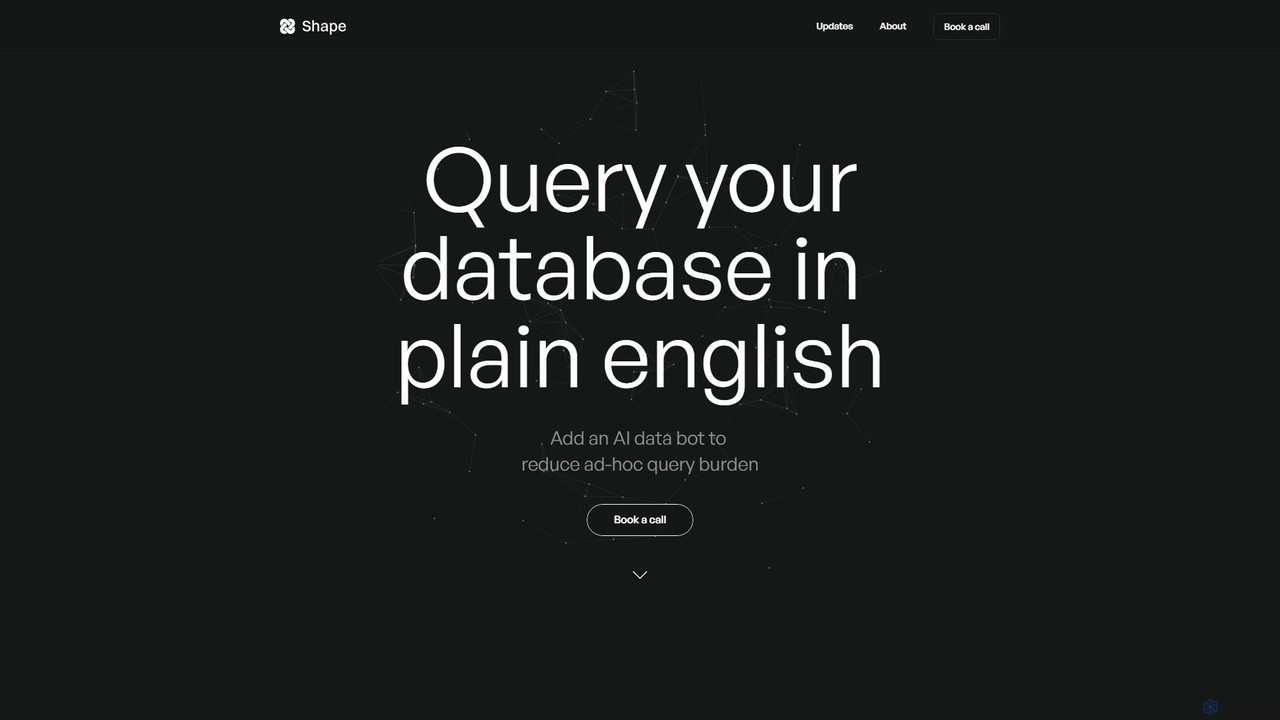
Shape é um analista de dados alimentado por IA que permite que as equipes consultem seus bancos de dados usando inglês simples. Ele se conecta à sua pilha de dados existente e permite que usuários não técnicos obtenham respostas instantâneas para perguntas complexas de dados por meio de integrações como Slack e Microsoft Teams. Ao traduzir a linguagem natural em SQL avançado, o Shape fornece respostas detalhadas, visualizações automatizadas e libera os analistas de dados do fardo de consultas ad-hoc, tornando os dados acessíveis a todos na organização.
Visão geral
pandalyst Visão geral
Pandalyst é uma plataforma de análise de dados alimentada por IA que transforma a forma como você interage com os dados. Faça perguntas em linguagem natural e receba visualizações, insights e relatórios instantâneos. Ele automatiza tarefas complexas de dados, tornando a inteligência de negócios acessível a todos, de analistas a líderes de negócios, sem escrever uma única linha de código.

Shape Visão geral
Shape é um analista de dados alimentado por IA que permite que as equipes consultem seus bancos de dados usando inglês simples. Ele se conecta à sua pilha de dados existente e permite que usuários não técnicos obtenham respostas instantâneas para perguntas complexas de dados por meio de integrações como Slack e Microsoft Teams. Ao traduzir a linguagem natural em SQL avançado, o Shape fornece respostas detalhadas, visualizações automatizadas e libera os analistas de dados do fardo de consultas ad-hoc, tornando os dados acessíveis a todos na organização.
Detailed feature comparison
| Feature | pandalyst | Shape |
|---|---|---|
| Categoria principal | Low-code No-code | API |
| Adicionado | 2025-08-08 | 2025-08-07 |
| Preço | Freemium | Pago |
| Site oficial | pandalyst.com | shape.xyz |
| Tipo de produto | Site | Site |
| Performance data | ||
| Avaliação | Não verificado | Não verificado |
| Comentários | 0 | 0 |
| Visitas mensais | 3.4K | 1.2K |
| Crescimento mensal | Não verificado | 163.1% |
| Favoritos | 157 | 111 |
| Details | Ver detalhes | Ver detalhes |
pandalyst vs Shape monthly traffic
Compare pandalyst and Shape by monthly reach, traffic trend, visit depth, top regions, and acquisition sources.
How to interpret the traffic data
In the pandalyst vs Shape monthly traffic comparison, pandalyst currently shows 3.4K visits and Shape shows 1.2K; pandalyst has about 2.8 times the visible traffic of Shape, an absolute difference of about 2.1K visits. This reflects visible reach, not feature quality or paid users.
Only Shape has complete third-party traffic details; pandalyst uses visits recorded inside ToolMage. These scopes cannot estimate market share directly, and on-site views should not be treated as the product’s total website traffic.
pandalyst monthly traffic:
Latest traffic
Shape monthly traffic:
Latest traffic
Monthly traffic trend
- 2025/8: 795 Visitas mensais
- 2025/9: 365 Visitas mensais
- 2026/2: 0 Visitas mensais
- 2026/3: 0 Visitas mensais
- 2026/4: 461 Visitas mensais
- 2026/5: 1.2K Visitas mensais
Principais regiões
Top 5 countries/regions
| Country/region | Percentage | Traffic |
|---|---|---|
| 🇮🇳India | 51.57% | 626 |
| 🇺🇸United States | 48.43% | 587 |
Palavras-chave
Usage comparison
Compare the core capabilities of pandalyst and Shape
pandalyst Core features
Shape Core features
Use cases
pandalyst Use cases
Shape Use cases
pandalyst vs Shape:In-depth comparison and selection guidance
First decide whether the products solve the same kind of need
This in-depth pandalyst vs Shape comparison uses only the product records, taxonomy, audience, traffic, and community signals available on this page. pandalyst is primarily listed under “Low-code No-code”, while Shape is primarily listed under “API”, so the first decision is whether your actual task matches their recorded scope.
The structured fields currently show these decision-relevant differences: Primary category (pandalyst: Low-code No-code; Shape: API); Pricing (pandalyst: Freemium; Shape: Paid); Monthly visits (pandalyst: 3.4K; Shape: 1.2K); Favorites (pandalyst: 157; Shape: 111); Website (pandalyst: pandalyst.com; Shape: shape.xyz). These facts are more useful for selection than brand visibility alone.
What market visibility and monthly traffic mean
In the pandalyst vs Shape monthly traffic comparison, pandalyst currently shows 3.4K visits and Shape shows 1.2K; pandalyst has about 2.8 times the visible traffic of Shape, an absolute difference of about 2.1K visits. This reflects visible reach, not feature quality or paid users.
Only Shape has complete third-party traffic details; pandalyst uses visits recorded inside ToolMage. These scopes cannot estimate market share directly, and on-site views should not be treated as the product’s total website traffic.
The current traffic scope is not sufficient for a reliable product ranking. Treat monthly visits as a market-interest signal, then decide using taxonomy, use cases, pricing, and a like-for-like trial rather than reading exposure as product capability.
Product positioning, use cases, and roles
pandalyst and Shape currently overlap in shared categories: Automação; shared tags: Analista de IA, Inteligência de Negócios, Painel, análise de dados, visualização de dados, No-code e SQL. This can place both on the same shortlist, but it does not prove equal implementation, depth, or cost.
pandalyst's unique categories/tags are Low-code No-code, Análise, processamento de linguagem natural, pandas, Python e Relatórios; Shape's are API, banco de dados, Consulta em linguagem natural e Integração com Slack. These unique fields are the strongest differentiators: validate the product whose recorded scope matches the task instead of following traffic alone.
What ratings, comments, and favorites can tell you
pandalyst has no verified rating, 0 comments, 157 favorites, and 142 likes;Shape has no verified rating, 0 comments, 111 favorites, and 94 likes。
Neither product has enough rating or comment samples for a credible reputation ranking.
Selection guidance by actual need
When to evaluate pandalyst first
Put pandalyst on the priority trial list when the task aligns with “Low-code No-code” and especially Low-code No-code, Análise, processamento de linguagem natural, pandas, Python e Relatórios. This follows recorded positioning and does not imply unlisted capabilities are absent.
pandalyst also currently records: pricing is freemium, product type is website, 3.4K on-site monthly views, no verified user rating. Verify any hard requirement around price, platform, or reach before trial, and do not let sparse review data substitute for testing.
When to evaluate Shape first
Put Shape on the priority trial list when the task aligns with “API” and especially API, banco de dados, Consulta em linguagem natural e Integração com Slack. This follows recorded positioning and does not imply unlisted capabilities are absent.
Shape also currently records: pricing is paid, product type is website, 1.2K verified monthly visits, no verified user rating. Verify any hard requirement around price, platform, or reach before trial, and do not let sparse review data substitute for testing.
How to validate the recommendation before deciding
The available data describes positioning, public visibility, and community signals, but it cannot prove output quality, speed, integration effort, privacy, or long-term cost in your workflow. Before deciding, run the same representative tasks in pandalyst and Shape, then record completion time, accuracy, manual corrections, and the real paid threshold. A like-for-like trial turns this comparison into a defensible adoption decision.