hyperficient ist ein Open-Source-KI-Tool für Entwickler und ML-Ingenieure, das die Suche nach den effizientesten Feinabstimmungsstrategien für neuronale Netze automatisiert. Es reduziert Rechenkosten, GPU-Zeit und manuellen Aufwand erheblich und ermöglicht eine optimale Modellleistung bei begrenzten Ressourcen.
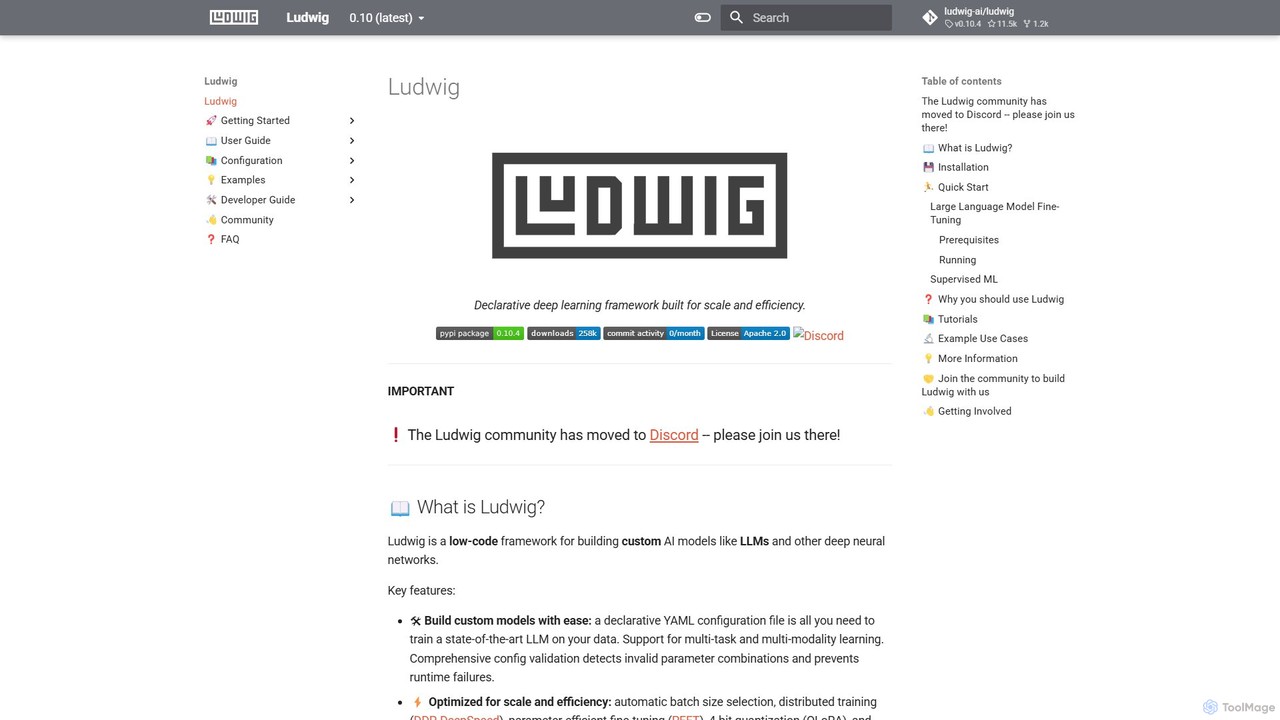
Ludwig ist ein Low-Code, Open-Source Deep-Learning-Framework, das die Erstellung und das Training von benutzerdefinierten KI-Modellen vereinfacht. Mithilfe deklarativer YAML-Konfigurationen können Benutzer problemlos komplexe Modelle, einschließlich LLMs, für multimodales und Multi-Task-Lernen erstellen, ohne umfangreichen Boilerplate-Code schreiben zu müssen. Es ist auf Skalierbarkeit und Produktionsreife ausgelegt und integriert sich in beliebte Tools wie HuggingFace und MLFlow.
Produktübersicht
hyperficient Produktübersicht
hyperficient ist ein Open-Source-KI-Tool für Entwickler und ML-Ingenieure, das die Suche nach den effizientesten Feinabstimmungsstrategien für neuronale Netze automatisiert. Es reduziert Rechenkosten, GPU-Zeit und manuellen Aufwand erheblich und ermöglicht eine optimale Modellleistung bei begrenzten Ressourcen.
Ludwig Produktübersicht
Ludwig ist ein Low-Code, Open-Source Deep-Learning-Framework, das die Erstellung und das Training von benutzerdefinierten KI-Modellen vereinfacht. Mithilfe deklarativer YAML-Konfigurationen können Benutzer problemlos komplexe Modelle, einschließlich LLMs, für multimodales und Multi-Task-Lernen erstellen, ohne umfangreichen Boilerplate-Code schreiben zu müssen. Es ist auf Skalierbarkeit und Produktionsreife ausgelegt und integriert sich in beliebte Tools wie HuggingFace und MLFlow.
Detailed feature comparison
| Feature | hyperficient | Ludwig |
|---|---|---|
| Hauptkategorie | Bibliotheken | Modelltraining |
| Hinzugefügt | 2025-08-07 | 2025-08-07 |
| Preismodell | Kostenlos | Kostenlos |
| Offizielle Website | hyperficient.org | ludwig.ai |
| Produkttyp | Website | Website |
| Performance data | ||
| Nutzerbewertung | Nicht verifiziert | Nicht verifiziert |
| Kommentare | 0 | 0 |
| Monatliche Besuche | 3.3K | 6.6K |
| Monatliches Wachstum | Nicht verifiziert | 3.4% |
| Favoriten | 104 | 83 |
| Details | Details ansehen | Details ansehen |
hyperficient vs Ludwig monthly traffic
Compare hyperficient and Ludwig by monthly reach, traffic trend, visit depth, top regions, and acquisition sources.
How to interpret the traffic data
In the hyperficient vs Ludwig monthly traffic comparison, hyperficient currently shows 3.3K visits and Ludwig shows 6.6K; Ludwig has about 2 times the visible traffic of hyperficient, an absolute difference of about 3.3K visits. This reflects visible reach, not feature quality or paid users.
Only Ludwig has complete third-party traffic details; hyperficient uses visits recorded inside ToolMage. These scopes cannot estimate market share directly, and on-site views should not be treated as the product’s total website traffic.
Ludwig is registered at the ludwig.ai/latest subpage. Because the current data does not state whether other host pages are excluded, treat this as domain-level context rather than independent traffic for one product or project.

hyperficient monthly traffic:
Latest traffic
Ludwig monthly traffic:
Latest traffic
Monthly traffic trend
- 2026/1: 7.2K Monatliche Besuche
- 2026/2: 5.3K Monatliche Besuche
- 2026/3: 6.5K Monatliche Besuche
- 2026/4: 6.3K Monatliche Besuche
- 2026/5: 6.6K Monatliche Besuche
Top-Regionen
Top 5 countries/regions
| Country/region | Percentage | Traffic |
|---|---|---|
| 🇺🇸United States | 62.41% | 4.1K |
| 🇮🇳India | 25.98% | 1.7K |
| 🇨🇦Canada | 7.38% | 484 |
| 🇻🇳Vietnam | 4.23% | 277 |
Suchbegriffe
Usage comparison
Compare the core capabilities of hyperficient and Ludwig
hyperficient Core features
Ludwig Core features
Use cases
hyperficient Use cases
Ludwig Use cases
hyperficient vs Ludwig:In-depth comparison and selection guidance
First decide whether the products solve the same kind of need
This in-depth hyperficient vs Ludwig comparison uses only the product records, taxonomy, audience, traffic, and community signals available on this page. hyperficient is primarily listed under “Bibliotheken”, while Ludwig is primarily listed under “Modelltraining”, so the first decision is whether your actual task matches their recorded scope.
The structured fields currently show these decision-relevant differences: Primary category (hyperficient: Bibliotheken; Ludwig: Modelltraining); Monthly visits (hyperficient: 3.3K; Ludwig: 6.6K); Favorites (hyperficient: 104; Ludwig: 83); Website (hyperficient: hyperficient.org; Ludwig: ludwig.ai). These facts are more useful for selection than brand visibility alone.
What market visibility and monthly traffic mean
In the hyperficient vs Ludwig monthly traffic comparison, hyperficient currently shows 3.3K visits and Ludwig shows 6.6K; Ludwig has about 2 times the visible traffic of hyperficient, an absolute difference of about 3.3K visits. This reflects visible reach, not feature quality or paid users.
Only Ludwig has complete third-party traffic details; hyperficient uses visits recorded inside ToolMage. These scopes cannot estimate market share directly, and on-site views should not be treated as the product’s total website traffic.
Ludwig is registered at the ludwig.ai/latest subpage. Because the current data does not state whether other host pages are excluded, treat this as domain-level context rather than independent traffic for one product or project.
Ludwig is registered under a ludwig.ai subpath, so its large visible total may include the host platform. The current data does not justify choosing Ludwig for traffic alone; shortlist by unique taxonomy and use case, then validate with the same tasks.
Product positioning, use cases, and roles
hyperficient and Ludwig currently overlap in shared categories: Maschinelles Lernen; shared tags: Feinabstimmung, Großes Sprachmodell, maschinelles Lernen, Open Source und Python. This can place both on the same shortlist, but it does not prove equal implementation, depth, or cost.
hyperficient's unique categories/tags are Bibliotheken, Automatisierung, Entwicklerwerkzeuge, Effizienz, Modelloptimierung, neuronale Netze, PEFT und PyTorch; Ludwig's are Modelltraining, Low-Code No-Code, AutoML, Datenwissenschaft, Deklaratives ML, Deep Learning, Rahmen und Low-Code. These unique fields are the strongest differentiators: validate the product whose recorded scope matches the task instead of following traffic alone.
What ratings, comments, and favorites can tell you
hyperficient has no verified rating, 0 comments, 104 favorites, and 104 likes;Ludwig has no verified rating, 0 comments, 83 favorites, and 87 likes。
Neither product has enough rating or comment samples for a credible reputation ranking.
Selection guidance by actual need
When to evaluate hyperficient first
Put hyperficient on the priority trial list when the task aligns with “Bibliotheken” and especially Bibliotheken, Automatisierung, Entwicklerwerkzeuge, Effizienz, Modelloptimierung und neuronale Netze. This follows recorded positioning and does not imply unlisted capabilities are absent.
hyperficient also currently records: pricing is free, product type is website, 3.3K on-site monthly views, no verified user rating. Verify any hard requirement around price, platform, or reach before trial, and do not let sparse review data substitute for testing.
When to evaluate Ludwig first
Put Ludwig on the priority trial list when the task aligns with “Modelltraining” and especially Modelltraining, Low-Code No-Code, AutoML, Datenwissenschaft, Deklaratives ML und Deep Learning. This follows recorded positioning and does not imply unlisted capabilities are absent.
Ludwig also currently records: pricing is free, product type is website, 6.6K monthly visits shown for the registered host (subpage scope unknown), no verified user rating. Verify any hard requirement around price, platform, or reach before trial, and do not let sparse review data substitute for testing.
How to validate the recommendation before deciding
The available data describes positioning, public visibility, and community signals, but it cannot prove output quality, speed, integration effort, privacy, or long-term cost in your workflow. Before deciding, run the same representative tasks in hyperficient and Ludwig, then record completion time, accuracy, manual corrections, and the real paid threshold. A like-for-like trial turns this comparison into a defensible adoption decision.