hyperficient ist ein Open-Source-KI-Tool für Entwickler und ML-Ingenieure, das die Suche nach den effizientesten Feinabstimmungsstrategien für neuronale Netze automatisiert. Es reduziert Rechenkosten, GPU-Zeit und manuellen Aufwand erheblich und ermöglicht eine optimale Modellleistung bei begrenzten Ressourcen.

Sylph AI ist eine Entwicklungsplattform, die darauf ausgelegt ist, das Potenzial von LLM-Anwendungen zu maximieren. Sie bietet AdalFlow, eine führende Open-Source-Bibliothek zum Erstellen und automatischen Optimieren von LLM-Task-Pipelines, sowie einen KI-Teamkollegen, der während des gesamten Entwicklungsworkflows, von der Idee bis zur Produktion, fachkundige Anleitung bietet.
Produktübersicht
hyperficient Produktübersicht
hyperficient ist ein Open-Source-KI-Tool für Entwickler und ML-Ingenieure, das die Suche nach den effizientesten Feinabstimmungsstrategien für neuronale Netze automatisiert. Es reduziert Rechenkosten, GPU-Zeit und manuellen Aufwand erheblich und ermöglicht eine optimale Modellleistung bei begrenzten Ressourcen.

Sylph AI Produktübersicht
Sylph AI ist eine Entwicklungsplattform, die darauf ausgelegt ist, das Potenzial von LLM-Anwendungen zu maximieren. Sie bietet AdalFlow, eine führende Open-Source-Bibliothek zum Erstellen und automatischen Optimieren von LLM-Task-Pipelines, sowie einen KI-Teamkollegen, der während des gesamten Entwicklungsworkflows, von der Idee bis zur Produktion, fachkundige Anleitung bietet.
Detailed feature comparison
| Feature | hyperficient | Sylph AI |
|---|---|---|
| Hauptkategorie | Bibliotheken | Bibliotheken |
| Hinzugefügt | 2025-08-07 | 2025-08-16 |
| Preismodell | Kostenlos | Freemium |
| Offizielle Website | hyperficient.org | www.sylph.ai |
| Produkttyp | Website | Website |
| Performance data | ||
| Nutzerbewertung | Nicht verifiziert | Nicht verifiziert |
| Kommentare | 0 | 0 |
| Monatliche Besuche | 4.2K | 22.5K |
| Monatliches Wachstum | Nicht verifiziert | -13.2% |
| Favoriten | 108 | 145 |
| Details | Details ansehen | Details ansehen |
hyperficient vs Sylph AI monthly traffic
Compare hyperficient and Sylph AI by monthly reach, traffic trend, visit depth, top regions, and acquisition sources.
How to interpret the traffic data
In the hyperficient vs Sylph AI monthly traffic comparison, hyperficient currently shows 4.2K visits and Sylph AI shows 22.5K; Sylph AI has about 5.4 times the visible traffic of hyperficient, an absolute difference of about 18.3K visits. This reflects visible reach, not feature quality or paid users.
Only Sylph AI has complete third-party traffic details; hyperficient uses visits recorded inside ToolMage. These scopes cannot estimate market share directly, and on-site views should not be treated as the product’s total website traffic.
hyperficient monthly traffic:
Latest traffic
Sylph AI monthly traffic:
Latest traffic
Monthly traffic trend
- 2025/9: 8.2K Monatliche Besuche
- 2026/1: 12K Monatliche Besuche
- 2026/2: 18.6K Monatliche Besuche
- 2026/3: 32.7K Monatliche Besuche
- 2026/4: 25.9K Monatliche Besuche
- 2026/5: 22.5K Monatliche Besuche
Top-Regionen
Top 5 countries/regions
| Country/region | Percentage | Traffic |
|---|---|---|
| 🇺🇸United States | 70.84% | 15.9K |
| 🇮🇳India | 9.68% | 2.2K |
| 🇮🇩Indonesia | 6.55% | 1.5K |
| 🇻🇳Vietnam | 6.47% | 1.5K |
| 🇧🇷Brazil | 6.46% | 1.5K |
Traffic-Quellen
| Source type | Percentage | Traffic |
|---|---|---|
| Direkt | 75.46% | 16.9K |
| Verweis | 24.54% | 5.5K |
Suchbegriffe
Usage comparison
Compare the core capabilities of hyperficient and Sylph AI
hyperficient Core features
Sylph AI Core features
Use cases
hyperficient Use cases
Sylph AI Use cases
hyperficient vs Sylph AI:In-depth comparison and selection guidance
First decide whether the products solve the same kind of need
This in-depth hyperficient vs Sylph AI comparison uses only the product records, taxonomy, audience, traffic, and community signals available on this page. hyperficient is primarily listed under “Bibliotheken”, while Sylph AI is primarily listed under “Bibliotheken”, so the first decision is whether your actual task matches their recorded scope.
The structured fields currently show these decision-relevant differences: Pricing (hyperficient: Free; Sylph AI: Freemium); Monthly visits (hyperficient: 4.2K; Sylph AI: 22.5K); Favorites (hyperficient: 108; Sylph AI: 145); Website (hyperficient: hyperficient.org; Sylph AI: www.sylph.ai); Added (hyperficient: 2025-08-07; Sylph AI: 2025-08-16). These facts are more useful for selection than brand visibility alone.
What market visibility and monthly traffic mean
In the hyperficient vs Sylph AI monthly traffic comparison, hyperficient currently shows 4.2K visits and Sylph AI shows 22.5K; Sylph AI has about 5.4 times the visible traffic of hyperficient, an absolute difference of about 18.3K visits. This reflects visible reach, not feature quality or paid users.
Only Sylph AI has complete third-party traffic details; hyperficient uses visits recorded inside ToolMage. These scopes cannot estimate market share directly, and on-site views should not be treated as the product’s total website traffic.
The current traffic scope is not sufficient for a reliable product ranking. Treat monthly visits as a market-interest signal, then decide using taxonomy, use cases, pricing, and a like-for-like trial rather than reading exposure as product capability.
Product positioning, use cases, and roles
hyperficient and Sylph AI currently overlap in shared categories: Bibliotheken und Automatisierung; shared tags: Entwicklerwerkzeuge, Großes Sprachmodell, Open Source und Python. This can place both on the same shortlist, but it does not prove equal implementation, depth, or cost.
hyperficient's unique categories/tags are Maschinelles Lernen, Effizienz, Feinabstimmung, maschinelles Lernen, Modelloptimierung, neuronale Netze, PEFT und PyTorch; Sylph AI's are LLM, KI-Agent, Automatisierung, Modell-Feinabstimmung, Optimierung, Pipeline und Prompt Engineering. These unique fields are the strongest differentiators: validate the product whose recorded scope matches the task instead of following traffic alone.
What ratings, comments, and favorites can tell you
hyperficient has no verified rating, 0 comments, 108 favorites, and 114 likes;Sylph AI has no verified rating, 0 comments, 145 favorites, and 116 likes。
Neither product has enough rating or comment samples for a credible reputation ranking.
Selection guidance by actual need
When to evaluate hyperficient first
Put hyperficient on the priority trial list when the task aligns with “Bibliotheken” and especially Maschinelles Lernen, Effizienz, Feinabstimmung, maschinelles Lernen, Modelloptimierung und neuronale Netze. This follows recorded positioning and does not imply unlisted capabilities are absent.
hyperficient also currently records: pricing is free, product type is website, 4.2K on-site monthly views, no verified user rating. Verify any hard requirement around price, platform, or reach before trial, and do not let sparse review data substitute for testing.
When to evaluate Sylph AI first
Put Sylph AI on the priority trial list when the task aligns with “Bibliotheken” and especially LLM, KI-Agent, Automatisierung, Modell-Feinabstimmung, Optimierung und Pipeline. This follows recorded positioning and does not imply unlisted capabilities are absent.
Sylph AI also currently records: pricing is freemium, product type is website, 22.5K verified monthly visits, no verified user rating. Verify any hard requirement around price, platform, or reach before trial, and do not let sparse review data substitute for testing.
How to validate the recommendation before deciding
The available data describes positioning, public visibility, and community signals, but it cannot prove output quality, speed, integration effort, privacy, or long-term cost in your workflow. Before deciding, run the same representative tasks in hyperficient and Sylph AI, then record completion time, accuracy, manual corrections, and the real paid threshold. A like-for-like trial turns this comparison into a defensible adoption decision.
Vergleichs-FAQ
How should I choose between hyperficient and Sylph AI?
Where does this comparison data come from?
What do unknown fields mean?
Related AI tools

Latitude
Latitude ist eine Open-Source-Entwicklungsplattform, die für die Erstellung, Bewertung und Bereitstellung von Anwendungen auf Basis von Großen Sprachmodellen (LLMs) konzipiert ist, mit einem besonderen Fokus auf die Schaffung autonomer KI-Agenten. Sie bietet Entwicklern eine umfassende Suite von Werkzeugen zum Experimentieren, Verfeinern und Skalieren ihrer KI-Lösungen.
MLOps
smolagents
smolagents ist ein minimalistisches, quelloffenes KI-Agenten-Framework, das von Hugging Face entwickelt wurde. Es ermöglicht Entwicklern, leistungsstarke, Code-First-KI-Agenten mit minimalem Python-Code zu erstellen und bereitzustellen. Durch den Fokus auf Einfachheit und Effizienz können Große Sprachmodelle (LLMs) nahtlos mit Werkzeugen und der realen Welt interagieren und unterstützen eine breite Palette von Modellen und sicheren Ausführungsumgebungen.
Entwicklung
ConnectOnion
ConnectOnion ist ein minimalistisches Python-Framework, das entwickelt wurde, um produktionsreife KI-Agenten mit deutlich weniger Code zu erstellen. Es vereinfacht die Erstellung von Agenten durch die Kombination von Markdown-Prompts und Python-Funktionen und reduziert den Boilerplate-Code um bis zu 85% im Vergleich zu anderen Frameworks.
Bibliotheken
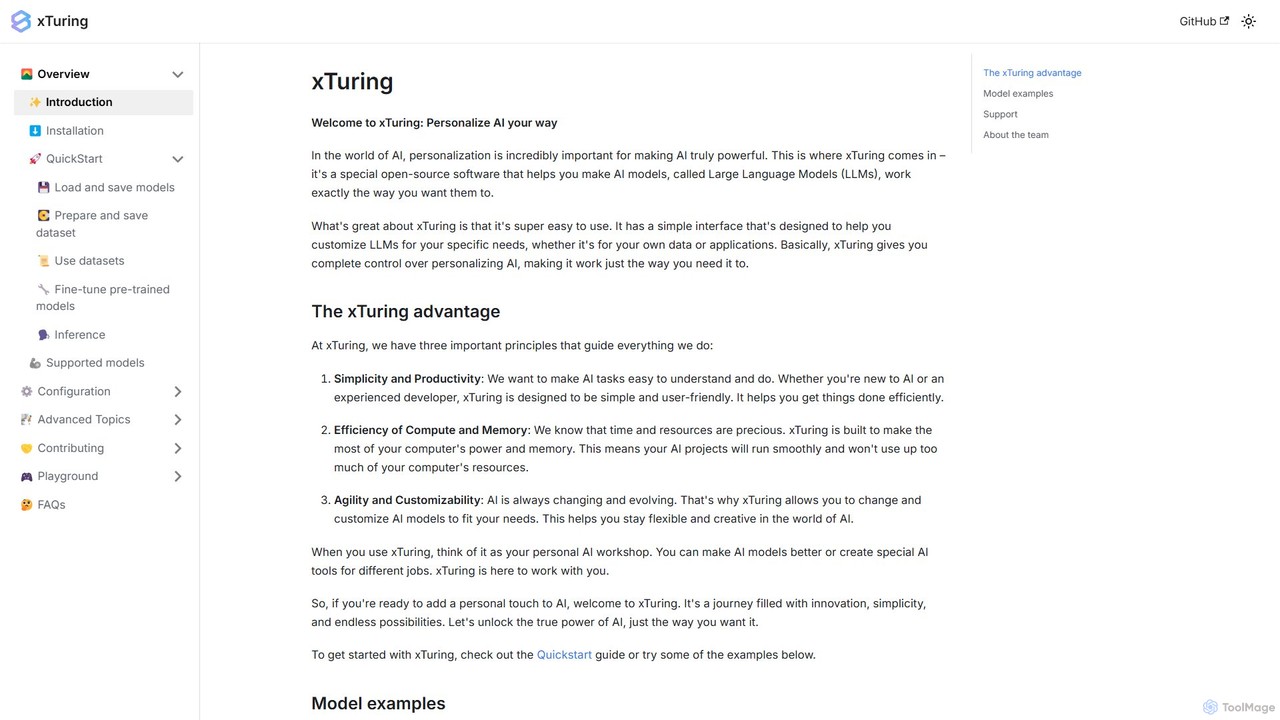
xTuring
xTuring ist eine Open-Source-Python-Bibliothek, die den Prozess des Erstellens, Feinabstimmens und Steuerns von Großen Sprachmodellen (LLMs) vereinfachen soll. Sie bietet eine benutzerfreundliche Oberfläche für Entwickler und Forscher, um KI-Modelle für spezifische Daten und Anwendungen mit hoher Effizienz und Anpassbarkeit zu personalisieren.
Modelltraining
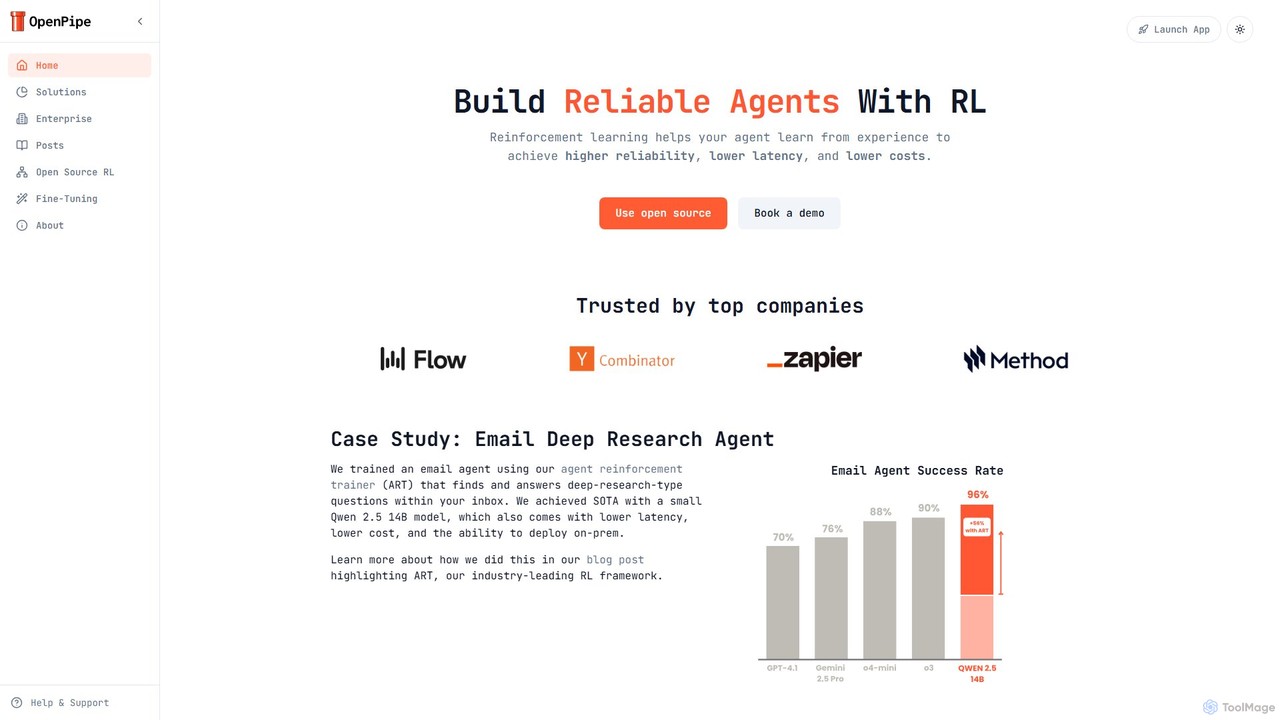
OpenPipe
OpenPipe ist eine unternehmenstaugliche Plattform zur Erstellung hochzuverlässiger KI-Agenten mittels Reinforcement Learning (RL) und Fine-Tuning. Sie ermöglicht Entwicklern, spezialisierte, kostengünstige und latenzarme Modelle zu erstellen, die große Allzweck-APIs übertreffen. Zu den Funktionen gehören ein Open-Source-Framework, On-Premise-Bereitstellung und kontinuierliche Optimierung.
Unternehmenslösungen
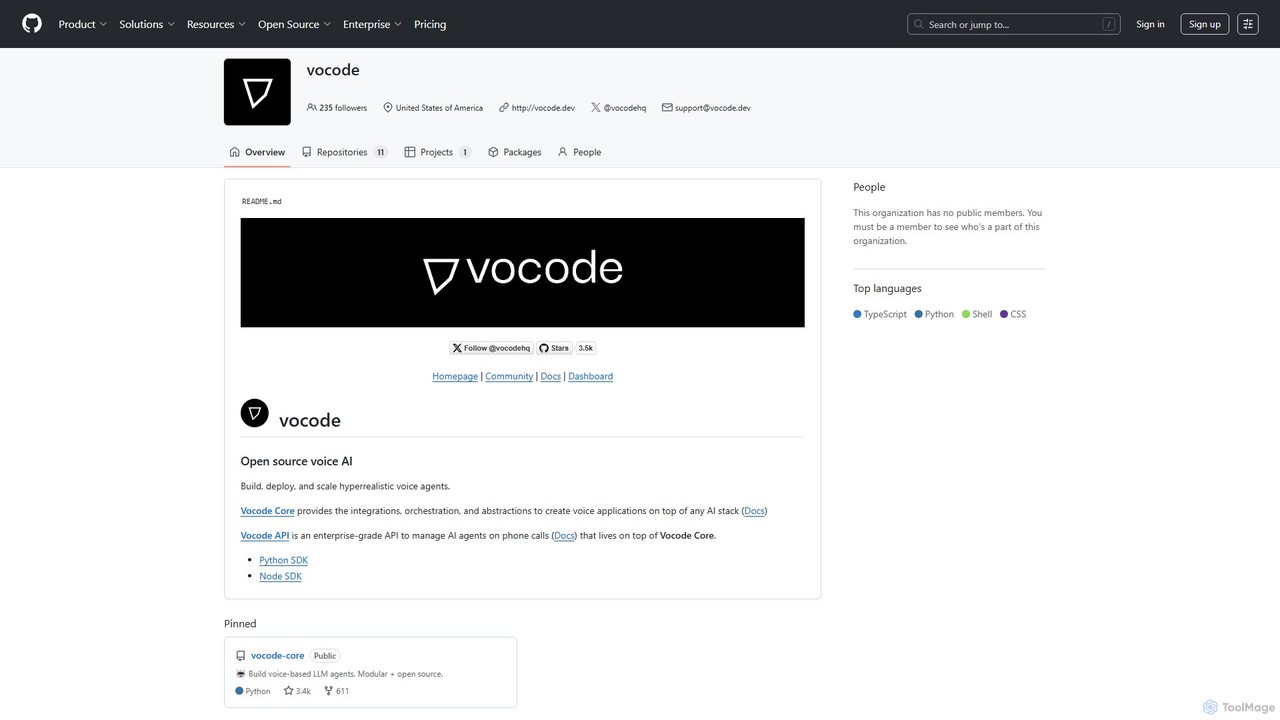
vocode
Vocode ist eine Open-Source-Plattform zum Erstellen, Bereitstellen und Skalieren von hyperrealistischen Sprach-KI-Agenten. Sie bietet Entwicklern ein Kern-Framework und eine unternehmenstaugliche API zur Erstellung anspruchsvoller sprachbasierter LLM-Anwendungen für Aufgaben wie automatisierten Kundenservice, Verkaufsanrufe und interaktive Sprachdialogsysteme (IVR).
Sprachbot
phidata
phidata ist ein Open-Source-Python-Framework zum Erstellen autonomer KI-Assistenten. Es vereinfacht die Integration von LLMs mit Gedächtnis, Wissensdatenbanken und externen Tools und ermöglicht es Entwicklern, mühelos leistungsstarke, zustandsbehaftete KI-Anwendungen zu erstellen.
Frameworks
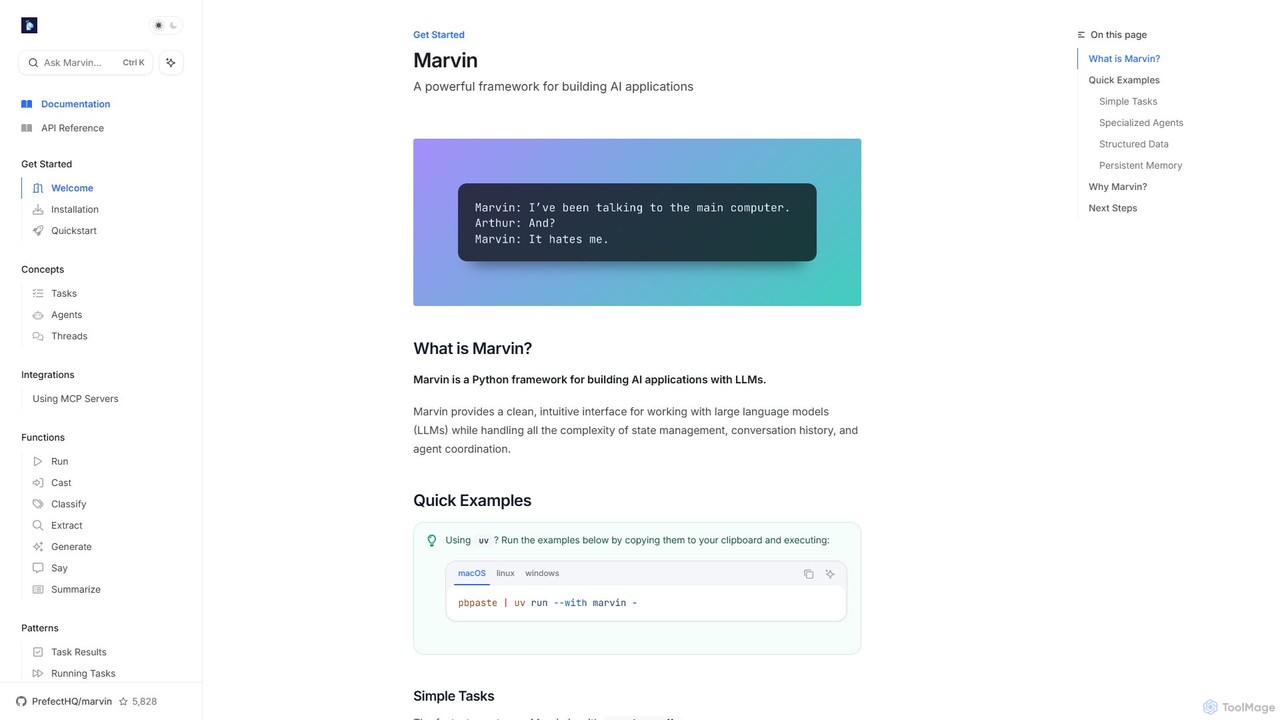
askmarvin
askmarvin ist ein leistungsstarkes Open-Source-Python-Framework zur Erstellung von KI-Anwendungen. Es vereinfacht die Interaktion mit LLMs und ermöglicht es Entwicklern, mit minimalem Code spezialisierte Agenten zu erstellen, Gesprächsverläufe zu verwalten, strukturierte Datenausgaben zu erzwingen und externe Tools zu integrieren. Ideal für schnelles Prototyping und die Skalierung komplexer KI-gesteuerter Workflows.
Code-Assistent
Fast.ai
Fast.ai ist ein Forschungsinstitut, das sich zum Ziel gesetzt hat, Deep Learning für jedermann zugänglich zu machen. Es bietet kostenlose Kurse, eine Open-Source-Softwarebibliothek (fastai), Spitzenforschung und eine lebendige Community, um Programmierer aller Hintergründe zu befähigen, Deep-Learning-Praktiker zu werden.
Maschinelles Lernen
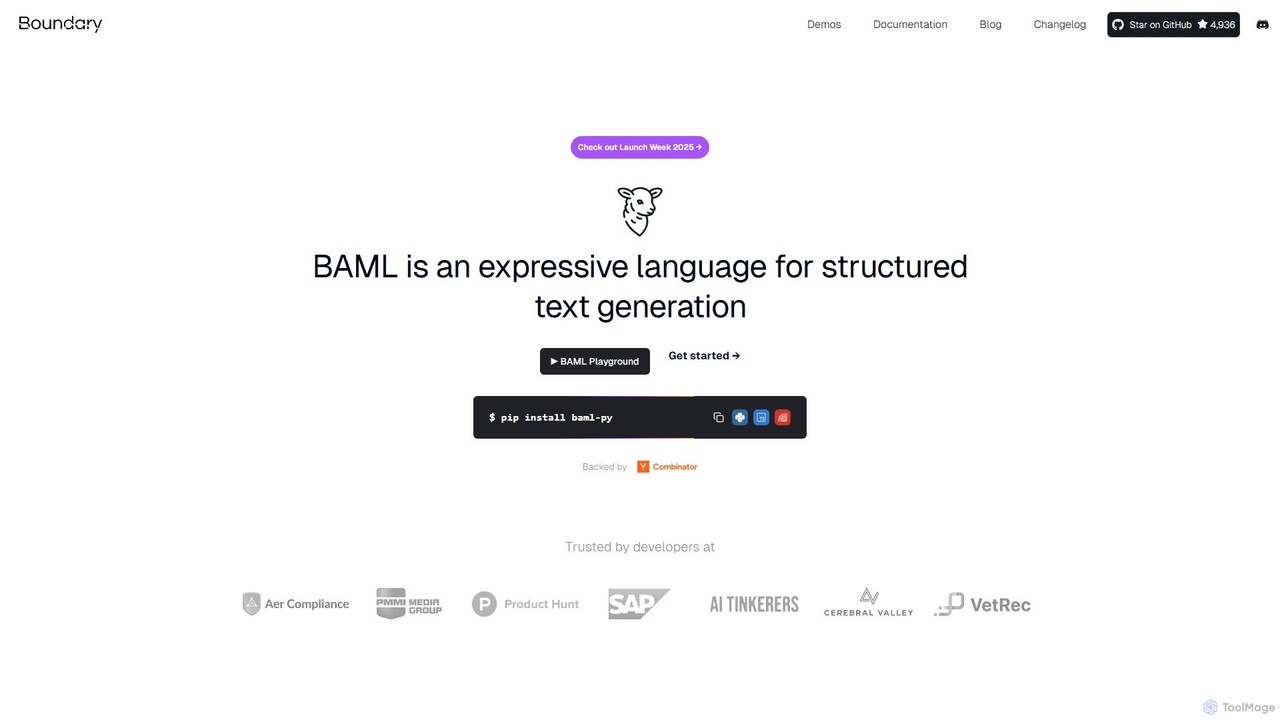
boundaryml
boundaryml (BAML) ist eine spezialisierte Programmiersprache und ein Toolkit für Entwickler, um zuverlässig strukturierte Daten aus großen Sprachmodellen (LLMs) zu extrahieren. Es verwandelt komplexes Prompt-Engineering in einen optimierten, codeähnlichen Prozess und gewährleistet typsichere, fehlerkorrigierte Ausgaben über verschiedene LLMs und Programmiersprachen wie Python und TypeScript hinweg. Es wurde entwickelt, um die Zuverlässigkeit zu erhöhen, Kosten zu senken und Entwicklungszyklen für KI-Anwendungen zu beschleunigen.
API
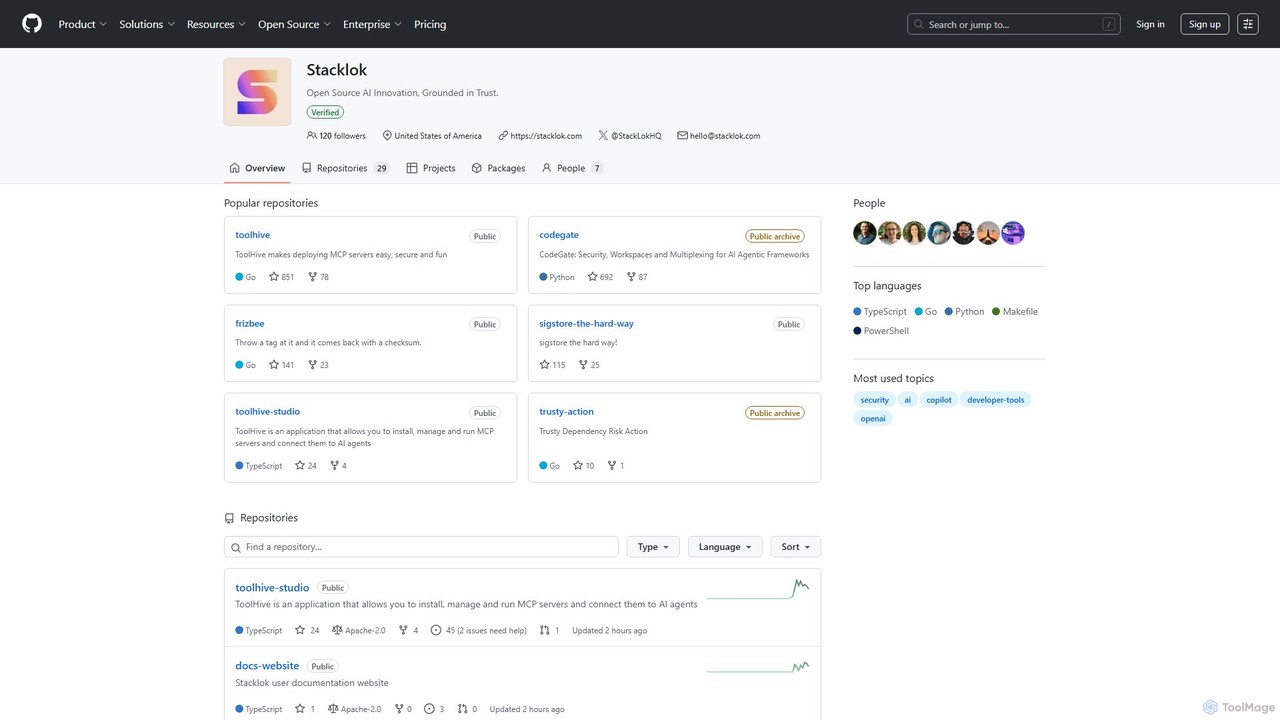
codegate
Codegate ist ein Open-Source-Sicherheitsgateway und Multiplexing-Framework für KI-Agentensysteme. Entwickelt von Stacklok, bietet es sichere Arbeitsbereiche und richtlinienbasierte Zugriffskontrolle, die es Entwicklern ermöglichen, komplexe Multi-Agenten-Anwendungen sicher und effizient zu erstellen und zu verwalten.
Agentische Frameworks
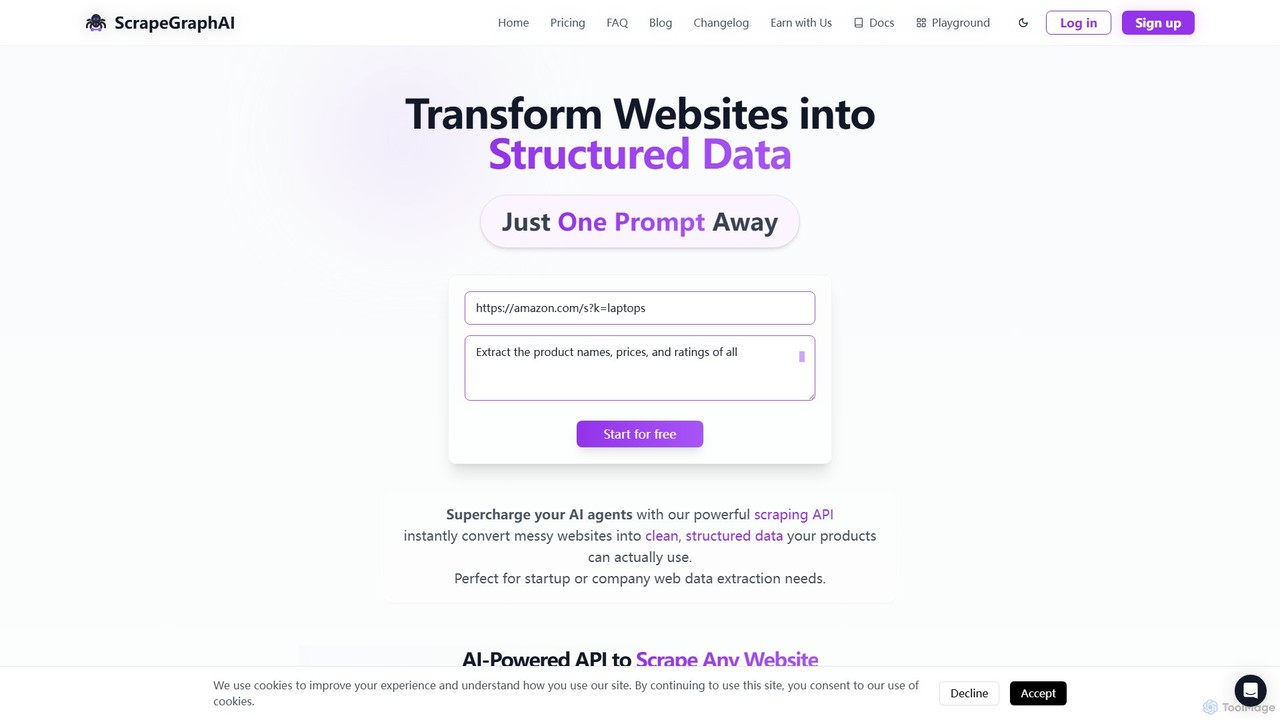
ScrapeGraphAI
ScrapeGraphAI ist eine KI-gestützte Web-Scraping-API, die unstrukturierte Websites mit einfachen Anweisungen in natürlicher Sprache in saubere, strukturierte JSON-Daten umwandelt. Entwickelt für Entwickler, KI-Agenten und automatisierte Workflows, vereinfacht es die Datenextraktion ohne komplexen Code.
Analysen
Open Interpreter
Ein Open-Source-Tool, das es Großen Sprachmodellen (LLMs) ermöglicht, Code (Python, Shell usw.) lokal auf Ihrem Computer auszuführen. Es bietet eine natürlichsprachliche Schnittstelle zu Ihrem Rechner und ermöglicht komplexe Aufgaben wie Datenanalyse, Dateiverwaltung und Automatisierung mit vollem Zugriff auf die Fähigkeiten Ihres Systems.
Datenanalyse
Rowboat
Rowboat ist eine leistungsstarke, KI-gestützte IDE zum Erstellen, Verwalten und Bereitstellen komplexer Multi-Agenten-Systeme. Unterstützt von Y Combinator, ermöglicht es Benutzern, Arbeitsabläufe in einfachem Englisch zu beschreiben, und sein KI-Copilot generiert automatisch den gesamten Agenten-Graphen, einschließlich Rollen, Prompts und Werkzeugintegrationen. Es wurde entwickelt, um die Erstellung robuster, realer KI-Agenten für Produktivität, E-Commerce, Support und mehr zu vereinfachen, mit Funktionen wie Open-Source-Flexibilität und Unterstützung für über 100 LLMs.
Agenten-Builder
PandasAI
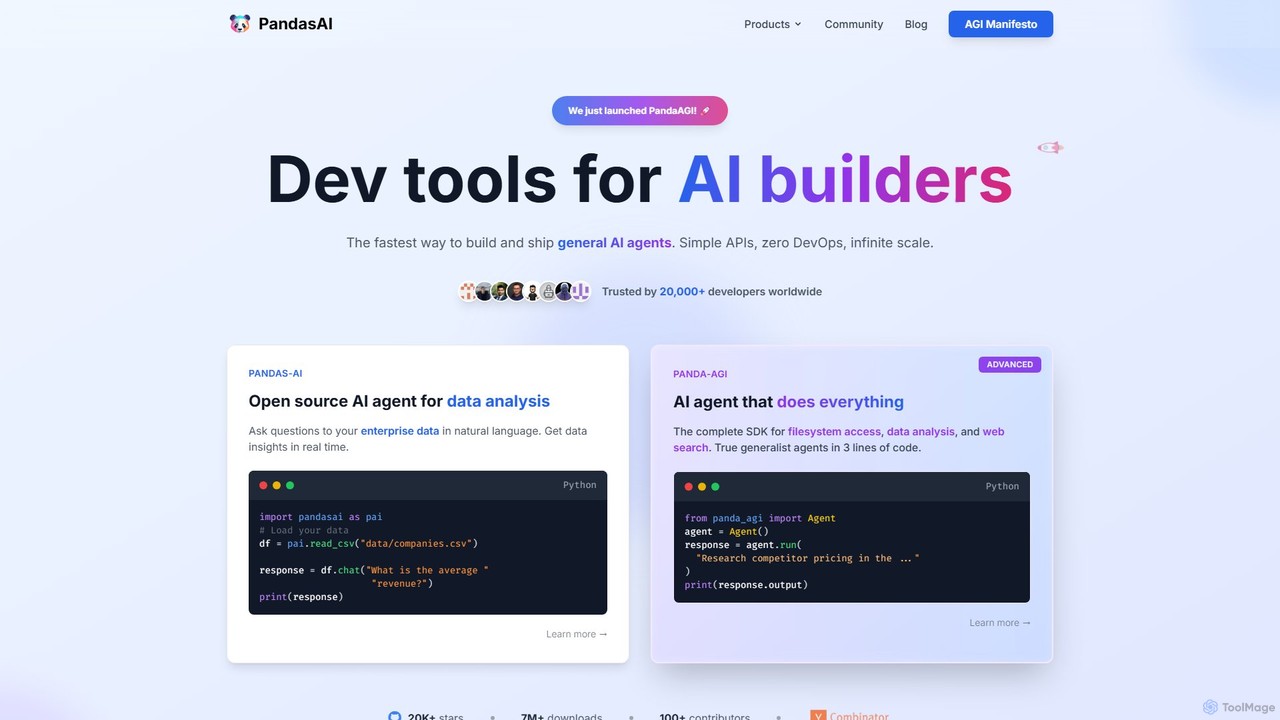
PandasAI bietet eine Suite von Entwickler-Tools zum Erstellen von KI-Anwendungen. Es umfasst eine Open-Source-Bibliothek für die konversationelle Datenanalyse mittels natürlicher Sprache und PandaAGI, ein fortschrittliches SDK zur Erstellung generalistischer KI-Agenten, die komplexe Aufgaben wie Websuchen und Dateisystemzugriffe durchführen können.
Datenanalyse