smolagents ist ein minimalistisches, quelloffenes KI-Agenten-Framework, das von Hugging Face entwickelt wurde. Es ermöglicht Entwicklern, leistungsstarke, Code-First-KI-Agenten mit minimalem Python-Code zu erstellen und bereitzustellen. Durch den Fokus auf Einfachheit und Effizienz können Große Sprachmodelle (LLMs) nahtlos mit Werkzeugen und der realen Welt interagieren und unterstützen eine breite Palette von Modellen und sicheren Ausführungsumgebungen.
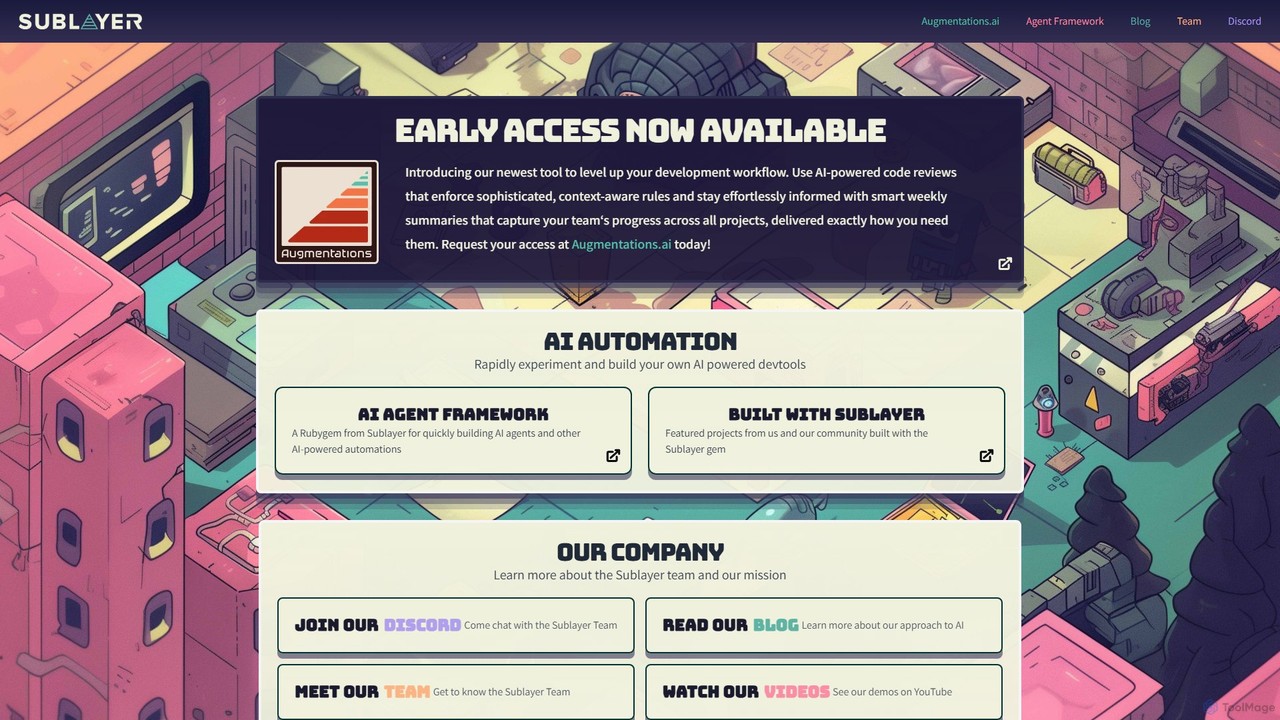
Sublayer ist ein modellunabhängiges KI-Agenten-Framework für Ruby-Entwickler. Es bietet ein leistungsstarkes Rubygem, um schnell KI-Agenten und benutzerdefinierte Entwickler-Tools zu erstellen, zu experimentieren und bereitzustellen, was eine personalisierte und kontextbezogene Automatisierung für Softwareentwicklungs-Workflows ermöglicht.
Produktübersicht
smolagents Produktübersicht
smolagents ist ein minimalistisches, quelloffenes KI-Agenten-Framework, das von Hugging Face entwickelt wurde. Es ermöglicht Entwicklern, leistungsstarke, Code-First-KI-Agenten mit minimalem Python-Code zu erstellen und bereitzustellen. Durch den Fokus auf Einfachheit und Effizienz können Große Sprachmodelle (LLMs) nahtlos mit Werkzeugen und der realen Welt interagieren und unterstützen eine breite Palette von Modellen und sicheren Ausführungsumgebungen.
Sublayer Produktübersicht
Sublayer ist ein modellunabhängiges KI-Agenten-Framework für Ruby-Entwickler. Es bietet ein leistungsstarkes Rubygem, um schnell KI-Agenten und benutzerdefinierte Entwickler-Tools zu erstellen, zu experimentieren und bereitzustellen, was eine personalisierte und kontextbezogene Automatisierung für Softwareentwicklungs-Workflows ermöglicht.
Detailed feature comparison
| Feature | smolagents | Sublayer |
|---|---|---|
| Hauptkategorie | Entwicklung | Code-Assistent |
| Hinzugefügt | 2025-08-14 | 2025-08-06 |
| Preismodell | Kostenlos | Freemium |
| Offizielle Website | smolagents.org | www.sublayer.com |
| Produkttyp | Website | Website |
| Performance data | ||
| Nutzerbewertung | Nicht verifiziert | Nicht verifiziert |
| Kommentare | 0 | 0 |
| Monatliche Besuche | 8.3K | 517 |
| Monatliches Wachstum | 15.8% | 7.7% |
| Favoriten | 130 | 105 |
| Details | Details ansehen | Details ansehen |
smolagents vs Sublayer monthly traffic
Compare smolagents and Sublayer by monthly reach, traffic trend, visit depth, top regions, and acquisition sources.
How to interpret the traffic data
In the smolagents vs Sublayer monthly traffic comparison, smolagents currently shows 8.3K visits and Sublayer shows 517; smolagents has about 16 times the visible traffic of Sublayer, an absolute difference of about 7.8K visits. This reflects visible reach, not feature quality or paid users.
Both tools provide verified traffic details, so monthly trends, visit depth, regions, and acquisition sources can be compared on the same basis.
smolagents monthly traffic:
Latest traffic
Monthly traffic trend
- 2025/9: 17.5K Monatliche Besuche
- 2026/1: 7.5K Monatliche Besuche
- 2026/2: 9.9K Monatliche Besuche
- 2026/3: 9K Monatliche Besuche
- 2026/4: 7.2K Monatliche Besuche
- 2026/5: 8.3K Monatliche Besuche
Top-Regionen
Top 5 countries/regions
| Country/region | Percentage | Traffic |
|---|---|---|
| 🇻🇳Vietnam | 32% | 2.7K |
| 🇺🇸United States | 29.81% | 2.5K |
| 🇬🇧United Kingdom | 13.66% | 1.1K |
| 🇮🇳India | 13.06% | 1.1K |
| 🇩🇪Germany | 11.47% | 951 |
Suchbegriffe
Sublayer monthly traffic:
Latest traffic
Monthly traffic trend
- 2025/9: 1.2K Monatliche Besuche
- 2026/1: 1.6K Monatliche Besuche
- 2026/2: 1K Monatliche Besuche
- 2026/3: 1.5K Monatliche Besuche
- 2026/4: 480 Monatliche Besuche
- 2026/5: 517 Monatliche Besuche
Top-Regionen
Top 5 countries/regions
| Country/region | Percentage | Traffic |
|---|---|---|
| 🇺🇸United States | 100% | 517 |
Suchbegriffe
Usage comparison
Compare the core capabilities of smolagents and Sublayer
smolagents Core features
Sublayer Core features
Use cases
smolagents Use cases
Sublayer Use cases
smolagents vs Sublayer:In-depth comparison and selection guidance
First decide whether the products solve the same kind of need
This in-depth smolagents vs Sublayer comparison uses only the product records, taxonomy, audience, traffic, and community signals available on this page. smolagents is primarily listed under “Entwicklung”, while Sublayer is primarily listed under “Code-Assistent”, so the first decision is whether your actual task matches their recorded scope.
The structured fields currently show these decision-relevant differences: Primary category (smolagents: Entwicklung; Sublayer: Code-Assistent); Pricing (smolagents: Free; Sublayer: Freemium); Monthly visits (smolagents: 8.3K; Sublayer: 517); Monthly growth (smolagents: 15.8%; Sublayer: 7.7%); Favorites (smolagents: 130; Sublayer: 105). These facts are more useful for selection than brand visibility alone.
What market visibility and monthly traffic mean
In the smolagents vs Sublayer monthly traffic comparison, smolagents currently shows 8.3K visits and Sublayer shows 517; smolagents has about 16 times the visible traffic of Sublayer, an absolute difference of about 7.8K visits. This reflects visible reach, not feature quality or paid users.
Both tools provide verified traffic details, so monthly trends, visit depth, regions, and acquisition sources can be compared on the same basis.
If public market visibility is an important first-pass criterion, investigate smolagents first. The final choice should still follow taxonomy, use case, and a real trial because higher traffic does not prove broader capabilities or better workflow fit.
Product positioning, use cases, and roles
smolagents and Sublayer currently overlap in shared categories: Frameworks und Automatisierung; shared tags: KI-Agent, Automatisierung, Codegenerierung, Entwicklerwerkzeuge, Rahmen und Open Source. This can place both on the same shortlist, but it does not prove equal implementation, depth, or cost.
smolagents's unique categories/tags are Entwicklung, Agentische KI, Hugging Face, LiteLLM, Großes Sprachmodell und Python; Sublayer's are Code-Assistent, Code-Review, Entwicklungswerkzeuge, Modellunabhängig und Ruby. These unique fields are the strongest differentiators: validate the product whose recorded scope matches the task instead of following traffic alone.
What ratings, comments, and favorites can tell you
smolagents has no verified rating, 0 comments, 130 favorites, and 146 likes;Sublayer has no verified rating, 0 comments, 105 favorites, and 97 likes。
Neither product has enough rating or comment samples for a credible reputation ranking.
Selection guidance by actual need
When to evaluate smolagents first
Put smolagents on the priority trial list when the task aligns with “Entwicklung” and especially Entwicklung, Agentische KI, Hugging Face, LiteLLM, Großes Sprachmodell und Python. This follows recorded positioning and does not imply unlisted capabilities are absent.
smolagents also currently records: pricing is free, product type is website, 8.3K verified monthly visits, no verified user rating. Verify any hard requirement around price, platform, or reach before trial, and do not let sparse review data substitute for testing.
When to evaluate Sublayer first
Put Sublayer on the priority trial list when the task aligns with “Code-Assistent” and especially Code-Assistent, Code-Review, Entwicklungswerkzeuge, Modellunabhängig und Ruby. This follows recorded positioning and does not imply unlisted capabilities are absent.
Sublayer also currently records: pricing is freemium, product type is website, 517 verified monthly visits, no verified user rating. Verify any hard requirement around price, platform, or reach before trial, and do not let sparse review data substitute for testing.
How to validate the recommendation before deciding
The available data describes positioning, public visibility, and community signals, but it cannot prove output quality, speed, integration effort, privacy, or long-term cost in your workflow. Before deciding, run the same representative tasks in smolagents and Sublayer, then record completion time, accuracy, manual corrections, and the real paid threshold. A like-for-like trial turns this comparison into a defensible adoption decision.
Vergleichs-FAQ
How should I choose between smolagents and Sublayer?
Where does this comparison data come from?
What do unknown fields mean?
Related AI tools

ConnectOnion
ConnectOnion ist ein minimalistisches Python-Framework, das entwickelt wurde, um produktionsreife KI-Agenten mit deutlich weniger Code zu erstellen. Es vereinfacht die Erstellung von Agenten durch die Kombination von Markdown-Prompts und Python-Funktionen und reduziert den Boilerplate-Code um bis zu 85% im Vergleich zu anderen Frameworks.
Bibliotheken
Sylph AI
Sylph AI ist eine Entwicklungsplattform, die darauf ausgelegt ist, das Potenzial von LLM-Anwendungen zu maximieren. Sie bietet AdalFlow, eine führende Open-Source-Bibliothek zum Erstellen und automatischen Optimieren von LLM-Task-Pipelines, sowie einen KI-Teamkollegen, der während des gesamten Entwicklungsworkflows, von der Idee bis zur Produktion, fachkundige Anleitung bietet.
Bibliotheken
Hexabot
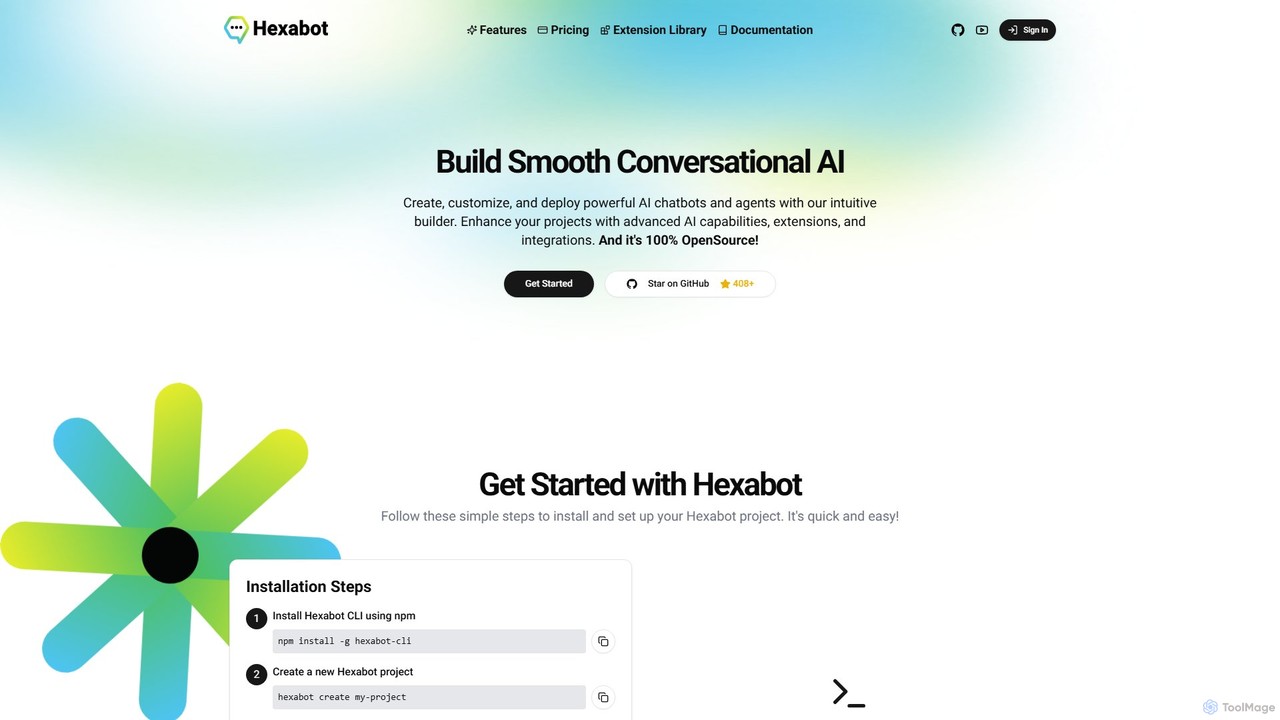
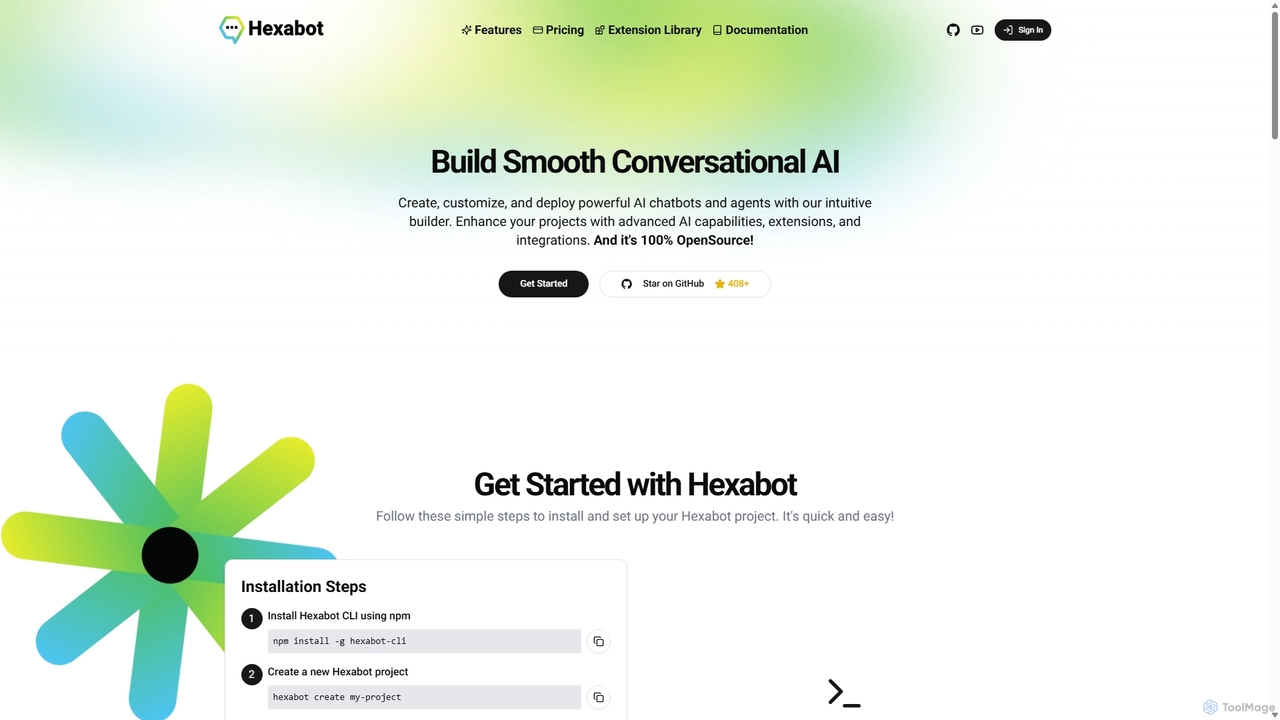
Hexabot ist eine Open-Source-Plattform zum Erstellen, Anpassen und Bereitstellen leistungsstarker KI-Chatbots und -Agenten. Es bietet eine entwicklerfreundliche Umgebung mit einem Low-Code-visuellen Editor, einer umfangreichen Erweiterungsbibliothek und Multi-Channel-Integration, die ein On-Premise-Hosting ermöglicht, um volle Datenprivatsphäre und Kontrolle zu gewährleisten.
Chatbot
Hexabot
Hexabot ist eine 100% Open-Source-Plattform zum Erstellen, Anpassen und Bereitstellen leistungsstarker KI-Chatbots und -Agenten. Es bietet einen intuitiven Low-Code-Builder, On-Premise-Hosting für Datenschutz und eine umfangreiche Bibliothek von Erweiterungen. Ideal für Entwickler und Unternehmen, die das Kundenerlebnis verbessern und Arbeitsabläufe über mehrere Kanäle und Sprachen hinweg automatisieren möchten.
Chatbot
Superagent
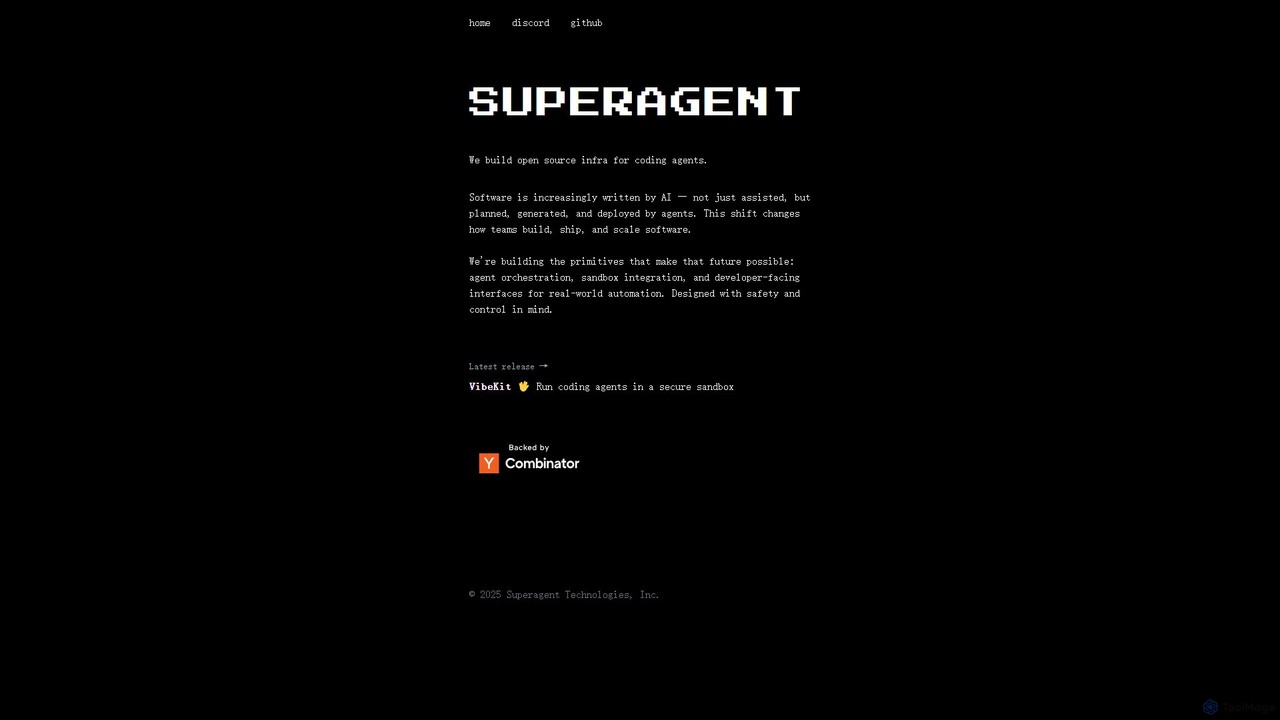
Superagent ist eine Open-Source-Infrastruktur zum Erstellen, Verwalten und Bereitstellen autonomer KI-Codierungsagenten. Es wurde für Entwickler konzipiert und bietet die wesentlichen Grundbausteine wie Agenten-Orchestrierung, sichere Sandbox-Integration (VibeKit) und entwicklerfreundliche Schnittstellen. Dieses Framework ermöglicht es Teams, komplexe Softwareentwicklungsaufgaben zu automatisieren, von der Feature-Generierung über die Fehlerbehebung bis hin zum CI/CD-Management, und führt die Softwareerstellung in eine neue, KI-gesteuerte Ära mit starkem Fokus auf Sicherheit und Kontrolle.
Orchestrierung
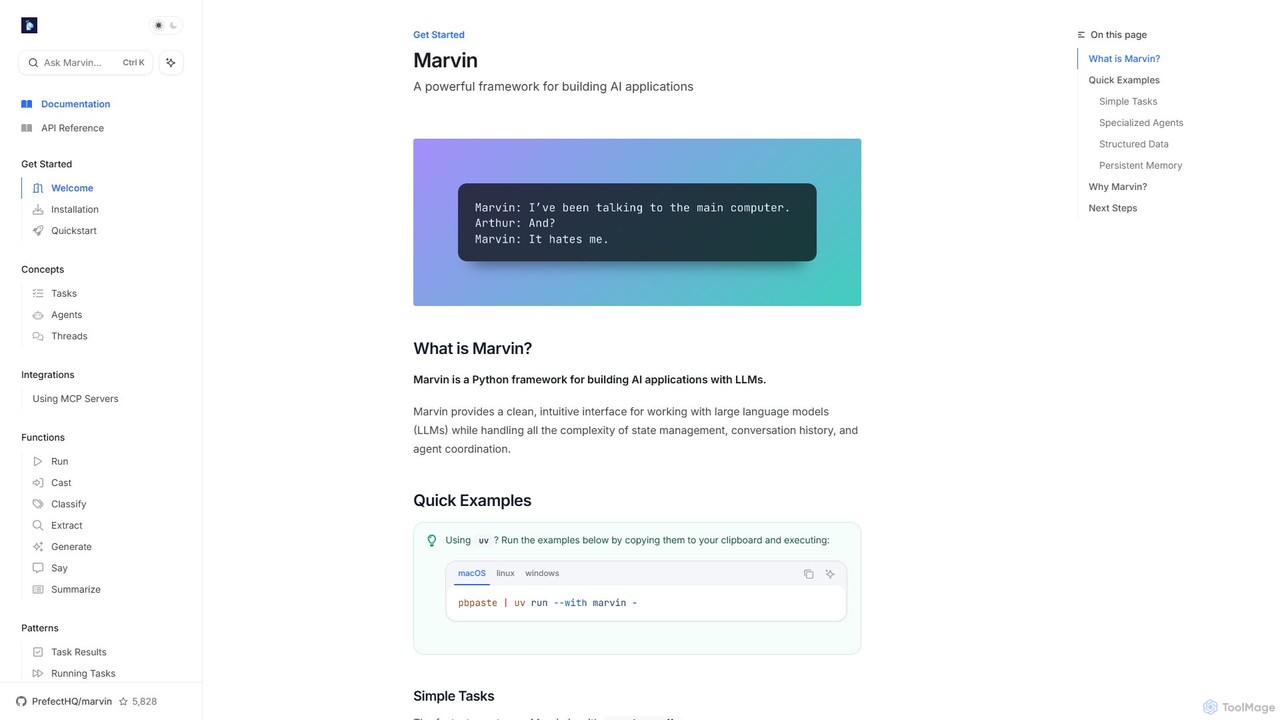
askmarvin
askmarvin ist ein leistungsstarkes Open-Source-Python-Framework zur Erstellung von KI-Anwendungen. Es vereinfacht die Interaktion mit LLMs und ermöglicht es Entwicklern, mit minimalem Code spezialisierte Agenten zu erstellen, Gesprächsverläufe zu verwalten, strukturierte Datenausgaben zu erzwingen und externe Tools zu integrieren. Ideal für schnelles Prototyping und die Skalierung komplexer KI-gesteuerter Workflows.
Code-Assistent
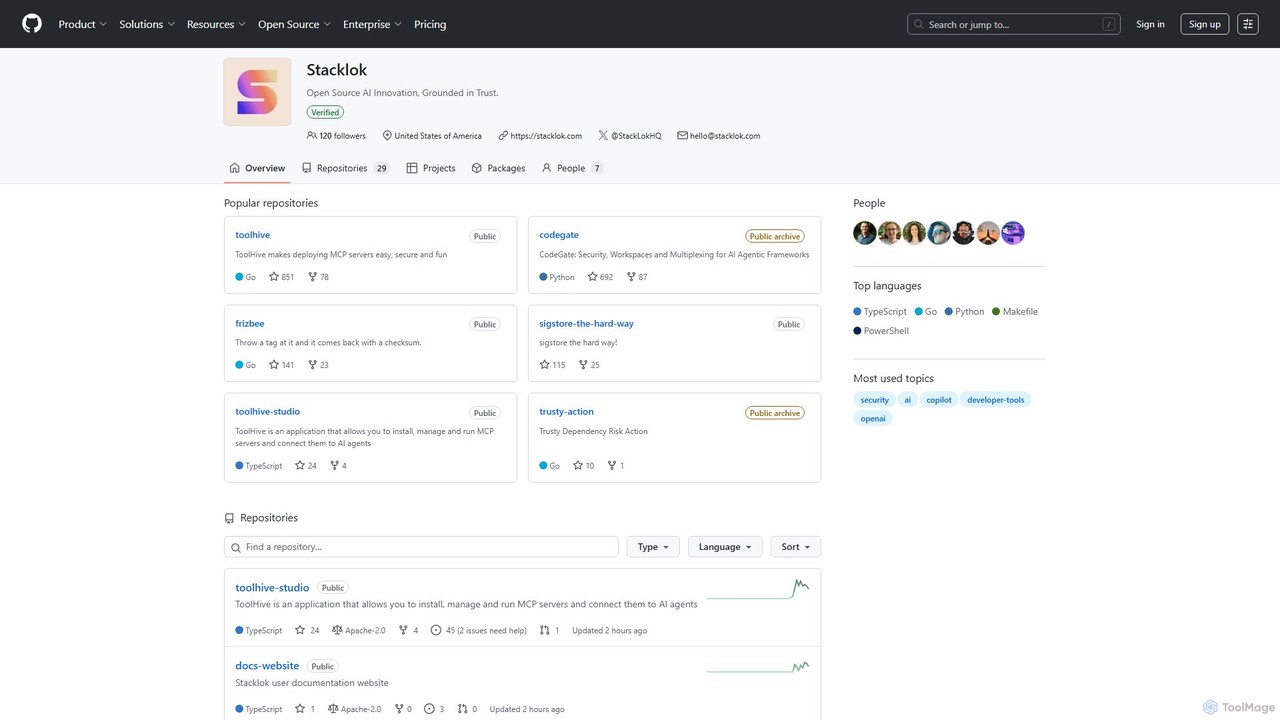
codegate
Codegate ist ein Open-Source-Sicherheitsgateway und Multiplexing-Framework für KI-Agentensysteme. Entwickelt von Stacklok, bietet es sichere Arbeitsbereiche und richtlinienbasierte Zugriffskontrolle, die es Entwicklern ermöglichen, komplexe Multi-Agenten-Anwendungen sicher und effizient zu erstellen und zu verwalten.
Agentische Frameworks
Latitude
Latitude ist eine Open-Source-Entwicklungsplattform, die für die Erstellung, Bewertung und Bereitstellung von Anwendungen auf Basis von Großen Sprachmodellen (LLMs) konzipiert ist, mit einem besonderen Fokus auf die Schaffung autonomer KI-Agenten. Sie bietet Entwicklern eine umfassende Suite von Werkzeugen zum Experimentieren, Verfeinern und Skalieren ihrer KI-Lösungen.
MLOps
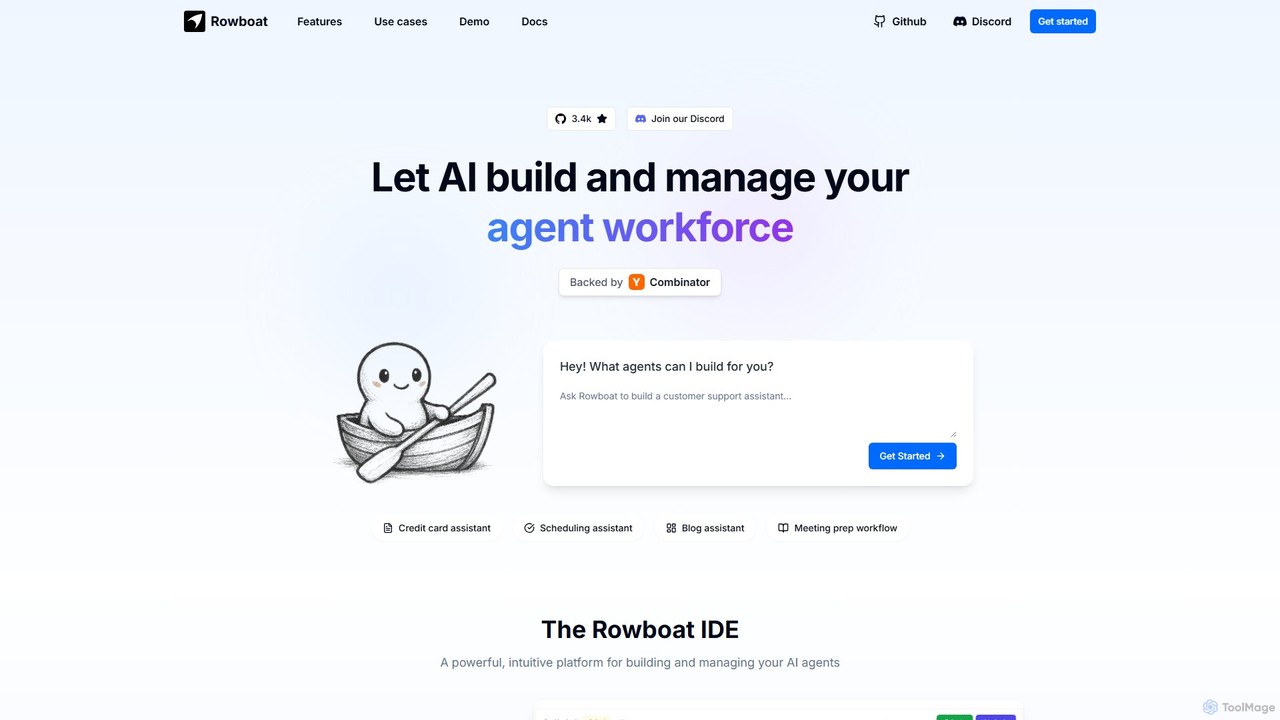
Rowboat
Rowboat ist eine leistungsstarke, KI-gestützte IDE zum Erstellen, Verwalten und Bereitstellen komplexer Multi-Agenten-Systeme. Unterstützt von Y Combinator, ermöglicht es Benutzern, Arbeitsabläufe in einfachem Englisch zu beschreiben, und sein KI-Copilot generiert automatisch den gesamten Agenten-Graphen, einschließlich Rollen, Prompts und Werkzeugintegrationen. Es wurde entwickelt, um die Erstellung robuster, realer KI-Agenten für Produktivität, E-Commerce, Support und mehr zu vereinfachen, mit Funktionen wie Open-Source-Flexibilität und Unterstützung für über 100 LLMs.
Agenten-Builder
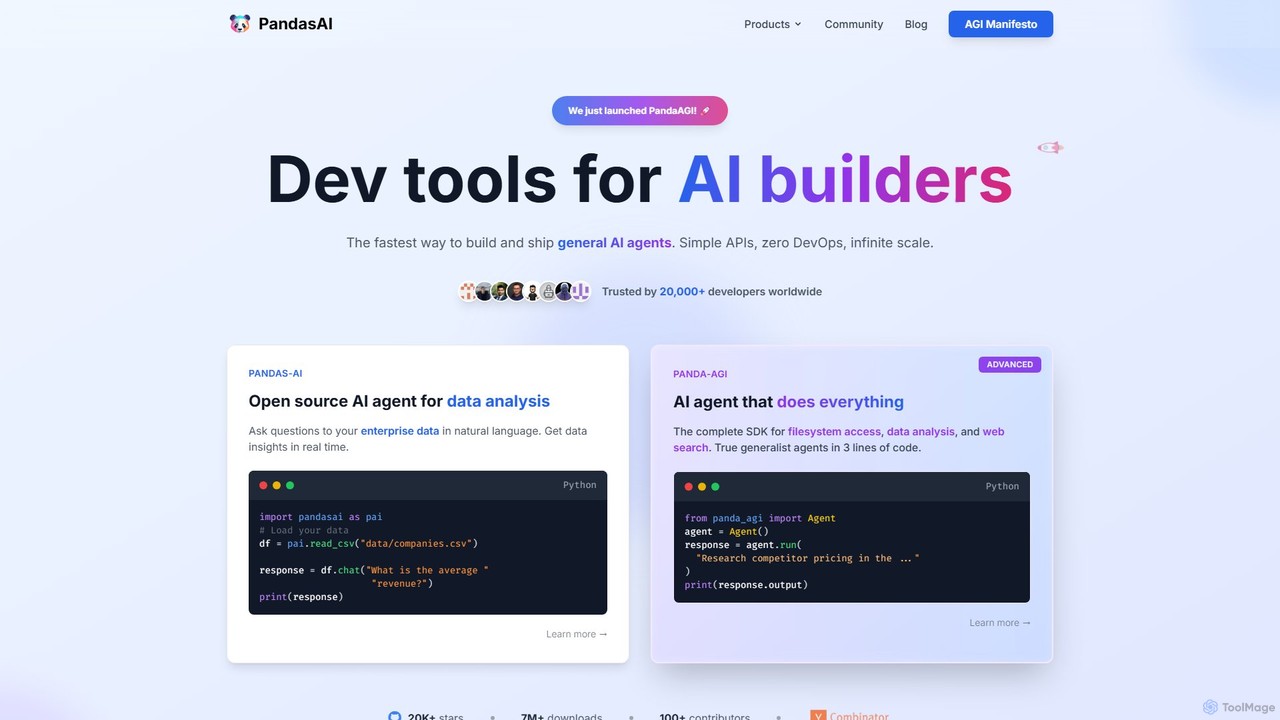
PandasAI
PandasAI bietet eine Suite von Entwickler-Tools zum Erstellen von KI-Anwendungen. Es umfasst eine Open-Source-Bibliothek für die konversationelle Datenanalyse mittels natürlicher Sprache und PandaAGI, ein fortschrittliches SDK zur Erstellung generalistischer KI-Agenten, die komplexe Aufgaben wie Websuchen und Dateisystemzugriffe durchführen können.
Datenanalyse
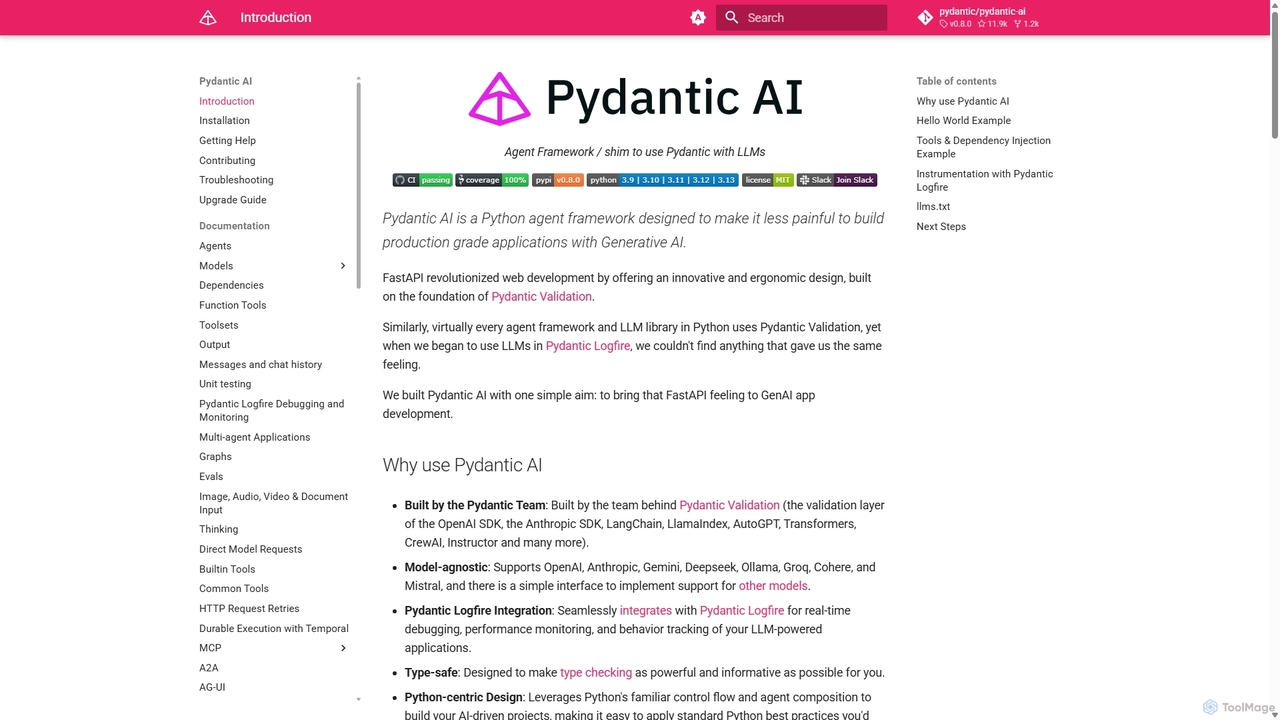
Pydantic AI
Pydantic AI ist ein Python-Agenten-Framework von den Entwicklern von Pydantic, das die Erstellung von produktionsreifen Generative-AI-Anwendungen vereinfachen soll. Es bietet einen modellunabhängigen Ansatz und unterstützt wichtige LLMs wie OpenAI, Gemini und Anthropic. Durch die Nutzung der robusten Validierung von Pydantic gewährleistet es typsichere, strukturierte Ausgaben und zielt darauf ab, die ergonomische und intuitive Entwicklererfahrung von FastAPI in die Welt der KI-Agentenentwicklung zu bringen.
Agent Builder
phidata
phidata ist ein Open-Source-Python-Framework zum Erstellen autonomer KI-Assistenten. Es vereinfacht die Integration von LLMs mit Gedächtnis, Wissensdatenbanken und externen Tools und ermöglicht es Entwicklern, mühelos leistungsstarke, zustandsbehaftete KI-Anwendungen zu erstellen.
Frameworks
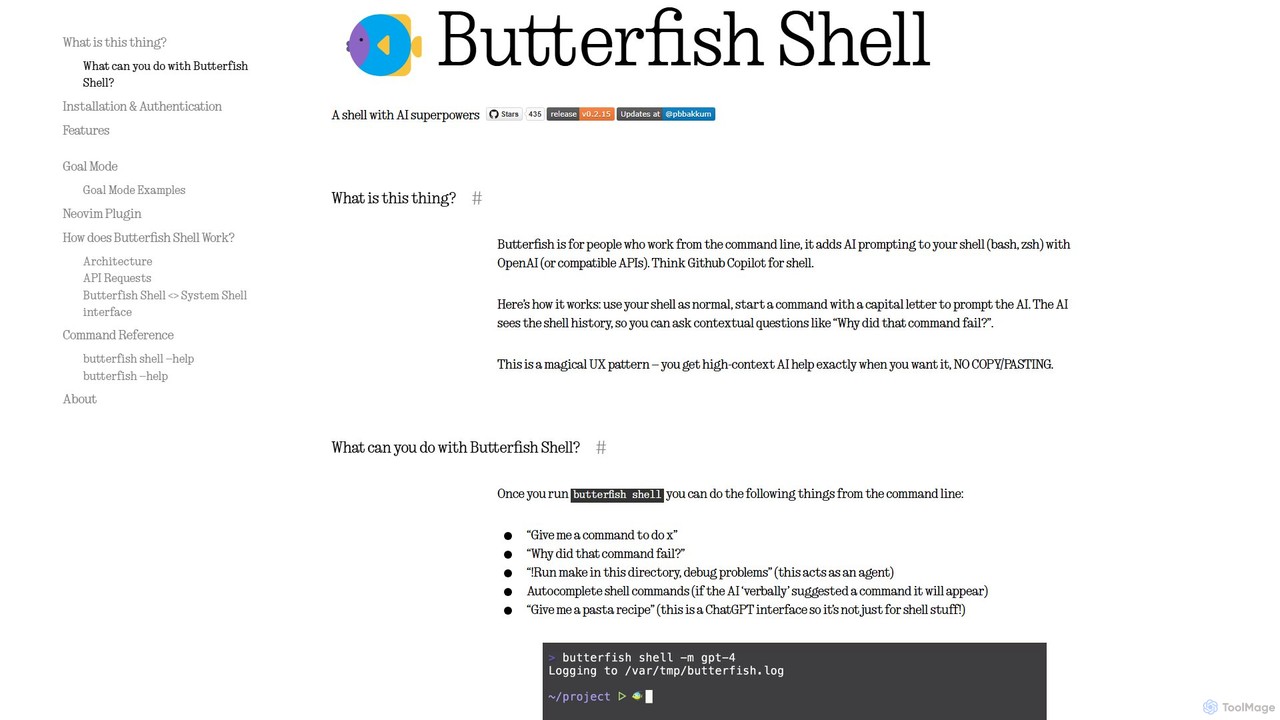
butterfish
butterfish ist ein Open-Source-CLI-Tool, das Ihre Shell (bash, zsh) mit KI-Fähigkeiten aufrüstet. Es funktioniert wie GitHub Copilot für die Kommandozeile und ermöglicht es Ihnen, Befehle zu generieren, Fehler zu beheben und Aufgaben mit natürlichsprachlichen Anweisungen direkt in Ihrem Terminal zu automatisieren. Es behält den Kontext Ihres Shell-Verlaufs bei, bietet hochrelevante Unterstützung und steigert die Produktivität für Entwickler und Systemadministratoren.
Code-Assistent
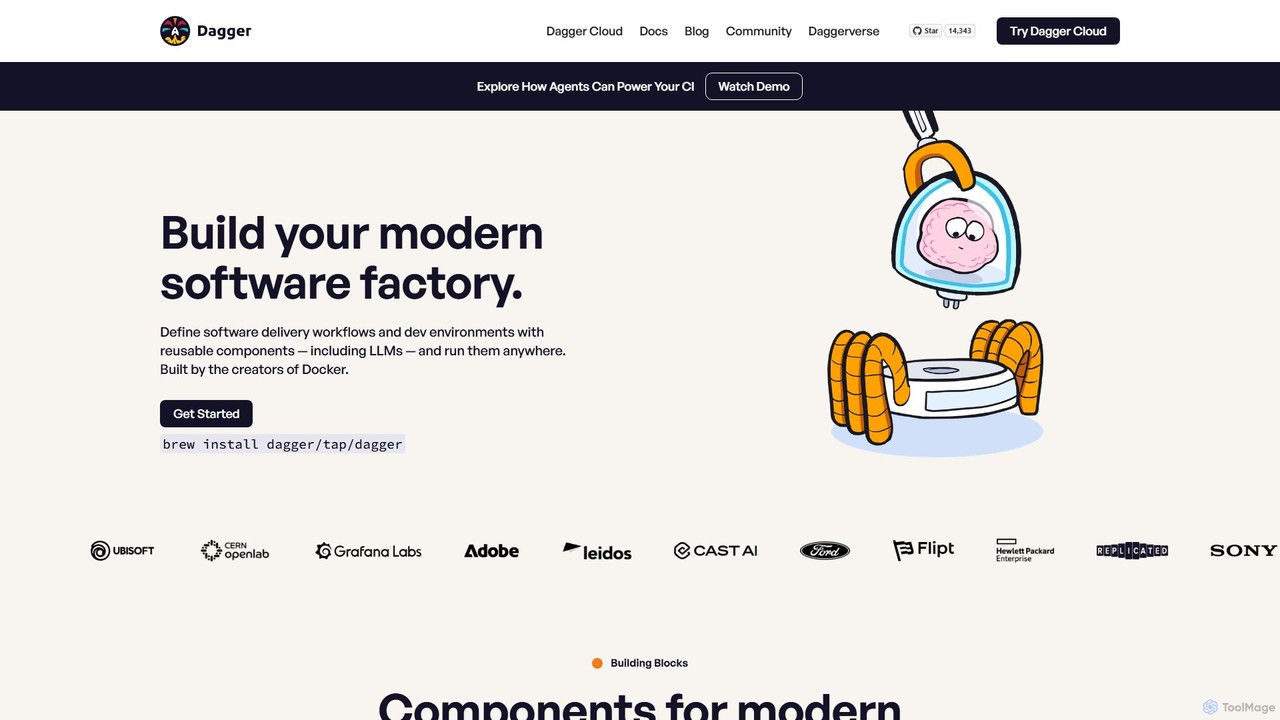
Dagger.io
Dagger.io ist eine programmierbare CI/CD-Engine, die es Entwicklern ermöglicht, leistungsstarke Automatisierungspipelines als Code in Sprachen wie Go, Python und TypeScript zu erstellen. Es nutzt Container, um sicherzustellen, dass Workflows portabel und reproduzierbar sind und überall konsistent ausgeführt werden. Dagger bietet auch eine sichere Umgebung für die Integration von LLMs und KI-Agenten in Ihren Softwareentwicklungslebenszyklus.
CI/CD
Metorial
Metorial ist eine Integrationsplattform für KI-Agenten, die Entwicklern ermöglicht, leistungsstarke agentische KI-Anwendungen schnell zu erstellen, bereitzustellen und zu überwachen. Sie bietet nahtlose Verbindungen zu Hunderten von Tools, Datenquellen und APIs über ihre serverlose Model Context Protocol (MCP)-Plattform und bietet robuste SDKs, Observability und Sicherheit auf Unternehmensniveau für skalierbare KI-Lösungen.
Agentische KI