ToolMage
Iniciar sesión
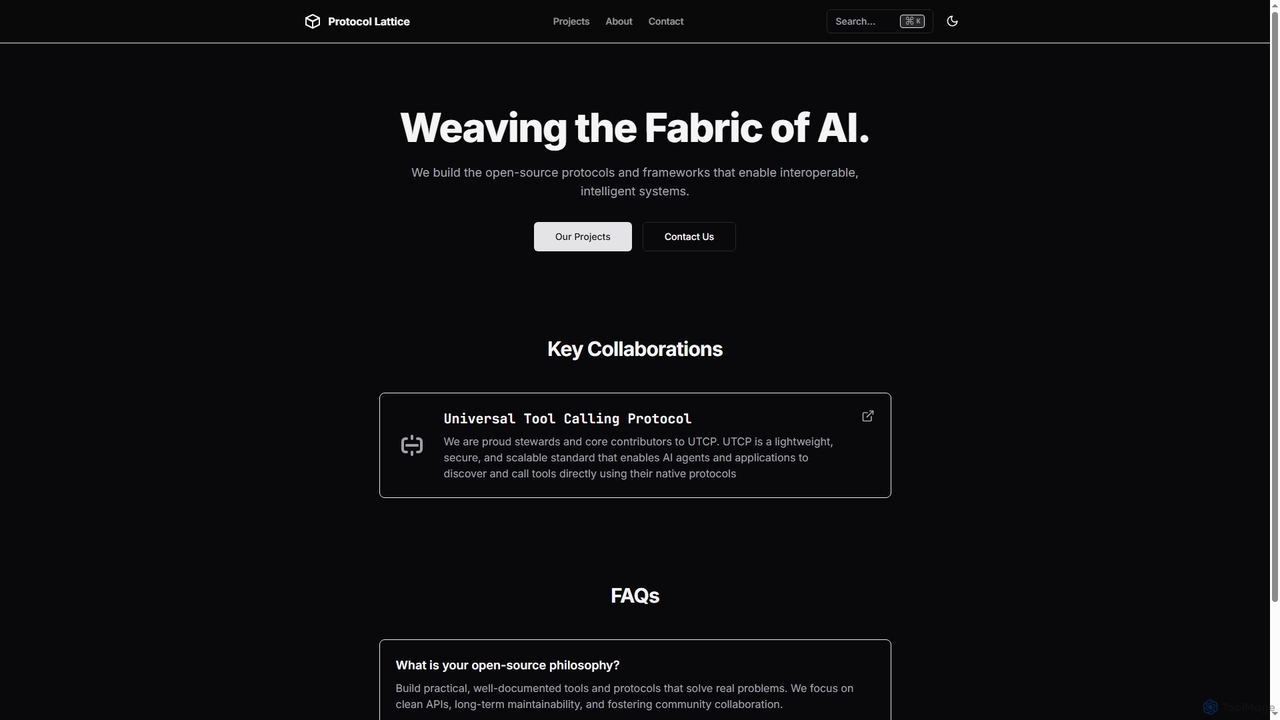
Agentfield
Orquestación · 19.1K visitas mensuales

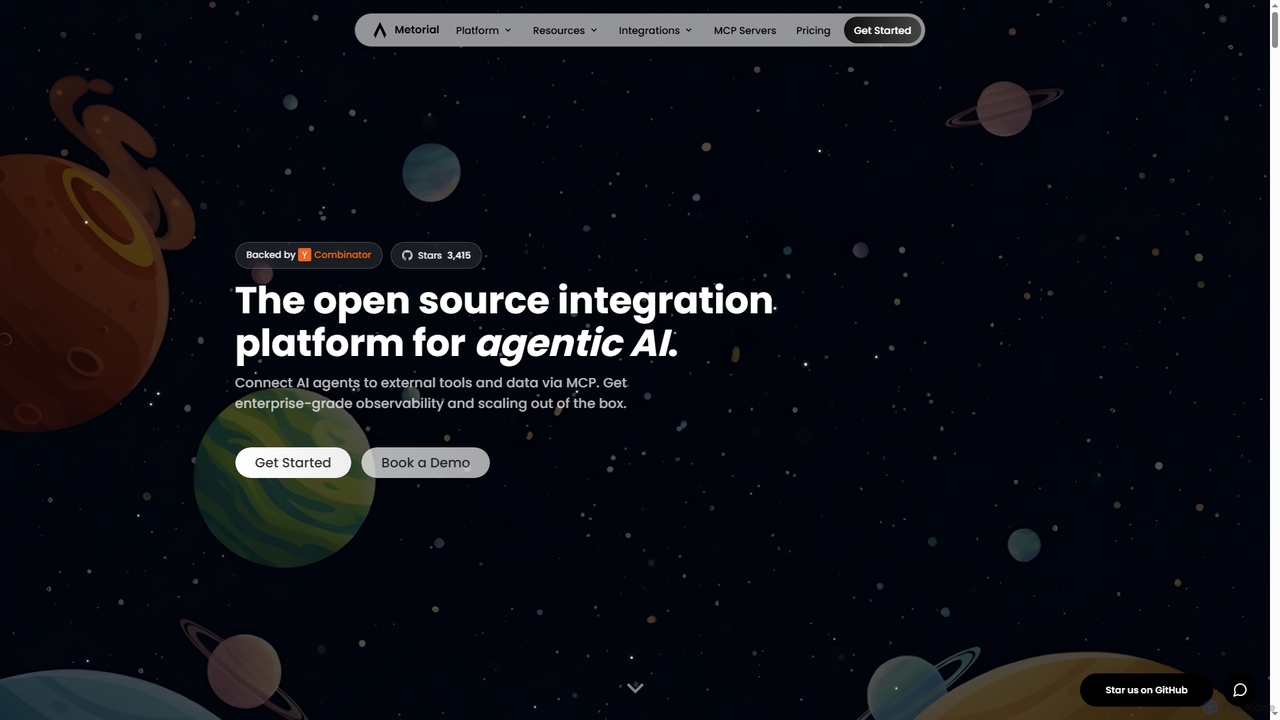
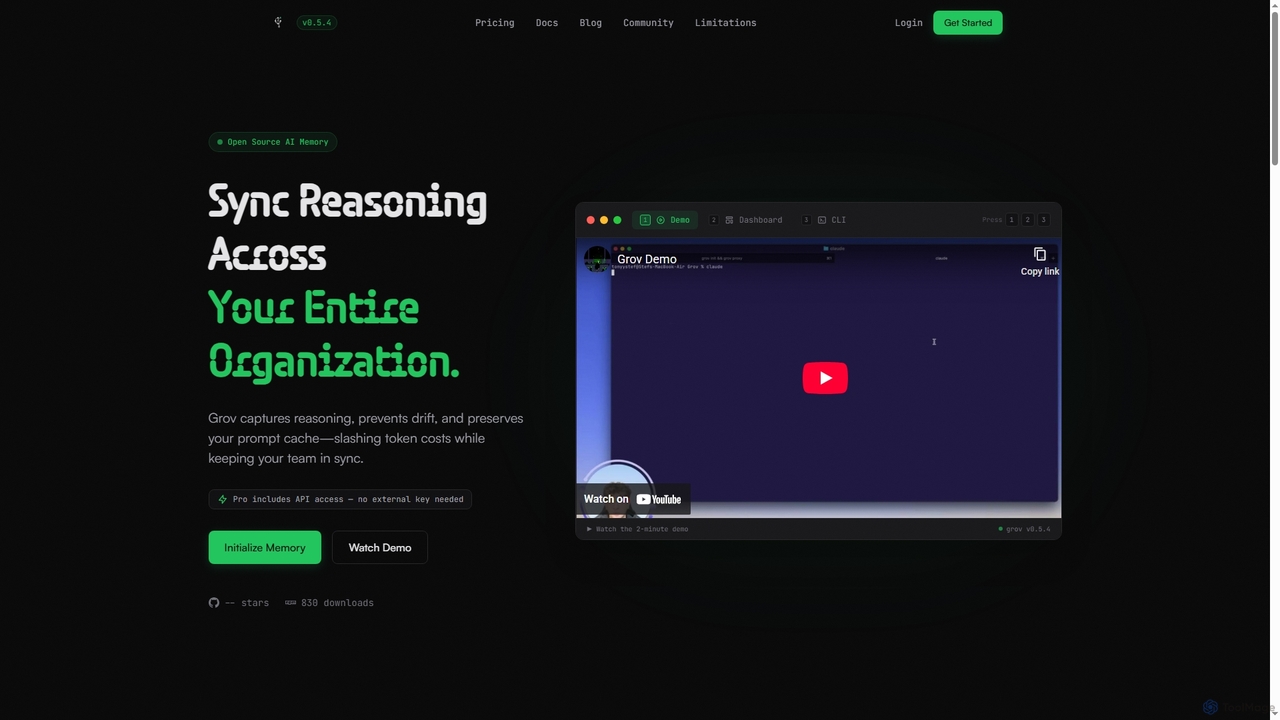
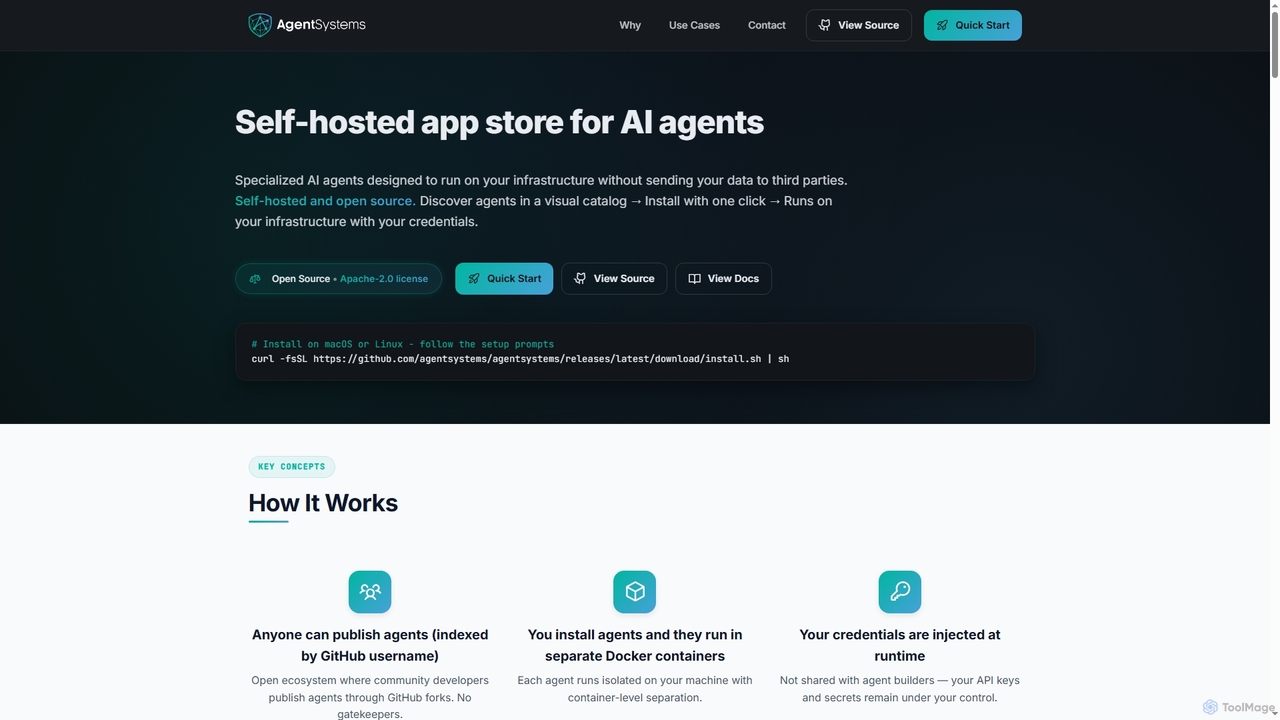
Agentfield es un plano de control de código abierto diseñado para construir y ejecutar agentes de IA autónomos como microservicios escalables, observables y conscientes de la identidad. Proporciona orquestación similar a Kubernetes, gestión de identidad criptográfica e infraestructura lista para producción para cerrar la brecha entre los prototipos de IA y las implementaciones de producción robustas y confiables.

VS
Dank
Frameworks de Agentes · 3.4K visitas mensuales

Dank es un framework de código abierto, nativo de JavaScript, para orquestar y desplegar agentes de IA en contenedores. Permite a los desarrolladores construir, gestionar y escalar múltiples agentes de IA como microservicios en cualquier infraestructura de nube, simplificando las implementaciones complejas de IA con una arquitectura nativa de Docker y monitoreo en tiempo real.

Agentfield vs Dank: precios, funciones y tráfico

Compara Agentfield y Dank por posicionamiento, precio, capacidades, tráfico y opiniones.

Actualizado 5 ago 2026

Resumen del producto

Agentfield Resumen del producto

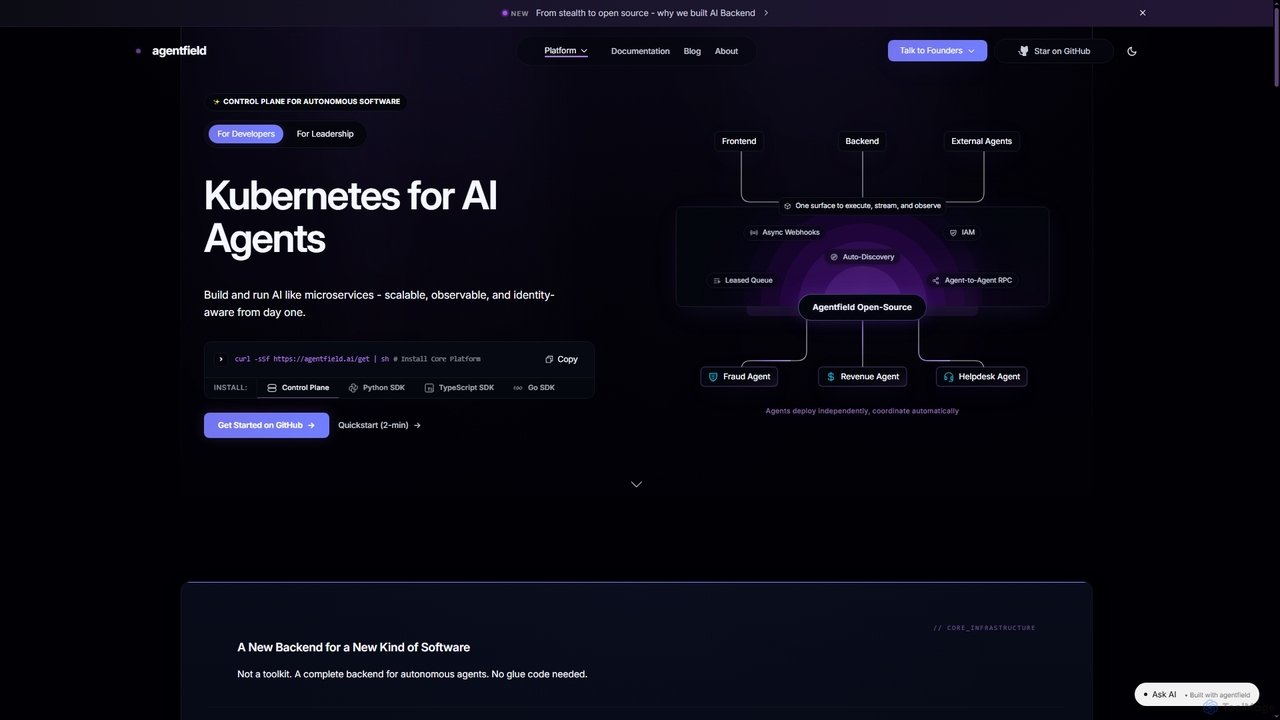
Agentfield es un plano de control de código abierto diseñado para construir y ejecutar agentes de IA autónomos como microservicios escalables, observables y conscientes de la identidad. Proporciona orquestación similar a Kubernetes, gestión de identidad criptográfica e infraestructura lista para producción para cerrar la brecha entre los prototipos de IA y las implementaciones de producción robustas y confiables.
Preview

Dank Resumen del producto

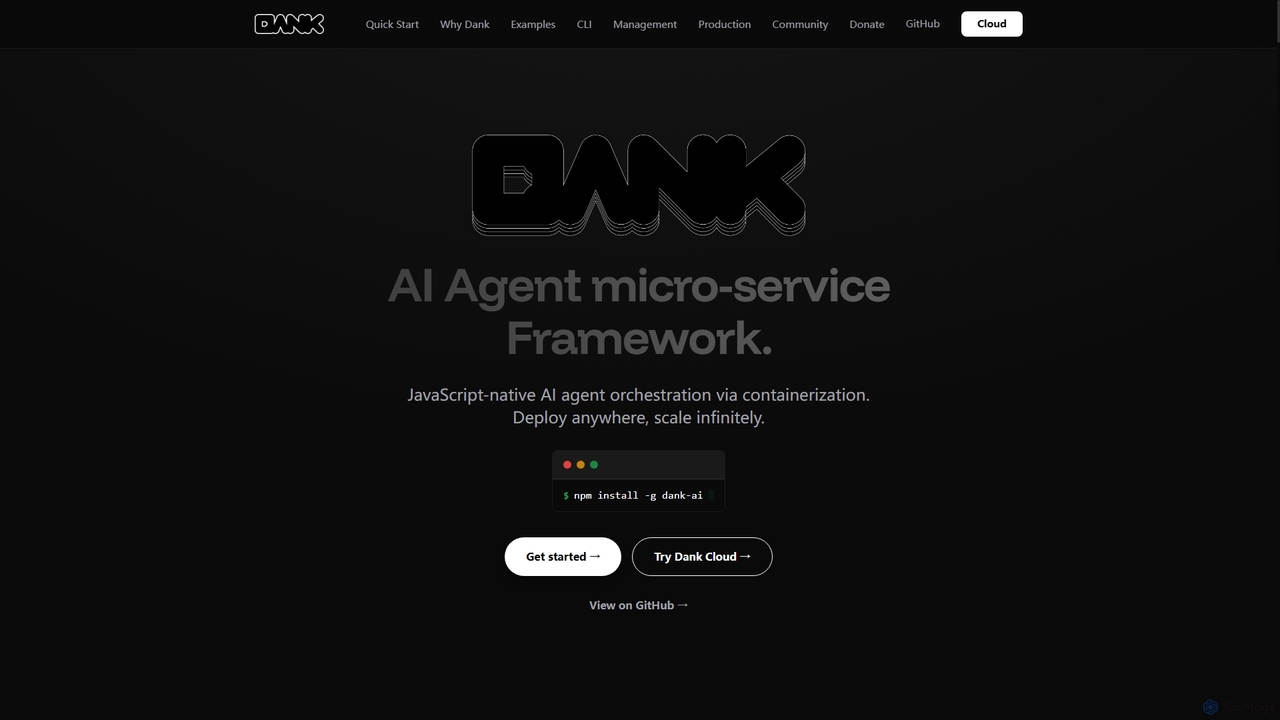
Dank es un framework de código abierto, nativo de JavaScript, para orquestar y desplegar agentes de IA en contenedores. Permite a los desarrolladores construir, gestionar y escalar múltiples agentes de IA como microservicios en cualquier infraestructura de nube, simplificando las implementaciones complejas de IA con una arquitectura nativa de Docker y monitoreo en tiempo real.

Preview

Detailed feature comparison

FeatureAgentfieldDank
Categoría principalOrquestaciónFrameworks de Agentes
Añadido2025-12-132025-11-27
PrecioGratisFreemium
Sitio oficialagentfield.aiwww.dank-ai.xyz
Tipo de productoSitio webSitio web
Performance data
ValoraciónSin verificarSin verificar
Comentarios00
Visitas mensuales19.1K3.4K
Crecimiento mensual9.5%Sin verificar
Favoritos54120
DetailsVer detallesVer detalles

Agentfield vs Dank monthly traffic

Compare Agentfield and Dank by monthly reach, traffic trend, visit depth, top regions, and acquisition sources.

How to interpret the traffic data

In the Agentfield vs Dank monthly traffic comparison, Agentfield currently shows 19.1K visits and Dank shows 3.4K; Agentfield has about 5.6 times the visible traffic of Dank, an absolute difference of about 15.7K visits. This reflects visible reach, not feature quality or paid users.

Only Agentfield has complete third-party traffic details; Dank uses visits recorded inside ToolMage. These scopes cannot estimate market share directly, and on-site views should not be treated as the product’s total website traffic.

Agentfield monthly traffic:

Latest traffic

Visitas mensuales
19.1K
Duración media
0:38
Páginas por visita
2.12
Tasa de rebote
43.47%
Data updated 2026-06-15

Monthly traffic trend

  • 2026/1: 33.2K Visitas mensuales
  • 2026/2: 11.4K Visitas mensuales
  • 2026/3: 16.3K Visitas mensuales
  • 2026/4: 17.4K Visitas mensuales
  • 2026/5: 19.1K Visitas mensuales

Regiones principales

Top 5 countries/regions
Country/regionPercentageTraffic
🇮🇳India26.5%5.1K
🇻🇳Vietnam23.74%4.5K
🇺🇸United States16.68%3.2K
🇧🇷Brazil16.55%3.2K
🇮🇩Indonesia16.53%3.2K

Fuentes de tráfico

Source typePercentageTraffic
Directo89.77%17.1K
Referido6.84%1.3K
Correo electrónico3.39%647

Palabras clave

agent fieldagent-fieldagentfieldagentfield aiagents field

Dank monthly traffic:

Latest traffic

Visitas mensuales
3.4K
Traffic-based selection guidance: The current traffic scope is not sufficient for a reliable product ranking. Treat monthly visits as a market-interest signal, then decide using taxonomy, use cases, pricing, and a like-for-like trial rather than reading exposure as product capability.

Usage comparison

Compare the core capabilities of Agentfield and Dank

Agentfield Core features

Orquestación
Frameworks de Agentes
Gestión de Identidad
Backend

Dank Core features

Frameworks de Agentes
Contenedorización
Orquestación
Desarrollo de IA

Use cases

Agentfield Use cases

Herramientas para desarrolladores
Microservicios
Código Abierto
Orquestación
escalabilidad
Agentes de IA
Audit Trails
Autonomous Software
Backend
sistemas distribuidos
ir
IAM
Gestión de identidad
Kubernetes
Integración de LLM
Observabilidad
Python
TypeScript
Verifiable Credentials

Dank Use cases

Herramientas para desarrolladores
Microservicios
Código Abierto
Orquestación
escalabilidad
Agente de IA
CI/CD
Despliegue en la nube
Contenerización
Docker
marco
JavaScript
Modelo de Lenguaje de Gran Escala
Listo para producción
IA sin servidor

Best suited roles

Agentfield Best suited roles

Ingeniero de IA
Ingeniero de DevOps
Desarrollador de Software
Arquitecto de la Nube
Oficial de Cumplimiento
Gerente de Producto (IA/ML)
Líder Técnico

Dank Best suited roles

Ingeniero de IA
Ingeniero de DevOps
Desarrollador de Software
Desarrollador Backend
Ingeniero de Nube
Arquitecto de Soluciones

Agentfield vs Dank:In-depth comparison and selection guidance

First decide whether the products solve the same kind of need

This in-depth Agentfield vs Dank comparison uses only the product records, taxonomy, audience, traffic, and community signals available on this page. Agentfield is primarily listed under “Orquestación”, while Dank is primarily listed under “Frameworks de Agentes”, so the first decision is whether your actual task matches their recorded scope.

The structured fields currently show these decision-relevant differences: Primary category (Agentfield: Orquestación; Dank: Frameworks de Agentes); Pricing (Agentfield: Free; Dank: Freemium); Monthly visits (Agentfield: 19.1K; Dank: 3.4K); Favorites (Agentfield: 54; Dank: 120); Website (Agentfield: agentfield.ai; Dank: www.dank-ai.xyz). These facts are more useful for selection than brand visibility alone.

What market visibility and monthly traffic mean

In the Agentfield vs Dank monthly traffic comparison, Agentfield currently shows 19.1K visits and Dank shows 3.4K; Agentfield has about 5.6 times the visible traffic of Dank, an absolute difference of about 15.7K visits. This reflects visible reach, not feature quality or paid users.

Only Agentfield has complete third-party traffic details; Dank uses visits recorded inside ToolMage. These scopes cannot estimate market share directly, and on-site views should not be treated as the product’s total website traffic.

The current traffic scope is not sufficient for a reliable product ranking. Treat monthly visits as a market-interest signal, then decide using taxonomy, use cases, pricing, and a like-for-like trial rather than reading exposure as product capability.

Product positioning, use cases, and roles

Agentfield and Dank currently overlap in shared tags: Herramientas para desarrolladores, Microservicios, Código Abierto, Orquestación y escalabilidad; shared roles: Ingeniero de IA, Ingeniero de DevOps y Desarrollador de Software. This can place both on the same shortlist, but it does not prove equal implementation, depth, or cost.

Agentfield's unique categories/tags are Orquestación, Frameworks de Agentes, Gestión de Identidad, Backend, Agentes de IA, Audit Trails, Autonomous Software y sistemas distribuidos; Dank's are Frameworks de Agentes, Contenedorización, Orquestación, Desarrollo de IA, Agente de IA, CI/CD, Despliegue en la nube y Contenerización. These unique fields are the strongest differentiators: validate the product whose recorded scope matches the task instead of following traffic alone.

What ratings, comments, and favorites can tell you

Agentfield has no verified rating, 0 comments, 54 favorites, and 56 likes;Dank has no verified rating, 0 comments, 120 favorites, and 130 likes。

Neither product has enough rating or comment samples for a credible reputation ranking.

Selection guidance by actual need

When to evaluate Agentfield first

Put Agentfield on the priority trial list when the task aligns with “Orquestación” and especially Orquestación, Frameworks de Agentes, Gestión de Identidad, Backend, Agentes de IA y Audit Trails, or the users include Arquitecto de la Nube, Oficial de Cumplimiento, Gerente de Producto (IA/ML) y Líder Técnico. This follows recorded positioning and does not imply unlisted capabilities are absent.

Agentfield also currently records: pricing is free, product type is website, 19.1K verified monthly visits, no verified user rating. Verify any hard requirement around price, platform, or reach before trial, and do not let sparse review data substitute for testing.

When to evaluate Dank first

Put Dank on the priority trial list when the task aligns with “Frameworks de Agentes” and especially Frameworks de Agentes, Contenedorización, Orquestación, Desarrollo de IA, Agente de IA y CI/CD, or the users include Desarrollador Backend, Ingeniero de Nube y Arquitecto de Soluciones. This follows recorded positioning and does not imply unlisted capabilities are absent.

Dank also currently records: pricing is freemium, product type is website, 3.4K on-site monthly views, no verified user rating. Verify any hard requirement around price, platform, or reach before trial, and do not let sparse review data substitute for testing.

How to validate the recommendation before deciding

The available data describes positioning, public visibility, and community signals, but it cannot prove output quality, speed, integration effort, privacy, or long-term cost in your workflow. Before deciding, run the same representative tasks in Agentfield and Dank, then record completion time, accuracy, manual corrections, and the real paid threshold. A like-for-like trial turns this comparison into a defensible adoption decision.

Preguntas frecuentes

How should I choose between Agentfield and Dank?
Compare positioning, pricing, taxonomy, and traffic maturity, then verify the latest details on each official website.
Where does this comparison data come from?
The factual baseline is derived from product, taxonomy, traffic, and community data. Reviewed editorial conclusions show their source and verification date.
What do unknown fields mean?
Unknown means there is not enough reliable evidence; the page does not fill gaps with assumptions.