Models
API · 3.5K 月間訪問数
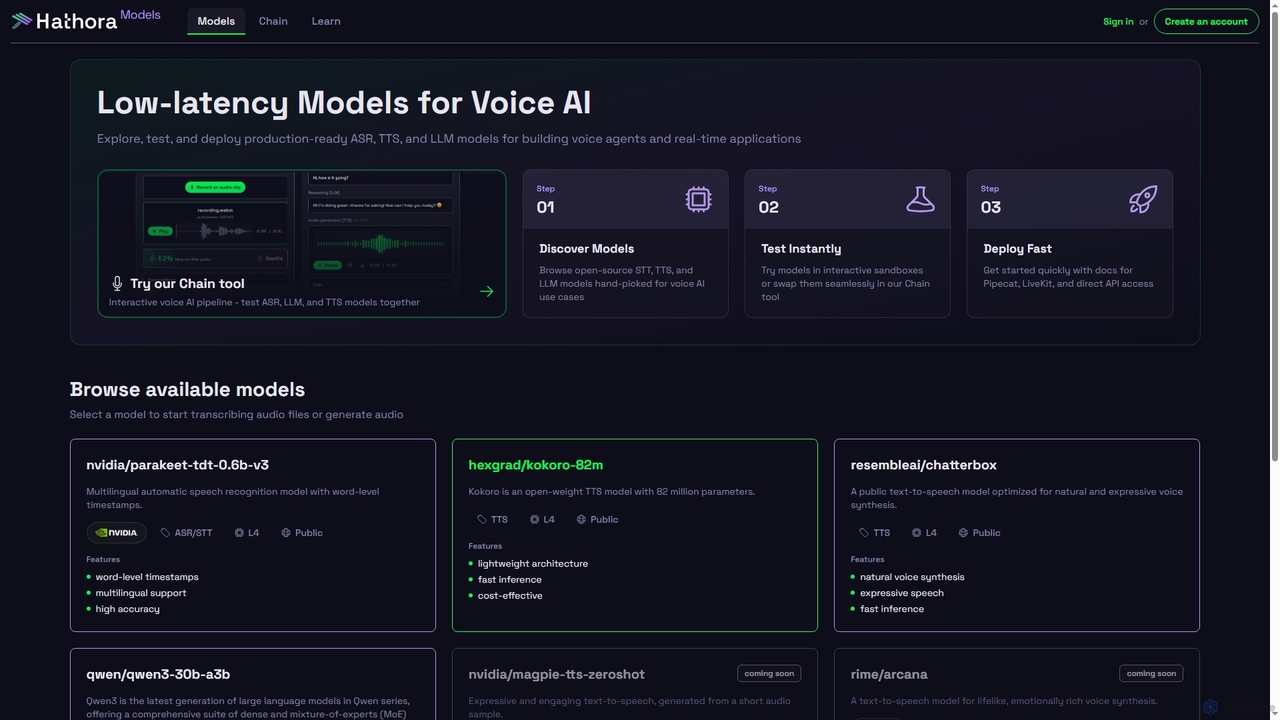
HathoraのModelsは、音声AIおよびリアルタイムアプリケーション向けに最適化された、低遅延のASR、TTS、LLMモデルの厳選されたカタログを提供します。開発者は、インタラクティブなサンドボックスと直接APIアクセスを通じて、本番環境対応のモデルを迅速に探索、テスト、デプロイし、音声エージェントやその他のアプリケーションにシームレスに統合できます。
HathoraのModelsは、音声AIおよびリアルタイムアプリケーション向けに最適化された、低遅延のASR、TTS、LLMモデルの厳選されたカタログを提供します。開発者は、インタラクティブなサンドボックスと直接APIアクセスを通じて、本番環境対応のモデルを迅速に探索、テスト、デプロイし、音声エージェントやその他のアプリケーションにシームレスに統合できます。
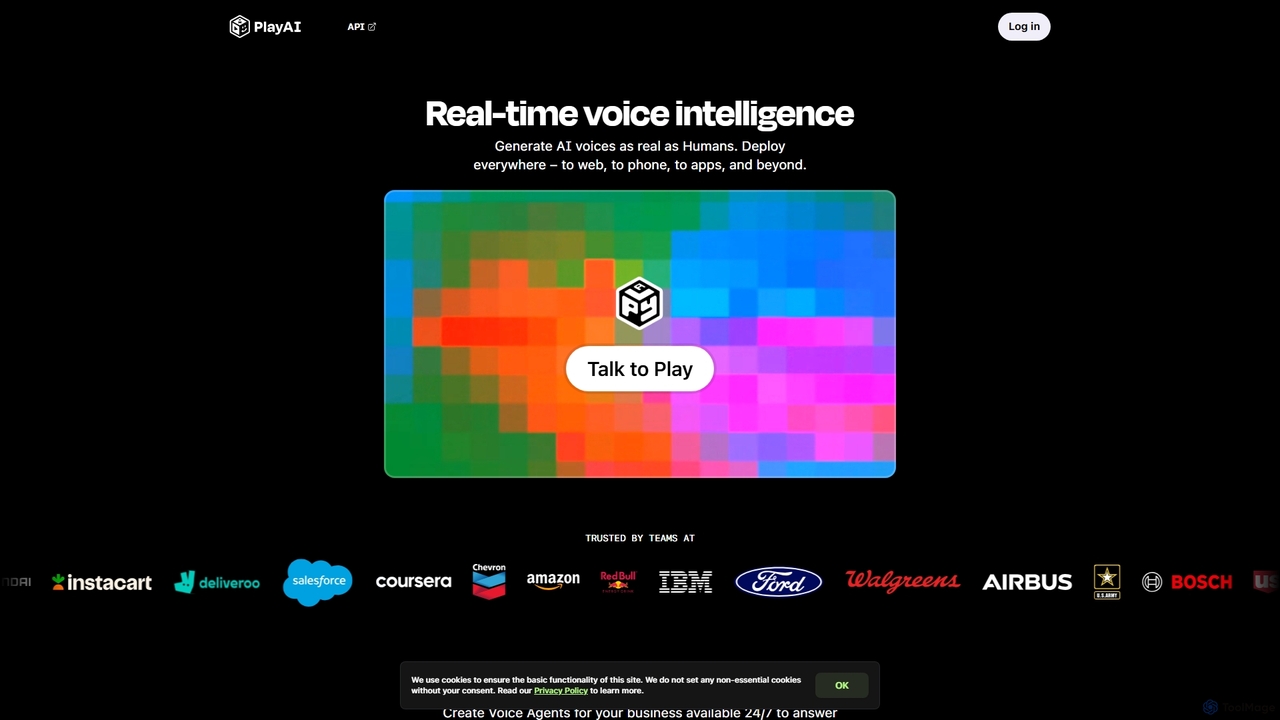
playは、企業向けの高度な音声AIプラットフォームで、超リアルなテキスト読み上げ(TTS)モデルとインテリジェントな音声エージェントに特化しています。これにより、企業はカスタマーサービス、営業、運用向けの24時間365日対応の自動エージェントを作成できます。カスタムナレッジベース、実世界のアクションを実行するためのAPI連携、データセキュリティのためのオンプレミス展開、30以上の言語サポートといった機能を備え、playは企業の音声コミュニケーションの拡大とグローバルな顧客エンゲージメントの強化を支援します。
HathoraのModelsは、音声AIおよびリアルタイムアプリケーション向けに最適化された、低遅延のASR、TTS、LLMモデルの厳選されたカタログを提供します。開発者は、インタラクティブなサンドボックスと直接APIアクセスを通じて、本番環境対応のモデルを迅速に探索、テスト、デプロイし、音声エージェントやその他のアプリケーションにシームレスに統合できます。
playは、企業向けの高度な音声AIプラットフォームで、超リアルなテキスト読み上げ(TTS)モデルとインテリジェントな音声エージェントに特化しています。これにより、企業はカスタマーサービス、営業、運用向けの24時間365日対応の自動エージェントを作成できます。カスタムナレッジベース、実世界のアクションを実行するためのAPI連携、データセキュリティのためのオンプレミス展開、30以上の言語サポートといった機能を備え、playは企業の音声コミュニケーションの拡大とグローバルな顧客エンゲージメントの強化を支援します。
Compare Models and Play by monthly reach, traffic trend, visit depth, top regions, and acquisition sources.
In the Models vs Play monthly traffic comparison, Models currently shows 3.5K visits and Play shows 23.3K; Play has about 6.7 times the visible traffic of Models, an absolute difference of about 19.8K visits. This reflects visible reach, not feature quality or paid users.
Only Play has complete third-party traffic details; Models uses visits recorded inside ToolMage. These scopes cannot estimate market share directly, and on-site views should not be treated as the product’s total website traffic.
| Country/region | Percentage | Traffic |
|---|---|---|
| 🇺🇸United States | 46.81% | 10.9K |
| 🇮🇳India | 27.02% | 6.3K |
| 🇩🇪Germany | 11.32% | 2.6K |
| 🇧🇷Brazil | 8.02% | 1.9K |
| 🇮🇩Indonesia | 6.83% | 1.6K |
This in-depth Models vs Play comparison uses only the product records, taxonomy, audience, traffic, and community signals available on this page. Models is primarily listed under “API”, while Play is primarily listed under “テキスト読み上げ”, so the first decision is whether your actual task matches their recorded scope.
The structured fields currently show these decision-relevant differences: Primary category (Models: API; Play: テキスト読み上げ); Pricing (Models: Not disclosed; Play: Paid); Monthly visits (Models: 3.5K; Play: 23.3K); Favorites (Models: 93; Play: 98); Website (Models: models.hathora.dev; Play: play.ai). These facts are more useful for selection than brand visibility alone.
In the Models vs Play monthly traffic comparison, Models currently shows 3.5K visits and Play shows 23.3K; Play has about 6.7 times the visible traffic of Models, an absolute difference of about 19.8K visits. This reflects visible reach, not feature quality or paid users.
Only Play has complete third-party traffic details; Models uses visits recorded inside ToolMage. These scopes cannot estimate market share directly, and on-site views should not be treated as the product’s total website traffic.
The current traffic scope is not sufficient for a reliable product ranking. Treat monthly visits as a market-interest signal, then decide using taxonomy, use cases, pricing, and a like-for-like trial rather than reading exposure as product capability.
Models and Play currently overlap in shared categories: API; shared tags: API、対話型AI、テキスト読み上げ、音声合成、音声AI; shared roles: プロダクトマネージャー、ソフトウェア開発者. This can place both on the same shortlist, but it does not prove equal implementation, depth, or cost.
Models's unique categories/tags are モデルデプロイメント、大規模言語モデル、音声認識、テキスト読み上げ、ASR、言語モデル、低遅延、オープンソース; Play's are テキスト読み上げ、音声ボット、自動化、AIチャットボット、顧客サポート自動化、多言語、オンプレミス、リアルタイム音声. These unique fields are the strongest differentiators: validate the product whose recorded scope matches the task instead of following traffic alone.
Models has no verified rating, 0 comments, 93 favorites, and 86 likes;Play has no verified rating, 0 comments, 98 favorites, and 108 likes。
Neither product has enough rating or comment samples for a credible reputation ranking.
Put Models on the priority trial list when the task aligns with “API” and especially モデルデプロイメント、大規模言語モデル、音声認識、テキスト読み上げ、ASR、言語モデル, or the users include AIエンジニア、データサイエンティスト、機械学習エンジニア、ソリューションアーキテクト. This follows recorded positioning and does not imply unlisted capabilities are absent.
Models also currently records: pricing is not verified, product type is website, 3.5K on-site monthly views, no verified user rating. Verify any hard requirement around price, platform, or reach before trial, and do not let sparse review data substitute for testing.
Put Play on the priority trial list when the task aligns with “テキスト読み上げ” and especially テキスト読み上げ、音声ボット、自動化、AIチャットボット、顧客サポート自動化、多言語, or the users include 事業主、コールセンターオペレーター、カスタマーサポートマネージャー、L&Dスペシャリスト. This follows recorded positioning and does not imply unlisted capabilities are absent.
Play also currently records: pricing is paid, product type is website, 23.3K verified monthly visits, no verified user rating. Verify any hard requirement around price, platform, or reach before trial, and do not let sparse review data substitute for testing.
The available data describes positioning, public visibility, and community signals, but it cannot prove output quality, speed, integration effort, privacy, or long-term cost in your workflow. Before deciding, run the same representative tasks in Models and Play, then record completion time, accuracy, manual corrections, and the real paid threshold. A like-for-like trial turns this comparison into a defensible adoption decision.