
免费增值
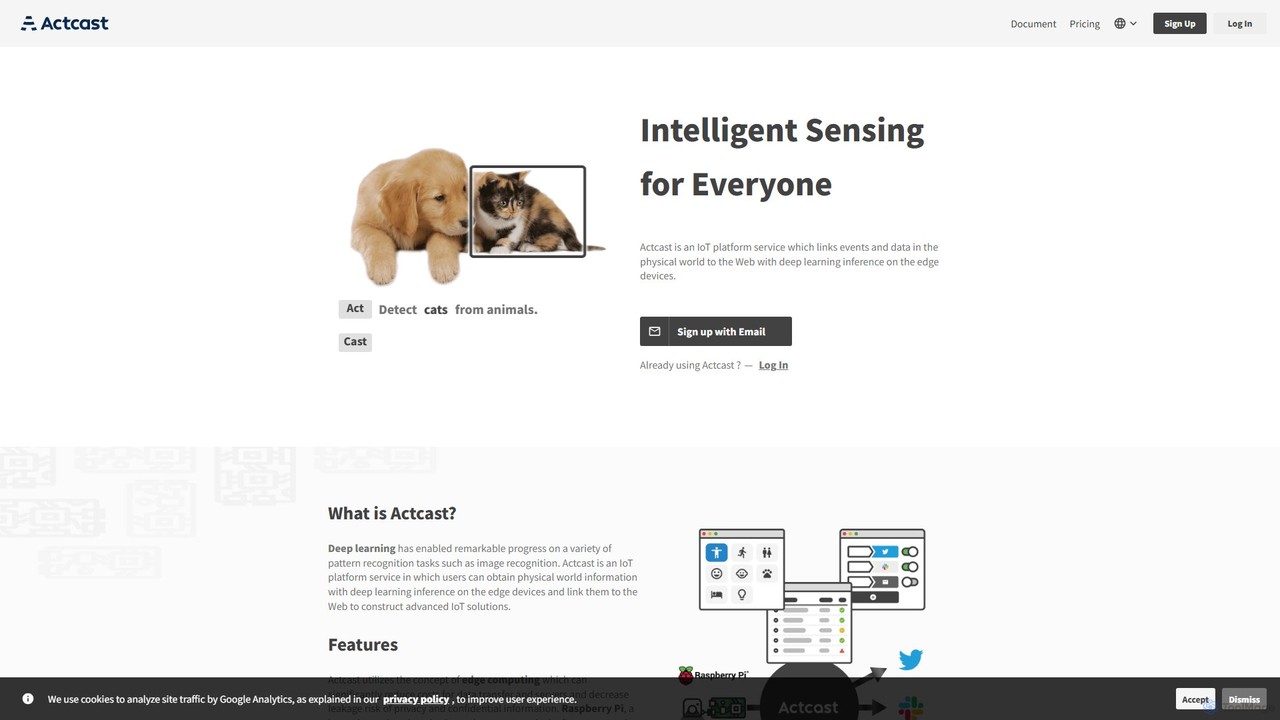
AI平台領域的邊緣計算熱門 AI 工具包括 Actcast 等,幫助您快速提升效率。
邊緣計算是一類將計算和數據儲存推向網路邊緣,更靠近數據源的分布式計算範式。這種方法透過在網路「邊緣」處理數據,而非傳輸至中心雲或數據中心,顯著降低了延遲並減少了頻寬消耗。它對於即時AI應用至關重要,能在物聯網、自動駕駛和智慧工廠等環境中實現更快的洞察和即時響應。作為AI平台生態系統中的一個專業組成部分,邊緣計算極大地提升了AI部署的效率和響應速度。
邊緣計算對於需要即時數據處理和決策的行業至關重要。它被製造工程師用於工業物聯網中的即時異常檢測,被汽車開發人員用於自動駕駛車輛導航,以及被智慧城市規劃者用於即時交通管理和公共安全應用。
選擇邊緣計算解決方案時,需考慮與現有設備的硬體兼容性、管理大量邊緣節點的擴展能力,以及強大的本地數據保護安全功能。同時,評估其與現有雲AI平台的集成能力,以實現無縫數據同步和模型部署。
工廠營運經理需要即時監控機器故障,以防止代價高昂的停機。透過在工廠車間的邊緣設備上部署AI模型,感測器數據可以即時分析,無需將所有原始數據發送到雲端即可識別異常。這使得預測性維護和即時干預成為可能,顯著提高了營運效率並減少了意外停機。
汽車工程師需要使車輛能夠即時響應不斷變化的道路狀況以確保安全。由邊緣計算驅動的車載AI系統在幾毫秒內本地處理攝影機、雷達和光達數據。這使得車輛能夠做出瞬間的導航、避障和緊急制動決策,顯著提高了自動駕駛汽車在動態環境中的安全性和可靠性。
零售店經理旨在分析店內顧客行為並個性化體驗,同時尊重隱私。邊緣的AI攝影機和感測器在本地處理匿名化的顧客移動和互動數據。這為動態顯示調整或個性化優惠提供了即時洞察,在不將敏感數據傳輸到雲端的情況下,提高了顧客參與度和銷售轉化率。
Healthcare Providers need to continuously monitor vital signs of patients in remote or home settings. Wearable devices or local gateways with AI capabilities, leveraging Edge Computing, process patient data at the source. They detect critical changes and send immediate alerts to caregivers, even with limited internet connectivity, enabling proactive intervention and reducing hospital readmissions by providing timely care.
Urban Planners and Traffic Engineers aim to optimize traffic flow and respond to incidents in real-time. AI cameras and sensors at intersections, powered by Edge Computing, process traffic data locally. This allows for dynamic adjustment of signal timings or immediate identification of accidents, reducing congestion and improving response times for emergency services, thereby enhancing urban mobility and public safety.
Farmers and Agronomists need to monitor crop health and environmental conditions for optimized yield. Drones or ground sensors with AI capabilities, utilizing Edge Computing, analyze images and environmental data directly in the field. This enables immediate detection of pests, diseases, or nutrient deficiencies, and recommends instant actions, maximizing crop yield, minimizing resource waste, and reducing environmental impact.
Edge Computing is a distributed computing model that processes data closer to its source, at the 'edge' of the network. This contrasts with traditional cloud computing, which relies on centralized data centers. Its core characteristics include low latency, reduced bandwidth usage, and enhanced real-time processing capabilities. It's particularly vital for AI applications that require immediate decision-making and operate in environments with limited connectivity or sensitive data.
The primary difference lies in where data processing occurs. Cloud Computing processes data in centralized data centers, often far from the data source, leading to higher latency. Edge Computing, conversely, processes data locally, at or near the source, significantly reducing latency and bandwidth usage. While Cloud Computing offers vast scalability and centralized management, Edge Computing excels in real-time applications, data privacy, and operational continuity in disconnected environments. They are often complementary, with edge devices pre-processing data before sending aggregated insights to the cloud.
Edge Computing offers several key benefits for AI applications. Firstly, it enables ultra-low latency processing, critical for real-time AI tasks like autonomous navigation or industrial automation. Secondly, it enhances data security and privacy by processing sensitive data locally, reducing the need for transmission to the cloud. Thirdly, it optimizes bandwidth usage and costs by only sending aggregated or critical data to central systems. Lastly, it improves reliability, allowing AI systems to function even with intermittent cloud connectivity, crucial for remote or mobile deployments.
AI applications that benefit most from Edge Computing are those requiring immediate response, handling sensitive data locally, or operating in environments with limited or intermittent connectivity. This includes autonomous systems like self-driving cars and drones, industrial automation for real-time anomaly detection, smart retail for in-store customer analytics, remote healthcare monitoring, and smart city infrastructure management. Any scenario where milliseconds matter or data privacy is paramount is an ideal candidate for edge-powered AI.
Security and privacy are critical in Edge Computing. While local data processing can reduce transmission risks, it necessitates robust device-level security, including strong authentication, access control, and data encryption at rest and in transit between edge nodes. Managing distributed security across numerous edge devices presents a challenge. Additionally, ensuring compliance with local data residency and privacy regulations (e.g., GDPR, CCPA) is paramount, as data is processed closer to its origin, often within specific geographical or regulatory boundaries.