Best of the Year 1 results Audit AI Tools

Popular AI tools in the Audit field include ComplyDo, etc., helping you quickly improve efficiency.

ComplyDo

ComplyDo

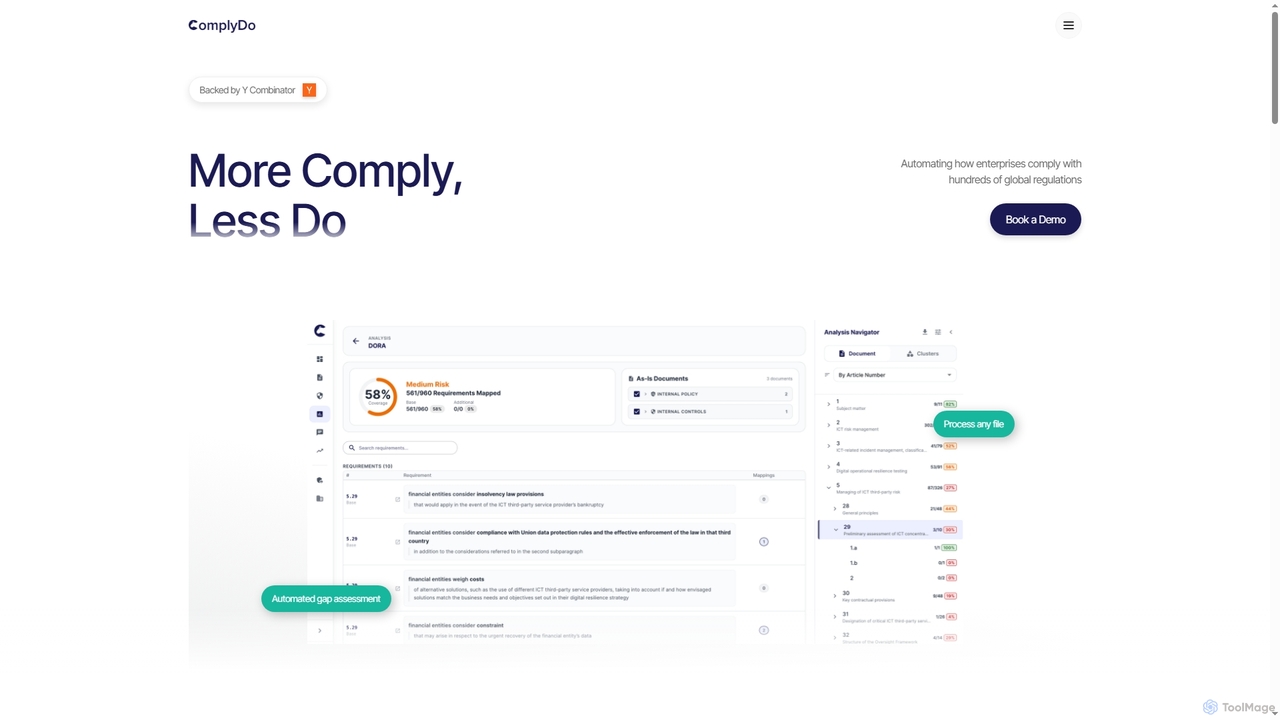
ComplyDo is an AI-powered compliance automation platform designed for enterprises to streamline internal control management, regulatory mapping, gap …

2.6K

About Audit

Audit AI tools are AI-powered solutions designed to automate and significantly enhance the process of examining records, systems, or operations. These tools leverage advanced machine learning algorithms and data analytics to process vast datasets, identify anomalies, ensure compliance with regulations, and uncover potential risks. By transforming traditional auditing methods, Audit AI tools provide deeper insights, improve accuracy, and dramatically increase efficiency across various industries, from finance to IT security and operational compliance.

Core Features

  • Automated Data Collection: Gathers and integrates diverse data sources, including financial records, system logs, and operational data, for comprehensive analysis.
  • Anomaly Detection: Utilizes AI models to identify unusual patterns, outliers, or deviations from expected norms that may indicate fraud, errors, or security breaches.
  • Compliance Monitoring: Continuously monitors processes and data against regulatory requirements (e.g., GDPR, SOX) and internal policies, flagging non-compliance in real-time.
  • Risk Assessment & Prediction: Evaluates potential vulnerabilities and predicts future risks based on historical data and identified patterns, aiding proactive risk management.
  • Intelligent Report Generation: Creates detailed, customizable audit reports with actionable insights, visualizations, and explanations for identified issues.

Applicable Scenarios

Audit AI tools are indispensable for finance departments conducting continuous transaction monitoring, IT security teams performing vulnerability assessments, and compliance officers ensuring adherence to complex regulatory frameworks. They are also vital for internal audit functions seeking to optimize operational processes and for supply chain managers verifying ethical sourcing and performance.

How to Choose

When selecting an Audit AI tool, prioritize solutions with robust data integration capabilities across your existing systems. Evaluate the accuracy and explainability of its AI models for anomaly detection and risk assessment. Consider the level of customization for compliance rules and reporting, scalability to handle growing data volumes, and the security measures in place to protect sensitive audit data. User-friendliness and vendor support are also crucial for successful implementation.

AuditUse Cases

1

Automated Financial Transaction Review

Financial auditors and compliance officers can use AI audit tools to automatically review millions of transactions daily. The AI identifies suspicious patterns, anomalies, or potential fraudulent activities that might indicate money laundering or other financial crimes, significantly reducing the time and resources required for manual checks and improving detection rates.

2

Automated Financial Transaction Monitoring

Financial compliance officers can leverage AI audit tools to continuously monitor millions of financial transactions for suspicious activities. By applying machine learning algorithms, the tool identifies patterns indicative of fraud, money laundering, or non-compliance with regulatory frameworks like AML or KYC, significantly reducing the time spent on manual reviews and improving detection rates. This ensures adherence to strict financial regulations and mitigates substantial financial risks.

3

Automating Financial Transaction Review

Finance and accounting teams can deploy Audit AI tools to automatically scan millions of financial transactions daily. The AI identifies suspicious patterns, duplicate payments, or deviations from budget, flagging potential fraud or errors in real-time. This significantly reduces the manual effort required for reconciliation and compliance checks, allowing auditors to focus on high-risk areas and complex investigations.

4

Code Security and Compliance Audit

Software development teams and cybersecurity professionals utilize AI audit tools to scan source code and deployed applications for security vulnerabilities, coding standard violations, and compliance with industry best practices. This proactive auditing helps identify and remediate flaws early in the development lifecycle, preventing costly breaches and ensuring robust software.

5

IT Security Log Analysis

Security analysts use AI audit tools to analyze vast volumes of IT system logs and network traffic for potential security breaches or vulnerabilities. The AI can detect anomalous login attempts, unusual data access patterns, or malware signatures that human analysts might miss, providing real-time alerts. This proactive approach helps organizations identify and respond to cyber threats much faster, strengthening their overall cybersecurity posture and preventing data loss.

6

Enhancing IT Security Vulnerability Audits

Cybersecurity professionals utilize Audit AI to continuously monitor network traffic, system logs, and user access patterns across an organization's infrastructure. The AI detects unusual login attempts, unauthorized data access, or malware signatures, providing immediate alerts for potential security breaches or system vulnerabilities. This proactive approach strengthens an organization's defense against cyber threats.

7

Marketing Content Compliance Check

Marketing and legal teams in regulated industries (e.g., pharmaceuticals, finance) employ AI audit tools to ensure all marketing materials, advertisements, and website content comply with strict regulatory guidelines and internal brand standards. The AI can flag non-compliant language, misleading claims, or inappropriate imagery before publication, mitigating legal risks.

8

Internal Controls Compliance Audit

Internal auditors can deploy AI audit tools to assess the effectiveness of internal controls across various business processes. The AI automatically reviews transaction data, access logs, and policy documents to identify deviations from established control procedures. This helps in pinpointing control weaknesses, ensuring operational efficiency, and maintaining regulatory compliance without extensive manual sampling, thereby providing a more comprehensive and consistent audit coverage.

9

Ensuring Regulatory Compliance Across Departments

Compliance officers leverage Audit AI tools to automatically review contracts, policies, and operational procedures against evolving industry regulations like GDPR, SOX, or HIPAA. The AI identifies clauses or practices that are non-compliant, highlights missing documentation, and tracks changes in regulatory requirements, ensuring the organization remains compliant and avoids costly penalties.

10

Data Quality and Governance Audit

Data stewards and IT managers leverage AI audit tools to continuously monitor data pipelines and databases for quality issues, inconsistencies, and privacy compliance (e.g., PII handling). The tools automatically detect data entry errors, missing values, or unauthorized data access, ensuring data integrity and adherence to data governance policies.

11

Healthcare Data Privacy Audit

Healthcare compliance officers utilize AI audit tools to ensure strict adherence to patient data privacy regulations like HIPAA. The AI scans electronic health records (EHRs) and access logs to detect unauthorized data views, unusual data modifications, or sharing violations. This automated auditing capability helps prevent costly data breaches and regulatory fines, safeguarding sensitive patient information and maintaining trust in healthcare providers.

12

Optimizing Supply Chain Transparency and Ethics

Operations and procurement managers use Audit AI to trace product origins, verify supplier certifications, and monitor logistics data throughout the supply chain. The AI can flag inconsistencies in sourcing, potential labor violations, or environmental non-compliance, ensuring ethical practices and transparency. This helps build a resilient and responsible supply chain, mitigating reputational and operational risks.

13

Supply Chain Risk Assessment

Procurement and risk management professionals use AI audit tools to assess risks within their supply chains. By analyzing supplier data, news feeds, and public records, the AI can identify potential compliance issues, ethical concerns, or financial instabilities among suppliers, enabling proactive risk mitigation and ensuring supply chain resilience.

14

Supply Chain Compliance Verification

Supply chain managers can employ AI audit tools to verify compliance with ethical sourcing, environmental standards, and labor practices across their global supply networks. The AI analyzes supplier data, certifications, and transaction records to identify discrepancies or potential violations. This ensures that the entire supply chain adheres to corporate social responsibility policies and international regulations, mitigating reputational and operational risks associated with non-compliant suppliers.

15

Streamlining Internal Operational Process Audits

Internal audit departments can apply Audit AI to analyze business process data, identifying inefficiencies, bottlenecks, or deviations from standard operating procedures. The AI provides insights into process performance, resource utilization, and compliance with internal controls, suggesting areas for improvement. This leads to optimized workflows, reduced operational costs, and enhanced organizational effectiveness.

16

HR Policy Adherence Audit

Human Resources departments can deploy AI audit tools to review internal communications, employee data, and operational processes for adherence to company policies and labor laws. The AI helps identify potential discrimination, harassment, or non-compliance issues in areas like hiring, promotions, or grievance handling, fostering a fair and compliant workplace.

17

Software Code Quality and Security Audit

Software development teams use AI audit tools to automatically review codebases for quality, security vulnerabilities, and compliance with coding standards. The AI can identify bugs, potential exploits, and deviations from best practices much faster than manual code reviews. This integration into the CI/CD pipeline ensures that code is secure and high-quality from the earliest stages of development, reducing technical debt and preventing costly post-release fixes.

18

Validating Data Quality and Integrity for Reporting

Data governance teams employ Audit AI tools to regularly assess the accuracy, completeness, and consistency of large datasets used for business intelligence and regulatory reporting. The AI automatically identifies data entry errors, missing values, or conflicting information across different systems, ensuring data integrity. This guarantees that decisions are based on reliable information and reports are accurate.

AuditFrequently Asked Questions