ToolMage
Sign in

Best 1 Health AI tools for Calculators

Popular Health AI tools in Calculators include ToolsMaverick, helping you work more efficiently.

ToolsMaverick
Free

ToolsMaverick

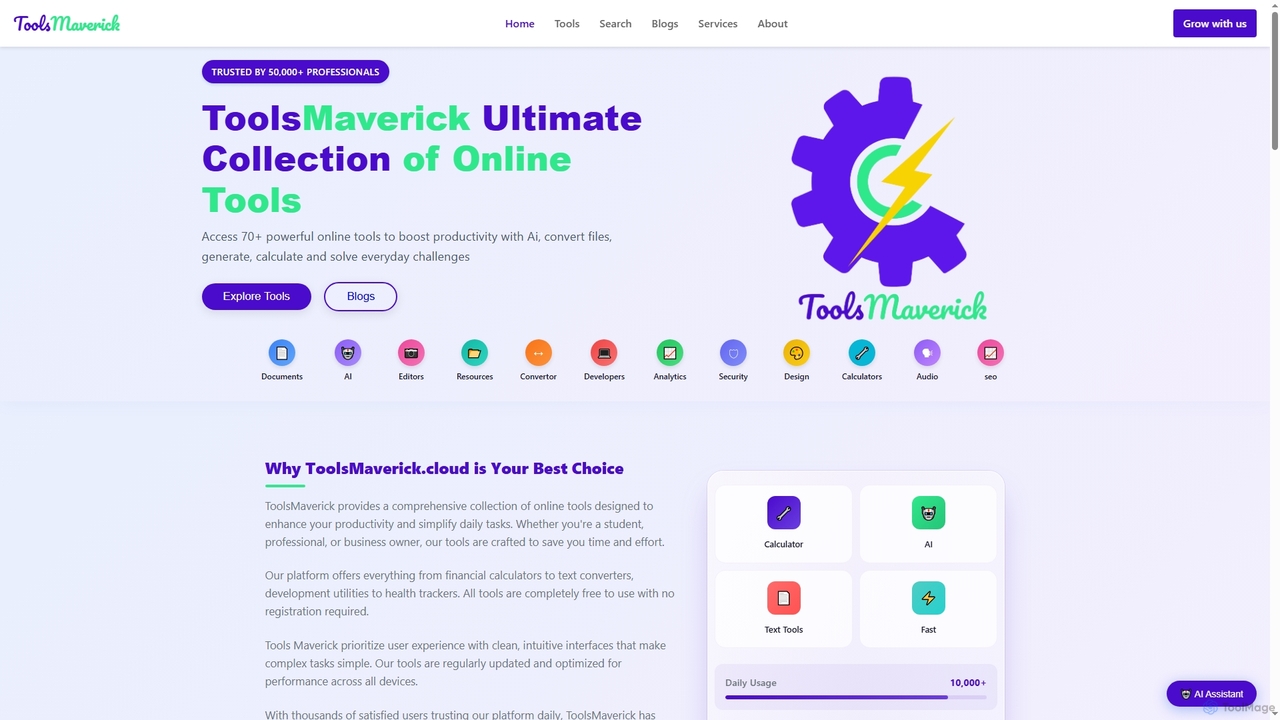
ToolsMaverick is a comprehensive, free online platform offering over 70 diverse utilities, including powerful AI tools, calculators, converters, SEO aids, and development tools. Designed for simplicity, it requires no sign-up, features no ads, and provides immediate access to enhance productivity for professionals, students, and everyday users.

Content Analysis
Visits 5.6KFavorites 133Likes 137

About Health

AI Health Calculators are specialized AI-powered tools designed to perform health-related calculations, assessments, and predictive analyses. These innovative tools leverage machine learning, natural language processing, and advanced algorithms to process diverse health data, offering highly personalized insights and data-driven recommendations. They empower individuals to proactively manage their wellness, gain a deeper understanding of their health metrics, and provide crucial support for healthcare professionals in clinical decision-making and patient education.

Core Features

  • Personalized Risk Assessment: Calculates individual health risks for various conditions, such as cardiovascular disease or diabetes, based on lifestyle, genetics, and medical history.
  • Nutritional & Dietary Analysis: Evaluates food intake patterns, suggests balanced meal plans tailored to specific needs, and tracks macro/micronutrient consumption for optimal health.
  • Fitness & Performance Optimization: Analyzes workout data from wearables, recommends tailored exercise routines, and predicts athletic performance improvements or injury risks.
  • Symptom Analysis & Guidance: Processes user-reported symptoms through intelligent algorithms to suggest potential conditions or guide users towards appropriate medical consultation, acting as a preliminary aid.
  • Medication Management Support: Assists healthcare providers in precise dosage calculations, identifies potential drug interactions, and helps manage medication schedules, enhancing patient safety.

Applicable Scenarios

AI Health Calculators are invaluable for personal wellness management, enabling individuals to track progress, set goals, and make informed lifestyle choices. They support fitness coaches in designing highly optimized training programs and assist dietitians in creating personalized nutrition plans for clients with specific health objectives. In clinical settings, these tools offer robust decision support for risk assessment, early detection, and medication management, ultimately enhancing patient care pathways and outcomes.

How to Choose

When selecting an AI Health Calculator, prioritize data accuracy and the scientific validity of its underlying algorithms and data sources. Consider the breadth and depth of health metrics it covers, its personalization capabilities, and seamless integration options with other health devices or electronic health records. Robust data privacy and security protocols are paramount, alongside user-friendliness, clear disclaimers regarding medical advice, and transparent methodology.

Health use cases

1

Personalized Diet & Nutrition Planning

Individuals seeking to improve their diet or manage specific health conditions (e.g., diabetes, weight loss) use AI health calculators. By inputting dietary preferences, health goals, and biometric data, the tool analyzes nutrient intake, identifies deficiencies, and generates customized meal plans and grocery lists, optimizing nutritional balance and adherence.

2

Chronic Disease Risk Prediction & Prevention

Healthcare providers or proactive individuals leverage AI health calculators to assess the risk of developing chronic diseases like heart disease, stroke, or type 2 diabetes. Inputting factors such as family history, lifestyle habits, and lab results, the AI provides a personalized risk score and suggests preventive measures or lifestyle modifications, facilitating early intervention.

3

Optimizing Athletic Training & Recovery

Athletes and fitness enthusiasts utilize AI health calculators integrated with wearables to analyze performance data, heart rate variability, and sleep patterns. The tool calculates optimal training loads, predicts recovery needs, and suggests personalized exercise routines or rest periods, helping to maximize performance, prevent overtraining, and reduce injury risk.

4

Medication Dosage & Interaction Verification

Pharmacists and clinicians employ AI health calculators to ensure patient safety. By inputting patient demographics, existing medications, and specific health parameters (e.g., kidney function), the AI verifies correct drug dosages, identifies potential adverse drug-drug interactions, and flags contraindications, minimizing errors and improving treatment efficacy.

5

Mental Wellness & Stress Level Tracking

Individuals focused on mental health use AI health calculators to track mood fluctuations, sleep quality, and stress indicators over time. The AI analyzes these patterns, identifies triggers, and provides personalized recommendations for mindfulness exercises, stress reduction techniques, or suggests when professional psychological support might be beneficial, fostering proactive mental care.

6

Fertility & Pregnancy Health Monitoring

Couples planning a family or expectant mothers use AI health calculators to track ovulation cycles, predict fertile windows, and monitor pregnancy milestones. The tool provides personalized insights into fetal development, calculates due dates, and offers guidance on prenatal care, nutrition, and potential risk factors, supporting a healthy journey.

Health FAQ

What are AI Health Calculators?

AI Health Calculators are advanced digital tools that use artificial intelligence, such as machine learning and data analytics, to process health-related information. Unlike traditional calculators that follow fixed formulas, AI versions can learn from vast datasets, offer personalized assessments, predict health outcomes, and provide tailored recommendations based on individual inputs like lifestyle, biometrics, and medical history.

How do AI Health Calculators differ from traditional health calculators?

The primary difference lies in their intelligence and adaptability. Traditional health calculators are static, rule-based tools providing generic results (e.g., BMI based on height/weight). AI Health Calculators, however, can analyze complex, multi-dimensional data, identify patterns, and offer dynamic, personalized insights, risk predictions, and actionable advice that evolves with new data, going beyond simple arithmetic to provide deeper health understanding.

What kind of data do AI Health Calculators typically use?

AI Health Calculators utilize a variety of data sources, often with user consent. This includes self-reported information (e.g., diet, exercise, symptoms), biometric data from wearables (e.g., heart rate, sleep patterns), genetic data, and, in clinical settings, anonymized electronic health records. The more comprehensive and accurate the data input, the more precise and relevant the AI's outputs will be.

Are AI Health Calculators safe and accurate for medical advice?

AI Health Calculators are powerful tools for information, assessment, and personalized insights, but they are not a substitute for professional medical advice, diagnosis, or treatment. While designed for accuracy based on available data and algorithms, their outputs should always be discussed with a qualified healthcare professional. Data privacy and security are critical, and reputable tools adhere to strict regulations like HIPAA or GDPR to protect sensitive health information.

Who can benefit most from using AI Health Calculators?

A wide range of individuals and professionals can benefit. This includes health-conscious individuals seeking to optimize their diet, fitness, or mental well-being; patients managing chronic conditions who need personalized tracking and insights; and athletes aiming to enhance performance. Healthcare professionals also benefit by using these tools as decision support systems for risk assessment, patient education, and medication management, improving efficiency and care quality.