ToolMage
Sign in

Best 1 Career Tools

Popular Career Tools include Aicvphoto, helping you work more efficiently.

Aicvphoto
Freemium

Aicvphoto

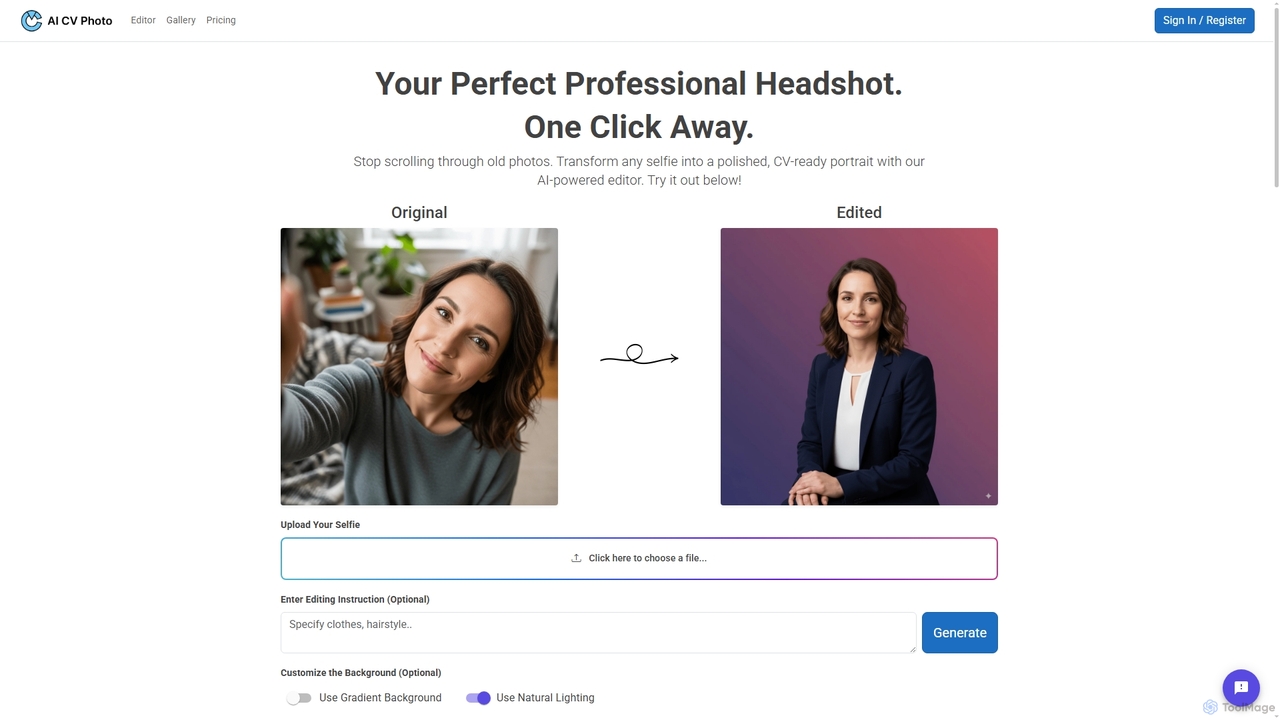
Aicvphoto is an AI-powered online tool that transforms casual selfies into professional headshots suitable for CVs, LinkedIn profiles, and other professional uses. It enhances lighting, removes backgrounds, and optimizes composition in under 20 seconds, offering studio-quality results at an affordable price.

Resume Builder
Visits 4.9KFavorites 120Likes 113

About Career Tools

Career Tools are AI-powered applications designed to assist individuals throughout their professional journey, from job seeking to long-term career development. These tools leverage artificial intelligence, machine learning, and natural language processing to offer personalized insights, automate tedious tasks, and provide strategic guidance. They empower users to optimize their resumes, prepare for interviews, identify skill gaps, and discover tailored job opportunities, ultimately enhancing their employability and career progression.

Core Features

  • Resume & CV Optimization: Analyzes resumes against job descriptions, suggesting improvements for keywords, formatting, and content.
  • Interview Preparation: Provides mock interview simulations, real-time feedback on responses, body language, and tone.
  • Job Matching & Recommendation: Uses AI algorithms to match user profiles with relevant job openings and suggest personalized opportunities.
  • Skill Gap Analysis: Assesses current skills, identifies areas for development, and recommends learning resources or courses.
  • Career Planning & Coaching: Offers insights into career paths, industry trends, and personalized advice for professional growth.

Use Cases

Career Tools are invaluable for job seekers aiming to streamline their application process, professionals looking to upskill or reskill, and individuals planning significant career transitions. They assist in crafting compelling application materials, practicing for crucial interviews, and gaining a clearer understanding of market demands and personal development needs.

How to Choose

When selecting an AI Career Tool, consider its specific functionalities (e.g., resume builder, interview simulator, skill assessment), the accuracy and relevance of its AI recommendations, and its data privacy policies. Evaluate user interface intuitiveness, integration capabilities with job boards or learning platforms, and the pricing model to ensure it aligns with your budget and career goals.

Career Tools use cases

1

Optimize Resume for Specific Job Postings

A job seeker can use AI career tools to tailor their resume for each specific job application. By uploading a job description, the tool analyzes keywords and required skills, then suggests modifications to the resume's content, phrasing, and formatting. This ensures the resume passes Applicant Tracking Systems (ATS) and highlights relevant experience, significantly increasing the chances of securing an interview by presenting a highly targeted application.

2

Practice for Job Interviews with AI Simulators

Candidates preparing for job interviews can utilize AI-powered interview simulators to hone their skills. These tools offer virtual mock interviews, asking common behavioral and technical questions. They provide instant feedback on verbal responses, tone of voice, eye contact, and even facial expressions, helping users identify areas for improvement. This practice builds confidence and refines communication, leading to stronger performance in real interviews.

3

Identify Skill Gaps for Career Advancement

Professionals aiming for career advancement can leverage AI career tools to analyze their current skill set against desired roles or industry benchmarks. The tool identifies specific skill gaps and recommends personalized learning paths, courses, or certifications to bridge these deficiencies. This proactive approach ensures continuous professional development, making individuals more competitive and prepared for future opportunities in their chosen field.

4

Discover Personalized Job Opportunities

Individuals actively seeking employment can use AI career tools to discover job opportunities that truly align with their profile and preferences. Unlike traditional job boards, AI tools analyze a user's skills, experience, and career aspirations to provide highly personalized recommendations, often uncovering hidden gems or roles they might not have considered. This saves time and increases the relevance of job applications, leading to better matches.

5

Craft Professional Cover Letters Quickly

Applicants often struggle with writing compelling cover letters for each job application. AI career tools can significantly streamline this process. By inputting a resume and a job description, the AI can generate a customized cover letter that highlights relevant skills and experiences, matches the tone of the company, and addresses specific requirements. This automation saves hours of writing time while ensuring a high-quality, personalized application document.

6

Plan Long-Term Career Paths

Mid-career professionals or those considering a career change can use AI career tools for long-term strategic planning. These tools analyze market trends, skill demands, and individual profiles to suggest potential career trajectories, required upskilling, and even mentorship opportunities. By providing data-driven insights, AI helps users make informed decisions about their future, mitigating risks and maximizing growth potential over several years.

Career Tools FAQ

What are AI Career Tools?

AI Career Tools are software applications that leverage artificial intelligence to assist individuals with various aspects of their professional development and job search. They typically feature capabilities like resume optimization, interview preparation, personalized job matching, and skill gap analysis. These tools aim to streamline career-related tasks, provide data-driven insights, and enhance a user's competitiveness in the job market.

How do AI Career Tools help with job searching?

AI Career Tools significantly enhance the job search process by offering several key benefits. They can analyze your resume and job descriptions to suggest optimal keywords, helping your application pass Applicant Tracking Systems (ATS). Many tools provide personalized job recommendations based on your profile, saving time spent sifting through irrelevant listings. Additionally, some offer AI-powered cover letter generation and interview practice, boosting your overall application quality and confidence.

What features should I look for in an AI Career Tool?

When choosing an AI Career Tool, prioritize features that align with your specific needs. Look for robust resume and CV optimization, including ATS compatibility checks. Effective interview simulators with real-time feedback are crucial for preparation. Strong job matching algorithms that provide personalized recommendations are also key. Additionally, consider tools offering skill gap analysis, career path planning, and integration with popular job boards or learning platforms for a comprehensive experience.

Are AI Career Tools suitable for all career stages?

Yes, AI Career Tools are generally suitable for individuals at various career stages, though the specific benefits may differ. For entry-level job seekers, they can help craft initial resumes and prepare for first interviews. Mid-career professionals can use them for skill gap analysis, career transition planning, and discovering advanced opportunities. Even senior executives might find value in market trend analysis and strategic career coaching offered by more sophisticated AI platforms. The key is to choose a tool with features relevant to your current stage.

How do AI Career Tools ensure data privacy?

Data privacy is a critical concern for AI Career Tools, as they handle sensitive personal and professional information. Reputable tools employ robust security measures, including encryption, secure data storage, and strict access controls. They typically adhere to global data protection regulations like GDPR and CCPA. Users should always review the tool's privacy policy to understand how their data is collected, used, and shared, and choose platforms that prioritize transparency and user control over their information.