ToolMage
Sign in

Best 2 Character Design AI tools

Popular Character Design AI tools include Nano Banana, helping you work more efficiently.

Nano Banana
Freemium

Nano Banana

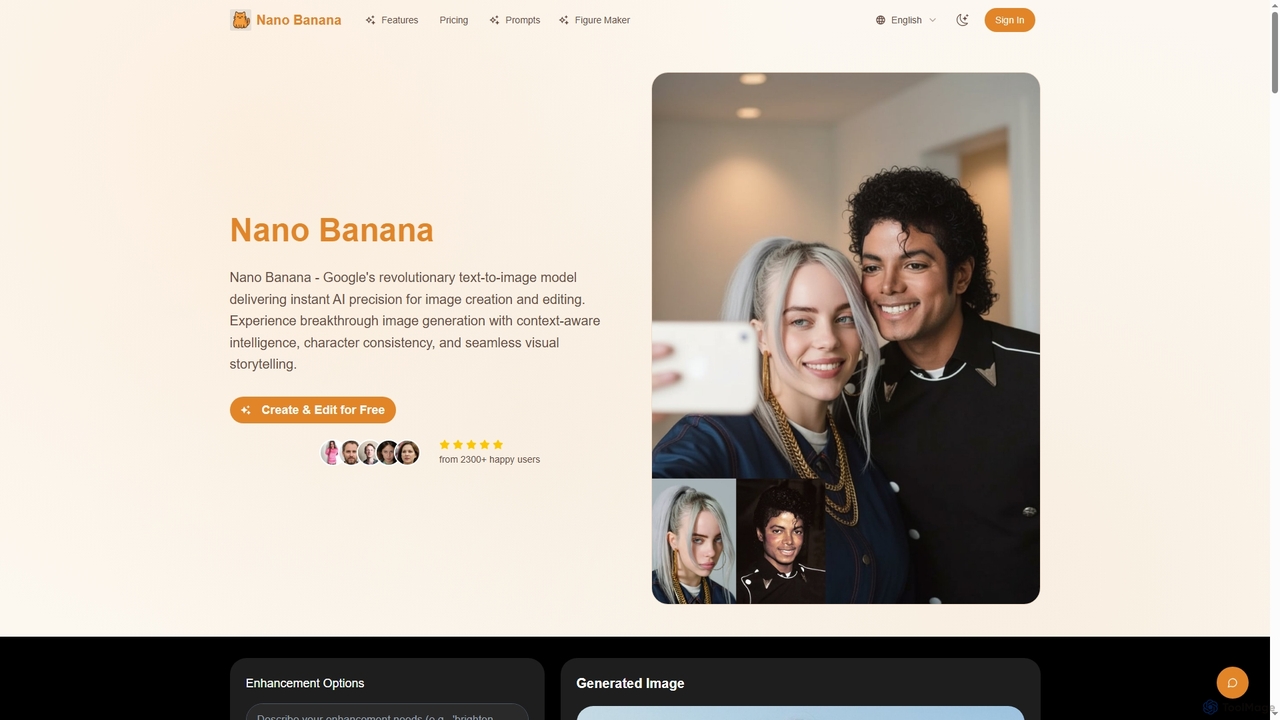
Nano Banana is Google's revolutionary AI text-to-image model, offering instant precision for image creation and editing. It leverages context-aware intelligence and advanced neural architecture to ensure character consistency, seamless visual storytelling, and high-quality outputs across various creative workflows, from character design to product visualization.

Ai Character
Visits 15.3KFavorites 120Likes 121
Nano Banana
Freemium

Nano Banana

Nano Banana is an AI-powered image editor driven by natural language prompts, utilizing Gemini 2.5 Flash Image technology. It excels at precise, effortless edits while maintaining character consistency, scene layout, and lighting across various images.

3D Figure Generation
Visits 105KFavorites 142Likes 148

About Character Design

Character Design tools are AI-powered platforms that assist artists, designers, and creators in generating, iterating, and refining character concepts. These tools leverage advanced AI algorithms, including generative adversarial networks (GANs) and deep learning, to transform textual descriptions or basic sketches into detailed visual representations. They significantly accelerate the creative process, enabling rapid prototyping, exploration of diverse styles, and consistent character development across various media.

Core Features

  • Concept Generation: Automatically generates unique character ideas from text prompts or reference images.
  • Style Transfer: Applies specific artistic styles (e.g., anime, realism, cartoon) to character designs.
  • 3D Model Creation: Converts 2D concepts into basic 3D models or enhances existing 3D assets.
  • Facial Expression & Pose Control: Allows manipulation of character expressions, gestures, and body poses.
  • Outfit & Accessory Design: Generates and customizes clothing, armor, and accessories for characters.

Applicable Scenarios

Character Design AI tools are invaluable for game developers, animators, illustrators, and virtual content creators. They streamline the initial concept phase, help maintain visual consistency across large projects, and enable rapid iteration for client feedback. From indie game studios to large animation houses, these tools empower teams to bring imaginative characters to life more efficiently.

How to Choose

When selecting a Character Design AI tool, consider its artistic style versatility and customization options to match your project's aesthetic. Evaluate its integration capabilities with your existing design software (e.g., Photoshop, Blender) and the output formats it supports (e.g., PNG, OBJ, FBX). Assess the learning curve and user interface, as well as the pricing model and community support, to ensure it aligns with your team's needs and budget.

Character Design use cases

1

Designing Game Protagonist Concepts

Game developers can use Character Design AI tools to rapidly generate multiple visual concepts for a game's main protagonist. By inputting textual descriptions of personality traits, backstory, and desired aesthetic, the AI can produce diverse character art, helping the team quickly iterate on designs and select the most compelling visual identity before committing to detailed modeling.

2

Generating Diverse NPC Variations

For open-world games or animated series requiring a large cast of non-player characters (NPCs), AI character design tools can generate hundreds of unique variations based on a core template. This allows creators to quickly populate virtual worlds with diverse characters, ensuring visual variety and reducing the manual effort of designing each individual NPC from scratch, saving significant production time.

3

Creating Animated Series Characters

Animation studios can leverage AI character design tools to develop consistent character models and expressions for animated series. By defining a character's core look, the AI can then generate various poses, facial expressions, and even slight stylistic adjustments while maintaining the character's brand identity. This ensures visual continuity across episodes and accelerates the pre-production phase for animators.

4

Developing Virtual Brand Mascots

Marketing teams and brands can utilize Character Design AI to create unique and engaging virtual mascots or brand ambassadors. The AI can help explore various design aesthetics, personality types, and outfit options for a mascot, ensuring it resonates with the target audience. This accelerates the branding process and provides a consistent visual identity for digital marketing campaigns and virtual events.

5

Customizing Avatars for Metaverse Platforms

Individual users and developers building for metaverse platforms can use AI character design tools to create highly customized and unique avatars. These tools allow for detailed adjustments to facial features, body types, hairstyles, and clothing, often with style transfer capabilities to match specific metaverse aesthetics. This empowers users to express their digital identity more freely and efficiently.

6

Iterating on Character Outfits and Accessories

Fashion designers and character artists can use AI tools to rapidly iterate on clothing, armor, and accessory designs for characters. By providing a base character and design parameters, the AI can generate numerous variations of outfits, textures, and embellishments. This significantly speeds up the design exploration phase, allowing for quick visualization of different styles and materials without extensive manual drawing or 3D modeling.

Character Design FAQ

What are Character Design AI tools?

Character Design AI tools are software applications that use artificial intelligence to assist in the creation and development of characters for various media. They typically feature generative capabilities, style transfer, and customization options to help artists and designers produce unique character concepts, iterate on designs, and maintain visual consistency across projects. These tools streamline workflows for game development, animation, illustration, and virtual content creation.

How do AI tools assist in character design?

AI tools assist character design by automating repetitive tasks, generating creative variations, and providing intelligent suggestions. They can quickly transform text prompts into visual concepts, apply different artistic styles, and even generate basic 3D models from 2D inputs. This allows designers to explore more options in less time, focus on high-level creative decisions, and ensure consistency across a large cast of characters, significantly boosting productivity and innovation.

Who benefits most from using AI character design tools?

Game developers, animation studios, illustrators, and virtual content creators benefit most from AI character design tools. Game developers can rapidly prototype characters and populate worlds with diverse NPCs. Animation studios ensure consistent character models across episodes. Illustrators can quickly explore various styles and concepts for commissions. Virtual content creators, including those for the metaverse, can design unique avatars and digital personas efficiently. These tools are particularly valuable for teams needing to scale character production or explore numerous creative directions.

What should I consider when choosing an AI character design tool?

When choosing an AI character design tool, prioritize its artistic style versatility and customization depth to ensure it aligns with your project's aesthetic and specific needs. Evaluate the quality and formats of its output (e.g., 2D images, 3D models, animation-ready assets) and its compatibility with your existing design software. Consider the user-friendliness of its interface, the learning curve, and the availability of tutorials or community support. Finally, assess the pricing model, including subscription costs and any usage-based fees, to fit your budget.

Can AI character design tools create 3D models?

Yes, many advanced AI character design tools are capable of creating or assisting in the creation of 3D models. Some tools can generate basic 3D meshes directly from 2D inputs or textual descriptions, providing a foundational model that can then be refined in traditional 3D software. Others focus on enhancing existing 3D assets by generating textures, applying materials, or even rigging characters for animation. This capability significantly bridges the gap between 2D concept art and 3D production.