
ToolMage
Sign in

Best 1 Retention Management AI tools for Customer Success

Popular Retention Management AI tools in Customer Success include Korl, helping you work more efficiently.

Korl

Korl

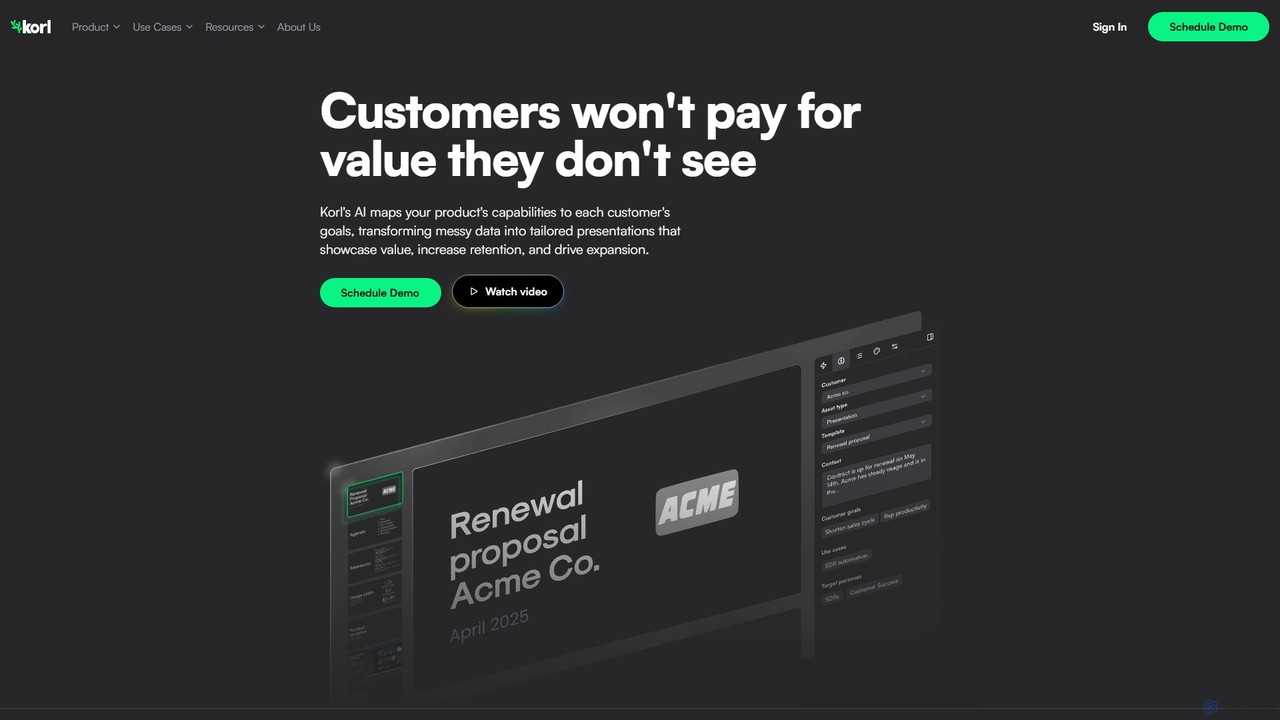
Korl is an AI-powered platform that automatically generates customer-specific presentations for Quarterly Business Reviews (QBRs) and renewals. By integrating with your existing data sources like Salesforce and Jira, Korl maps your product's value to each customer's unique goals, helping to increase retention and drive expansion.

Retention Management
Visits 9.7KFavorites 163Likes 135

About Retention Management

Retention Management tools are AI-powered solutions specifically designed to help businesses minimize customer churn and maximize customer lifetime value. These platforms leverage advanced analytics, machine learning, and behavioral science to predict customer attrition, identify at-risk segments, and automate personalized engagement strategies. By proactively addressing customer needs and fostering loyalty, retention management tools enable businesses to build stronger, more profitable customer relationships within the broader scope of customer success initiatives.

Core Features

  • Churn Prediction: Utilizes AI to analyze customer data and identify patterns indicating potential churn, allowing for early intervention.
  • Personalized Engagement: Delivers tailored communications, offers, and support based on individual customer behavior and preferences to foster loyalty.
  • Feedback Analysis: Processes customer feedback from various channels using NLP to uncover sentiment, pain points, and areas for improvement.
  • Automated Win-Back Campaigns: Triggers targeted campaigns with special offers or personalized messages to re-engage lapsed customers.
  • Customer Health Scoring: Assigns a health score to each customer based on their activity, engagement, and satisfaction, highlighting those needing attention.

Applicable Scenarios

SaaS companies use these tools to monitor subscription health and reduce cancellations by identifying disengaged users. E-commerce businesses deploy them to increase repeat purchases and customer loyalty through personalized product recommendations and post-purchase follow-ups. Subscription services leverage retention management to understand why customers downgrade or cancel, enabling proactive offers and improved service design.

How to Choose

When selecting a retention management tool, prioritize its AI model's accuracy in churn prediction and its ability to integrate seamlessly with existing CRM and marketing automation platforms. Evaluate the depth of personalization features, including segmentation capabilities and multi-channel engagement options. Consider the robustness of its analytics and reporting dashboards, as well as the scalability to handle growing customer bases and data volumes.

Retention Management use cases

1

Predicting Churn in SaaS Subscriptions

A SaaS product manager uses an AI retention management tool to monitor user engagement metrics, feature usage, and support interactions. The tool's machine learning model identifies users exhibiting behaviors correlated with churn, such as declining login frequency or decreased feature adoption. This allows the product team to proactively reach out with targeted educational content or personalized support, significantly reducing the monthly churn rate.

2

Automating Personalized Re-engagement for E-commerce

An e-commerce marketing specialist leverages retention management software to analyze past purchase history and browsing behavior. When a customer hasn't made a purchase in a specific timeframe, the tool automatically triggers a personalized email campaign with product recommendations based on their previous interests, or a special discount on items they viewed, encouraging repeat purchases and increasing customer lifetime value.

3

Identifying At-Risk Customers in Financial Services

A customer success manager at a bank uses an AI retention platform to analyze transaction data, service interactions, and feedback from high-value clients. The system flags clients showing signs of dissatisfaction or reduced engagement, such as fewer logins or increased complaints. This enables the manager to schedule proactive check-ins, offer tailored financial advice, or address concerns before the client considers switching providers.

4

Optimizing Loyalty Programs for Retail Chains

A retail loyalty program manager employs retention management AI to segment customers based on their purchasing frequency, average spend, and product preferences. The tool helps design and automate tiered loyalty rewards, exclusive early access to sales, or personalized birthday offers. This data-driven approach ensures that loyalty incentives are highly relevant and effective, boosting customer engagement and repeat visits.

5

Analyzing Customer Feedback for Service Improvement

A customer experience team uses an AI retention tool with natural language processing (NLP) capabilities to analyze thousands of customer support tickets, survey responses, and social media comments. The tool identifies recurring pain points, emerging issues, and sentiment trends related to specific products or services. This insight directly informs product development and service improvements, addressing root causes of dissatisfaction and preventing future churn.

6

Automating Win-Back Campaigns for Lapsed Subscribers

A streaming service's marketing team utilizes retention management software to identify subscribers who have recently canceled their service. The AI analyzes their past viewing habits and engagement levels to craft highly personalized win-back offers, such as a discounted re-subscription for their favorite genre or a free trial of a new premium feature. This automated process significantly increases the rate of subscriber reactivation.

Retention Management FAQ

What are AI Retention Management tools?

AI Retention Management tools are specialized software solutions that use artificial intelligence, particularly machine learning and predictive analytics, to help businesses keep their customers. They analyze vast amounts of customer data to identify patterns, predict potential churn, and automate personalized strategies to improve customer loyalty and extend customer lifetime value. These tools are a critical component of a comprehensive customer success strategy.

How do AI tools predict customer churn?

AI tools predict customer churn by analyzing historical customer data, including purchase history, engagement levels, support interactions, demographics, and behavioral patterns. Machine learning algorithms identify correlations between these data points and past churn events. By recognizing similar patterns in current customers, the AI can assign a "churn risk score" to individuals or segments, enabling businesses to intervene proactively before a customer leaves.

What are the key benefits of using AI for customer retention?

Using AI for customer retention offers several key benefits, including increased customer lifetime value by reducing churn, improved customer satisfaction through personalized experiences, and enhanced operational efficiency by automating engagement strategies. AI enables businesses to move from reactive problem-solving to proactive prevention, identifying at-risk customers early and delivering timely, relevant interventions that foster stronger loyalty and advocacy.

How does Retention Management differ from general Customer Relationship Management (CRM)?

While both Retention Management and CRM focus on customer interactions, their primary objectives differ. CRM systems are broad platforms for managing all aspects of customer relationships, from sales and marketing to service, throughout the entire customer lifecycle. Retention Management, as a specialized subset, specifically focuses on preventing churn and fostering loyalty *after* a customer has been acquired, often using advanced AI for predictive analytics and personalized engagement to keep existing customers engaged and satisfied.

What features should I look for in an AI Retention Management platform?

When evaluating an AI Retention Management platform, look for robust churn prediction capabilities powered by accurate machine learning models. Essential features include advanced customer segmentation, personalized communication automation across multiple channels (email, in-app, SMS), and comprehensive customer health scoring. Integration with your existing CRM, marketing automation, and data analytics tools is also crucial for a unified view of the customer and seamless workflow execution.