Best of the Year 3 results Customer Success AI Tools

Popular AI tools in the Customer Success field include Korl、Stratopus、AdaptLoop, etc., helping you quickly improve efficiency.

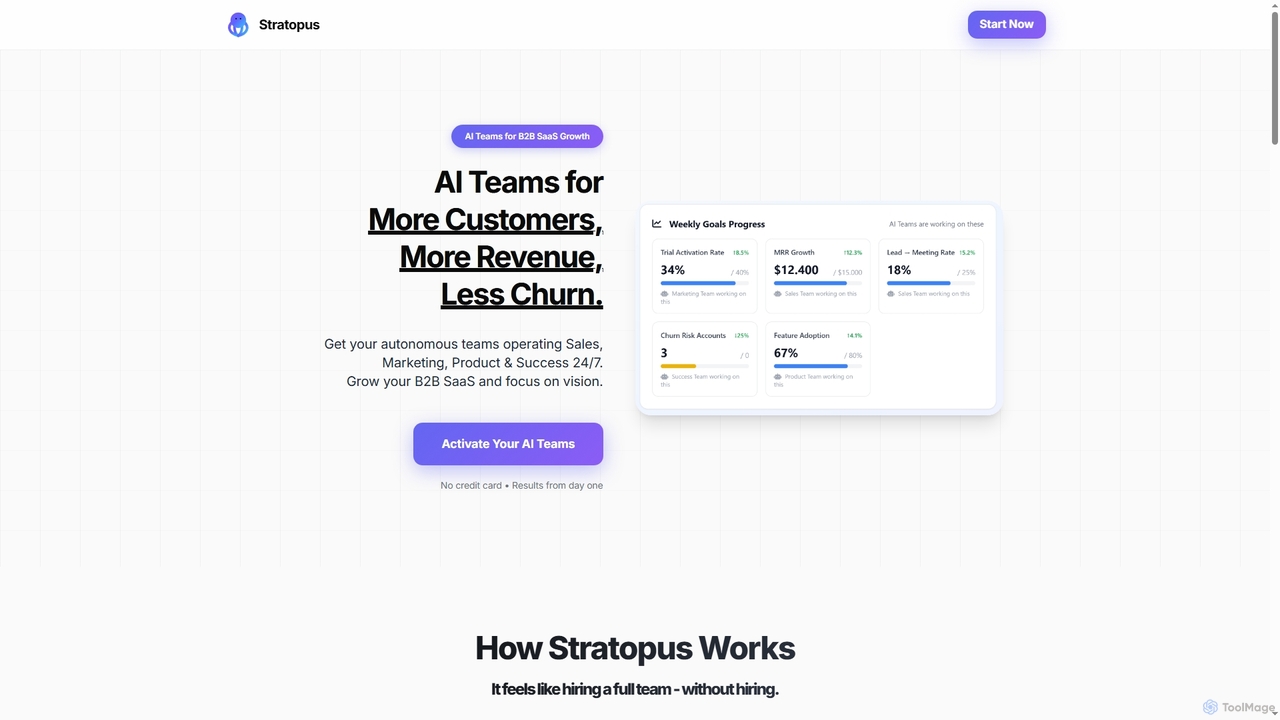
Stratopus

Stratopus

Stratopus provides autonomous AI teams for B2B SaaS companies, specializing in Sales, Marketing, Product, and Success. It helps …

2.8K
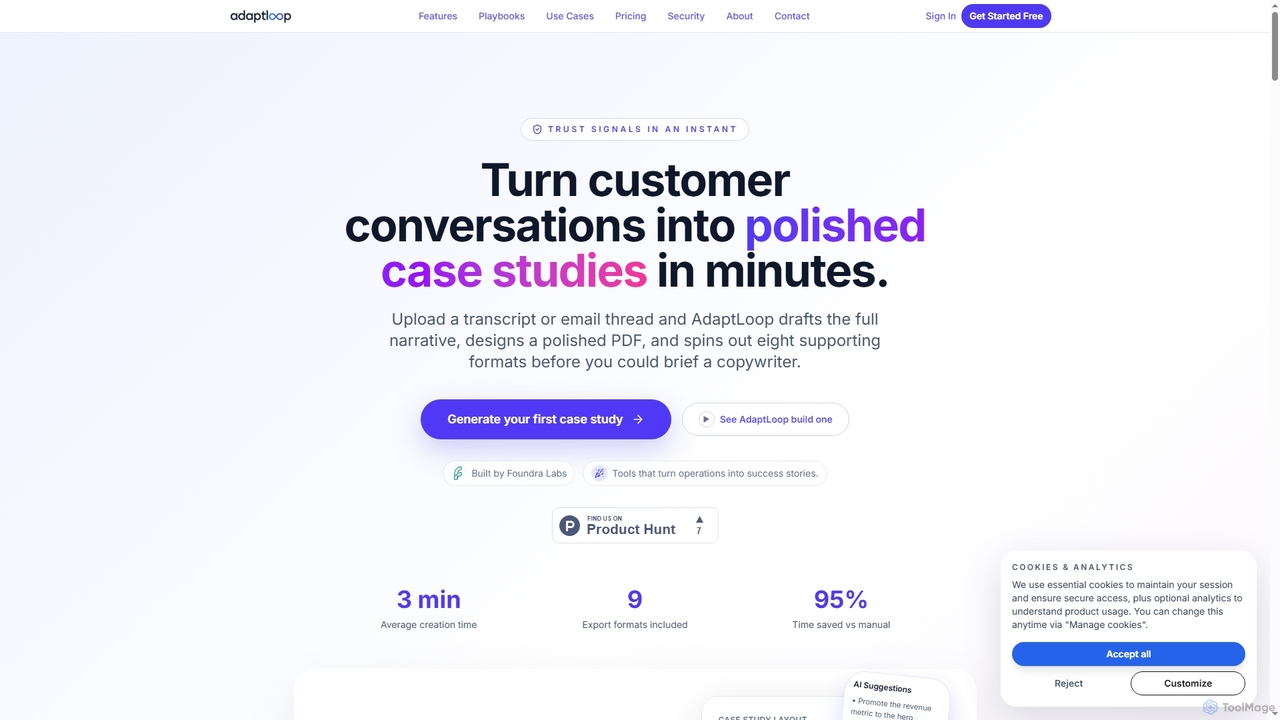
AdaptLoop

AdaptLoop

AdaptLoop is an AI-powered case study builder that transforms customer conversations into polished, multi-format case studies in minutes. …

2.7K
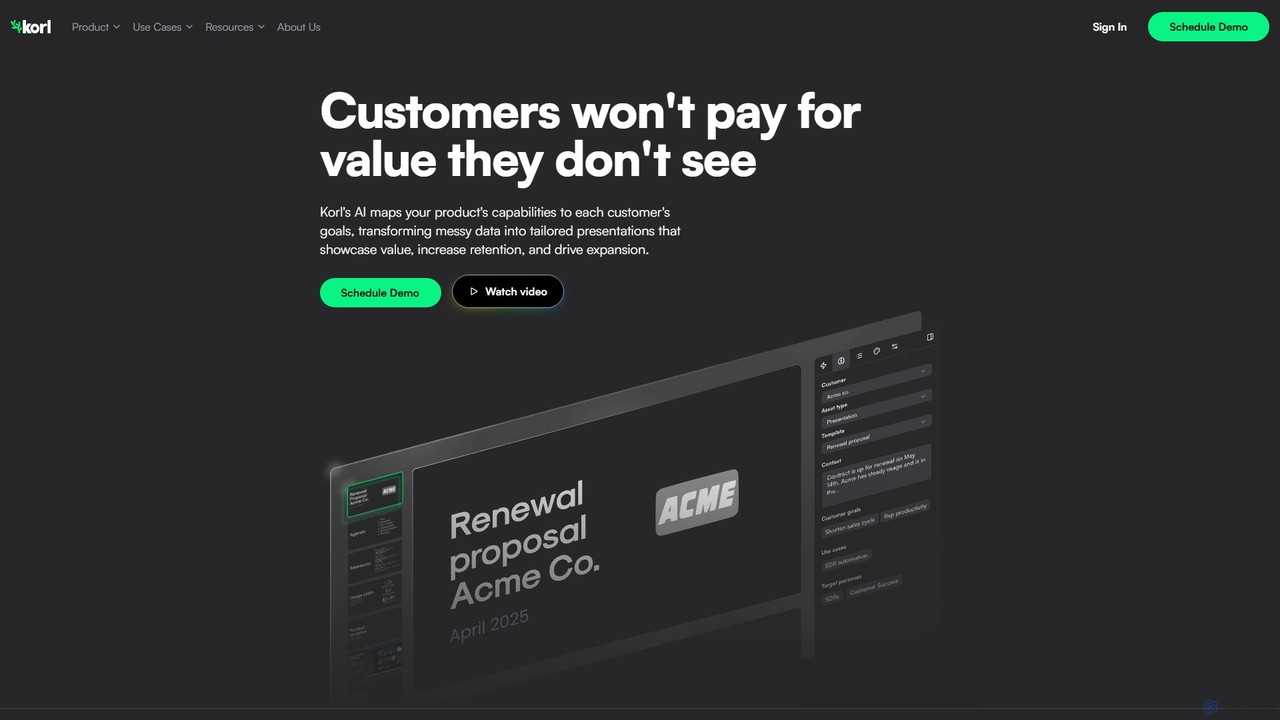
Korl

Korl

Korl is an AI-powered platform that automatically generates customer-specific presentations for Quarterly Business Reviews (QBRs) and renewals. By …

5.8K

About Customer Success

Customer Success tools are AI-powered platforms designed to help businesses retain customers, increase their value, and ensure they achieve desired outcomes. These tools leverage machine learning to analyze vast amounts of data from sources like CRMs, support tickets, and product usage analytics. By identifying patterns in user behavior, they proactively flag at-risk accounts, pinpoint upsell opportunities, and automate communications. This transforms customer success from a reactive support function into a proactive, data-driven strategy for revenue growth and customer loyalty.

Core Features

  • Customer Health Scoring: Automatically calculates and updates a health score for each account based on configurable metrics like product adoption, engagement, and support history.
  • Churn Prediction: Uses predictive analytics to identify customers who are at a high risk of churning, allowing teams to intervene proactively.
  • Automated Playbooks: Triggers pre-defined workflows and tasks for customer success managers (CSMs) based on specific events, such as a drop in health score or a key feature adoption.
  • Sentiment Analysis: Analyzes text from emails, surveys, and support chats to gauge customer sentiment and identify underlying issues or satisfaction drivers.
  • Upsell & Expansion Identification: Monitors usage patterns to detect accounts that are prime candidates for upgrades or cross-selling opportunities.

Applicable Scenarios

These tools are essential for B2B SaaS and subscription-based businesses. Customer Success Managers use them daily to manage their portfolio of accounts, prioritize outreach, and prepare for business reviews. Leadership and operations teams utilize the platform's analytics to forecast revenue, understand churn drivers, and measure the overall health of the customer base.

Selection Criteria

When choosing a Customer Success tool, consider its integration capabilities with your existing tech stack (CRM, helpdesk). Evaluate the flexibility of its data model and the ability to customize health scores and predictive models. Assess the sophistication of its automation engine for creating effective playbooks. Finally, ensure the user interface is intuitive for CSMs to adopt into their daily workflows for task management and strategic planning.

Customer SuccessUse Cases

1

Proactive Churn Risk Mitigation

A Customer Success Manager (CSM) at a B2B SaaS company receives an AI-generated alert that a high-value account's health score has dropped from 90 to 65. The tool identifies the cause: a significant decrease in daily active users and two unresolved high-priority support tickets. The platform's automated playbook immediately creates a task for the CSM to schedule a check-in call, provides a summary of the issues, and suggests talking points focused on resolving the support tickets and offering a retraining session. This proactive intervention allows the CSM to address problems before the customer considers churning, preserving a key revenue source.

2

Identifying Expansion Revenue Opportunities

An AI customer success platform analyzes product usage data across all accounts for a software company. It flags an account that is consistently hitting the API call limits of their current plan and has recently started using advanced reporting features typically associated with the premium tier. The system automatically notifies the assigned Account Manager, providing them with concrete data points. The manager then reaches out to the customer with a tailored proposal to upgrade, demonstrating how the premium plan would better support their growing usage and provide more value, leading to a successful upsell.

3

Automating and Scaling Customer Onboarding

A fast-growing SaaS company needs to onboard hundreds of new customers each month without hiring a massive success team. They use an AI Customer Success tool to create an automated onboarding playbook. The system tracks key activation milestones for each new user, such as 'first project created' or 'team member invited'. If a user fails to complete a milestone within a set timeframe, the tool automatically sends a personalized email with a helpful tutorial video. This scales the onboarding process, ensures consistent user experience, and frees up CSMs to focus only on accounts that are genuinely struggling.

4

Gauging Customer Sentiment at Scale

A large enterprise software provider wants to understand customer sentiment beyond simple satisfaction scores. They use an AI platform to analyze thousands of open-ended survey responses and support ticket conversations each quarter. The AI's sentiment analysis engine identifies recurring themes of frustration, such as 'confusing navigation' and 'slow report generation'. It also highlights positive themes like 'excellent support agent'. This provides the product and support teams with specific, actionable feedback, allowing them to prioritize improvements based on what truly matters to their customers, rather than relying on anecdotal evidence.

5

Streamlining Preparation for Business Reviews

A CSM is preparing for a Quarterly Business Review (QBR) with a strategic client. Instead of spending days manually compiling data from different systems, they use their AI Customer Success platform. The tool automatically generates a comprehensive QBR-ready presentation. This presentation includes key account health trends, product adoption metrics, a summary of support interactions, and AI-identified areas of success and opportunities for growth. This saves the CSM over 80% of their preparation time, allowing them to focus on crafting a strategic narrative and having a value-driven conversation with the client.

6

Personalizing Customer Communication at Scale

A marketing automation company wants to send a feature update announcement to its 50,000 users. Instead of a generic email blast, they use their customer success platform to segment the audience. The AI identifies three segments: power users of a related feature, users who have previously requested this update, and inactive users. The platform then helps craft slightly different messages for each segment, highlighting the benefits most relevant to them. This data-driven, personalized approach results in a 3x higher engagement rate for the announcement compared to previous generic emails, driving faster adoption of the new feature.

Customer SuccessFrequently Asked Questions