
Stylitics
Stylitics is an AI-powered Inspirational Commerce platform for retailers. It transforms the online shopping experience by automatically creating …
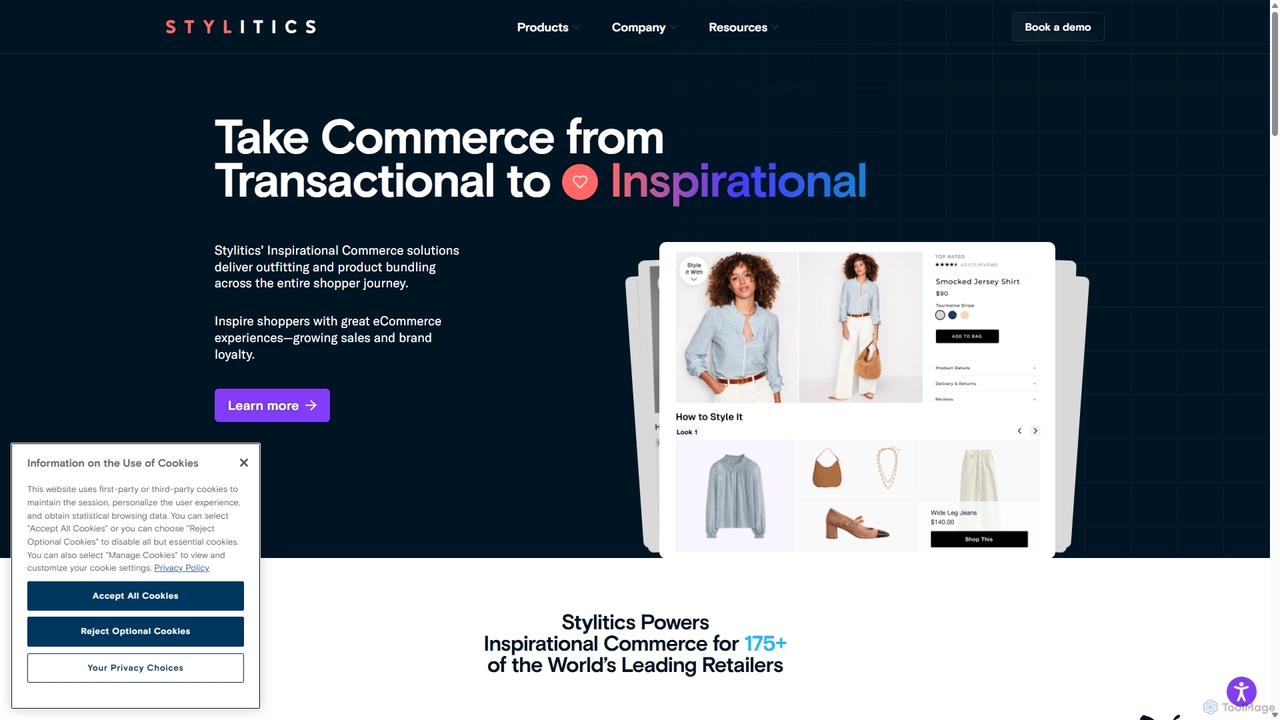
Stylitics is an AI-powered Inspirational Commerce platform for retailers. It transforms the online shopping experience by automatically creating personalized product bundles, complete outfits, and shoppable content. This helps brands increase average order value (AOV), conversion rates, and customer loyalty by making commerce inspirational rather than just transactional.
About Visual Merchandising
AI Visual Merchandising tools are software solutions that use artificial intelligence to strategically arrange and display products in digital retail environments. These tools leverage computer vision to analyze product attributes and predictive analytics to optimize layouts based on user behavior, sales data, and emerging trends. Their primary value is in automating the creation of visually compelling and personalized shopping experiences that increase customer engagement and conversion rates. This technology transforms static product grids into dynamic, intelligent showcases tailored to each shopper.
Core Features
- Automated Product Tagging: Uses computer vision to automatically identify and tag product attributes like color, style, pattern, and material.
- Dynamic Layout Generation: Intelligently arranges products on category pages and homepages to maximize appeal and sales potential.
- Personalized Recommendations: Creates unique product assortments and visual suggestions for individual users based on their browsing history.
- Trend Analysis: Analyzes visual data from social media and runways to identify emerging trends and recommend relevant product placements.
- Performance Analytics: Provides heatmaps and A/B testing capabilities to measure the effectiveness of different visual strategies.
Use Cases
These tools are primarily used by e-commerce managers, retail brands, and digital marketing teams within the fashion and home goods sectors. They are applied to automate the curation of product collections, personalize the online storefront for different customer segments, and optimize product discovery on category pages. For example, a brand can automatically feature its bestselling items or create layouts that reflect micro-trends without manual intervention.
How to Choose
When selecting an AI Visual Merchandising tool, consider its integration capabilities with your e-commerce platform (e.g., Shopify, Magento, BigCommerce). Evaluate the sophistication of its AI model and the level of customization it allows. Also, assess the depth of its analytics and reporting features to ensure you can measure ROI. Finally, consider the tool's scalability to handle your product catalog size and traffic volume.
Visual MerchandisingUse Cases
Automate E-commerce Collection Curation
An e-commerce manager for a fast-fashion brand is tasked with creating new, themed product collections weekly to keep the site fresh. Instead of spending hours manually selecting and arranging products, they use an AI Visual Merchandising tool. The AI analyzes the entire catalog, automatically groups items into collections like 'Weekend Getaway' or 'Office Comfort' based on visual attributes and metadata, and then generates optimized layouts for each collection page. This reduces curation time by over 80% and ensures collections are visually cohesive and aligned with current stock levels.
Personalize Storefronts for Different Segments
A luxury retail brand wants to provide a unique shopping experience for its VIP customers versus first-time visitors. Using an AI Visual Merchandising tool integrated with their CRM, they create dynamic homepage layouts. First-time visitors see a layout highlighting bestsellers and introductory offers. In contrast, VIP customers are shown new arrivals from their favorite designers and exclusive collections. The AI continuously adjusts these layouts based on real-time browsing behavior, leading to a 15% increase in average order value for segmented audiences.
Optimize Product Listing Page (PLP) Layouts
A large online marketplace struggles with optimizing the order of thousands of products on its category pages. A merchandising team uses an AI tool to run continuous A/B tests on these pages. The AI automatically shuffles product placements based on various strategies—such as 'trend-first', 'high-margin-first', or 'personalized'—and measures which layout drives the highest click-through and add-to-cart rates. The winning layout is then automatically rolled out to all users, resulting in a measurable lift in category-specific revenue without constant manual adjustments.
Create AI-Driven 'Shop the Look' Features
An online apparel retailer wants to increase average order value by encouraging customers to buy complete outfits. They implement an AI Visual Merchandising tool to power a 'Shop the Look' feature. When a customer views a product, the AI analyzes the item's style, color, and pattern, then scans the entire inventory to find complementary items (e.g., shoes, accessories, outerwear). It presents these as a complete, shoppable look. This automated styling suggestion helps customers visualize outfits and simplifies cross-selling, boosting sales of complementary products by 20%.
Generate Trend-Responsive Campaign Visuals
A marketing team for a home decor brand needs to quickly create digital campaigns that reflect emerging interior design trends. They use an AI Visual Merchandising tool that analyzes popular images from platforms like Pinterest and Instagram. The AI identifies trending color palettes, textures, and furniture styles. The marketing team then uses the tool to automatically curate product collections and generate lifestyle imagery that aligns with these trends, such as 'Japandi Style Living Rooms' or 'Cottagecore Kitchens'. This allows them to launch relevant, visually appealing campaigns in days instead of weeks.
Create Virtual Showrooms for B2B Sales
A wholesale fashion brand wants to reduce the cost and environmental impact of physical samples and trade shows. They use an AI Visual Merchandising tool to build an interactive virtual showroom. Retail buyers can log in to explore new collections on 3D models, mix and match pieces to create potential store assortments, and view AI-generated lookbooks. The AI also provides data-driven recommendations on which products are likely to perform best in the buyer's specific geographic market. This creates a more efficient and personalized B2B buying experience.