Forms Best in category 1 results Data Collection AI Tool

Popular AI tools in the Data Collection field of Forms include FlowForma, etc., helping you quickly improve efficiency.

FlowForma

FlowForma

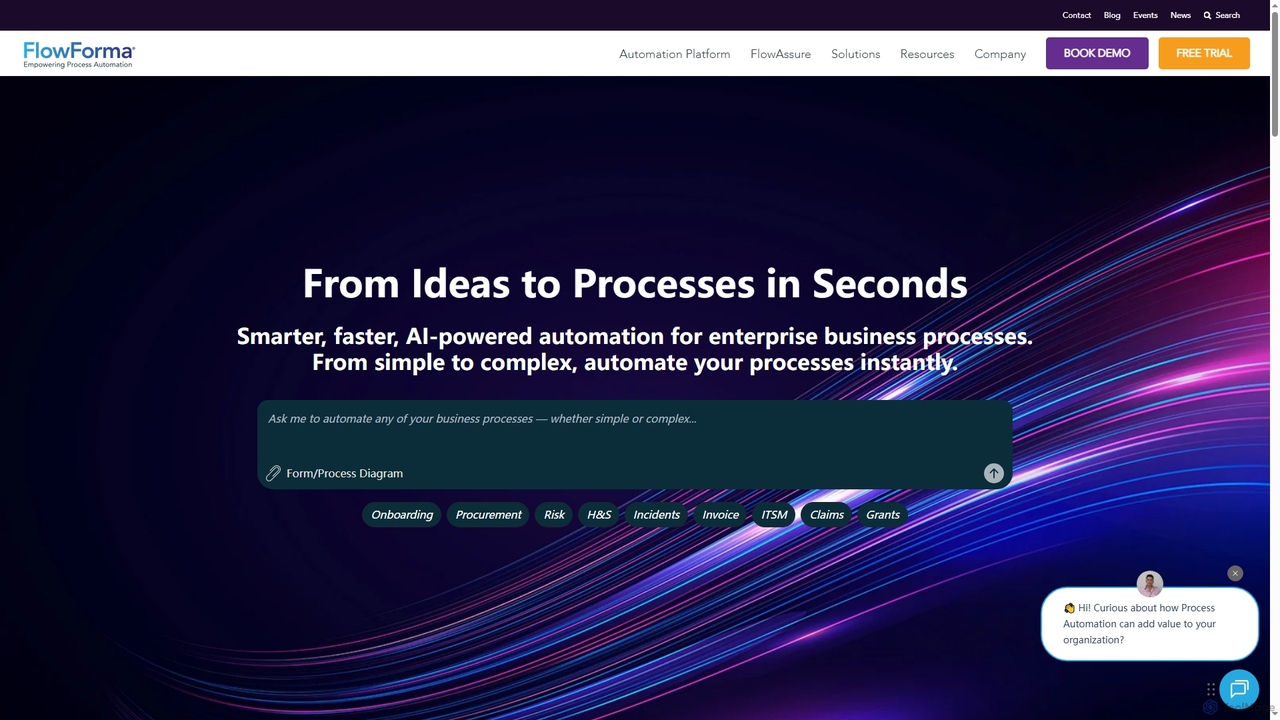
FlowForma is an AI-powered Digital Process Automation (DPA) platform designed for enterprises to rapidly automate business processes. It …

32.6K

About Data Collection

AI Data Collection tools are specialized solutions designed to automate and enhance the process of gathering information from various sources, often complementing traditional forms by intelligently processing their outputs or collecting data where forms aren't present. These tools leverage advanced AI, such as natural language processing and machine learning, to efficiently extract, categorize, and validate structured and unstructured data. Their primary value lies in transforming raw information into actionable insights, significantly reducing manual effort and improving data accuracy for businesses and researchers.

Core Features

  • Automated Data Extraction: Intelligently extracts specific data points from diverse sources like web pages, documents, and emails.
  • Intelligent Form Parsing: Automatically processes and extracts relevant information from submitted forms, surveys, and questionnaires.
  • Sentiment and Entity Analysis: Uses AI to identify emotions, opinions, and key entities within collected text data.
  • Real-time Data Validation: Automatically checks the accuracy, completeness, and consistency of incoming data.
  • Multi-source Integration: Connects with various data repositories, APIs, and platforms for comprehensive data gathering.

Use Cases

AI Data Collection tools are invaluable for market researchers analyzing consumer trends, sales teams enriching lead profiles, and product managers gathering user feedback. They enable automated competitive intelligence gathering, streamline academic research by extracting relevant literature, and support compliance teams in monitoring regulatory data.

How to Choose

When selecting an AI Data Collection tool, consider its compatibility with your data sources (web, documents, forms), the accuracy of its AI extraction capabilities, and its integration options with your existing analytics or CRM systems. Evaluate its scalability for handling large volumes of data, compliance features for data privacy regulations, and the level of customization offered for specific data fields.

Data CollectionUse Cases

1

Automated Customer Feedback Analysis

A marketing team needs to analyze thousands of customer reviews and survey responses daily across multiple platforms. Using an AI Data Collection tool, they can automatically extract key themes, sentiment, and common pain points from unstructured text. This allows them to quickly identify emerging trends, prioritize product improvements, and tailor marketing campaigns based on real-time customer insights, saving hundreds of hours of manual review.

2

Automated Market Research Data Gathering

Market research analysts can use AI data collection tools to automatically scrape public web pages, social media, and news articles for consumer sentiment, competitor activities, and emerging trends. By setting up intelligent crawlers and parsers, they can gather vast amounts of unstructured data, which is then analyzed by AI to identify patterns and generate reports, significantly reducing the manual effort of data aggregation and accelerating market insights.

3

Intelligent Document Processing for Finance

A financial department processes hundreds of invoices, receipts, and contracts each week. An AI Data Collection tool can automatically scan these documents (both digital and scanned images), extract critical information like vendor names, amounts, dates, and line items, and then validate it against internal databases. This significantly reduces manual data entry errors, accelerates payment processing, and ensures compliance with financial regulations.

4

Customer Feedback Analysis from Surveys

Product managers and customer experience teams can deploy AI data collection tools to process open-ended responses from customer surveys, reviews, and support tickets. The AI can perform sentiment analysis to gauge overall satisfaction, extract key themes and pain points, and categorize feedback automatically. This enables rapid identification of critical issues and popular feature requests, informing product development and service improvements more efficiently than manual review.

5

Market Research & Competitive Intelligence

Market researchers require up-to-date information on industry trends, competitor activities, and consumer preferences. AI Data Collection tools can continuously monitor and extract data from public web sources, news articles, social media, and industry reports. This enables researchers to build comprehensive competitive intelligence reports and identify market opportunities with minimal manual effort, providing a strategic advantage.

6

Competitor Intelligence Collection from Web

Business intelligence teams can leverage AI data collection to monitor competitors' websites, pricing pages, product launches, and news mentions across the internet. AI-powered web scraping tools can automatically collect and structure this data, identifying changes in pricing strategies, new feature announcements, or shifts in market positioning. This provides real-time competitive insights, enabling businesses to react swiftly to market dynamics and maintain a competitive edge.

7

Lead Qualification and Data Enrichment

Sales and marketing teams often collect basic lead information through web forms. An AI Data Collection tool can automatically enrich these leads by gathering additional public data (e.g., company size, industry, contact roles) from various online sources. This provides sales representatives with a more complete profile, allowing for better lead qualification and personalized outreach, leading to higher conversion rates.

8

Lead Qualification Data Enrichment

Sales and marketing teams can use AI data collection tools to enrich lead profiles by automatically gathering additional information from public sources. After a lead submits a basic form, the AI can search for their company's industry, size, recent news, or key contacts, providing sales representatives with a more comprehensive understanding of the prospect. This enables more personalized outreach and improves lead qualification efficiency, leading to higher conversion rates.

9

Compliance and Regulatory Reporting

Organizations in regulated industries (e.g., healthcare, legal) must collect and maintain vast amounts of data for compliance audits and regulatory reporting. AI Data Collection tools can automate the extraction and categorization of relevant information from legal documents, patient records, or internal reports. This ensures data accuracy, reduces the risk of non-compliance, and streamlines the preparation of audit trails and regulatory submissions.

10

Academic Research Data Extraction

Researchers and academics can utilize AI data collection tools to efficiently extract specific data points, statistics, and findings from large volumes of scientific papers, journals, and reports. Instead of manually sifting through countless documents, AI can identify and compile relevant information based on predefined keywords or research questions. This significantly accelerates literature reviews, meta-analyses, and data synthesis, allowing researchers to focus more on analysis and interpretation.

11

Real-time IoT Sensor Data Aggregation

Manufacturers deploying IoT devices need to collect and analyze vast streams of sensor data (e.g., temperature, pressure, machine status) in real-time. AI Data Collection tools can ingest, filter, and process this high-volume, high-velocity data, identifying anomalies or patterns indicative of potential equipment failure or operational inefficiencies. This enables predictive maintenance and optimizes operational performance, preventing costly downtime.

12

Compliance Data Monitoring and Reporting

Compliance officers and legal teams can deploy AI data collection solutions to continuously monitor regulatory changes, legal documents, and internal policy adherence. AI can automatically scan vast databases and external sources for updates relevant to specific compliance frameworks, extract key clauses, and flag potential discrepancies. This proactive approach ensures organizations stay compliant, reduces the risk of penalties, and streamlines the generation of audit-ready compliance reports.

Data CollectionFrequently Asked Questions