
ToolMage
Sign in

Best 1 Gpt Directory AI tools for Gpts

Popular Gpt Directory AI tools in Gpts include mojju, helping you work more efficiently.

mojju
Freemium

mojju

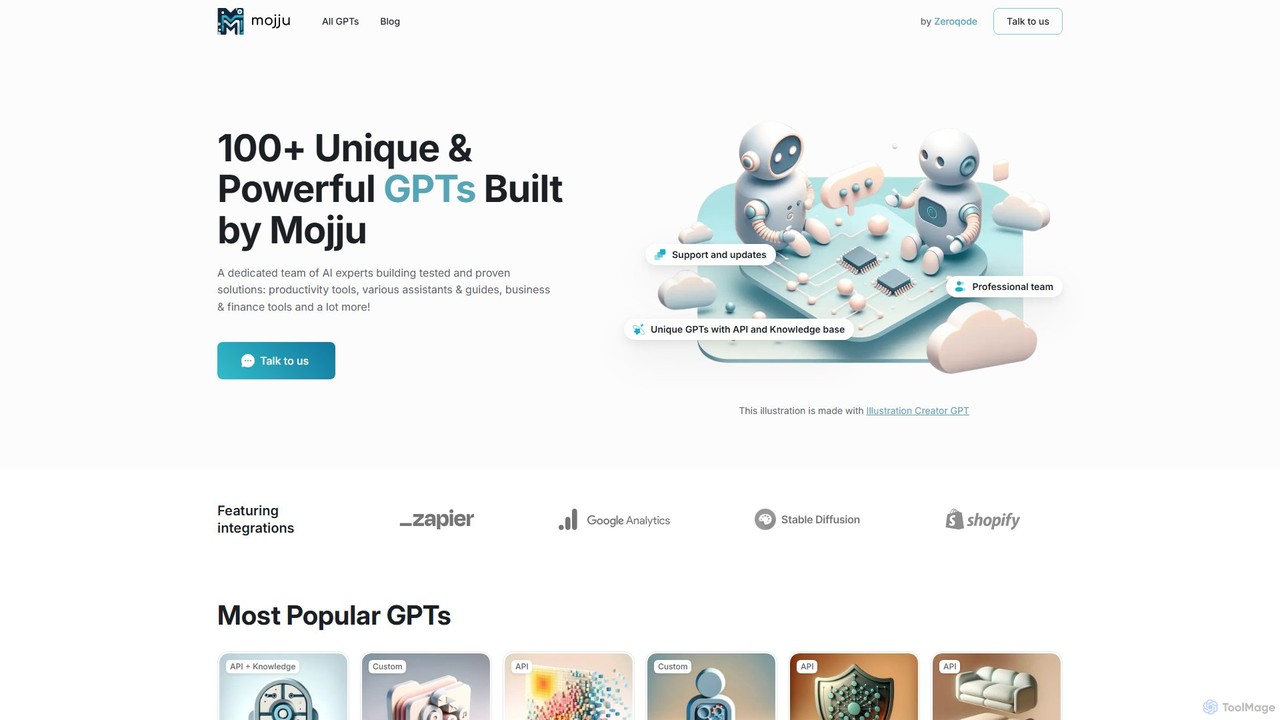
Mojju is a platform offering a curated collection of over 100 unique and powerful custom GPTs. Developed by AI experts at Zeroqode, these tools cater to a wide range of needs, including productivity, business operations, design, software development, learning, and lifestyle. Many GPTs feature API integrations and knowledge bases, providing tested and proven solutions for both personal and professional tasks.

Management
Visits 7.2KFavorites 124Likes 140

About Gpt Directory

A Gpt Directory is a specialized search engine and curated platform designed to help users discover custom GPTs. These tools organize the vast ecosystem of user-created GPTs, making it easy to find, compare, and access specialized assistants for specific tasks. Unlike browsing a general marketplace, GPT Directories provide advanced filtering, community ratings, and categorized collections to help users quickly locate the most relevant and effective GPTs. This significantly saves time and effort in navigating the thousands of available options.

Core Features

  • Advanced Search & Filtering: Find GPTs by keyword, category, creator, popularity, or specific capabilities.
  • Curated Collections: Discover hand-picked lists of top GPTs for domains like marketing, coding, or education.
  • Community Ratings & Reviews: Leverage user feedback and rankings to assess the quality and usefulness of a GPT before use.
  • Detailed GPT Profiles: Access comprehensive information on each GPT, including its purpose, required prompts, and creator details.

Use Cases

GPT Directories are essential for anyone looking to leverage the power of custom GPTs. Professionals like marketers, developers, and researchers use them to find specialized tools for their workflows. Creators and developers use them to analyze trends and promote their GPTs to a wider audience. Students and educators can find academic assistants, while hobbyists can explore creative and entertaining applications.

How to Choose

When selecting a Gpt Directory, consider the size and freshness of its database—a good directory is updated frequently. Evaluate the power of its search and filtering functions to see if they match your needs. Check for an active community with insightful reviews, as this provides valuable social proof. Finally, assess the quality of its curation and the overall user-friendliness of the interface for a smooth discovery experience.

Gpt Directory use cases

1

Finding a Niche Marketing GPT

A digital marketer needs to create a series of social media posts for a new product launch. Instead of using a general-purpose chatbot, they use a Gpt Directory to search for 'social media content calendar' or 'ad copy generator'. They filter results by top-rated and recently updated, read user reviews to compare the top options, and select a specialized GPT that understands brand voice and platform-specific formats, streamlining their content creation process.

2

Discovering Code Generation Assistants

A software developer is working with a new programming framework and needs a reliable coding assistant. They access a Gpt Directory and browse the 'Development' or 'Coding' category. The directory allows them to compare different coding GPTs based on user reviews from other developers, helping them find a tool that provides accurate code snippets, explains complex concepts, and assists with debugging, ultimately accelerating their development cycle.

3

Finding an Academic Research Assistant

A university student is writing a thesis and is overwhelmed by the number of research papers to review. They use a Gpt Directory to find a GPT specialized in 'academic paper summarization' or 'literature review'. By checking the user ratings and detailed descriptions, they select a GPT that can process PDF uploads, extract key findings, and generate formatted citations. This allows the student to quickly assess the relevance of dozens of papers, saving hours of manual reading.

4

Evaluating GPTs for Business Integration

A project manager is tasked with finding an AI tool to automate customer support responses. They use a Gpt Directory to identify several GPTs designed for customer service. The directory's comparison features and user reviews help them create a shortlist based on criteria like multilingual support, integration capabilities with their CRM, and user-reported accuracy. This structured evaluation process helps them select the most suitable GPT for a pilot project, mitigating the risk of choosing an incompatible tool.

5

Promoting a Newly Created GPT

A developer has just created a custom GPT for translating legal documents. To reach their target audience of lawyers and paralegals, they submit their GPT to several popular Gpt Directories. They write a clear description, add relevant tags like 'legal', 'translation', and 'contracts', and encourage early users to leave reviews. Being listed in these directories increases their GPT's visibility, drives initial user adoption, and provides a platform for gathering valuable feedback for future improvements.

6

Exploring Creative and Entertainment GPTs

A hobbyist interested in creative writing wants to experiment with AI storytelling tools. They visit a Gpt Directory and explore the 'Creative Writing' or 'Games' categories. They find various GPTs, from dungeon masters for role-playing games to poets and scriptwriters. The directory's rankings and user comments help them discover highly-rated, fun, and imaginative GPTs that they might not have found through a standard search, opening up new avenues for their creative pursuits.

Gpt Directory FAQ

What is a Gpt Directory?

A Gpt Directory is a third-party website or platform that serves as a searchable and organized catalog of custom GPTs. Unlike a single official marketplace, these directories often provide enhanced search features, user reviews, and curated lists to help users navigate and discover the most suitable GPTs from a massive, and often overwhelming, collection. They act as a discovery and evaluation layer on top of the GPT ecosystem.

How is a Gpt Directory different from the official GPT Store?

The main difference lies in curation, community feedback, and discovery features. While the official GPT Store is the primary source, a Gpt Directory often provides:

  • Superior Search: More advanced filtering options by category, popularity, or user rating.
  • Community Reviews: Aggregated user ratings and comments, offering social proof of a GPT's quality.
  • Curated Collections: Thematic lists like 'Top 10 GPTs for Writers' that help in targeted discovery.
  • Objective Comparison: A neutral platform to compare various GPTs that might compete with each other.
How do I find the best GPT for my needs using a directory?

To find the best GPT, start by using specific keywords related to your task in the directory's search bar. Then, use filters to narrow down the results—sort by 'most popular' or 'highest rated' to see what others find useful. Read the descriptions carefully to understand each GPT's intended purpose and capabilities. Finally, pay close attention to recent user reviews, as they provide real-world insights into the GPT's performance and reliability.

Are the GPTs listed in these directories safe to use?

Reputable Gpt Directories typically link to GPTs hosted on official platforms (like OpenAI's), which have their own safety protocols. However, the directory itself is a discovery tool. It's always a good practice to be cautious. Avoid sharing sensitive personal information with any custom GPT. Check the GPT's creator and read user reviews in the directory to gauge its trustworthiness before extensive use.

Can I submit my own GPT to a directory?

Yes, most Gpt Directories are open to submissions from creators. They typically have a 'Submit a GPT' or similar button on their website. You will usually need to provide a link to your GPT, a clear description of its function, and select relevant categories or tags. Listing your GPT in a directory is an effective way to increase its visibility and reach a wider audience beyond the platform where it was created.