ToolMage
Sign in

Best 1 Application for Job

Popular Application in Job include hellohiringmanager, helping you work more efficiently.

hellohiringmanager
Freemium

hellohiringmanager

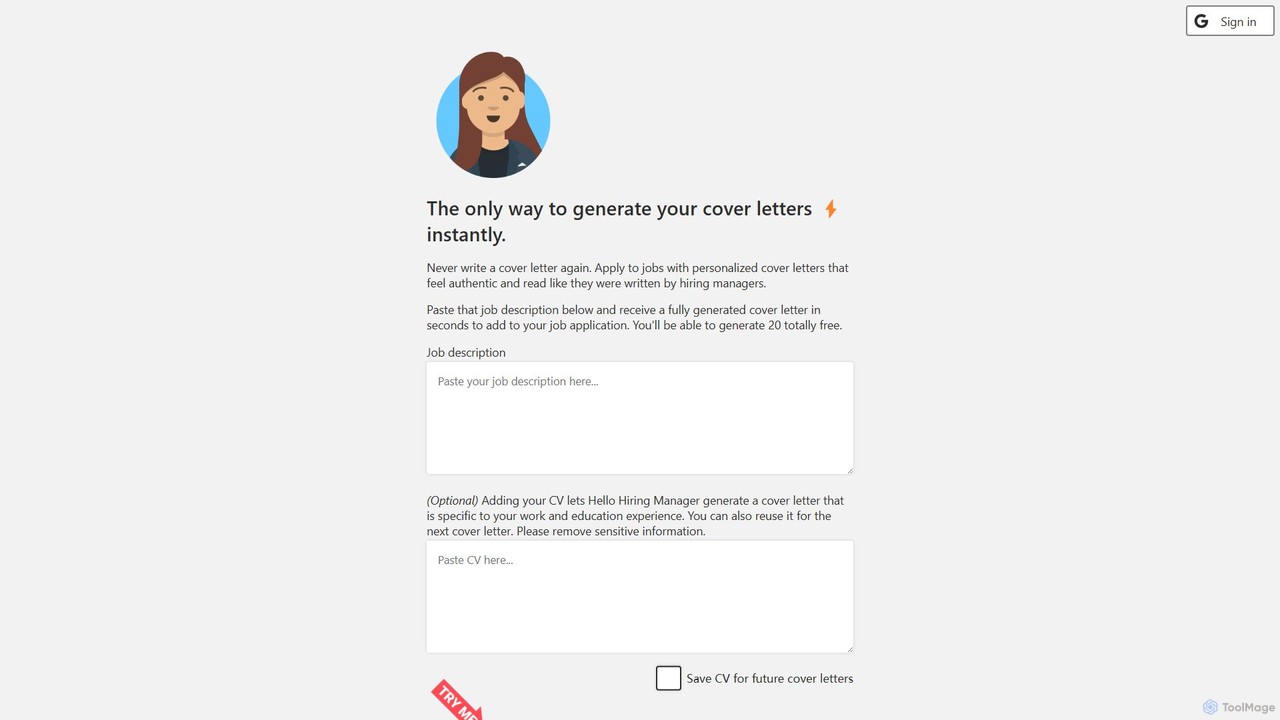
HelloHiringManager is an AI-powered tool that instantly generates personalized, job-winning cover letters. By analyzing a job description and your CV, it creates authentic and professional letters, helping you apply to more jobs faster and with higher quality.

Cover Letter Generator
Visits 10.3KFavorites 202Likes 197

About Application

AI Application tools are specialized platforms designed to assist job seekers in creating, managing, and optimizing their job applications. Leveraging natural language processing (NLP), these tools analyze job descriptions to provide tailored suggestions for resumes, cover letters, and professional profiles. They streamline the application process, helping candidates present their qualifications more effectively to recruiters and applicant tracking systems (ATS). This category focuses specifically on enhancing application materials and interview readiness within the broader job search process.

Core Features

  • Resume & CV Optimization: Analyzes job descriptions to suggest relevant keywords and tailor content for applicant tracking systems (ATS).
  • Cover Letter Generation: Creates personalized and compelling cover letters based on your experience and the target role.
  • AI Interview Coaching: Provides mock interview simulations with real-time feedback on answers, pacing, and communication style.
  • Profile Enhancement: Offers recommendations for improving professional profiles on platforms like LinkedIn to attract recruiters.
  • Application Tracking: Helps organize and monitor the status of multiple job applications in one centralized dashboard.

Use Cases

These tools are widely used by recent graduates, career changers, and active job seekers across all industries. For instance, a software engineer can use an AI tool to highlight specific technical skills for a competitive role, while a marketing professional can generate a creative cover letter that reflects a brand's tone of voice.

How to Choose

When selecting an AI Application tool, consider the specific features you need, such as resume building versus interview prep. Evaluate its ability to parse different job description formats, the quality of its AI-generated content, and its integration with job boards. Also, review the pricing models, from free basic versions to subscription-based premium services.

Application use cases

1

Crafting an ATS-Optimized Resume

A project manager applying for competitive roles uses an AI application tool to ensure their resume passes through Applicant Tracking Systems (ATS). They upload their resume and the job description. The tool scans both, identifies missing keywords and skills, and suggests specific bullet points that align with the role's requirements. The result is a highly tailored resume that increases the chances of being seen by a human recruiter, moving the application from a large candidate pool to the shortlist.

2

Generating a Personalized Cover Letter in Minutes

A graphic designer wants to apply to a creative agency but lacks the time to write a unique cover letter for each application. They use an AI tool, providing their resume and a link to the job posting. The AI analyzes the agency's style and the job's needs, then generates a draft cover letter that highlights the designer's most relevant portfolio pieces and skills in the agency's tone. The designer makes minor edits, saving hours of work while still sending a personalized and impactful document.

3

Practicing for a Behavioral Interview

A recent graduate feels nervous about their first corporate job interview. They use an AI interview coach to practice. The platform presents common behavioral questions like "Tell me about a time you faced a conflict." The user records their answer, and the AI provides instant feedback on the clarity of their response, use of filler words, speaking pace, and even body language analysis via the webcam. This practice builds their confidence and helps them structure their answers more effectively for the real interview.

4

Enhancing a LinkedIn Profile for Recruiters

A sales executive looking to transition into a new industry uses an AI tool to optimize their LinkedIn profile. The tool suggests a more impactful headline that includes target keywords recruiters are searching for. It also helps rewrite the "About" section to better showcase their transferable skills and achievements. The AI identifies skills to add to their profile that are in high demand for their desired roles, increasing their visibility in recruiter searches and leading to more inbound messages.

5

Managing a High-Volume Job Search

A professional who was recently laid off is applying to dozens of jobs each week. They use an AI application tracker to stay organized. The tool, often a browser extension, automatically saves job descriptions, company details, and application submission dates. It allows them to set reminders for follow-ups, take notes on interview stages, and visualize their entire job search pipeline. This prevents missed opportunities and reduces the stress of managing a large-scale job hunt.

6

Tailoring Applications for Career Changers

An educator transitioning into a corporate training role struggles to frame their teaching experience in business terms. They use an AI resume builder designed for career changers. The tool helps translate skills like "classroom management" and "curriculum development" into corporate-friendly language such as "team leadership" and "instructional design." It suggests projects and accomplishments from their teaching career that demonstrate relevant business acumen, effectively bridging the gap between their past experience and future goals.

Application FAQ

What are AI Application tools?

AI Application tools are software platforms that use artificial intelligence to help job seekers with tasks like writing resumes, crafting cover letters, and preparing for interviews. They analyze job requirements and a user's background to generate optimized application materials. Their primary goal is to increase a candidate's chances of passing automated screening systems (ATS) and impressing hiring managers.

How do I choose the right AI Application tool?

To choose the right tool, first identify your primary need: is it resume building, cover letter writing, or interview practice? Then, consider these factors:

  • Feature Set: Does it offer ATS scanning, keyword suggestions, and multiple templates?
  • Content Quality: Check reviews or use a trial to assess the quality of the AI-generated text.
  • Ease of Use: The interface should be intuitive and easy to navigate.
  • Pricing: Compare free plans, one-time fees, and subscription models to find one that fits your budget.

What's the difference between an AI Resume Builder and a standard template?

A standard template provides a pre-designed layout where you manually input your information. An AI Resume Builder is an interactive tool that does much more. It actively suggests content, optimizes your wording with relevant keywords based on a specific job description, checks for consistency, and ensures the format is friendly for Applicant Tracking Systems (ATS). The key difference is the AI's intelligent, data-driven guidance versus a static format.

Can AI Application tools guarantee me a job?

No, AI Application tools cannot guarantee a job. They are powerful assistants designed to improve the quality and effectiveness of your application materials and help you prepare for interviews. They significantly increase your chances of getting noticed by recruiters and securing an interview. However, the final hiring decision always depends on your qualifications, interview performance, and fit with the company culture.

Who are AI Application tools best suited for?

These tools are beneficial for a wide range of individuals. They are particularly useful for:

  • Recent Graduates: Who need help creating their first professional resume.
  • Career Changers: Who need to reframe their experience for a new industry.
  • Active Job Seekers: Who apply to many jobs and need to quickly tailor their applications.
  • Non-native Speakers: Who want to ensure their application materials are grammatically correct and professional.