Journalism Best in category 1 results Tools AI Tool

Popular AI tools in the Tools field of Journalism include Good Tape, etc., helping you quickly improve efficiency.

Good Tape

Good Tape

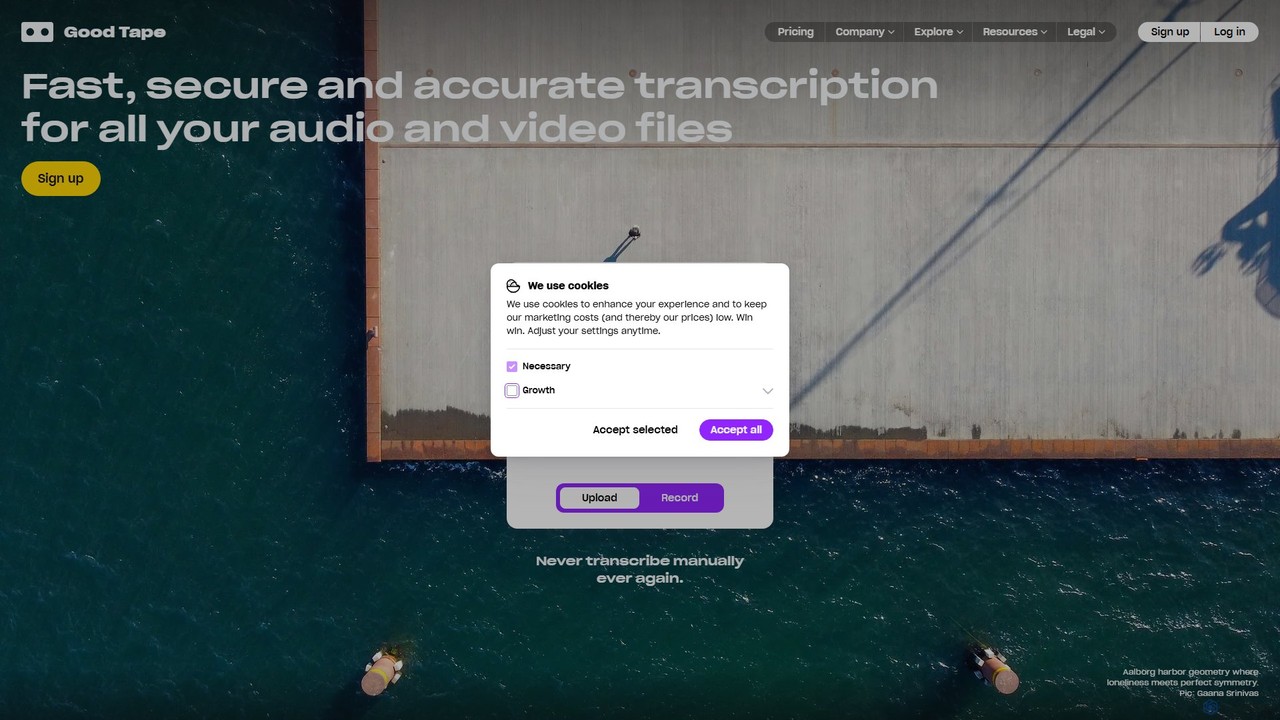
Good Tape is an AI-powered transcription service designed for journalists, researchers, and content creators. It provides fast, secure, …

274.6K

About Tools

AI Journalism Tools are specialized applications designed to assist journalists and newsrooms in the entire reporting lifecycle. These tools leverage machine learning, natural language processing, and data analysis to automate repetitive tasks and uncover insights from vast amounts of information. Their primary value lies in enhancing reporting speed, accuracy, and depth, allowing journalists to focus on critical analysis, storytelling, and investigation. They are distinct from general AI tools by prioritizing source verification, data integrity, and ethical considerations specific to journalism.

Core Features

  • Automated Data Analysis: Tools that process large datasets, such as public records or social media trends, to identify patterns, anomalies, and potential news stories.
  • AI-Assisted Fact-Checking: Systems that cross-reference claims against reliable databases and sources to help verify information and detect potential misinformation.
  • Natural Language Generation (NLG): Automatically creates structured, data-driven reports for topics like financial earnings, sports results, or election updates.
  • Rapid Transcription & Summarization: Converts audio and video interviews into text with high accuracy and generates concise summaries to quickly identify key points.
  • Media Verification: Analyzes images and videos to detect signs of manipulation, such as deepfakes or altered contexts, ensuring the authenticity of visual evidence.

Applicable Scenarios

These tools are essential in modern newsrooms for investigative journalism, where they help analyze complex leaks and financial records. In breaking news situations, they are used for real-time fact-checking and monitoring social media feeds. Data journalists also rely on them to create compelling data-driven stories and interactive visualizations from raw data.

Selection Criteria

When choosing an AI Journalism Tool, prioritize accuracy and bias detection mechanisms. Evaluate its ability to integrate with your existing Content Management System (CMS) and newsroom workflow. Consider the tool's transparency—whether it can explain its outputs—and its data security protocols, especially when handling sensitive information. Finally, assess the learning curve and the level of technical support provided.

ToolsUse Cases

1

Analyzing Leaked Documents for Investigative Reports

An investigative journalist receives thousands of leaked financial documents. Manually reviewing them would take months. By using an AI data analysis tool, the journalist can upload all documents, and the tool automatically extracts key entities like names, organizations, and transaction amounts. It then identifies hidden connections and suspicious patterns, such as multiple payments to shell corporations, reducing the analysis time from months to days and providing concrete leads for a major story on corruption.

2

Automating Local Election Result Reports

During an election night, a national news agency needs to provide real-time results for hundreds of local districts. A Natural Language Generation (NLG) tool is connected to the official election data feed. As results are updated, the tool automatically generates a unique, short news article for each district, including winner's name, vote counts, and historical context. This allows the agency to publish hundreds of localized reports simultaneously, a task impossible for a human team to achieve with the same speed and accuracy.

3

Verifying Social Media Content During a Crisis

During a natural disaster, a news desk is flooded with user-generated images and videos from social media. A journalist uses an AI media verification tool to quickly assess their authenticity. The tool performs a reverse image search, analyzes metadata, and scans for signs of digital manipulation. Within minutes, it flags a viral video as being from a previous, unrelated event, preventing the newsroom from spreading misinformation and helping them focus on credible, verified content for their audience.

4

Rapid Transcription of Press Conferences

A political reporter attends a one-hour press conference with crucial announcements. Instead of spending hours manually transcribing the audio, they use an AI transcription tool. The tool provides a full, speaker-diarized transcript within 10 minutes of the event ending. The reporter can then quickly search the text for key phrases, pull accurate quotes, and use the AI-generated summary to draft their article, enabling them to publish the story well ahead of competitors who rely on manual transcription.

5

Monitoring Public Sentiment on Policy Changes

A government introduces a new environmental policy. A data journalist wants to gauge public reaction across different regions. They use an AI sentiment analysis tool to monitor millions of social media posts, news comments, and forum discussions related to the policy. The tool categorizes sentiment as positive, negative, or neutral and identifies key themes of discussion. This provides the journalist with a data-backed overview of public opinion, enabling them to write a nuanced article about the policy's reception that goes beyond anecdotal evidence.

6

Generating Data Visualizations for a Feature Story

A health reporter is writing a feature on national vaccination rates using a complex government dataset. To make the story more engaging, they use an AI tool that automatically generates interactive charts and maps from the raw data. The reporter simply uploads the spreadsheet, and the tool suggests the most effective visualization types, such as a choropleth map showing rates by state and a line chart illustrating trends over time. This saves hours of manual design work and produces professional, easy-to-understand graphics that enhance the reader's comprehension of the story.

ToolsFrequently Asked Questions