
TalkPDF
TalkPDF is an intelligent AI assistant designed to simplify daily tasks by offering a wide array of tools. …
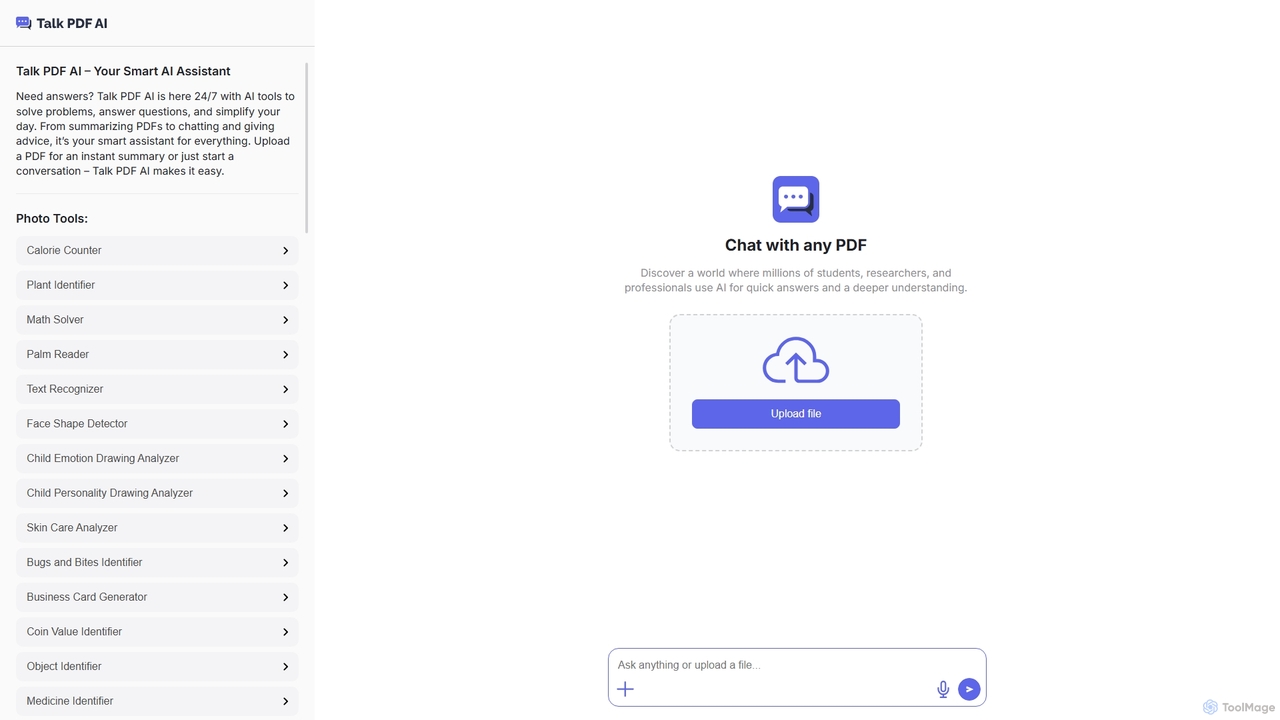
TalkPDF is an intelligent AI assistant designed to simplify daily tasks by offering a wide array of tools. It excels at interacting with PDFs, providing instant summaries, answering questions, and facilitating conversations. Beyond PDF capabilities, it integrates numerous AI-powered photo, text, and audio tools for diverse needs.
About Translation
AI Translation tools are applications that use neural machine translation (NMT) to automatically convert text or speech from a source language to a target language. These tools analyze context, grammar, and idiomatic expressions to produce accurate and natural-sounding translations, moving beyond simple word-for-word substitution. They are essential for breaking down language barriers in global communication, content localization, and international business. Many modern tools also offer advanced features like real-time conversation translation and document formatting preservation.
Core Features
- Neural Machine Translation (NMT): Utilizes deep learning models to understand sentence context for fluent and highly accurate translations.
- Terminology Management: Allows users to create custom glossaries to ensure brand and industry-specific terms are translated consistently.
- Document Translation: Preserves the original layout and formatting of files such as PDFs, Word documents, and presentations during translation.
- Real-time Speech Translation: Captures spoken language and provides instant audio or text translation for live conversations and meetings.
- API Integration: Enables developers to embed translation capabilities directly into websites, applications, and automated workflows.
Use Cases
These tools are widely used by multinational corporations for internal documentation, marketing teams for localizing websites and campaigns, and freelance translators to increase productivity. They are also valuable for customer support teams handling international inquiries and individuals communicating across different linguistic backgrounds.
How to Choose
When selecting an AI Translation tool, evaluate the quality and range of supported language pairs. Consider its ability to handle specific file formats while preserving layout. For business applications, look for features like terminology management, API access, and robust data security protocols. Finally, compare pricing models, such as per-character fees or subscription plans, to find one that fits your usage needs.
TranslationUse Cases
Localizing Marketing Content for Global Campaigns
A marketing manager for a global e-commerce brand needs to launch a new product in Japan, Germany, and Brazil. Instead of hiring multiple agencies, they use an AI translation tool. They upload their English website copy, ad creatives, and social media posts. The tool, using a pre-defined glossary for brand terms like 'EcoPower,' translates the content into Japanese, German, and Portuguese while preserving the design layout. This reduces the localization turnaround time from weeks to a few hours and ensures consistent brand messaging across all markets.
Real-time Translation for International Business Meetings
A project manager is leading a video conference with team members from France and South Korea. Using an AI tool with real-time speech translation, each participant speaks in their native language. The tool provides instant audio translation and on-screen captions for everyone. This eliminates the need for a human interpreter, reduces misunderstandings caused by language barriers, and allows for a more natural and efficient collaborative discussion, ensuring all stakeholders are aligned on project goals.
Translating Legal and Technical Documents with High Accuracy
A legal firm needs to review contracts and technical patents from an international partner. These documents contain highly specific terminology. They use a professional AI translation tool that supports custom glossaries. The paralegals first upload a list of legal and technical terms to ensure consistent translation. Then, they process the PDF documents, and the tool delivers translated versions that maintain the original formatting and use the correct, pre-approved terminology, significantly speeding up the due diligence process.
Automating Multilingual Customer Support
An online software company has customers worldwide. Their support team receives tickets in Spanish, French, and Mandarin. By integrating an AI translation API into their helpdesk system, support tickets are automatically translated into English for the agents. The agents write their replies in English, which are then automatically translated back into the customer's native language. This allows a small, centralized support team to provide fast, effective multilingual support without hiring native speakers for each language.
Assisting Language Learners with Contextual Understanding
A student learning Japanese uses an AI translation tool as a study aid. When they encounter a complex sentence in a news article, they don't just get a literal translation. The tool provides multiple alternative translations, explains the nuances of certain word choices, and breaks down the grammatical structure. This helps the student understand the context and idiomatic usage, accelerating their learning process beyond what a traditional dictionary can offer.
Translating User-Generated Content for Social Media Analysis
A market research analyst is studying customer feedback about a new electronic device from social media posts and online forums across Europe. The comments are in German, Italian, and Polish. The analyst uses an AI translation tool's API to batch-process thousands of comments. The translated text is then fed into a sentiment analysis tool, allowing the company to gain valuable insights into market reception and identify product issues in different regions without manual translation.