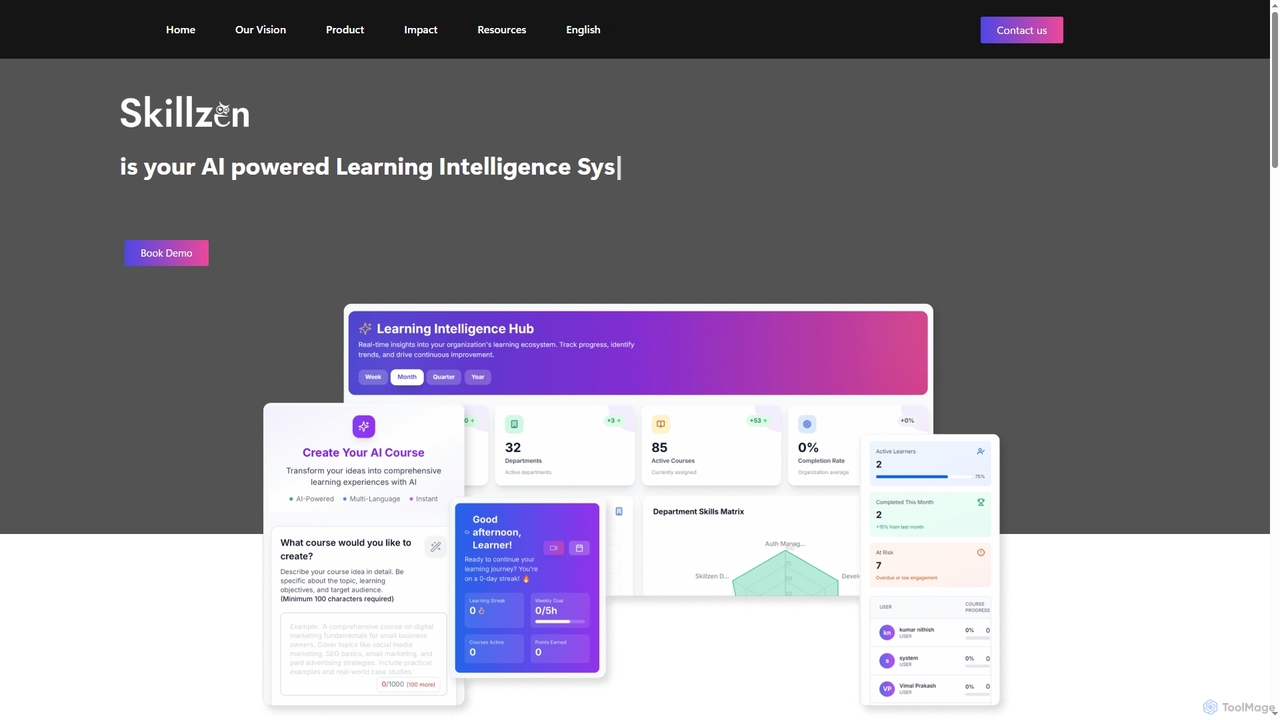
Corporate Training AI tools are specialized platforms that leverage artificial intelligence to optimize and personalize employee learning and development within organizations. These tools utilize AI to analyze learning patterns, automate content delivery, and provide adaptive training paths, significantly enhancing skill acquisition and knowledge retention. They address critical business needs such as compliance training, upskilling, reskilling, and efficient onboarding, making corporate education more engaging and measurable.
Core Features
- Personalized Learning Paths: AI analyzes individual performance and learning styles to create customized training modules and recommendations.
- Automated Content Creation: Generates training materials, quizzes, and simulations from existing knowledge bases or specified topics.
- Performance Analytics & Feedback: Tracks learner progress, identifies skill gaps, and provides real-time, actionable feedback.
- Intelligent Tutoring & Coaching: AI-powered chatbots or virtual assistants offer on-demand support, answer questions, and guide learners.
- Adaptive Assessment: Dynamically adjusts difficulty and types of assessments based on learner responses to ensure mastery.
Applicable Scenarios
These tools are invaluable for HR departments, learning & development specialists, and corporate trainers across various industries. They are particularly useful for large enterprises needing to scale training efficiently, companies with high employee turnover requiring rapid onboarding, and organizations in regulated sectors that demand continuous compliance education. For instance, a global tech company can use AI to deliver consistent product training to sales teams worldwide, adapting content to regional nuances.
How to Choose
When selecting Corporate Training AI tools, consider the breadth of content generation capabilities, the depth of personalization offered, and its integration with existing HRIS or LMS platforms. Evaluate the analytics dashboard for actionable insights, the ease of content updates, and the tool's ability to support various learning formats, including microlearning and simulations. Scalability for your organization's size and future growth, along with robust data security, are also crucial factors.