Best of the Year 1 results Memory Preservation AI Tools

Popular AI tools in the Memory Preservation field include Colorfix, etc., helping you quickly improve efficiency.

Colorfix

Colorfix

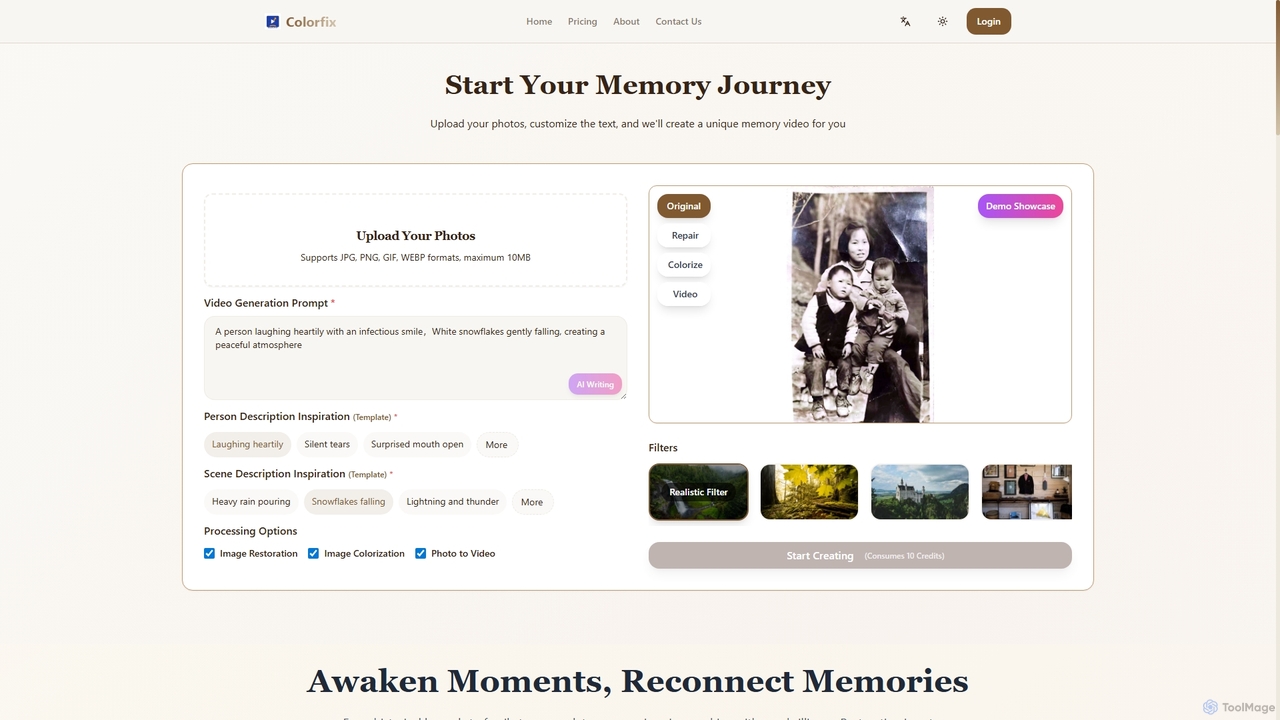
Colorfix is an AI-powered web application designed to breathe new life into old, damaged, or faded photographs. It …

2.1K

About Memory Preservation

Memory Preservation tools are AI-powered solutions designed to capture, organize, and retrieve personal memories and digital legacies. These tools leverage advanced AI, including natural language processing, computer vision, and machine learning, to process diverse data formats like photos, videos, audio, and text. Their primary value lies in creating comprehensive, searchable personal archives, enabling users to easily recall past experiences, preserve family histories, and manage their digital footprint for future generations.

Core Features

  • Automated Data Ingestion: Automatically imports and categorizes memories from various sources (social media, cloud storage, devices).
  • Semantic Search & Recall: Allows users to find specific memories using natural language queries, even without exact keywords.
  • Contextual Enrichment: AI adds metadata, identifies people, places, and events, and links related memories to provide richer context.
  • Digital Legacy Management: Tools for organizing and securely sharing personal data with designated individuals or for future self-reflection.
  • Personalized Reminders: AI can proactively surface relevant memories based on current context, anniversaries, or user preferences.

Use Cases

Individuals seeking to organize decades of digital photos and videos can use these tools to automatically tag, categorize, and create searchable timelines of their lives. Families can build shared digital archives, preserving stories and heirlooms for future generations. For those managing cognitive decline, these tools can offer personalized reminiscence aids, helping recall important life events and relationships.

How to Choose

When selecting a Memory Preservation tool, consider its data privacy and security protocols, as personal memories are highly sensitive. Evaluate the range of data types it supports (photos, videos, audio, text) and its integration capabilities with existing platforms. Assess the AI's accuracy in tagging and contextualizing memories, and look for intuitive search and recall functionalities. Finally, consider the long-term storage options and digital legacy features.

Memory PreservationUse Cases

1

Creating a Comprehensive Digital Life Journal

For individuals wanting to document their life journey, AI memory preservation tools automatically collect photos, videos, social media posts, and diary entries from various platforms. The AI organizes these disparate pieces into a coherent, searchable timeline, identifying key events, people, and locations. This allows users to effortlessly revisit specific periods, reflect on personal growth, and share curated life stories with loved ones, saving hundreds of hours of manual organization.

2

Preserving Family History and Ancestral Stories

Families can utilize these tools to digitize and centralize generations of photos, letters, and oral histories. AI can transcribe old documents, identify faces across different eras, and link individuals to family trees. This creates a rich, interactive family archive that can be easily explored by all members, ensuring that ancestral narratives and visual memories are securely preserved and passed down, preventing loss due to physical degradation or dispersal.

3

Aiding Individuals with Cognitive Impairment

For caregivers and individuals experiencing early-stage memory loss, AI memory preservation tools offer personalized reminiscence therapy. By curating and presenting familiar photos, videos, and audio clips related to significant life events, the tools can help trigger memories and facilitate conversation. This supports cognitive function, reduces anxiety, and enhances quality of life by providing accessible prompts for recalling cherished moments and relationships.

4

Organizing Professional Milestones and Project Archives

Professionals can use these tools to archive career achievements, project documentation, and learning experiences. The AI automatically categorizes reports, presentations, emails, and meeting notes, making them searchable by topic, date, or collaborator. This creates a personal professional knowledge base, allowing for quick retrieval of past work, demonstration of expertise, and efficient onboarding for new projects, significantly reducing time spent searching for information.

5

Curating Digital Legacy for Future Generations

Individuals planning their digital legacy can leverage these tools to organize and designate access to their digital assets. AI helps identify and consolidate important documents, personal messages, and media files, ensuring they are securely stored and accessible to chosen beneficiaries. This proactive approach guarantees that cherished memories and vital information are passed on according to wishes, providing peace of mind and a lasting digital footprint.

6

Enhancing Personal Productivity Through Contextual Recall

Beyond simple archiving, these tools can enhance daily productivity by providing contextual memory prompts. For example, before a meeting, the AI might surface relevant past communications or project notes related to attendees or topics. This proactive recall helps users prepare more effectively, avoid redundant work, and make more informed decisions by instantly accessing pertinent past information, acting as an extended personal memory assistant.

Memory PreservationFrequently Asked Questions