illuminovel
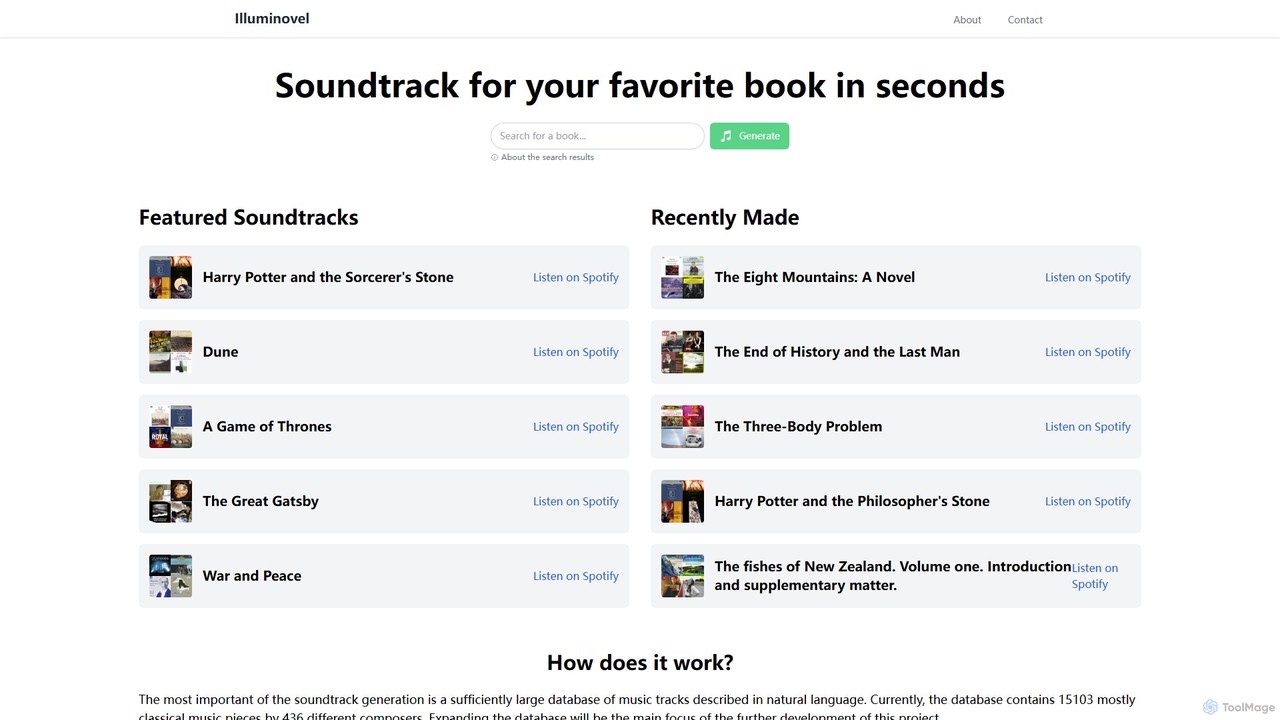
Illuminovel is a unique AI-powered tool that enhances your reading experience by generating custom soundtracks and character illustrations …
Illuminovel is a unique AI-powered tool that enhances your reading experience by generating custom soundtracks and character illustrations for your favorite books. Simply enter a book's title to receive a curated Spotify playlist that matches its mood and themes. It also uses advanced AI like Gemini to analyze book text and create stunning visual representations of characters, bringing the literary world to life in both sound and sight.
About Soundtrack Generation
Soundtrack Generation tools are AI-powered platforms that automatically compose and produce original musical scores and background tracks. These tools leverage advanced machine learning algorithms to understand musical theory, emotional cues, and user-defined parameters such as genre, mood, tempo, and instrumentation. They provide content creators, filmmakers, game developers, and podcasters with a rapid, cost-effective solution for acquiring custom, royalty-free audio for their projects, eliminating complex licensing hurdles.
Core Features
- Genre & Mood Selection: Choose from a diverse range of musical styles (e.g., orchestral, electronic, ambient) and emotional tones (e.g., happy, suspenseful, melancholic).
- Parameter Customization: Adjust key musical elements like tempo, key signature, instrumentation, and track duration to fit specific project needs.
- Stem Export & Layering: Generate individual instrument tracks (stems) for advanced mixing, editing, or dynamic layering within interactive media.
- AI-driven Composition: Algorithms intelligently create unique melodies, harmonies, and rhythmic patterns based on the specified inputs.
- Seamless Loop Generation: Produce perfectly looping audio segments ideal for continuous background music in games, apps, or presentations.
Applicable Scenarios
These tools are invaluable for professionals and hobbyists alike. Independent filmmakers can quickly generate bespoke scores for their short films or documentaries, ensuring a unique auditory experience. Game developers can create dynamic, adaptive background music that responds to gameplay events or transitions between different in-game environments. Podcasters and YouTubers benefit from unique, branded intro/outro music and background tracks that enhance their content's production value without copyright concerns.
How to Choose
When selecting an AI soundtrack generation tool, consider its musical versatility, including the breadth of genres, moods, and instruments available. Evaluate the depth of customization options, such as granular control over tempo, key, and arrangement. Assess the quality and format of export options, looking for high-fidelity audio and the ability to export individual stems. Finally, review the licensing terms for commercial use and the overall ease of use, especially for those without extensive musical background.
Soundtrack GenerationUse Cases
Create Background Music for YouTube Videos
Content creators can quickly generate royalty-free, mood-appropriate background tracks for their vlogs, tutorials, or review videos. By inputting desired genre, tempo, and emotional tone, they can produce unique audio that enhances viewer engagement and maintains brand consistency without licensing complexities.
Compose Scores for Indie Games
Independent game developers can produce adaptive or looped soundtracks that match different game levels, environments, or emotional states without hiring a dedicated composer. This allows for rapid iteration of audio assets, ensuring the music dynamically enhances the player's experience and fits the game's unique aesthetic.
Generate Podcast Intros and Outros
Podcasters can design unique, branded musical segments for their show's opening and closing. By specifying a desired mood, instrumentation, and length, they can create professional-sounding intros and outros that set the tone for their episodes and reinforce their brand identity, all without needing musical composition skills.
Develop Promotional Video Soundtracks
Marketing teams can create custom, impactful music for product launches, advertisements, or corporate videos. AI soundtrack generators allow them to quickly experiment with different musical styles and moods to find the perfect audio that enhances brand messaging and resonates with the target audience, significantly reducing production time and costs.
Produce Ambient Music for Meditative Apps
Developers of wellness or meditation applications can generate calming, continuous ambient soundscapes to aid relaxation and focus. By specifying parameters like 'calm,' 'nature-inspired,' or 'minimalist,' they can create unique, non-distracting audio environments that enhance the user's meditative experience without needing to license existing tracks.
Design Soundscapes for Virtual Reality Experiences
VR content creators can generate immersive, responsive audio environments that enhance the user's sense of presence and interaction within virtual worlds. By integrating AI-generated soundscapes, they can create dynamic audio that adapts to user movement, in-game events, or environmental changes, providing a more believable and engaging virtual experience.