
ToolMage
Sign in

Best 1 Uncensored AI tools for Nsfw

Popular Uncensored AI tools in Nsfw include AliveAI, helping you work more efficiently.

AliveAI
Freemium

AliveAI

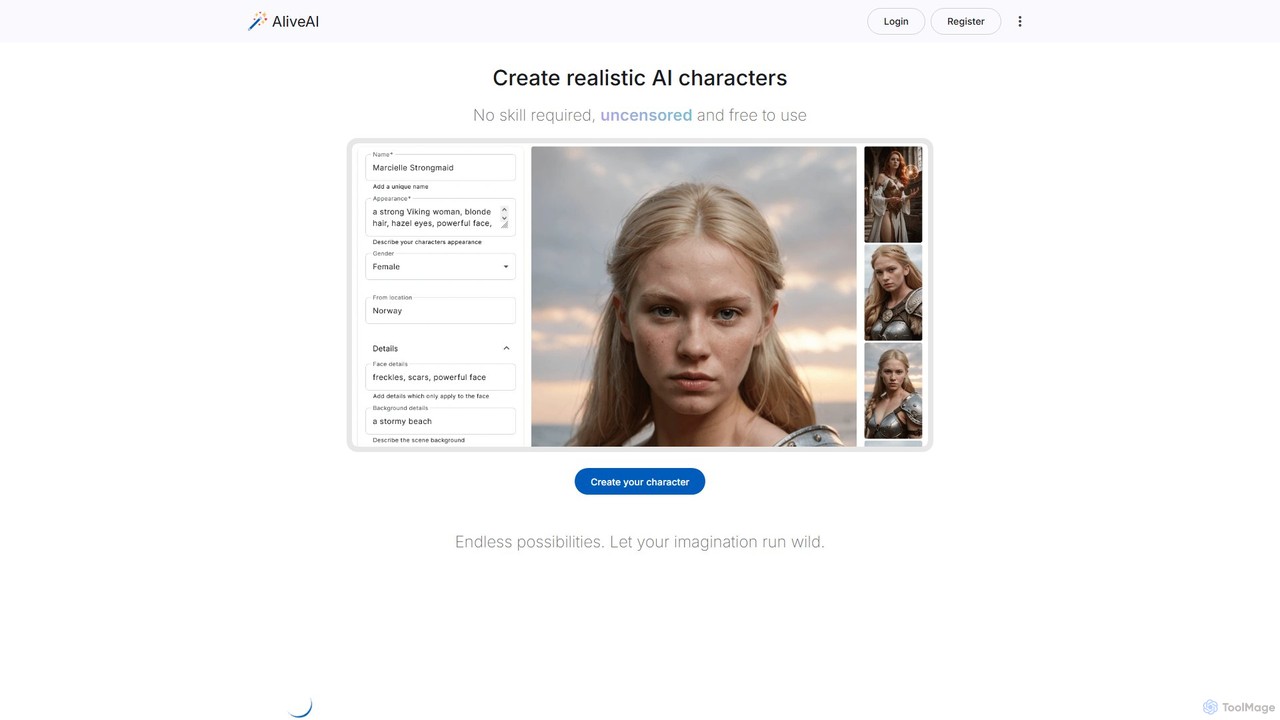
AliveAI is an uncensored AI image and video generator designed for ultimate creative freedom. It specializes in creating hyper-realistic, photorealistic characters and scenes without content restrictions. Leveraging advanced models like SDXL, it empowers artists, designers, and creators to generate any image imaginable, including NSFW, anime, and social media influencer styles, with speed and ease.

Ai Art
Visits 141.5KFavorites 136Likes 121

About Uncensored

Uncensored AI tools are language or image generation models designed with minimal to no content filters. Unlike mainstream AI, these tools operate without the typical ethical or safety restrictions, allowing them to process prompts and generate content on a wide range of sensitive or explicit topics. This provides users with unfiltered access to the model's raw capabilities, enabling creative freedom and exploration of subjects that are typically off-limits. Their primary value lies in serving niche applications like unrestricted creative writing, academic research, and specialized character development.

Core Features

  • No Content Filters: Generates responses and images for topics that standard AIs refuse, including explicit or controversial themes.
  • Raw Model Access: Provides outputs that are less aligned or sanitized, reflecting the underlying training data more directly.
  • Creative Freedom: Enables writers, artists, and researchers to explore complex or mature subjects without interruption.
  • Privacy-Focused Deployment: Many models are designed for local execution, giving users full control over their data and usage.

Use Cases

These tools are primarily used by fiction writers creating mature narratives, game developers designing complex characters with unfiltered dialogue, and researchers studying AI biases and safety mechanisms. Artists also use them for provocative or boundary-pushing creative projects that require complete expressive freedom.

How to Choose

When selecting an Uncensored AI tool, consider the model's primary function (text vs. image), its technical requirements (local GPU vs. cloud API), and the community support available. It's also crucial to evaluate the model's specific training data and intended purpose, as some are better suited for storytelling while others excel at open-ended dialogue. Always be aware of the ethical responsibilities associated with generating unfiltered content.

Uncensored use cases

1

Unrestricted Creative Writing for Mature Fiction

Fiction authors often need to explore complex, dark, or adult themes that mainstream AI assistants might block. An uncensored AI allows a writer to generate dialogue, plot points, or descriptive passages involving violence, psychological depth, or nuanced moral ambiguity without triggering content filters. This enables them to maintain their creative vision and produce authentic narratives for mature audiences, using the AI as a brainstorming partner that doesn't shy away from difficult subject matter.

2

Developing Complex Video Game Characters

Game developers creating narrative-rich games often require characters with complex backstories and personalities, including antagonists or morally grey figures. An uncensored AI can be used to generate realistic, unfiltered dialogue and behavioral patterns for these characters. This helps developers create more believable and engaging non-player characters (NPCs) that react authentically to various in-game situations, enhancing the overall player immersion and storytelling depth of the game.

3

AI Safety and Bias Research

Researchers in AI safety and ethics use uncensored models as a baseline to understand potential harms and biases. By interacting with a model that lacks safety guardrails, they can identify failure modes, study how harmful content is generated, and develop more robust alignment techniques and filtering mechanisms for future AI systems. This controlled research is crucial for building safer and more reliable AI for public use, as it exposes vulnerabilities that are hidden in heavily filtered models.

4

Creating Provocative or Boundary-Pushing Digital Art

Digital artists exploring themes of the taboo, the surreal, or the politically charged can use uncensored image generation models to bring their visions to life without restriction. These tools allow for the creation of provocative imagery that might be flagged or blocked by mainstream platforms. This empowers artists to fully express their conceptual ideas, challenge societal norms, and create powerful visual statements that contribute to artistic discourse, all while maintaining complete control over the final output.

5

Unfiltered Role-playing and Story Simulation

Users interested in immersive role-playing or interactive storytelling can use uncensored AI to create dynamic and unpredictable scenarios. The AI can act as a dungeon master or a character in a story, responding to user inputs without the constraints of a predefined script or content policy. This leads to more organic, emergent narratives where any action is possible, providing a highly personalized and deeply engaging experience for users looking for true interactive freedom in their simulations.

6

Exploring Sensitive Topics for Academic Study

Academics and social scientists can use uncensored language models to simulate public discourse on controversial topics or analyze historical texts that contain sensitive language. The model's ability to engage with these subjects without refusal allows for controlled experiments on how information (or misinformation) spreads, or how different viewpoints are articulated. This provides a valuable tool for research in fields like sociology, political science, and communication studies, enabling analysis that might otherwise be difficult to conduct.

Uncensored FAQ

What are Uncensored AI tools?

Uncensored AI tools are artificial intelligence models, typically for generating text or images, that have been designed with minimal or no content filters. Unlike mainstream AI services that restrict outputs related to sensitive, explicit, or controversial topics, these tools provide raw, unfiltered responses. They are primarily used for applications requiring creative freedom, such as mature storytelling, artistic expression, and academic research into AI behavior, where standard safety restrictions would be a hindrance.

What is the difference between Uncensored AI and standard AI like ChatGPT?

The primary difference lies in content filtering and safety alignment. Standard AIs like ChatGPT are heavily aligned with safety protocols to avoid generating harmful, unethical, or explicit content. Uncensored AIs, by contrast, intentionally lack these guardrails. This means:

  • Standard AI: Will refuse prompts on a wide range of sensitive topics and is designed to be helpful and harmless.
  • Uncensored AI: Will attempt to answer almost any prompt, providing direct access to the model's raw capabilities, which includes the potential to generate offensive or dangerous content.

Essentially, standard AI prioritizes safety and ethical guidelines, while uncensored AI prioritizes user freedom and unfiltered output.

Who typically uses Uncensored AI tools?

The user base for uncensored AI is diverse but typically falls into specific niches where creative or intellectual freedom is paramount. Key user groups include:

  • Creative Writers and Artists: Individuals creating mature fiction, provocative art, or exploring complex themes that are restricted by mainstream tools.
  • Game Developers: Professionals designing realistic characters, especially antagonists or morally complex figures, who require unfiltered dialogue.
  • AI Researchers: Academics and safety experts studying model vulnerabilities, biases, and developing better alignment techniques.
  • Role-players and Hobbyists: Users seeking immersive, unrestricted storytelling and simulation experiences without content limitations.
How do I choose the right Uncensored AI model?

Choosing the right model depends on your specific needs. Consider these factors:

  • Modality: Do you need a text-based model (LLM) for writing and dialogue, or an image generation model for art?
  • Technical Requirements: Can you run a model locally on a powerful GPU, or do you need a more accessible cloud-based service or API? Local models offer more privacy and control.
  • Community and Support: Look for models with active communities (like on Hugging Face or GitHub) for guidance, pre-trained variations, and troubleshooting.
  • Specialization: Some uncensored models are fine-tuned for specific tasks like storytelling, role-playing, or coding. Choose one that aligns with your primary use case.
Are there risks associated with using Uncensored AI?

Yes, there are significant risks. Because these models lack safety filters, they can generate content that is inaccurate, biased, harmful, or offensive. Users must be aware of these risks and use the tools responsibly. Key risks include exposure to misinformation, reinforcement of harmful stereotypes, and the potential creation of abusive or illegal content. These tools are best suited for users who understand the technology's limitations and are prepared to critically evaluate and manage the output in a controlled, ethical manner.