ChangeMap
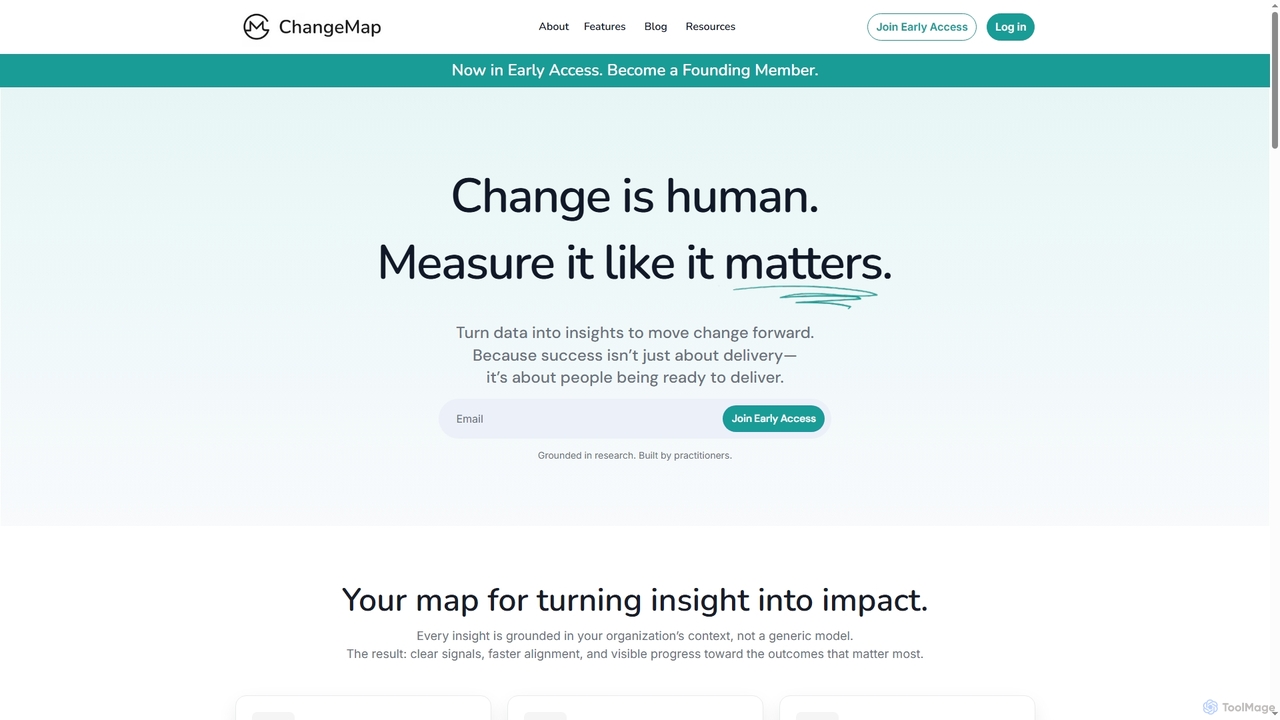
ChangeMap is an AI-powered platform designed for organizational change management, transforming human-centric data into actionable insights. It helps …
ChangeMap is an AI-powered platform designed for organizational change management, transforming human-centric data into actionable insights. It helps leaders measure readiness, track adoption, analyze sentiment, and build adaptive change plans to ensure successful transformations.
About Change Management
Change Management tools are AI-powered solutions designed to streamline, analyze, and facilitate organizational transitions, ensuring successful adoption of new processes, technologies, or strategies. These platforms leverage artificial intelligence to predict potential resistance, personalize communication, and automate administrative tasks associated with large-scale shifts. By providing data-driven insights and structured frameworks, they empower leaders to navigate complex changes more effectively, minimize disruption, and accelerate the realization of benefits within the broader context of organizational development.
Core Features
- Resistance Prediction: AI algorithms analyze employee sentiment and historical data to identify potential areas and sources of change resistance.
- Personalized Communication: Generate tailored messages and training materials for different stakeholder groups, improving engagement and understanding.
- Impact Analysis: Model the potential effects of proposed changes on various departments, roles, and systems before implementation.
- Transition Planning Automation: Automate the creation and tracking of change plans, timelines, and task assignments.
- Feedback & Sentiment Monitoring: Continuously collect and analyze employee feedback to gauge adoption rates and address concerns in real-time.
Applicable Scenarios
These tools are invaluable for enterprises undergoing digital transformation, mergers and acquisitions, or significant policy shifts. HR departments use them to manage new system rollouts, while project managers leverage them for large-scale operational changes. They are also crucial for leaders aiming to foster a culture of continuous improvement and adaptability across the organization.
How to Choose
When selecting a Change Management tool, consider its AI capabilities for predictive analytics and personalization, its integration with existing HRIS or project management systems, and the robustness of its reporting and analytics features. Evaluate the user interface for ease of adoption by change leaders and employees, and ensure it offers scalable solutions for your organization's size and complexity.

Change ManagementUse Cases
Accelerating Digital Transformation Adoption
For large enterprises implementing new ERP systems or cloud platforms, AI Change Management tools analyze employee readiness and identify departments most likely to resist. They then generate personalized training paths and communication strategies, ensuring faster skill acquisition and smoother transition for thousands of employees, significantly reducing project delays and increasing ROI.
Managing Post-Merger Cultural Integration
During mergers and acquisitions, integrating two distinct company cultures is a major challenge. These tools survey employee sentiment, identify cultural friction points, and suggest targeted interventions. They help HR teams design unified communication plans and track the adoption of new values and policies, fostering a cohesive new organizational identity more rapidly.
Implementing New Remote Work Policies
As companies adapt to hybrid or fully remote models, new policies around work hours, collaboration tools, and performance metrics require careful rollout. AI Change Management platforms help communicate these changes effectively, gather feedback on policy impact, and provide resources for employees to adapt, ensuring compliance and maintaining productivity across distributed teams.
Streamlining Organizational Restructuring
When a company undergoes a significant departmental restructuring or redefines roles, clarity and support are paramount. These tools map the impact of structural changes on individual roles, automate the notification process for affected employees, and provide resources for career transition or upskilling, minimizing anxiety and maintaining morale during turbulent times.
Driving Adoption of New Software & Tools
For IT departments rolling out new productivity software or collaboration platforms, user adoption is key. Change Management AI tools track user engagement with new systems, identify common pain points through sentiment analysis, and automatically trigger targeted in-app guidance or support resources, ensuring employees quickly become proficient and utilize the new tools effectively.
Fostering a Culture of Continuous Improvement
Organizations aiming for agile methodologies or continuous process improvement need tools to manage ongoing, smaller-scale changes. These platforms help identify areas for improvement based on employee suggestions, facilitate the communication and implementation of new best practices, and measure their impact, embedding a proactive change mindset throughout the workforce.