ToolMage
Sign in

Best 1 Online Payments AI tools for Payment Processing

Popular Online Payments AI tools in Payment Processing include DIRO, helping you work more efficiently.

DIRO
Freemium

DIRO

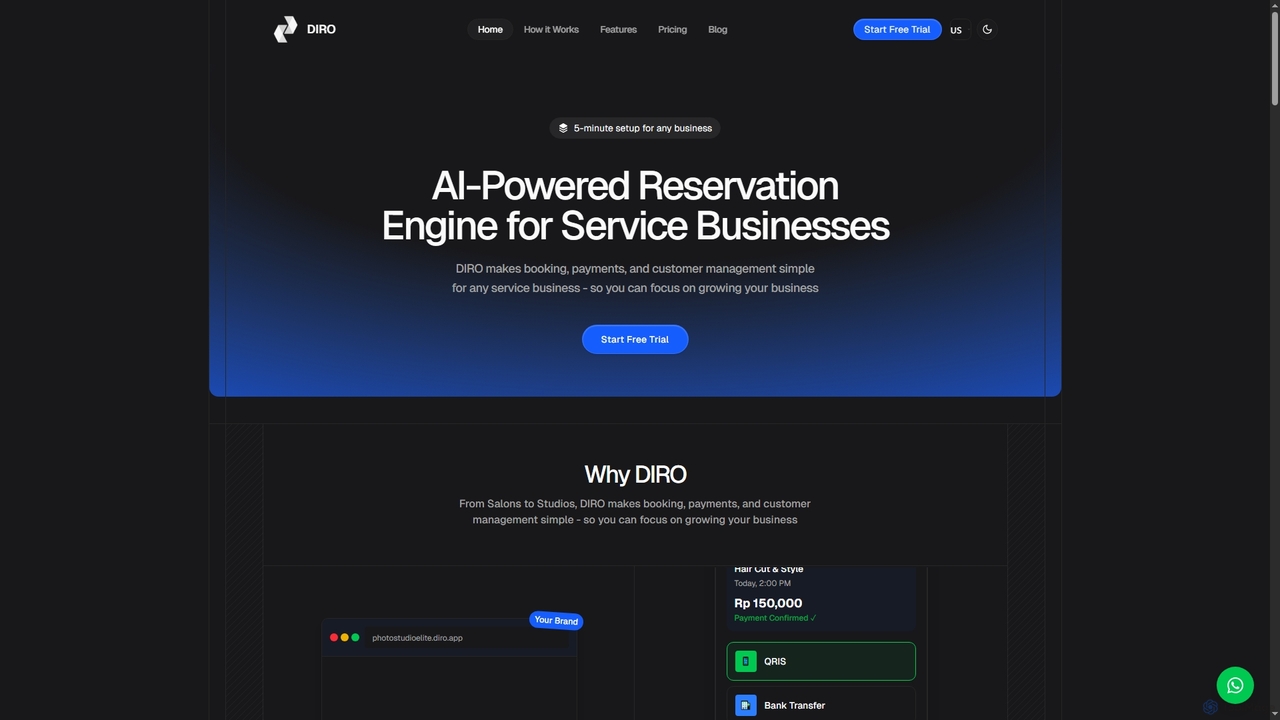
DIRO is an AI-powered reservation engine for service businesses, simplifying online booking, payments, and customer management. It enables businesses to create branded booking sites, reduce no-shows with automated reminders, manage staff, and gain insights, allowing them to focus on growth and enhance client loyalty.

3D
Visits 12.2KFavorites 156Likes 161

About Online Payments

Online Payments are a category of digital tools that facilitate secure and efficient financial transactions over the internet. These platforms leverage advanced encryption and fraud detection technologies to enable businesses and individuals to send and receive money electronically. They are essential for e-commerce, subscription services, and any online business requiring seamless financial exchanges, offering convenience and global reach.

Core Features

  • Payment Gateway Integration: Securely connects online stores with banks and payment processors, handling transaction authorization and data encryption.
  • Multi-Currency Support: Allows businesses to accept payments in various global currencies, expanding market reach and improving customer experience.
  • Subscription Billing: Automates recurring payments for services, memberships, and digital products, managing billing cycles and renewals.
  • Fraud Detection & Prevention: Utilizes AI and machine learning to identify and block suspicious transactions, protecting both merchants and customers from financial loss.
  • PCI DSS Compliance: Ensures adherence to industry security standards for handling cardholder data, maintaining trust and regulatory compliance.

Applicable Scenarios

Online payment tools are crucial for e-commerce businesses processing customer purchases, SaaS companies managing recurring subscriptions, and freelancers receiving payments from international clients. They also support crowdfunding platforms, online education providers, and non-profits collecting donations, ensuring smooth and secure financial flows for diverse digital operations.

How to Choose

When selecting an online payment solution, consider its integration capabilities with your existing e-commerce platform or CRM, the range of payment methods it supports (credit cards, digital wallets, bank transfers), and its fee structure. Evaluate its fraud prevention features, multi-currency options, and customer support quality, ensuring it aligns with your business scale and security requirements.

Online Payments use cases

1

Processing E-commerce Customer Purchases

An online retail business utilizes an online payment gateway to securely process credit card and digital wallet payments from customers worldwide. When a customer completes a purchase, the payment tool encrypts sensitive data, authorizes the transaction with the bank, and confirms payment, enabling immediate order fulfillment and a smooth shopping experience.

2

Automating Subscription Service Billing

A SaaS company offering monthly software subscriptions employs an online payment platform to automate recurring billing. The tool securely stores customer payment details, automatically charges accounts on scheduled dates, handles failed payments with retry logic, and sends billing notifications, significantly reducing manual administrative effort and improving retention.

3

Facilitating International Freelancer Payments

A freelance designer uses an online payment service to receive payments from clients located in different countries. The platform supports multiple currencies and offers various payout options, allowing the designer to easily invoice clients, accept payments in their local currency, and withdraw funds efficiently, simplifying cross-border financial transactions.

4

Managing Online Course Enrollment Fees

An online education provider integrates an online payment system to manage enrollment fees for its courses. Students can securely pay tuition using their preferred method, and the system automatically tracks payments, issues receipts, and grants access to course materials, streamlining the registration process and ensuring financial transparency.

5

Collecting Donations for Non-Profit Organizations

A non-profit organization implements an online payment solution on its website to accept donations from supporters globally. The tool provides a secure and user-friendly interface for one-time or recurring contributions, processes transactions efficiently, and generates donation reports, maximizing fundraising efforts and donor engagement.

6

Enabling In-App Purchases for Mobile Games

A mobile game developer integrates an online payment SDK to facilitate in-app purchases for virtual items and upgrades. The payment system securely handles microtransactions, supports various mobile payment methods, and provides real-time transaction data, enhancing player monetization and ensuring a seamless purchase flow within the game.

Online Payments FAQ

What are Online Payments?

Online Payments are digital financial transactions conducted over the internet, enabling individuals and businesses to send and receive money electronically. They are powered by payment gateways and processors that securely encrypt data, authorize funds, and facilitate the transfer between parties, making e-commerce and digital services possible.

How do Online Payments differ from traditional Payment Processing?

Online Payments specifically refer to transactions initiated and completed digitally via the internet, often involving web-based interfaces or APIs. Traditional Payment Processing is a broader term encompassing all methods of handling financial transactions, including in-person card swipes, checks, and bank transfers, with online payments being a subset focused on the digital realm.

What are the key security features of Online Payment systems?

Key security features include end-to-end encryption (SSL/TLS) to protect data during transmission, tokenization to replace sensitive card details with unique identifiers, and PCI DSS compliance for secure data handling. Many systems also incorporate advanced fraud detection algorithms, 3D Secure authentication, and chargeback protection to safeguard transactions.

What payment methods can typically be accepted through Online Payments?

Online payment systems typically support a wide array of methods, including major credit and debit cards (Visa, MasterCard, American Express), digital wallets (PayPal, Apple Pay, Google Pay), bank transfers (ACH, SEPA), and local payment options specific to different regions. Some also integrate with cryptocurrencies or buy-now-pay-later services.

Who benefits most from using Online Payment solutions?

Online payment solutions primarily benefit e-commerce businesses, SaaS providers, freelancers, and any organization conducting transactions digitally. They enable global reach, automate billing, enhance security, and provide a convenient customer experience, driving sales and operational efficiency for online ventures.