
ToolMage
Sign in

Best 1 Dietary Advice AI tools for Personalized Guidance

Popular Dietary Advice AI tools in Personalized Guidance include Chini, helping you work more efficiently.

Chini

Chini

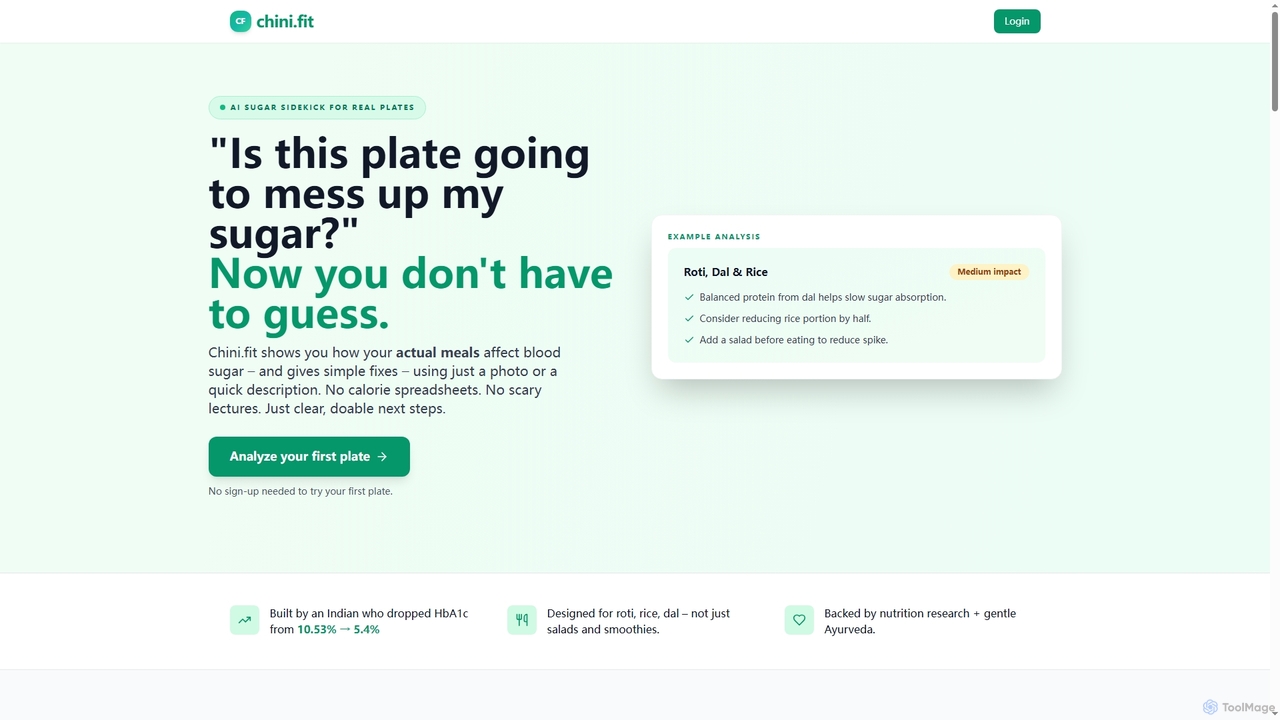
Chini is an AI-powered blood sugar companion that analyzes your meals from a photo or description, providing instant sugar impact insights and simple, actionable fixes. Designed specifically for diverse Indian meals, it helps users understand how their actual food choices affect blood sugar without complex tracking or medical jargon, promoting sustainable healthy habits.

Nutrition
Visits 6.6KFavorites 124Likes 128

About Dietary Advice

Dietary Advice AI tools are a specialized subset of Personalized Guidance tools that leverage artificial intelligence to provide tailored nutritional recommendations and meal plans. These tools analyze individual health data, dietary preferences, and lifestyle factors to generate highly customized eating strategies. They empower users to manage health conditions, optimize nutrition, achieve weight goals, and cultivate healthier eating habits through data-driven insights and accessible guidance.

Core Features

  • Personalized Meal Planning: Generates custom meal plans based on individual dietary needs, preferences, and health objectives.
  • Nutrient Tracking & Analysis: Monitors macro and micronutrient intake, providing detailed reports and identifying nutritional gaps.
  • Dietary Restriction Management: Accommodates allergies, intolerances, and specific dietary choices like vegan, keto, or gluten-free.
  • Goal-Oriented Recommendations: Offers specific food and recipe suggestions tailored for weight loss, muscle gain, or managing chronic diseases.
  • Food Logging & Analysis: Simplifies the process of recording food intake and provides instant feedback on nutritional content.

Applicable Scenarios

These tools are invaluable for individuals seeking structured support for their dietary journey. They are widely used by those managing specific health conditions like diabetes or hypertension, athletes optimizing their performance nutrition, and individuals aiming for sustainable weight management or navigating complex food allergies and intolerances.

How to Choose

When selecting an AI dietary advice tool, prioritize accuracy of nutritional data and evidence-based recommendations. Look for extensive customization options for dietary preferences and restrictions, and consider its integration capabilities with other health trackers. A user-friendly interface for food logging and clear progress tracking features are also crucial for long-term adherence and effectiveness.

Dietary Advice use cases

1

Managing Chronic Conditions with Tailored Diets

Individuals with chronic conditions like type 2 diabetes or hypertension can utilize AI dietary advice tools to generate meal plans that strictly adhere to medical guidelines. By inputting their diagnosis and specific dietary restrictions, the AI provides daily menus and recipes designed to stabilize blood sugar levels or reduce sodium intake, helping them manage their health effectively and consistently.

2

Optimizing Athletic Performance Nutrition

Athletes and fitness enthusiasts can leverage these tools to fine-tune their nutrition for peak performance. The AI analyzes training intensity, recovery needs, and competition schedules to create dynamic meal plans that ensure optimal macronutrient timing, hydration, and supplement intake, supporting muscle growth, endurance, and faster recovery.

3

Personalized Weight Management

For individuals aiming for sustainable weight loss or healthy weight gain, AI dietary advice tools offer personalized calorie-controlled meal plans. Users input their current weight, target weight, and activity levels, and the AI generates balanced daily menus, tracks progress, and adjusts recommendations over time, fostering healthy eating habits without restrictive dieting.

4

Navigating Food Allergies and Intolerances

People with complex food allergies (e.g., nuts, shellfish) or intolerances (e.g., lactose, gluten) can use these tools to safely plan their meals. The AI filters out allergenic ingredients from recipes and food suggestions, providing a diverse range of safe and delicious options, significantly reducing the risk of adverse reactions and expanding dietary variety.

5

Meal Planning for Busy Professionals

Time-constrained professionals often struggle with healthy eating. AI dietary advice tools can generate quick, nutritious, and easy-to-prepare meal ideas tailored to their busy schedules and preferences. This helps them maintain a balanced diet without extensive meal prep, ensuring consistent energy levels and overall well-being despite demanding routines.

6

Enhancing General Wellness and Healthy Eating Habits

Anyone looking to improve their overall diet and cultivate healthier eating habits can benefit. The tools offer balanced meal suggestions, nutritional insights into their current intake, and educational content about healthy food choices. This proactive approach helps users understand their dietary patterns, make informed decisions, and build a foundation for long-term wellness.

Dietary Advice FAQ

What are AI Dietary Advice tools?

AI Dietary Advice tools are applications or platforms that use artificial intelligence to provide personalized nutritional guidance and meal recommendations. They analyze user data such as health goals, dietary restrictions, activity levels, and food preferences to generate customized eating plans, track nutrient intake, and offer insights to promote healthier dietary habits.

How to choose the best AI dietary advice tool?

When selecting an AI dietary advice tool, consider its accuracy in nutritional data, the level of personalization offered for meal plans, and its ability to accommodate specific dietary restrictions or health conditions. Evaluate the user interface for ease of food logging, integration with other health devices, and whether it provides evidence-based recommendations or expert support. Look for tools with positive user reviews and a clear privacy policy.

What specific features do AI dietary advice tools offer?

AI dietary advice tools typically offer features like personalized meal plan generation, detailed nutrient tracking (macros, micros), food logging with extensive databases, and goal-oriented recommendations for weight management or specific health needs. Many also include dietary restriction filters, recipe suggestions, progress tracking, and educational content on nutrition.

How can AI dietary advice tools help me achieve my health goals?

These tools help by providing structured, personalized guidance that removes guesswork from dieting. They ensure your meal plans align with your specific goals (e.g., weight loss, muscle gain, managing diabetes) by tracking intake, suggesting appropriate foods, and adapting recommendations based on your progress. This data-driven approach fosters consistency and helps you make informed dietary choices for sustainable results.

How do AI dietary advice tools differ from general nutrition apps or human dietitians?

AI dietary advice tools offer a highly personalized, data-driven approach, often at a lower cost and with 24/7 accessibility compared to human dietitians. They differ from general nutrition apps by using AI to dynamically adapt recommendations based on individual data, rather than just providing static information or basic tracking. While they provide comprehensive guidance, they typically complement, rather than replace, the nuanced, empathetic, and complex medical advice a human dietitian can offer, especially for severe conditions.