Photo & Image Editing Best in category 1 results Metadata AI Tool

Popular AI tools in the Metadata field of Photo & Image Editing include aistockkeywords, etc., helping you quickly improve efficiency.

aistockkeywords

aistockkeywords

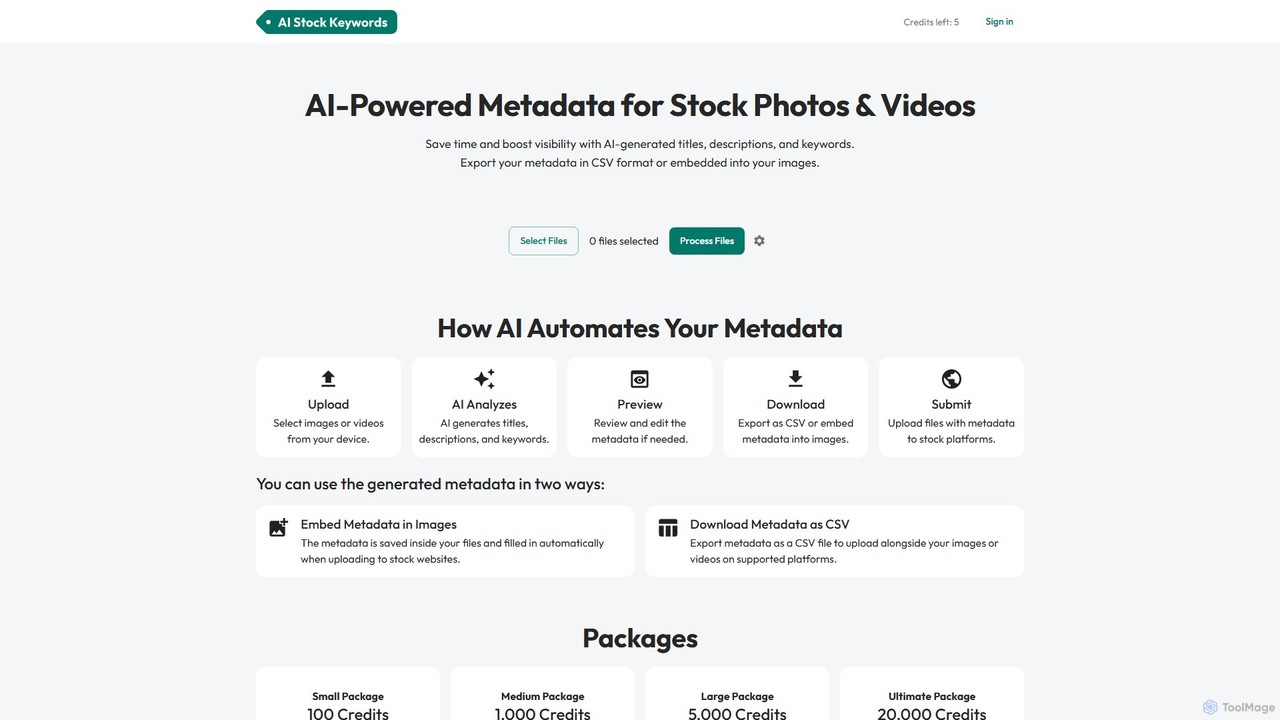
An AI-powered tool that automates the generation of titles, descriptions, and keywords for stock photos and videos. It …

8.1K

About Metadata

AI Metadata tools are a specialized category within photo editing that automates the management of data embedded within image files. These tools use computer vision and natural language processing to analyze visual content, automatically generating descriptive keywords, tags, captions, and alt text. This significantly enhances image searchability, organization, and accessibility without altering the image's pixels. They are essential for managing large volumes of digital assets efficiently, improving SEO, and ensuring compliance with accessibility standards.

Core Features

  • Automated Tagging & Keywording: Analyzes image content to generate a list of relevant keywords and tags based on objects, scenes, and concepts.
  • EXIF, IPTC & XMP Editing: Provides an interface to view, edit, and batch-process standard metadata fields like camera settings, copyright, and location.
  • AI Description & Alt Text Generation: Creates coherent, natural-language descriptions of images for accessibility (WCAG) and SEO purposes.
  • Object & Face Recognition: Identifies and tags specific people, products, or landmarks within photos for precise cataloging.
  • Bulk Processing: Applies metadata changes, edits, or generation rules to thousands of image files simultaneously.

Use Cases

These tools are widely used by stock photographers for keywording submissions, e-commerce businesses for product image SEO, and marketing teams for managing digital asset management (DAM) systems. News agencies also rely on them for quickly embedding accurate IPTC data into photojournalism content.

How to Choose

When selecting an AI Metadata tool, consider its batch processing capabilities, the accuracy of its AI-generated tags, and its support for various metadata standards (EXIF, IPTC, XMP). Also, evaluate its integration with other software like Adobe Lightroom or DAM platforms, and whether it offers an API for custom automation workflows.

MetadataUse Cases

1

Batch Keywording for Stock Photographers

A professional stock photographer needs to upload a batch of 500 new photos to multiple stock agencies. Manually adding 15-30 relevant keywords to each image is a time-consuming process that can take days. By using an AI Metadata tool, they can upload the entire batch and let the AI analyze each photo. The tool automatically suggests highly relevant keywords based on objects, themes, colors, and concepts within seconds. The photographer can then quickly review, edit, and approve the keywords, reducing the entire keywording process from days to just a couple of hours, leading to faster submissions and increased sales potential.

2

Automating Alt Text for E-commerce Product Images

An e-commerce manager is responsible for a website with over 10,000 product listings. To comply with accessibility standards (WCAG) and improve image SEO, every product image needs descriptive alt text. Writing this manually is an impossible task. An AI Metadata tool can be integrated into their workflow to automatically generate alt text for all new and existing images. The AI analyzes the product photo and creates a concise description like 'Front view of a red cotton t-shirt with a crew neck'. This automation ensures 100% coverage, improves the shopping experience for visually impaired users, and boosts the site's ranking in image search engines.

3

Organizing a Corporate Digital Asset Management (DAM) System

A large corporation's marketing team struggles to find approved brand assets in their disorganized DAM system. Photos from different campaigns are mixed up, and searching for a specific image is difficult. By implementing an AI Metadata tool, they can process their entire library of assets. The AI automatically tags images with relevant information such as campaign name (e.g., 'Summer 2024 Launch'), product featured, usage rights, and even the dominant brand colors. This creates a structured, highly searchable database. Now, a designer can instantly find 'all approved lifestyle photos from the Summer 2024 campaign featuring the new sneaker', saving hours of manual searching and ensuring brand consistency.

4

Streamlining Photojournalism Workflow with IPTC Data

A photojournalist covering a live event needs to send images back to their news agency with accurate captions, credits, and location information immediately. Manually typing this IPTC data for each photo under pressure is slow and prone to errors. Using an AI Metadata tool on a laptop or mobile device, they can create presets for the event. For each photo, the tool can automatically apply the event name, location from GPS, and their byline. The AI can even suggest a caption by analyzing the photo's content, which the journalist can then quickly edit and confirm. This process ensures that every image is transmitted with complete and accurate metadata, speeding up the editorial process and ensuring proper attribution.

5

Cataloging Digital Archives for Museums

A museum is digitizing its vast collection of historical photographs. Each image contains valuable information about people, places, and events that needs to be cataloged for researchers and the public. An AI Metadata tool can analyze these scanned images. It can perform facial recognition to suggest identities of historical figures, use optical character recognition (OCR) to read text from signs or documents in the photos, and identify architectural styles or time periods. This automated data extraction populates the museum's database with rich, searchable metadata, making the collection vastly more accessible and useful for academic research and online exhibits than manual cataloging ever could.

6

Cleaning and Standardizing Metadata for a Photo Library Migration

A company is migrating its 20-year-old photo library to a new cloud-based DAM system. The existing metadata is inconsistent, with missing copyright information, varied date formats, and messy keywords. An AI Metadata tool can be used to scan the entire library before migration. It can automatically standardize date formats, use AI to identify and fill in missing location data, and consolidate messy keywords (e.g., merging 'NYC', 'New York', and 'New York City' into one standard tag). It can also batch-apply a standardized copyright notice to all images. This ensures that the data migrated to the new system is clean, consistent, and highly organized from day one, preventing future search and management issues.

MetadataFrequently Asked Questions