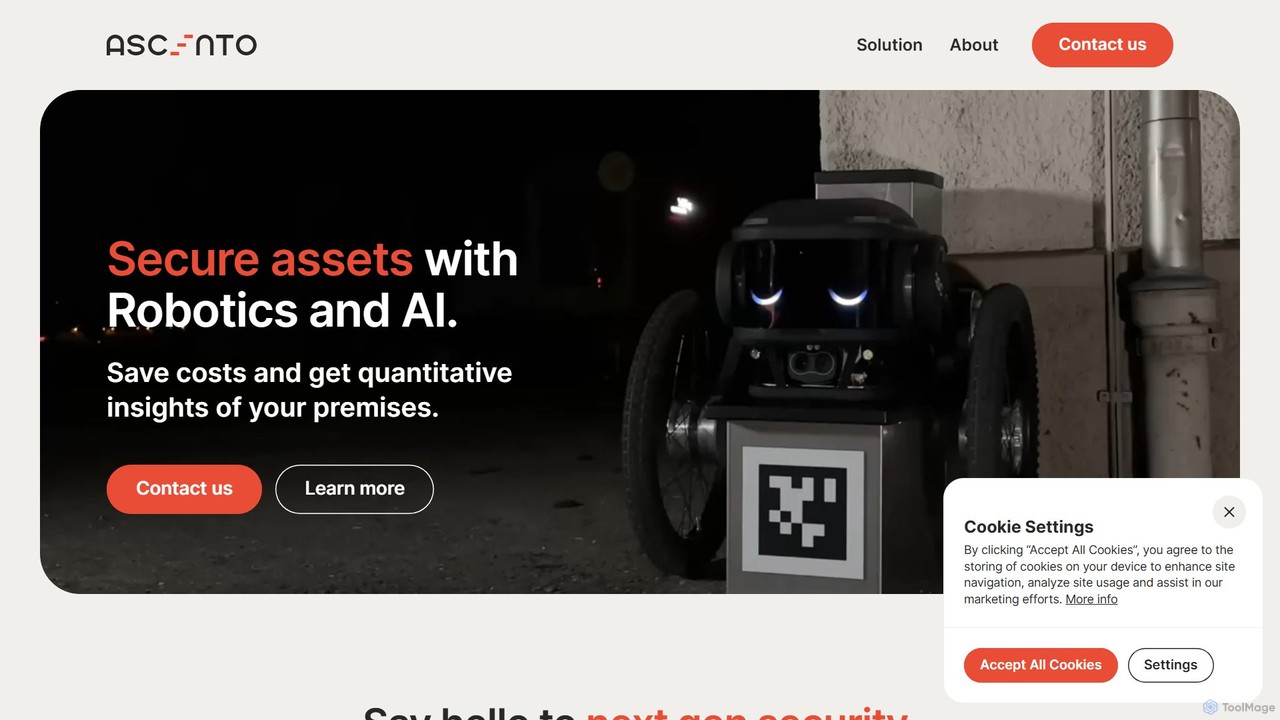
Robotic Surveillance tools are AI-powered systems that use autonomous or semi-autonomous mobile robots for security and monitoring. These platforms integrate advanced sensors like high-definition cameras, thermal imagers, and LiDAR with AI algorithms for navigation, object recognition, and anomaly detection. They provide a dynamic and proactive security layer, capable of patrolling large areas, accessing hazardous environments, and responding to incidents in real-time. This mobility distinguishes them from fixed security cameras, offering greater coverage and operational flexibility.
Core Features
- Autonomous Navigation: Robots independently patrol predefined routes or dynamically navigate complex environments while avoiding obstacles.
- Multi-Sensor Fusion: Combines data from various sensors (e.g., visual, thermal, audio) to create a comprehensive understanding of the environment.
- Real-time Threat Detection: AI analytics on-board or in the cloud identify potential threats such as intruders, fires, or leaks and send instant alerts.
- Remote Operation and Control: Allows human operators to take manual control of the robot to investigate specific incidents or navigate challenging situations.
Use Cases
These tools are ideal for securing large-scale facilities such as manufacturing plants, warehouses, data centers, and energy substations. They are also deployed for perimeter security, construction site monitoring, and public safety in large venues. Their ability to operate in harsh or dangerous conditions makes them valuable for industrial inspections and post-incident assessment.
How to Choose
When selecting a Robotic Surveillance tool, consider the operational environment (indoor, outdoor, rugged terrain). Evaluate the robot's type (ground, aerial) and its sensor payload to match your specific monitoring needs. Assess the level of autonomy versus the need for human control. Finally, check its integration capabilities with your existing Video Management System (VMS) and security infrastructure.