ToolMage
Sign in

Best 1 Data Protection AI tools for Privacy Tools

Popular Data Protection AI tools in Privacy Tools include Privacy Wala, helping you work more efficiently.

Privacy Wala
Paid

Privacy Wala

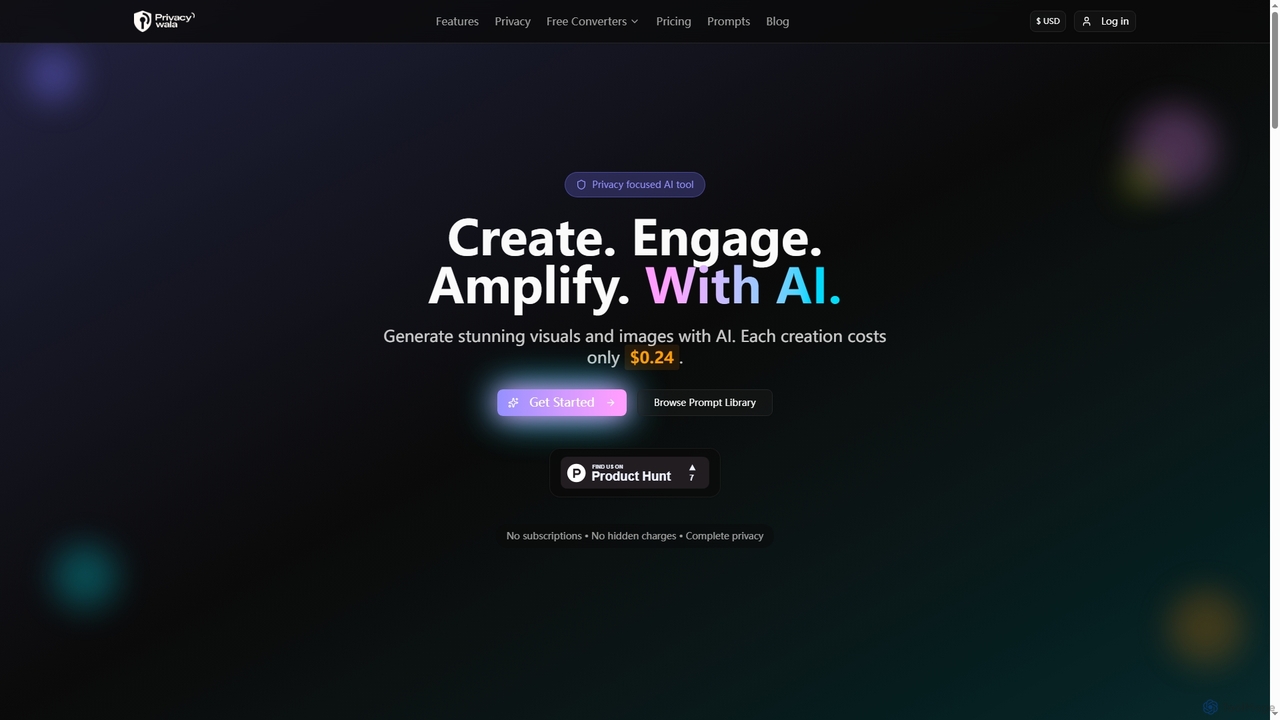
Privacy Wala is a privacy-first AI image generator that allows users to create stunning visuals, enhance images, and remove backgrounds without compromising their data. It offers a transparent pay-per-creation model, ensuring no subscriptions or hidden charges, and guarantees that user data is never stored, reused, or used for AI training.

Background Removal
Visits 7.3KFavorites 157Likes 146

About Data Protection

Data Protection tools are AI-powered solutions designed to safeguard sensitive information, ensure regulatory compliance, and mitigate data privacy risks across an organization's digital assets. These tools leverage advanced machine learning and natural language processing to identify, classify, and protect data, offering a proactive approach to privacy management. They help organizations maintain trust with customers, avoid costly breaches, and navigate the complex landscape of global data privacy regulations like GDPR and CCPA.

Core Features

  • Data Discovery & Classification: Automatically locate and categorize sensitive data (e.g., PII, financial, health) across various systems and formats.
  • Automated Redaction & Anonymization: Intelligently mask, remove, or tokenize personally identifiable information to protect privacy while enabling data utility.
  • Data Loss Prevention (DLP): Monitor and control data movement to prevent unauthorized sharing or exfiltration of sensitive information.
  • Access Control & Anomaly Detection: Manage user permissions and identify unusual access patterns or suspicious activities that could indicate a breach.
  • Compliance Monitoring & Reporting: Continuously assess data processing activities against privacy regulations and generate audit-ready compliance reports.

Use Cases

Organizations across sectors like finance, healthcare, and legal leverage these tools to protect customer and patient data, ensure transactional privacy, and manage intellectual property. They are crucial for automating privacy impact assessments, responding to data subject access requests, and maintaining a robust security posture against evolving cyber threats.

How to Choose

When selecting a Data Protection tool, consider its ability to integrate with your existing infrastructure, the breadth of data types and sources it supports, and its compliance reporting capabilities. Evaluate the level of automation for tasks like data discovery and redaction, scalability to handle growing data volumes, and the clarity of its privacy policy management features to ensure it aligns with your specific regulatory needs and operational workflows.

Data Protection use cases

1

Automating PII Redaction in Legal Documents

Legal departments frequently handle sensitive client information within contracts and case files. AI Data Protection tools can automatically identify and redact personally identifiable information (PII) from these documents before they are shared externally or with unauthorized internal personnel. This ensures compliance with privacy regulations and significantly reduces the manual effort and risk associated with sensitive data handling, allowing legal professionals to focus on core tasks.

2

Preventing Data Loss in Cloud Storage Environments

IT security teams face the challenge of preventing sensitive corporate data from being inadvertently or maliciously uploaded to unauthorized cloud storage platforms. AI-powered Data Loss Prevention (DLP) tools monitor data movement across cloud services, detecting and blocking attempts to transfer classified information that violates predefined security policies. This proactive measure safeguards intellectual property and confidential business data from exfiltration, enhancing overall data security posture.

3

Streamlining GDPR and CCPA Compliance Monitoring

Privacy officers in global organizations struggle with the continuous monitoring and reporting required by regulations like GDPR and CCPA. AI Data Protection solutions automate the assessment of data processing activities, identifying potential compliance gaps and generating detailed audit trails. This capability simplifies the complex task of demonstrating adherence to privacy laws, reducing the risk of non-compliance fines and building greater trust with data subjects.

4

Secure Anonymization for Research and Analytics

Researchers and data scientists often need to share large datasets for collaborative analysis or public release, but must protect individual privacy. AI tools can perform advanced anonymization and pseudonymization techniques, transforming sensitive data into a format where individuals cannot be identified, while preserving the dataset's analytical value. This enables secure data sharing for scientific discovery, market research, and public health initiatives without compromising privacy.

5

Detecting Insider Threats and Anomalous Data Access

Security analysts are constantly vigilant against insider threats, where authorized users might misuse their access to sensitive data. AI Data Protection systems learn normal user behavior patterns and flag anomalous activities, such as unusual data access times, large-volume downloads, or attempts to access restricted files. This intelligent monitoring helps detect potential data breaches or exfiltration attempts by internal actors early, allowing for rapid intervention.

6

Automating Data Subject Access Request (DSAR) Fulfillment

Fulfilling Data Subject Access Requests (DSARs) can be a time-consuming and resource-intensive process for privacy teams, requiring the identification and compilation of all personal data related to an individual. AI-powered tools automate the discovery of relevant data across disparate systems, streamline the review process, and facilitate the secure delivery of information to the data subject. This significantly reduces the operational burden and ensures timely, accurate responses to privacy requests.

Data Protection FAQ

What are AI Data Protection tools?

AI Data Protection tools are advanced software solutions that leverage artificial intelligence, including machine learning and natural language processing, to identify, classify, and safeguard sensitive information. They go beyond traditional security measures by intelligently analyzing data patterns, user behavior, and compliance requirements to proactively protect against breaches and ensure privacy. These tools are crucial for managing risks associated with PII, financial data, and intellectual property across an organization's digital footprint.

How do AI Data Protection tools differ from traditional security tools?

AI Data Protection tools differ from traditional security tools primarily in their intelligence and automation capabilities. Traditional tools often rely on predefined rules and signatures, making them reactive to known threats. In contrast, AI tools use machine learning to learn, adapt, and detect novel threats or anomalous behaviors without explicit programming. They can automatically classify data, redact sensitive information, and monitor for compliance violations, offering a more dynamic, proactive, and scalable approach to data security and privacy management.

What are the primary benefits of using AI for Data Protection?

The primary benefits of using AI for Data Protection include enhanced compliance with global privacy regulations, significant reduction in data breach risks, and improved operational efficiency. AI automates labor-intensive tasks like data discovery, classification, and redaction, freeing up security and privacy teams. It also enables proactive threat detection by identifying subtle anomalies in data access or movement, leading to faster response times and a stronger overall security posture. This ultimately builds greater trust with customers and stakeholders.

What are the key features to look for in an AI Data Protection solution?

When evaluating an AI Data Protection solution, look for key features such as comprehensive data discovery and classification across diverse data sources, robust automated redaction and anonymization capabilities, and effective Data Loss Prevention (DLP) functionalities. Strong access control with anomaly detection is vital for identifying insider threats. Additionally, prioritize tools offering continuous compliance monitoring and detailed reporting for regulations like GDPR or CCPA, along with seamless integration into your existing IT infrastructure.

Who typically uses AI Data Protection tools?

AI Data Protection tools are typically used by a wide range of professionals and organizations concerned with data privacy and security. This includes Chief Privacy Officers (CPOs), Chief Information Security Officers (CISOs), IT security teams, compliance officers, legal departments, and data governance specialists. Industries suchs as finance, healthcare, legal, and any business handling large volumes of sensitive customer or employee data find these tools indispensable for meeting regulatory obligations, mitigating risks, and maintaining data integrity and trust.