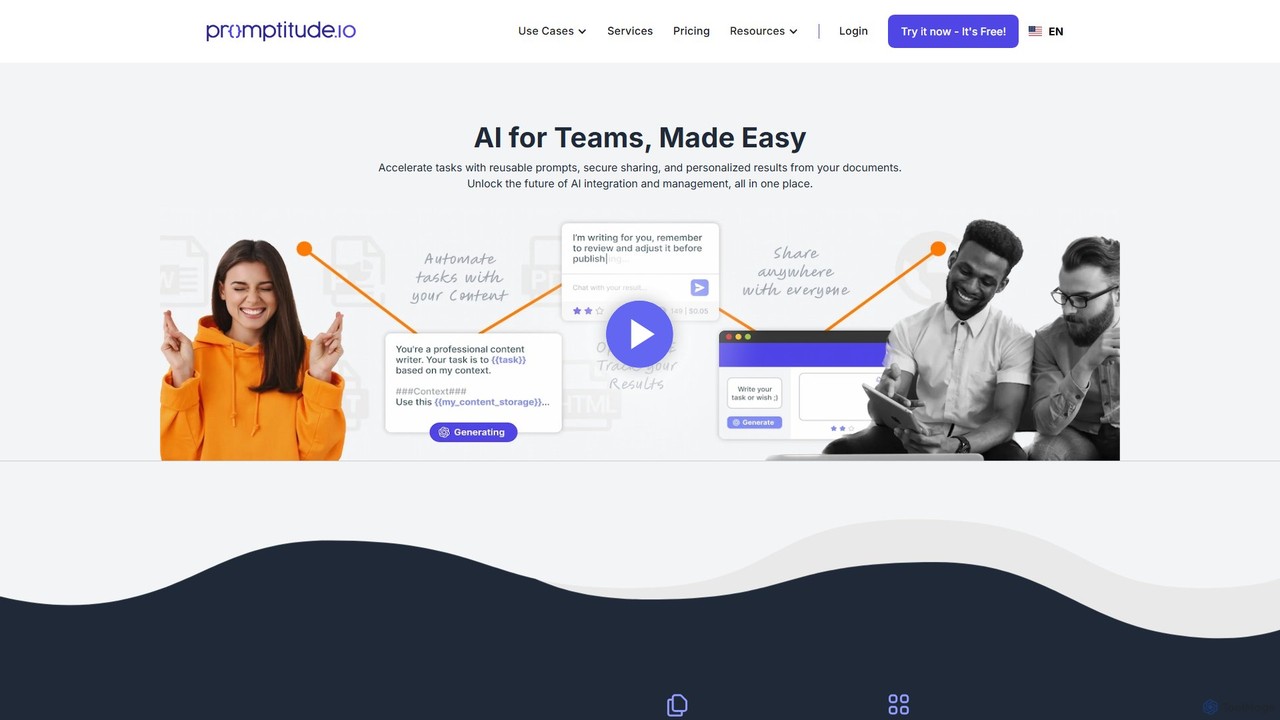
Prompt Management tools are specialized platforms for organizing, versioning, testing, and deploying prompts for large language models (LLMs). As a key component of the broader Prompting discipline, these tools move beyond simple text editing to provide a structured system for handling prompts at scale. They enable teams to create a centralized, collaborative library of reusable and optimized prompts, ensuring consistency and improving the performance of AI applications. This systematic approach is crucial for maintaining quality and efficiency in production environments.
Core Features
- Prompt Library: A centralized repository for storing, searching, and categorizing all prompts.
- Version Control: Tracks changes to prompts over time, allowing users to revert to previous versions and compare performance.
- Collaboration & Sharing: Enables team members to share, comment on, and co-edit prompts securely.
- A/B Testing & Evaluation: Provides frameworks for systematically testing different prompt variations against various models to find the most effective ones.
- Templating & Variable Management: Allows the creation of dynamic prompts with placeholders that can be filled with different data inputs.
Use Cases
These tools are essential for teams and organizations that rely on consistent AI-generated outputs. This includes marketing teams standardizing ad copy prompts, customer support departments managing prompts for AI agents, and development teams embedding version-controlled prompts into their applications. Any workflow requiring repeatable, high-quality results from LLMs benefits from a dedicated management system.
How to Choose
When selecting a Prompt Management tool, consider its integration capabilities with different LLMs and your existing development environments (e.g., via SDKs or APIs). Evaluate the robustness of its version control and collaboration features. Also, assess its analytics and testing functionalities to ensure you can measure prompt performance effectively. Finally, consider security features, access controls, and the overall scalability of the platform for your team's needs.