Launchmind
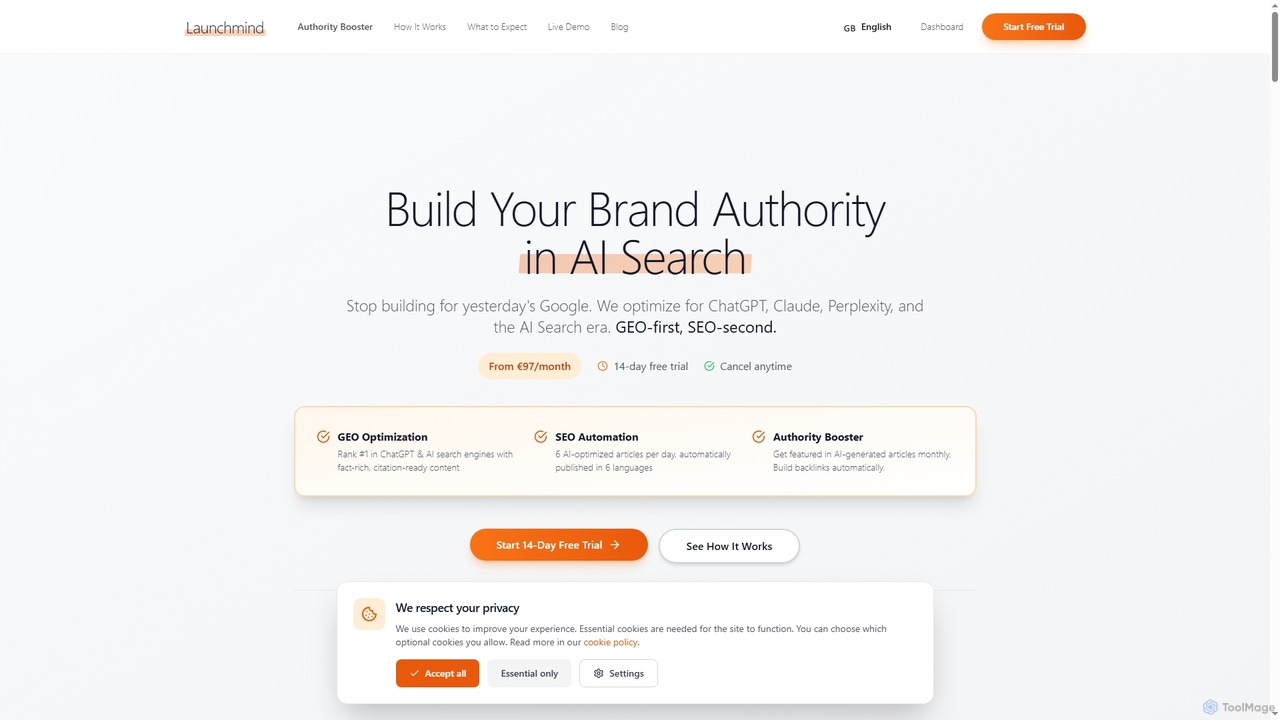
Launchmind is an AI-powered GEO and SEO platform designed to build brand authority in the era of AI …
Launchmind is an AI-powered GEO and SEO platform designed to build brand authority in the era of AI search. It optimizes content for generative AI engines like ChatGPT, Claude, and Perplexity, while also enhancing traditional Google SEO. The platform automates multilingual content creation, backlink building, and ensures high visibility across modern search landscapes.
Pressmaster.ai
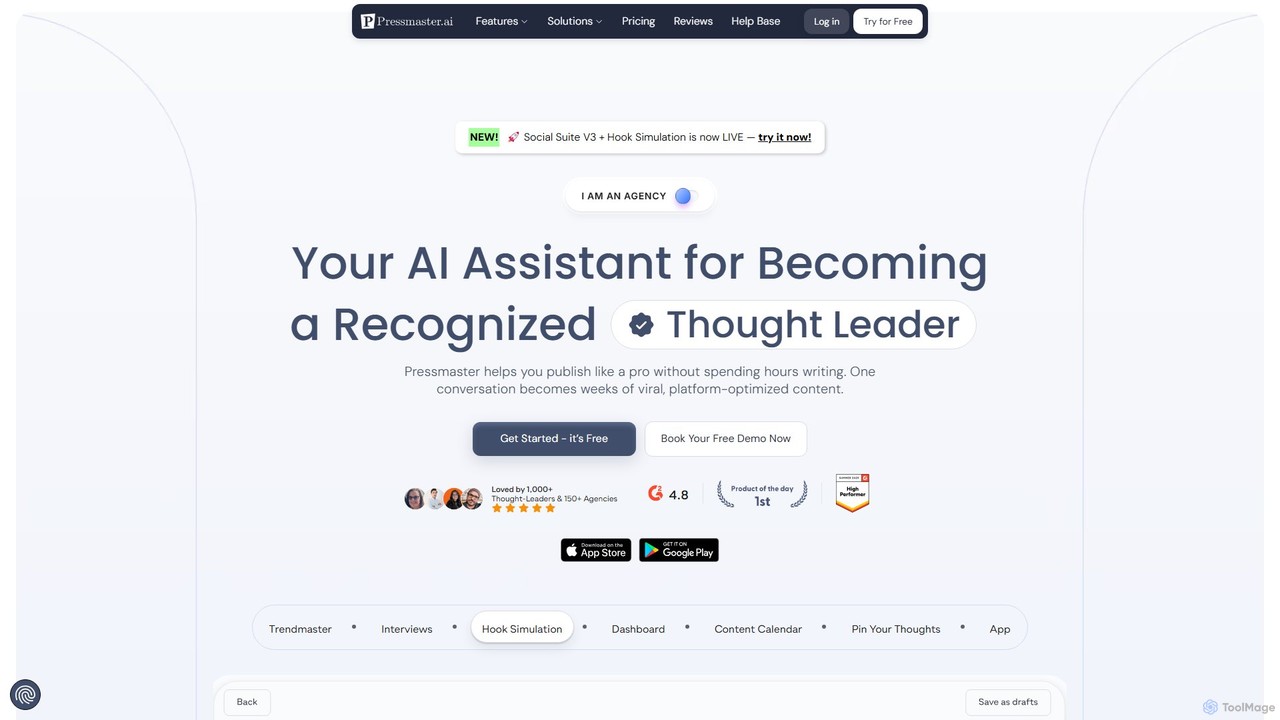
Pressmaster.ai is an AI-powered platform designed for founders, experts, and agencies to establish thought leadership. It transforms your …
Pressmaster.ai is an AI-powered platform designed for founders, experts, and agencies to establish thought leadership. It transforms your ideas and voice into authentic, platform-optimized content, including articles and social media posts. By using AI interviews and trend analysis, it streamlines content creation, helping you build authority and engagement effortlessly.
About Brand Management
AI Brand Management tools are a specialized category of software designed to automate the monitoring, analysis, and protection of a brand's identity and reputation. Leveraging machine learning, natural language processing (NLP), and computer vision, these tools track brand mentions, analyze public sentiment, and ensure visual consistency across digital platforms. They empower marketing and public relations teams to proactively manage brand health, respond to potential crises, and maintain a cohesive brand image in real-time. This data-driven approach provides deep insights into public perception and competitive positioning.
Core Features
- Sentiment Analysis: Automatically gauges the emotional tone (positive, negative, neutral) of online conversations mentioning the brand.
- Visual Identity Monitoring: Uses computer vision to detect logo usage, both correct and incorrect, in images and videos across the web.
- Social Listening & Mention Tracking: Monitors brand names, products, and keywords across social media, news sites, blogs, and forums.
- Reputation Scoring: Aggregates various data points into a quantifiable score or dashboard to represent overall brand health.
- Competitive Intelligence: Tracks competitors' brand presence, share of voice, and public sentiment for comparative analysis.
Applicable Scenarios
These tools are essential for corporate communications departments, marketing agencies, and brand managers, particularly in consumer-facing industries like retail, technology, and hospitality. They are used for daily brand health monitoring, analyzing the impact of marketing campaigns, managing public relations crises, and ensuring brand consistency across global or franchised operations.
Selection Criteria
When choosing an AI Brand Management tool, evaluate the breadth of channels it monitors (social, news, forums, etc.). Assess the accuracy of its sentiment analysis and the reliability of its visual recognition capabilities. Consider its integration potential with other platforms like CRM or analytics suites, and examine the depth and customizability of its reporting features.

Brand ManagementUse Cases
Proactive Crisis Management and Mitigation
A public relations team at a global airline uses an AI Brand Management tool to monitor online conversations in real-time. The system detects a sudden spike in negative sentiment originating from a specific airport. By analyzing the mentions, the team quickly identifies a recurring customer service issue. They receive an alert before the story is picked up by major news outlets, allowing them to coordinate with the ground staff to resolve the problem and issue a public statement, mitigating a potential large-scale reputation crisis.
Ensuring Brand Consistency Across Franchises
The corporate marketing team of a fast-food chain with thousands of franchise locations needs to maintain a uniform brand image. They use an AI tool with visual recognition to scan social media and local review sites. The AI automatically flags instances where franchisees use outdated logos, incorrect color schemes on promotional materials, or unapproved marketing messages. This allows the central team to efficiently address inconsistencies and provide franchisees with the correct assets, protecting the brand's integrity globally.
Measuring Sponsorship ROI and Brand Association
A technology company sponsors a major music festival. To measure the return on investment (ROI), their brand manager uses an AI tool to analyze online photos and videos from the event. The tool's computer vision identifies every instance of the company's logo—on banners, merchandise, and screens. It correlates logo visibility with the sentiment of associated posts, providing data on how the sponsorship impacted brand perception among festival attendees and the wider online audience, offering a more nuanced ROI calculation than simple impression counts.
Analyzing Public Reception of a Rebranding Campaign
A legacy retail brand undergoes a major rebranding, including a new logo and brand message. The marketing team uses an AI Brand Management tool to track the public's reaction. The tool's NLP analyzes sentiment in social media comments and news articles, categorizing feedback into themes like 'logo design,' 'new slogan,' and 'brand values.' This provides immediate, structured feedback, helping the team understand which elements of the rebrand are resonating positively and which are facing criticism, allowing for swift adjustments to their communication strategy.
Competitive Benchmarking on Brand Perception
A product manager for a SaaS company wants to understand how their brand is perceived relative to its top two competitors. They use an AI tool to track and compare brand sentiment, share of voice, and key conversation themes for all three companies over a quarter. The dashboard reveals that while their brand has a positive sentiment, a competitor is more frequently associated with 'innovation.' This insight directly informs the next product marketing campaign, which will focus on highlighting the brand's cutting-edge features to shift public perception.
Vetting Influencers for Brand Alignment
A luxury fashion brand is planning an influencer marketing campaign. Before partnering, the brand manager uses an AI tool to analyze the public profiles of potential influencers. The tool assesses the overall sentiment of their content, identifies past brand associations, and flags any controversial topics they have engaged with. This provides a data-driven 'brand safety' score for each influencer, ensuring the brand only collaborates with individuals whose public persona genuinely aligns with their values of elegance and exclusivity, thus protecting the brand's premium image.