ToolMage
Sign in

Best 1 Local Seo AI tools for Search Engine Optimization

Popular Local Seo AI tools in Search Engine Optimization include Digital Smiles, helping you work more efficiently.

Digital Smiles

Digital Smiles

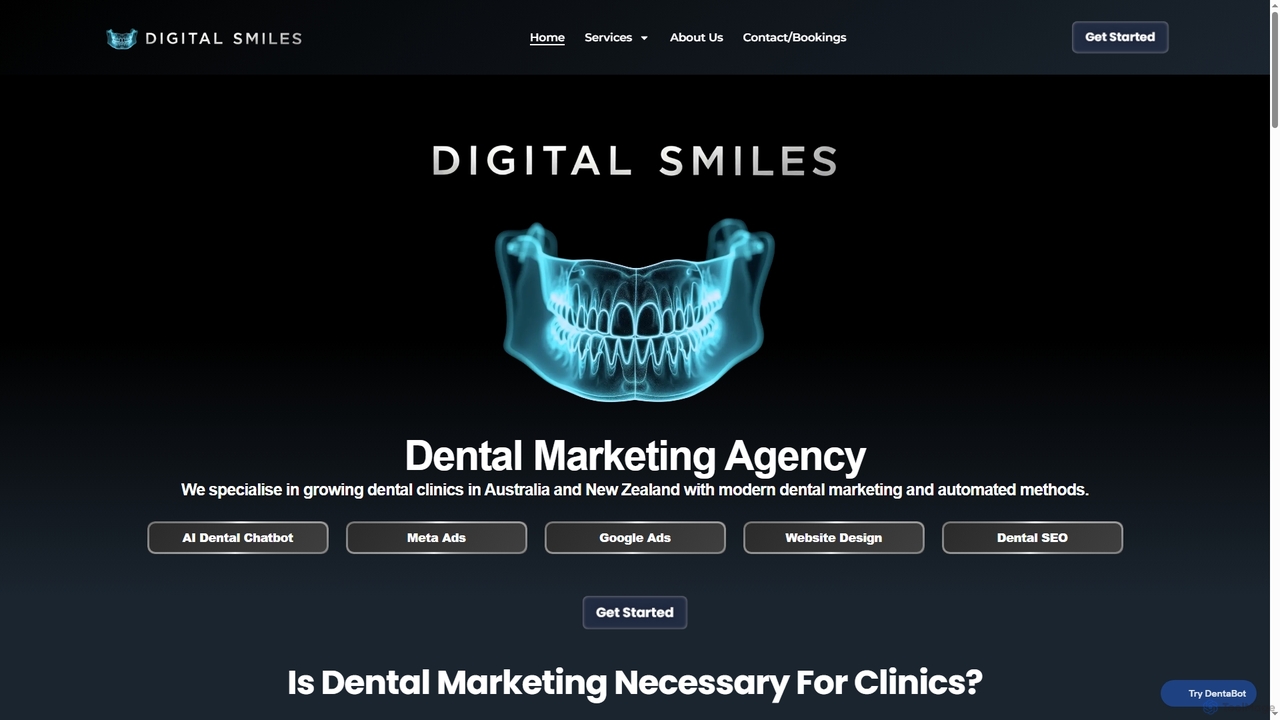
Digital Smiles is a specialized dental marketing agency for Australia and New Zealand, leveraging advanced AI, including the DentaBot chatbot, to enhance online visibility, attract new patients, and increase bookings. They offer comprehensive solutions like Meta Ads, Google Ads, website design, and SEO, all optimized with AI-powered conversion tracking for sustained growth.

Paid Search
Visits 4KFavorites 130Likes 135

About Local Seo

Local SEO tools are a specialized category of AI-driven software designed to enhance a business's visibility in geographically-specific search results. These tools leverage AI to analyze and optimize signals crucial for local rankings, such as Google Business Profile (GBP) data, customer reviews, and local citations (NAP consistency). Their primary purpose is to help brick-and-mortar stores, service-area businesses, and multi-location enterprises attract customers in their immediate vicinity. By automating tasks like review responses and local keyword tracking, they enable businesses to dominate the local map pack and 'near me' searches effectively.

Core Features

  • Google Business Profile Optimization: AI-powered suggestions for posts, Q&A, product/service descriptions, and image attributes to maximize GBP visibility.
  • Local Rank Tracking: Monitors keyword rankings within specific geographic areas (geogrids) to visualize search visibility at a street-level.
  • Review Management: Uses AI to analyze review sentiment, generate response drafts, and manage review generation campaigns across multiple platforms.
  • Citation Management: Automatically scans, identifies, and helps correct inconsistencies in Name, Address, and Phone Number (NAP) data across online directories.
  • Local Competitor Analysis: Tracks the local SEO strategies of competitors, including their GBP activities, review velocity, and citation profiles.

Use Cases

These tools are essential for any business with a physical location or a defined service area. This includes restaurants, retail shops, law firms, healthcare clinics, and home service providers like plumbers or electricians. Marketing agencies also use them to manage the local online presence for multiple clients at scale, ensuring consistent and optimized information across all locations.

How to Choose

When selecting a Local SEO tool, consider the number of locations you need to manage, as pricing often scales with volume. Evaluate the depth of its Google Business Profile integration and management features. Assess the sophistication of its review management and response generation capabilities. Finally, check the accuracy and granularity of its local rank tracking to ensure it meets your reporting needs.

Featured tool rankings

Local Seo use cases

1

Manage a Multi-Location Restaurant Chain

A marketing manager for a national restaurant chain with 100+ locations uses a Local SEO tool to streamline their online presence. The tool's AI automatically standardizes business hours, menus, and promotional information across all Google Business Profiles. It also generates localized posts for each branch, such as highlighting a 'special of the day' relevant to that city. The AI-powered review management feature drafts responses to customer feedback, allowing the small central team to maintain a high response rate and positive sentiment across all locations, significantly boosting local search rankings and driving foot traffic.

2

Optimize a Local Home Service Business

The owner of a plumbing business serving a specific metropolitan area uses a Local SEO tool to dominate search results for 'plumber near me'. The tool's local rank tracker provides a geogrid view, showing exactly where their business ranks block-by-block. This insight allows them to create location-specific landing pages and Google posts targeting neighborhoods where their visibility is weaker. The AI also helps manage their online reputation by prompting satisfied customers to leave reviews and flagging negative reviews for immediate attention, building trust and authority that converts searchers into service calls.

3

Boost Foot Traffic for a Retail Store

A local boutique owner wants to increase in-store visits. They use a Local SEO tool to optimize their Google Business Profile for product-related searches like 'handmade jewelry near me'. The AI suggests adding high-quality photos of their products and creating Google Posts about new arrivals and in-store events. It also analyzes competitor reviews to identify what customers value most (e.g., customer service, unique selection) and helps craft a GBP description that highlights these strengths. This targeted optimization leads to higher visibility in the local map pack, directly translating online searches into physical foot traffic.

4

Scale Client Management for a Marketing Agency

A digital marketing agency manages local SEO for 50 small businesses, from dentists to cafes. Using an AI Local SEO tool, they can access a single dashboard to monitor all clients' GBP performance, review alerts, and ranking changes. The tool's AI generates monthly performance reports automatically, highlighting key wins and areas for improvement, saving account managers hours of manual work. It also identifies and helps fix NAP citation inconsistencies across the web for all clients, a task that would be prohibitively time-consuming to perform manually at this scale, thus providing significant value and improving client retention.

5

Build Trust for a Healthcare Clinic

A new dental clinic needs to establish credibility in a competitive neighborhood. They use a Local SEO tool to actively manage their online reputation. The tool sends automated requests for reviews to patients after their appointments. For incoming reviews, the AI analyzes sentiment; positive reviews are shared on social media via an integration, while negative ones trigger an immediate alert to the office manager for personal follow-up. This proactive approach helps the clinic quickly build a strong base of positive reviews, improving their ranking and building the trust necessary to attract new patients searching for a reliable dentist.

6

Analyze Local Market for a New Business Launch

An entrepreneur planning to open a new coffee shop uses a Local SEO tool for market research. They utilize the competitor analysis feature to identify all existing coffee shops in their target neighborhood. The AI analyzes the competitors' Google Business Profiles, identifying their busiest times, most popular menu items (from Q&A and reviews), and common customer complaints. It also tracks their local search rankings for keywords like 'best espresso' or 'quiet cafe'. This data provides invaluable insights, helping the entrepreneur to define a unique selling proposition, plan their menu, and develop a pre-launch SEO strategy to effectively compete from day one.

Local Seo FAQ

What are AI Local SEO tools?

AI Local SEO tools are specialized software platforms that use artificial intelligence to help businesses with physical locations or service areas improve their visibility in local search results. Unlike general SEO tools, they focus on location-specific ranking factors. Key functions include optimizing Google Business Profiles, managing online reviews and customer sentiment, ensuring consistent business information (NAP) across directories, and tracking search rankings within precise geographic zones (like a specific neighborhood).

What's the difference between Local SEO and general SEO tools?

The primary difference lies in their focus and the signals they optimize. General SEO tools aim to improve rankings on a national or global scale, focusing on broad keyword targeting, backlink building, and on-page technical SEO. Local SEO tools, a subset of SEO, concentrate on a specific geographic area. They prioritize optimizing signals that prove local relevance to search engines, such as:

  • Google Business Profile: Managing posts, Q&A, services, and photos.
  • Local Citations: Ensuring Name, Address, Phone (NAP) consistency across directories.
  • Customer Reviews: Managing review generation, sentiment, and responses.
  • Geographic Rank Tracking: Monitoring visibility in specific cities or neighborhoods.
How do I choose the right AI Local SEO tool?

Choosing the right tool depends on your specific business needs. Consider these factors:

  • Number of Locations: If you manage multiple branches, choose a tool built for multi-location management with bulk editing and reporting features.
  • Feature Set: Do you need strong review management, detailed local rank tracking (geogrids), or robust citation building services? Prioritize tools that excel in your most needed areas.
  • Integrations: Check for integrations with other marketing tools you use, such as social media schedulers or CRM platforms.
  • Ease of Use and Reporting: The platform should have an intuitive interface and provide clear, actionable reports that demonstrate ROI without requiring deep technical expertise.
Who benefits most from using AI Local SEO tools?

Any business that relies on local customers can benefit significantly. This includes:

  • Multi-location businesses: Chains (restaurants, retail, banks) that need to manage brand consistency and local promotions across many locations.
  • Service-area businesses: Professionals like plumbers, electricians, and lawyers who serve specific geographic areas and need to appear in 'near me' searches.
  • Brick-and-mortar stores: Single-location shops, cafes, and boutiques aiming to drive foot traffic from their local community.
  • Marketing agencies: Firms that manage the online presence for multiple local business clients and need efficiency and scalability.
Can AI tools fully automate my local SEO strategy?

AI tools can automate many of the most time-consuming tasks in local SEO, such as tracking rankings, monitoring reviews, and identifying citation inconsistencies. They provide data-driven insights and suggestions that significantly enhance strategy. However, they do not fully replace human oversight and strategic decision-making. The best results come from a combination of AI-powered automation for efficiency and a human expert who can interpret the data, understand local market nuances, and manage customer relationships with a personal touch, especially when responding to complex reviews or creating unique local content.