ToolMage
Sign in

Best 1 Public Safety AI tools for Smart Cities

Popular Public Safety AI tools in Smart Cities include icetana, helping you work more efficiently.

icetana
Paid

icetana

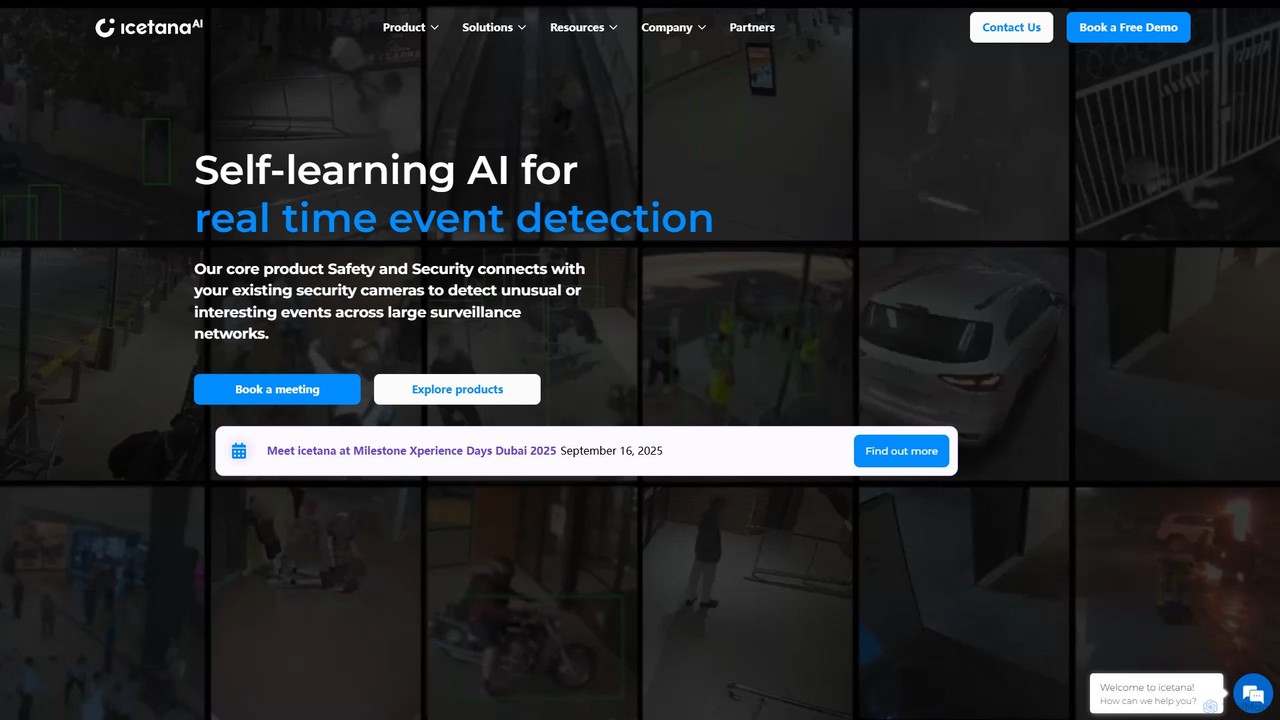
icetana is an AI-powered video analytics platform that enhances existing CCTV systems by automatically detecting anomalies and unusual events. It uses self-learning AI to identify threats in real-time, helping security teams monitor large-scale camera networks proactively and efficiently, reducing operator workload and improving response times.

Analytics
Visits 13.4KFavorites 146Likes 153

About Public Safety

Public Safety AI tools are a specialized category of applications designed to enhance the operational efficiency and predictive capabilities of law enforcement and emergency services. Leveraging machine learning, computer vision, and real-time data analysis, these tools identify potential threats, predict crime hotspots, and optimize emergency response logistics. As a key component of Smart City initiatives, they transform vast amounts of urban data into actionable intelligence to create safer communities. Unlike general analytics platforms, they focus specifically on anomaly detection, behavioral pattern recognition, and rapid incident assessment.

Core Features

  • Predictive Policing: Uses historical data to forecast where and when crimes are likely to occur, enabling proactive resource allocation.
  • Real-time Threat Detection: Analyzes live video feeds to automatically detect suspicious activities, such as abandoned objects or crowd anomalies.
  • Emergency Response Optimization: Automates dispatch systems and calculates the fastest routes for emergency vehicles based on real-time traffic.
  • Intelligent Evidence Analysis: Rapidly processes large volumes of digital evidence, like video footage, to identify key information and suspects.

Use Cases

These tools are primarily used by municipal governments, police departments, fire departments, and emergency management agencies. For example, a city's command center can use this AI to monitor public events for security threats, while an investigative unit can accelerate the review of surveillance footage after an incident.

How to Choose

When selecting a Public Safety AI tool, evaluate its compliance with data privacy regulations (e.g., GDPR), its ability to integrate with existing systems like CCTV and CAD (Computer-Aided Dispatch), the model's accuracy and bias mitigation measures, and its scalability to handle city-wide data streams.

Public Safety use cases

1

Automating Crime Hotspot Prediction for Patrol Planning

Police department analysts use AI tools to process historical crime data, demographic information, and local event schedules. The system generates predictive maps highlighting areas with a high probability of specific crimes occurring in the near future. Patrol commanders then use these insights to allocate resources more effectively, deploying units to these hotspots proactively. This data-driven approach helps shift policing from a reactive to a preventative model, aiming to deter crime before it happens and improve community safety.

2

Real-time Anomaly Detection in Public Transportation Hubs

Security teams at transit authorities deploy AI to monitor hundreds of CCTV feeds from train stations and airports simultaneously. The AI is trained to detect anomalies such as unattended luggage left for an extended period, individuals entering restricted areas, or sudden crowd surges indicating panic. When an anomaly is detected, the system automatically alerts security personnel with a video clip of the event, enabling a much faster response than is possible with manual monitoring alone. This enhances passenger safety and operational security.

3

Optimizing Emergency Vehicle Dispatch and Routing

In a 911 dispatch center, an AI system analyzes incoming call data alongside real-time traffic conditions, road closures, and the current location of all available emergency units. It instantly recommends the most suitable unit (e.g., ambulance with specific equipment) and calculates the fastest, most optimal route to the incident location. This process bypasses human delays and cognitive load, shaving critical minutes off response times. For conditions like cardiac arrest, these saved minutes can directly improve patient survival rates.

4

Accelerating Post-Incident Video Footage Review

Criminal investigators often face thousands of hours of video from CCTV, body cams, and public submissions after a major incident. An AI tool can ingest all this footage and automatically search for specific individuals based on a photo, vehicles by make and model, or specific actions. The system can create a timeline of a suspect's movements across multiple cameras. This reduces the manual review process from weeks or months to just a few hours, enabling law enforcement to identify leads and make arrests much more quickly.

5

AI-Powered Wildfire and Natural Disaster Prediction

Emergency management agencies use AI models that integrate weather data, satellite imagery, topographical maps, and historical fire data. The AI can predict the potential spread of a wildfire under changing wind conditions or model the inundation area of a flood. This provides authorities with more accurate and timely information to issue evacuation warnings, pre-position resources like firefighters and medical supplies in high-risk zones, and plan safer evacuation routes for the public.

6

Enhancing Situational Awareness at Large Public Events

For securing large events like concerts or marathons, security command centers use AI to gain a comprehensive operational picture. The system analyzes crowd density and flow patterns from aerial and ground cameras to identify potential overcrowding or stampede risks. It can also monitor social media feeds for keywords indicating distress or threats. This real-time intelligence allows security staff to proactively manage crowds, deploy personnel to emerging hotspots, and respond faster to medical or security incidents.

Public Safety FAQ

What are AI Public Safety tools?

AI Public Safety tools are software applications that use artificial intelligence, particularly machine learning and computer vision, to help government agencies prevent crime and respond to emergencies. They analyze data from sources like cameras, sensors, and historical records to provide predictive insights and automate monitoring tasks. Key functions include crime forecasting, real-time threat detection from video feeds, and optimizing emergency response routes.

How do I choose the right AI Public Safety tool?

Choosing the right tool requires careful evaluation. Consider these key factors:

  • Integration Capability: Ensure it can connect with your existing infrastructure, such as CCTV networks, Computer-Aided Dispatch (CAD) systems, and record management systems.
  • Accuracy and Bias: Scrutinize the model's documented accuracy rates and ask about the measures taken to mitigate algorithmic bias to ensure fair and equitable outcomes.
  • Data Privacy and Compliance: Verify that the tool complies with all relevant local and national data privacy laws (like GDPR or CCPA).
  • Scalability: The solution should be able to scale to handle the volume of data generated by your entire jurisdiction, from a few cameras to thousands.
What is the difference between Public Safety AI and standard surveillance software?

The key difference is proactive analysis versus passive recording. Standard surveillance software primarily records and displays video feeds, requiring a human operator to watch them and spot incidents. Public Safety AI actively analyzes these feeds in real-time. It uses computer vision to automatically detect specific events, objects, or behaviors (like a fight, a fallen person, or an abandoned bag) and sends an immediate alert. In essence, standard software is a recording tool, while Public Safety AI is an automated detection and alerting system.

What are the main functions of AI in public safety?

The main functions of AI in public safety can be grouped into four key areas:

  • Prediction: Using historical data and machine learning to forecast events, such as identifying potential crime hotspots or modeling the path of a natural disaster.
  • Detection: Actively monitoring real-time data streams (especially video) to automatically identify threats, anomalies, or incidents as they happen.
  • Response: Optimizing the allocation and dispatch of emergency resources, such as guiding first responders via the fastest routes or managing resource distribution during a crisis.
  • Investigation: Accelerating the analysis of large volumes of evidence after an event, such as searching through thousands of hours of video for a specific person or vehicle.
Who typically uses AI Public Safety tools?

The primary users are public sector organizations responsible for citizen safety and security. This includes:

  • Police Departments: For crime prediction, investigation, and real-time monitoring of public spaces.
  • Emergency Management Agencies: For disaster prediction, resource planning, and coordinating response efforts.
  • Fire Departments: For predicting fire spread and optimizing the deployment of firefighting units.
  • Transit Authorities: For securing public transportation networks like subways and airports by monitoring for threats and anomalies.

These tools are generally used in command centers and by data analysts within these agencies.