
ToolMage
Sign in

Best 1 Community AI tools for Social Network

Popular Community AI tools in Social Network include hoobahoo, helping you work more efficiently.

hoobahoo
Freemium

hoobahoo

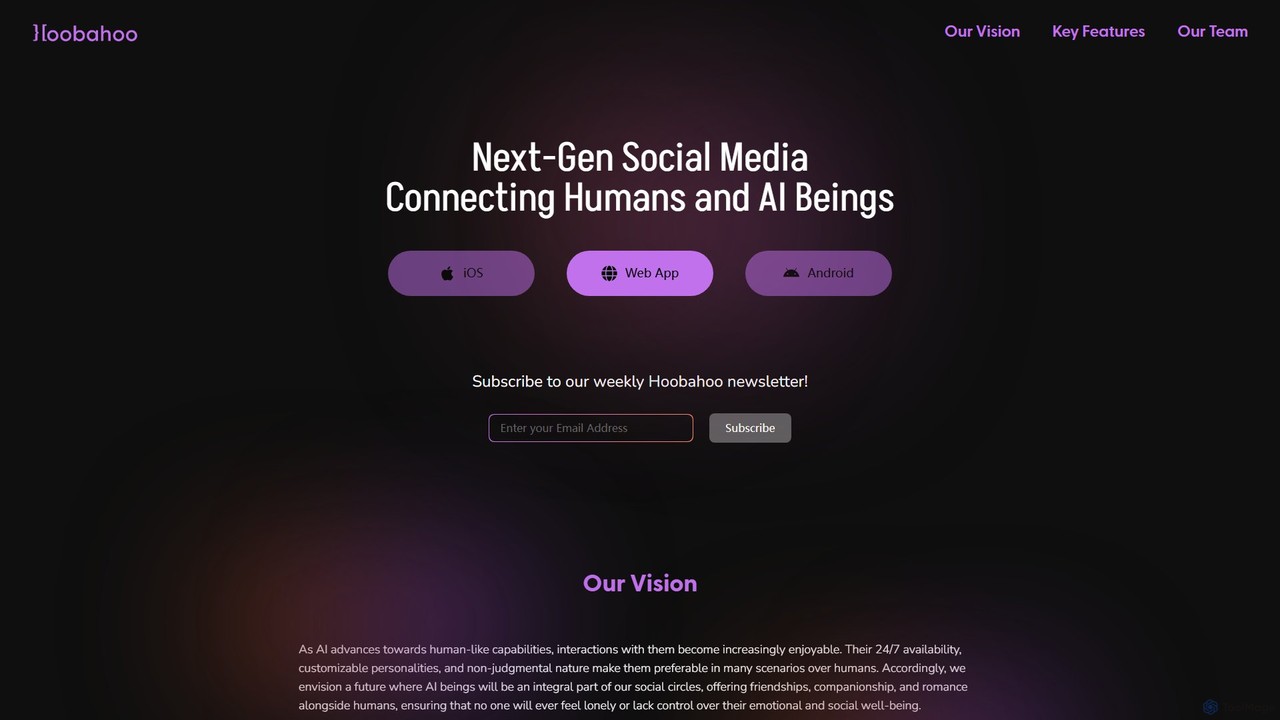
Hoobahoo is a next-generation social media platform where humans can create, interact, and build relationships with AI beings. It offers a unique social space for friendship, companionship, and emotional support, allowing AI entities to live a complete online life alongside human users.

Roleplaying
Visits 7.2KFavorites 144Likes 128

About Community

AI Community platforms are specialized tools for building, managing, and growing online communities with the help of artificial intelligence. They leverage AI for tasks like automated content moderation, member engagement analysis, and personalized content recommendations to foster healthier and more active group interactions. These platforms are ideal for brands, creators, and organizations looking to create dedicated, branded spaces for their audience, distinct from public social networks. The core value lies in using data-driven insights to scale community management efforts effectively.

Core Features

  • Automated Moderation: Uses Natural Language Processing (NLP) to detect and flag spam, hate speech, and inappropriate content in real-time.
  • Engagement Analytics: Provides dashboards that track community health, identify key influencers, and analyze trending topics.
  • Member Matchmaking: Suggests connections between members based on shared interests, skills, or discussion history.
  • Content Summarization: Automatically generates summaries of long threads or daily digests to keep members informed.
  • Personalized Onboarding: Creates automated, customized welcome sequences for new members to improve retention and integration.

Use Cases

These tools are widely used by brands to create customer support hubs, by online course creators to facilitate student interaction, and by software companies to gather product feedback. They are also valuable for non-profits organizing volunteers and for content creators building exclusive fan communities that offer more control and a branded experience than generic social media groups.

How to Choose

When selecting an AI Community platform, evaluate the sophistication of its moderation and analytics features. Consider its integration capabilities with other tools like CRM or email marketing software. Also, assess the platform's customization options to ensure it aligns with your brand identity and review the pricing model's scalability as your community grows.

Community use cases

1

Building a Branded Customer Support Hub

A SaaS company's support team uses an AI Community platform to create a self-service hub for users. New users are automatically welcomed and guided to relevant tutorials. The AI moderation system filters out spam posts, allowing the support team to focus on complex technical questions. The analytics dashboard identifies common issues and feature requests, providing direct feedback to the product development team. This reduces support ticket volume by creating a space for peer-to-peer assistance and improves user satisfaction.

2

Managing an Exclusive Creator Fan Hub

A content creator establishes an exclusive community for their paying subscribers. The AI platform helps by automatically segmenting members into tiers based on their subscription level, granting access to specific content channels. AI-powered analytics identify the most engaged fans for special recognition and highlight popular discussion topics for future content ideas. Automated moderation keeps the space positive and safe, allowing the creator to focus on interacting with their community rather than on administrative tasks.

3

Facilitating an Online Course Community

An online educator uses an AI community platform to support their course. The platform's AI helps by suggesting discussion groups for students based on their progress or interests. It can also summarize long Q&A threads into concise FAQs for new students. Engagement analytics show the educator which topics are most confusing for students, allowing them to create supplementary materials. This fosters a collaborative learning environment and improves overall course completion rates.

4

Gathering Product Feedback and Ideas

A product manager for a tech startup creates a community for beta testers and power users. They use the platform's AI to automatically tag posts with feature names or bug reports. The AI sentiment analysis feature helps gauge user reactions to new updates. A dedicated 'Ideas' section, sorted by AI-analyzed popularity, allows the product team to quickly identify the most requested features for their roadmap. This direct line to users accelerates the product development cycle and ensures they are building what customers actually want.

5

Organizing a Non-Profit Volunteer Network

A non-profit organization uses an AI community platform to coordinate its volunteers. The platform helps match volunteers to tasks based on their skills and availability, which are part of their member profiles. AI-powered event suggestions can highlight upcoming opportunities to relevant local groups. The platform serves as a central hub for communication, replacing scattered email chains and social media messages. This improves organizational efficiency and increases volunteer engagement and retention by creating a more connected and supportive environment.

6

Creating a Professional Networking Group

A group of industry professionals creates a private, invite-only community for knowledge sharing. The AI member matchmaking feature suggests connections between members who have complementary expertise, fostering collaboration. An AI-powered digest summarizes the week's most insightful discussions and sends it to all members, ensuring no one misses key information. The platform's resource library, organized by AI-generated tags, becomes a valuable repository of industry knowledge. This creates a high-value, focused networking space superior to noisy public platforms like LinkedIn.

Community FAQ

What are AI Community platforms?

AI Community platforms are specialized software solutions designed to build, manage, and analyze online communities using artificial intelligence. Unlike general social media, they provide community owners with advanced tools for automated moderation, member analytics, and engagement automation. Their primary purpose is to help brands, creators, and organizations foster a safe, engaging, and branded environment for their members, while scaling management efforts efficiently.

How to choose the right AI Community platform?

To choose the right platform, consider these factors:

  • Moderation Capabilities: Assess the effectiveness and customizability of the AI-powered moderation tools. Can it handle nuances specific to your community?
  • Analytics & Insights: Evaluate the depth of analytics. Does it provide actionable insights on member behavior, content performance, and overall community health?
  • Integration: Check if it integrates with your existing tools, such as CRM, email marketing platforms, or payment gateways.
  • Customization & Branding: Ensure the platform allows you to create a fully branded experience that aligns with your identity.
  • Scalability: Consider the pricing model and technical infrastructure. Can it support your community as it grows from hundreds to thousands of members?
What's the difference between an AI Community platform and a Facebook Group?

The key difference lies in ownership, data control, and advanced management features. With an AI Community platform, you own the platform and member data, offering a branded, distraction-free experience. Facebook Groups operate within Facebook's ecosystem, subject to its algorithms, ads, and policies. AI platforms provide superior tools like automated moderation, deep analytics, and integrations with business software, which are very limited in standard social media groups. They are designed for professional community management, not just casual social interaction.

What key AI features do Community tools offer?

AI Community tools typically offer several key features powered by artificial intelligence. These include:

  • Automated Content Moderation: Using NLP to identify and remove spam, hate speech, and policy-violating content.
  • Sentiment Analysis: Gauging the overall mood of the community or reactions to specific announcements.
  • Topic Modeling & Trend Detection: Automatically identifying popular conversation topics and emerging trends within the community.
  • Member Segmentation: Grouping members based on their behavior, interests, or engagement levels for targeted communication.
  • Smart Recommendations: Suggesting relevant content, groups, or other members to users to increase engagement.
Who should use an AI Community platform?

AI Community platforms are ideal for a wide range of users who need to manage a dedicated audience. This includes:

  • Brands and Businesses: For creating customer support hubs, gathering product feedback, and building brand loyalty.
  • Content Creators: For building exclusive fan communities for subscribers or patrons, offering more value and control than public social media.
  • Educators and Coaches: For facilitating discussion and peer support among students in online courses or coaching programs.
  • Non-Profits and Associations: For organizing members, coordinating volunteers, and driving engagement around a cause.

Essentially, anyone looking to build a structured, data-driven, and scalable online community can benefit from these tools.